Lana Rhoades
The rapid expansion of the digital economy has fundamentally altered the landscape of retail, transforming how goods are bought and sold across state and international borders. For entrepreneurs and enterprises establishing online marketplaces—platforms where multiple third-party sellers list and transact products—the administrative burden of sales tax compliance has emerged as a primary operational challenge. As tax jurisdictions worldwide tighten regulations to capture revenue from e-commerce, marketplace providers are faced with a complex choice: assume the role of the "Seller of Record" or implement robust technological frameworks to facilitate tax collection for their constituent sellers. This evolution in tax policy, accelerated by landmark legal precedents and the proliferation of "Marketplace Facilitator" laws, requires a sophisticated understanding of nexus, remittance, and automated compliance technology.
The Regulatory Framework: From Physical Presence to Economic Nexus
To understand the current state of marketplace taxation, one must examine the chronological shift in United States tax law. For decades, the standard for sales tax collection was governed by the 1992 Supreme Court decision in Quill Corp. v. North Dakota, which dictated that a state could only require a business to collect sales tax if the business had a "physical presence" (such as a warehouse, office, or employees) in that state. This era allowed many early e-commerce entities to grow without the immediate burden of multi-state tax compliance.
However, the landscape shifted dramatically on June 21, 2018, with the Supreme Court’s ruling in South Dakota v. Wayfair, Inc. The court overturned the physical presence requirement, establishing the concept of "economic nexus." Under this new standard, states gained the authority to require out-of-state sellers to collect and remit sales tax based solely on their volume of sales or number of transactions within the state. Following the Wayfair decision, nearly every state with a general sales tax moved to implement economic nexus laws, typically setting thresholds at $100,000 in annual sales or 200 separate transactions.
Parallel to the rise of economic nexus was the introduction of "Marketplace Facilitator" laws. Recognizing the difficulty of enforcing tax collection on millions of individual small sellers, states shifted the legal burden to the platforms themselves. Today, more than 45 states and the District of Columbia have enacted legislation requiring marketplace facilitators—defined generally as any platform that lists products and processes payments—to collect and remit sales tax on behalf of their third-party sellers. This legislative trend has effectively made the "facilitator" the primary point of tax enforcement, regardless of whether they own the inventory being sold.
Strategic Compliance Models for Marketplace Operators
Marketplace providers generally operate under one of two primary tax compliance frameworks. The selection of a model depends on the platform’s business goals, technical capabilities, and the degree of control they wish to exert over the customer experience.

The Seller of Record Model
In the "Seller of Record" (SOR) model, the marketplace platform assumes full legal responsibility for every transaction. To the consumer and the tax authorities, the marketplace is the entity selling the product. While this provides a seamless experience for individual vendors—who are relieved of the administrative weight of tax filing—it places a massive burden on the platform provider.
Under the SOR model, the marketplace must register for sales tax permits in every jurisdiction where it meets nexus requirements. This involves monitoring varying tax rates across more than 11,000 taxing jurisdictions in the U.S. alone, managing exemption certificates, and handling the complexities of "product taxability"—the fact that a single item may be taxable in one state but exempt in another (such as clothing in Pennsylvania versus New York). Furthermore, the SOR model increases the platform’s audit risk, as state revenue departments will look directly to the marketplace for any discrepancies in remittance.
The Facilitator Tooling Model
The second approach involves providing sellers with integrated tools to manage their own tax obligations. This model was historically popular among platforms that functioned more as "listing services" than full-service fulfillment providers. In this scenario, the marketplace integrates a sales tax engine via an API (Application Programming Interface) that calculates the correct tax at checkout based on the seller’s specific nexus profile and the buyer’s location.
While this model empowers individual sellers, the rise of Marketplace Facilitator laws has made it increasingly rare for platforms to avoid all responsibility. Even if a platform provides tools for sellers, the state may still legally mandate that the platform collect and remit the funds. Consequently, many modern marketplaces utilize a hybrid approach: they use automated technology to handle the collection and remittance required by facilitator laws, while providing sellers with detailed reporting for their own corporate income tax and remaining "non-facilitated" sales tax obligations.
Supporting Data: The Economic Impact of Compliance
The scale of the e-commerce market underscores why tax authorities have focused so heavily on marketplace regulation. According to data from the U.S. Department of Commerce, e-commerce sales reached approximately $1.1 trillion in 2023, representing roughly 15% of total retail sales. A significant portion of this growth is driven by marketplaces; industry analysts estimate that third-party sales on platforms like Amazon, eBay, and Etsy account for more than 60% of total global online consumer spending.
For the states, the revenue implications are profound. A report from the Government Accountability Office (GAO) estimated that states could gain between $8 billion and $13 billion annually by enforcing tax collection on remote sellers. However, for the marketplace providers, the cost of compliance is significant. Small to mid-sized marketplaces often face "compliance drag," where the cost of tax software, legal consultation, and administrative labor can consume a notable percentage of their operating margins. Research suggests that for a marketplace expanding into multiple states, the initial cost of establishing a compliant tax infrastructure can range from $20,000 to over $100,000, depending on the complexity of the product catalog and the geographic reach of the seller base.
Industry Responses and Implementation Challenges
The shift toward mandatory marketplace collection has met with mixed reactions from the industry. Large-scale facilitators generally support the move toward uniform marketplace laws, as it creates a level playing field and provides a clearer regulatory roadmap. However, industry advocacy groups representing smaller startups have expressed concerns that these laws create a "barrier to entry," making it difficult for new, niche marketplaces to compete with established giants who already possess the infrastructure to handle multi-state filing.
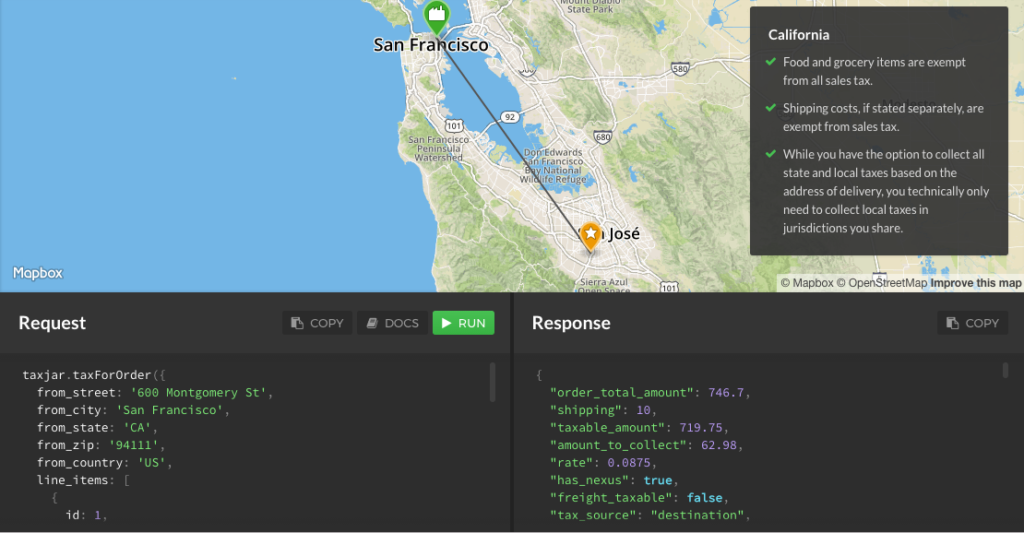
Technological solution providers, such as TaxJar, have responded by developing specialized APIs designed to automate the entire lifecycle of a transaction. These systems are engineered to handle:
- Real-time Calculation: Determining the exact tax rate at the moment of checkout, accounting for state, county, city, and special district taxes.
- Sourcing Logic: Applying "destination-based" or "origin-based" sourcing rules, which dictate which jurisdiction’s tax rate applies to a specific sale.
- Reporting and Filing: Aggregating data across thousands of transactions to generate "return-ready" reports and, in many cases, automatically filing those returns with state agencies.
- Multi-Channel Synchronization: Ensuring that a seller’s activity on a private marketplace is reconciled with their sales on other platforms like Shopify or Amazon to prevent double-taxation or missed nexus thresholds.
Analysis of Broader Implications
The trend toward marketplace-centric tax collection is not limited to the United States. Globally, tax authorities are adopting similar "deemed supplier" regimes. The European Union’s VAT e-commerce package, introduced in 2021, and similar measures in the United Kingdom, Australia, and Canada, have placed the burden of Value Added Tax (VAT) and Goods and Services Tax (GST) squarely on the marketplace facilitator.
This global shift suggests that the role of the online marketplace is evolving from a mere intermediary to a regulated financial entity. As tax laws become more granular—with some jurisdictions introducing "sugar taxes," "environmental levies," or specific "digital services taxes"—the technical requirement for marketplaces to maintain accurate, real-time tax data becomes an existential necessity.
Furthermore, the data collected by marketplace facilitators is becoming a vital tool for tax authorities. In an era of "real-time reporting," some jurisdictions are moving toward requiring marketplaces to upload transaction data as it happens, rather than at the end of a filing period. This move toward transparency aims to close the "tax gap" but increases the pressure on marketplace developers to ensure their systems are robust, secure, and perfectly aligned with shifting legal definitions.
Conclusion
For the online marketplace provider in 2026 and beyond, sales tax is no longer a peripheral accounting concern but a core component of platform architecture. The transition from physical to economic nexus, coupled with the near-universal adoption of marketplace facilitator laws, has fundamentally reassigned the responsibility for tax collection. Whether a platform chooses to act as the Seller of Record or provides sophisticated compliance tools to its vendors, the reliance on automated, API-driven solutions is unavoidable. As the digital marketplace continues to grow in complexity and geographic reach, those who prioritize seamless, automated tax compliance will find themselves better positioned to scale, remain audit-ready, and maintain the trust of both their sellers and the regulatory bodies governing the global economy.