Dwi Wanna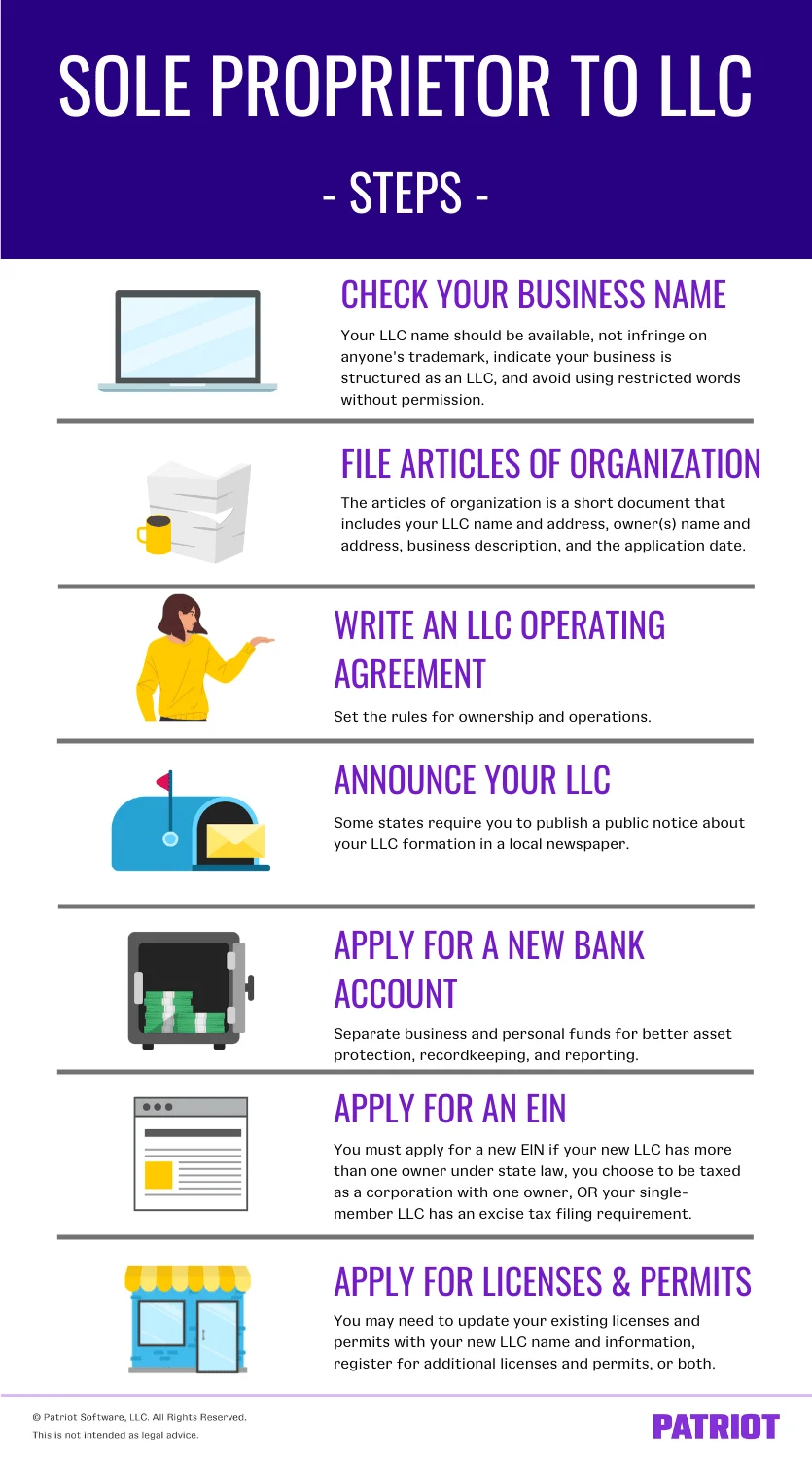
The decision to transition a business from a sole proprietorship to a Limited Liability Company (LLC) represents a pivotal milestone in the lifecycle of an American small business. While the sole proprietorship remains the most common business structure in the United States due to its simplicity and lack of formal filing requirements, it offers no legal separation between the owner and the enterprise. As a business scales, the inherent risks of unlimited personal liability often necessitate a shift toward more robust legal structures. Data from the U.S. Small Business Administration (SBA) indicates that while over 70% of American businesses are owned by sole proprietors, the LLC has become the fastest-growing entity type for those seeking a balance between administrative ease and asset protection.
The Structural Evolution of Small Business Entities
To understand the necessity of this transition, one must examine the fundamental differences between these two legal frameworks. A sole proprietorship is an unincorporated business owned and run by one individual with no distinction between the business and the owner. Consequently, the owner is personally entitled to all profits but is also personally responsible for all business debts, losses, and legal liabilities. If a sole proprietorship is sued or defaults on a loan, the owner’s personal assets—including their home, savings, and vehicles—are at risk of seizure.
In contrast, an LLC is a hybrid legal entity that combines the asset protection of a corporation with the tax flexibility of a partnership or sole proprietorship. Established by state statute, the LLC creates a "corporate veil" that shields the personal assets of the "members" (owners) from the liabilities of the business. According to recent legal analysis, this separation is the primary motivator for conversion, particularly for businesses that interact with the public, hire employees, or enter into significant contracts.
Historical Context and Modern Trends
The LLC is a relatively modern innovation in American law. Wyoming was the first state to authorize the structure in 1977, followed by a slow adoption across other states until a landmark 1988 IRS ruling confirmed that LLCs could be taxed as partnerships rather than corporations. By the mid-1990s, all 50 states had adopted LLC statutes.
Today, the transition is often triggered by specific growth indicators. Economic data suggests that businesses typically consider converting to an LLC once they exceed $50,000 in annual revenue or when they begin to hire non-family employees. The shift is also increasingly driven by the "gig economy," where independent contractors seek to professionalize their brand and secure better terms with corporate clients who often prefer—or require—contractors to be incorporated.
The Chronology of Conversion: A Seven-Step Process
Transitioning from a sole proprietorship to an LLC is not a single act but a chronological sequence of legal and administrative filings. While specific requirements vary by state jurisdiction, the following timeline outlines the standard path to conversion.
1. Statutory Name Verification and Compliance
The first step involves ensuring the business name is available and compliant with state law. Most states require that the name of the entity be distinguishable from all other registered entities in the Secretary of State’s database. Furthermore, the name must typically include a designator such as "Limited Liability Company," "L.L.C.," or "LLC." If the sole proprietor was operating under a "Doing Business As" (DBA) name, they must ensure that this name is available for permanent registration as a corporate entity.
2. Filing the Articles of Organization
The formal creation of the LLC occurs when the owner files the Articles of Organization with the state’s filing office, usually the Secretary of State. This document provides the foundational details of the business, including its name, principal place of business, and the name and address of its registered agent.
The registered agent is a critical component of the LLC structure. This individual or entity is designated to receive service of process and official government correspondence on behalf of the company. Filing fees for the Articles of Organization vary significantly by geography; for instance, Kentucky charges as little as $40, while Massachusetts and Nevada can exceed $300 and $400 respectively, including mandatory initial reports.
3. Formalizing Governance via an Operating Agreement
While not mandatory in all states, legal experts unanimously recommend the creation of an Operating Agreement. This internal document outlines the ownership structure, member roles, voting rights, and procedures for dissolving the company or transferring interest. In the absence of an Operating Agreement, the LLC is governed by the state’s "default rules," which may not align with the owner’s specific intentions. For a single-member LLC, this document serves as further evidence of the separation between the individual and the entity, helping to preserve the corporate veil in the event of a legal challenge.

4. Mandatory Public Notice Requirements
In a handful of states, including New York, Arizona, and Nebraska, new LLCs are subject to "publication requirements." This involves publishing a notice of the LLC’s formation in local newspapers for a specified period (often six consecutive weeks). After publication, an affidavit of publication must be filed with the state. Failure to comply with these transparency laws can lead to the suspension of the LLC’s authority to do business.
5. Tax Identity and the IRS Transition
A common misconception among sole proprietors is that they can retain their Social Security Number or existing Employer Identification Number (EIN) for the new LLC. In reality, the IRS generally requires a new EIN when a business changes its legal structure from a sole proprietorship to an LLC. This number acts as a "corporate social security number" and is essential for tax filings, payroll processing, and opening business banking accounts.
6. Financial Decoupling and Banking
Upon receiving the new EIN and certified Articles of Organization, the owner must open a new business bank account under the LLC’s name. This is perhaps the most critical step in maintaining the legal integrity of the entity. "Commingling" funds—the practice of mixing personal and business finances—is the most common reason courts "pierce the corporate veil," allowing creditors to bypass the LLC’s protection and seize the owner’s personal assets.
7. Transfer of Permits, Licenses, and Contracts
The final phase of the transition involves updating all professional licenses, local permits, and existing contracts. Because the LLC is a separate legal person, it must hold the permits required for operation. This includes everything from local health department permits to professional certifications and vendor contracts.
Financial Data and Tax Implications
The transition to an LLC introduces new tax considerations. By default, a single-member LLC is treated as a "disregarded entity" for federal tax purposes, meaning the owner reports business income and expenses on Schedule C of their personal Form 1040, much like a sole proprietorship. However, the LLC structure offers the flexibility to elect to be taxed as a C Corp or an S Corp.
The S Corp election is particularly popular among high-earning LLC owners. By electing S Corp status via IRS Form 2553, owners can potentially reduce their self-employment tax burden. Under this structure, the owner receives a "reasonable salary" (subject to payroll taxes), while the remaining profits are distributed as dividends (not subject to self-employment taxes). Analysis by tax professionals suggests this strategy often becomes viable once the business generates enough profit to pay a competitive salary plus at least $20,000 to $30,000 in additional distributions.
Official Responses and Regulatory Outlook
State regulatory bodies have increasingly streamlined the conversion process through online filing portals. However, officials warn that with increased protection comes increased responsibility. In 2024, the federal government implemented the Corporate Transparency Act (CTA), which requires most LLCs to report Beneficial Ownership Information (BOI) to the Financial Crimes Enforcement Network (FinCEN). This federal mandate aims to prevent money laundering and the use of shell companies, adding a new layer of compliance for those moving away from sole proprietorship.
Legal analysts also emphasize the importance of "maintaining the entity." Unlike sole proprietorships, LLCs often require annual or biennial reports and fees to remain in "Good Standing" with the state. Failure to file these reports can lead to administrative dissolution, which immediately strips the owner of their liability protection.
Broader Impact and Strategic Implications
The shift from sole proprietor to LLC is more than a legal formality; it is a strategic move that impacts creditworthiness and scalability. Commercial lenders and investors typically view LLCs as more stable and professional than sole proprietorships. An LLC can build its own credit profile independent of the owner’s personal credit score, which is vital for securing business loans and lines of credit.
Furthermore, the LLC structure facilitates easier ownership transfers. In a sole proprietorship, the business is inseparable from the owner; if the owner dies or leaves, the business ceases to exist. An LLC, however, has "perpetual existence," meaning the entity can continue to operate and be sold or passed on to heirs through the transfer of membership interests.
In conclusion, while the transition from a sole proprietorship to an LLC involves administrative hurdles and ongoing compliance costs, the benefits of asset protection, tax flexibility, and professional credibility offer a compelling value proposition for growing enterprises. As the American regulatory environment becomes more complex, the move toward formal incorporation remains a standard best practice for risk mitigation and long-term business sustainability.