Candice Horbacz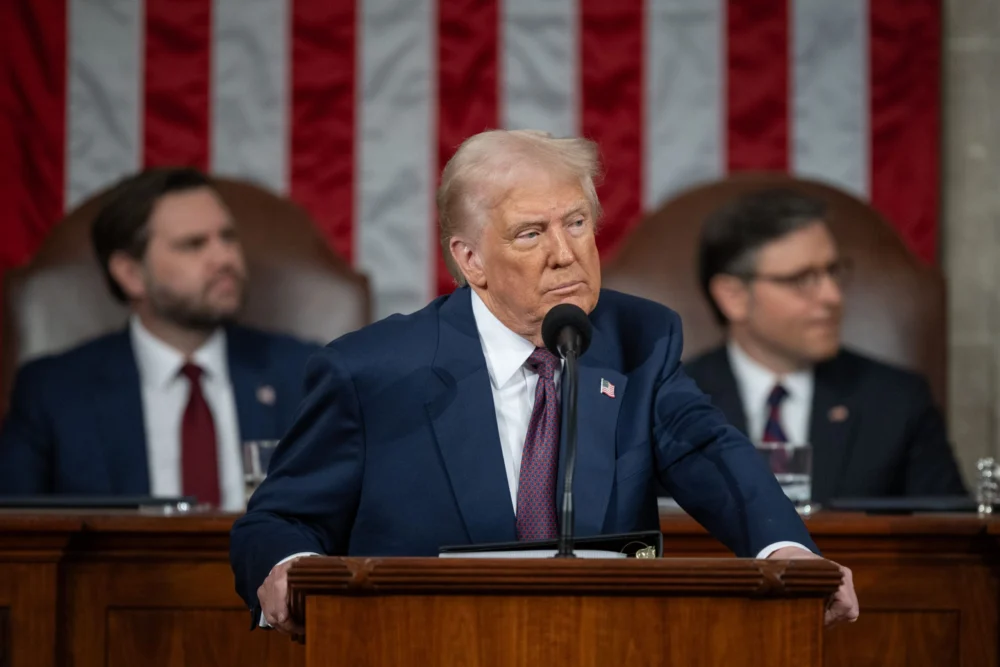
As President Trump prepares to deliver his annual State of the Union address to a joint session of Congress, anticipation runs high regarding the policy landscape he will outline. While the speech is poised to cover a broad spectrum of issues from foreign policy to social initiatives, economic policy, particularly in the realms of taxation and trade tariffs, is expected to feature prominently, offering a critical look at the administration’s fiscal strategy and its impact on the American economy. This address serves as a pivotal moment for the President to articulate his vision and defend his economic record amidst ongoing debates about national debt, global trade, and domestic prosperity.
The Evolving Landscape of Tariffs: A Cornerstone of Trade Policy
Tariffs, essentially taxes on imported goods, have been a defining characteristic of the Trump administration’s economic agenda, dominating headlines and global trade discussions for the past year and beyond. Implemented with the stated goals of protecting domestic industries, correcting perceived unfair trade practices, and rebalancing global trade deficits, these measures have significantly altered the cost structure for businesses and consumers alike. The administration has frequently utilized various statutory authorities, including Section 232 of the Trade Expansion Act of 1962 (invoking national security concerns), Section 301 of the Trade Act of 1974 (addressing unfair trade practices, notably against China), and at times, the International Emergency Economic Powers Act (IEEPA). Each of these legal frameworks carries distinct implications for the scope, duration, and justification of the tariffs imposed.
The chronology of these trade barriers has been marked by frequent adjustments and legal challenges. Initially, the administration imposed tariffs on steel and aluminum imports under Section 232, citing national security. This was followed by more extensive tariffs on a wide range of goods from China under Section 301, escalating into what many have termed a "trade war." The legal underpinnings of some of these actions, particularly those invoking IEEPA, faced scrutiny. A significant development occurred on Friday, February 20, 2025, when the Supreme Court issued a landmark ruling, declaring tariffs imposed under the supposed authority of IEEPA unconstitutional. This decision, a major blow to the administration’s revenue projections from tariffs, effectively struck down nearly three-fourths of the new expected revenue from these specific measures, forcing a re-evaluation of the tariff strategy.
In direct response to the Supreme Court’s decision, President Trump swiftly announced a new 10 percent baseline tariff, ostensibly utilizing Section 122 authority, which allows for temporary tariffs during periods of national emergency. This new tariff, however, was subject to significant exemptions designed to mitigate some of its broader economic impact. The very next day, the President further escalated the measure, raising this new baseline tariff rate to 15 percent. This latest iteration of tariffs is explicitly scheduled to expire after 150 days, introducing a degree of temporary uncertainty into trade calculations.
According to analyses by organizations like the Tax Foundation, the current combination of Section 232 tariffs and the newly implemented Section 122 tariffs is projected to generate approximately $668 billion in new tax revenue over the next decade. Under this framework, imports are estimated to face a weighted average applied tax rate of 12.1 percent. This figure represents a reduction from the 13.8 percent rate that was in effect when IEEPA tariffs were still valid alongside Section 232 measures. Once the temporary Section 122 tariffs expire after their 150-day period, the weighted average applied tariff rate is expected to significantly decrease to 6.7 percent, highlighting the fluctuating and often transient nature of these trade policies.
Economists and trade experts have extensively debated the distribution of the economic burden associated with tariffs. While often framed as a tax on foreign exporters, recent empirical evidence, including research from institutions like the Federal Reserve Bank of New York, suggests a different reality. Studies indicate that almost the entire burden of these tariffs is ultimately borne by individuals and firms within the United States, rather than by foreign exporters. This occurs because domestic importers pay the tariffs, and these costs are typically passed on to American consumers through higher prices or to American businesses through increased input costs. Critically, this burden on U.S. households can materialize even without a general rise in overall inflation, as the specific prices of imported goods and their domestic alternatives increase. Furthermore, the presence of tariffs on international competition often incentivizes domestic suppliers to raise their own prices, further contributing to increased costs for consumers and businesses. This phenomenon, known as "tariff pass-through," underscores the complex and often counterintuitive economic effects of protectionist trade policies.
The "One Big Beautiful Bill Act" (OBBBA): A Major Fiscal Overhaul
Beyond tariffs, the other monumental fiscal policy achievement sure to be highlighted in the State of the Union address is the "One Big Beautiful Bill Act," or OBBBA. While its name may lack descriptive specificity, the legislation itself was undeniably expansive, representing a comprehensive overhaul of significant portions of the nation’s tax code and introducing new spending parameters. This act was passed during a period of intense focus on stimulating economic growth and delivering on campaign promises of tax relief and fiscal responsibility.
On the tax side, OBBBA introduced a range of changes that can broadly be categorized into several key areas. While specific line items are vast, they generally included adjustments to individual income tax rates, modifications to corporate tax structures, and the introduction of new deductions and credits. For instance, the law notably included new deductions for certain tipped and overtime income, aiming to provide targeted relief to specific segments of the workforce. Additionally, it retroactively boosted the standard deduction, offering a broader tax cut for many taxpayers. The precise details of these changes involved complex calculations related to income brackets, eligibility criteria, and phase-out thresholds, necessitating detailed analysis to understand their full scope. The spending side of OBBBA, though less emphasized in public discourse, also played a crucial role in its overall fiscal impact, with specific allocations and cuts designed to align with the administration’s budgetary priorities.
A comprehensive analysis by the Tax Foundation revealed the profound fiscal implications of OBBBA. On a static basis, meaning without accounting for potential economic growth induced by the tax cuts, the law is projected to reduce federal revenue by an estimated $5.2 trillion between 2025 and 2034. However, when factoring in the long-run economic effects, such as increased investment and productivity stimulated by the tax cuts, alongside the spending cuts included in the bill, and the higher interest costs necessitated by increased deficits, the total cost of the package comes to approximately $4.1 trillion over the same decade. This substantial figure underscores the magnitude of OBBBA’s impact on the nation’s fiscal health and its trajectory of national debt. Proponents of OBBBA have often argued that the legislation would unleash significant economic growth, offsetting some of the revenue losses, while critics have voiced concerns over the exacerbation of the national debt.
Decoding Tax Refunds: Why Americans Saw More Back
A particularly salient point of discussion and one that the President and his administration have frequently championed is the phenomenon of larger tax refunds experienced by many Americans for the 2025 tax year. To understand this, it’s crucial to grasp the mechanism of tax refunds: they occur when an individual’s employer withholds more income from their paychecks over the year than the taxpayer ultimately owes in federal income tax. The excess amount is then returned as a refund.
On average, tax refunds were indeed higher for the 2025 tax year. This seemingly straightforward outcome is rooted in a timing discrepancy related to the implementation of OBBBA. Several provisions of the Act, such as the new deductions for tipped and overtime income and the boosted standard deduction, were made applicable to all or part of the 2025 tax year. However, the Internal Revenue Service (IRS) did not immediately update its withholding tables to reflect these changes once OBBBA was enacted. Consequently, employers continued to withhold taxes at rates that did not fully account for the new, more generous deductions and credits available to taxpayers under the new law. This resulted in many taxpayers having more money withheld than they ultimately owed, leading to larger refunds when they filed their 2025 tax returns.
The Tax Foundation’s analysis estimated that the average tax cut for the 2025 tax year was approximately $611 per taxpayer. However, it is imperative to note that the actual size of the change in refund varied wildly depending on individual taxpayer circumstances. Those taxpayers who directly benefited from one of the targeted tax provisions, such as the new deductions for tipped or overtime income, likely saw more significant increases in their refunds. In contrast, a salaried worker who primarily benefited from the retroactively boosted standard deduction might have experienced a more modest, though still positive, adjustment. Looking ahead, as the IRS has since updated its withholding tables to align with OBBBA’s provisions, the direct benefits of these tax changes are expected to be reflected in lower withholding amounts and, consequently, higher take-home pay throughout the year, rather than primarily manifesting as larger tax refunds at tax filing time. This shift aims to provide more immediate financial relief to taxpayers.
The Deficit Dilemma: Tariffs vs. OBBBA – A Revenue Comparison
A recurring argument advanced by defenders of OBBBA, and indeed by the President himself, is the assertion that revenue generated from tariffs would effectively offset the considerable cost of the tax cuts and new spending outlined in the Act. President Trump has even gone further, claiming that tariff revenue could be so substantial as to allow for the wholesale repeal of the income tax and simultaneously cover the cost of numerous other proposed spending initiatives. This claim sets up a critical fiscal question: can tariffs genuinely bridge the gap created by a major tax overhaul?
Rigorous economic analysis, including studies by the Tax Foundation, unequivocally demonstrates that tariffs do not possess the revenue-generating capacity required to replace the federal income tax, which forms the bedrock of government funding. Furthermore, even the most ambitious projections for tariff revenue fall far short of offsetting the deficit impact of OBBBA.
To facilitate an "apples-to-apples" comparison, let’s consider the figures without factoring in dynamic interest costs, which complicates direct comparisons. On this basis, OBBBA’s deficit impact totals approximately $3.3 trillion over a decade. In contrast, before the Supreme Court’s ruling that nullified the IEEPA tariffs, the cumulative dynamic revenue projected from the combined IEEPA and Section 232 tariffs was estimated at around $2.0 trillion over a decade. Following the Supreme Court’s decision and with the introduction of the new Section 122 baseline tariff (scheduled for 150 days), the revised projection for tariff revenue from these measures now stands at a much lower $668 billion over a decade.
The stark disparity between these figures illustrates the core fiscal challenge. Even under the most favorable (and now outdated) scenarios, tariff revenue was insufficient to cover OBBBA’s costs. With the IEEPA tariffs struck down and the new Section 122 tariffs being temporary and generating less revenue, the gap has widened significantly. Ultimately, the President’s tariffs, while generating some revenue, are demonstrably insufficient to offset the substantial tax cuts embedded in OBBBA, let alone fund other ambitious spending priorities or make a meaningful dent in the nation’s underlying deficit problem, which continues to be a major concern for fiscal policymakers and economists.
Economic Impact: Short-term Volatility, Long-term Trends
The combined effect of OBBBA and the administration’s tariff policies on the American economy presents a complex picture, characterized by both immediate disruptions and longer-term structural shifts. The Tax Foundation’s analysis of OBBBA, for instance, projects a long-run increase in Gross Domestic Product (GDP) by 0.7 percent. This positive outlook is attributed to the incentives for work and investment embedded within the tax cuts, which are expected to stimulate economic activity, capital formation, and productivity over time.
Conversely, the existing tariffs are estimated to reduce long-run GDP by 0.2 percent. This negative impact stems from increased import costs, reduced trade volumes, supply chain inefficiencies, and the reallocation of resources away from more efficient production. When these two opposing forces are considered together, the overall assessment suggests a modestly positive effect on the economy in the long run. This net positive, however, belies the significant and often conflicting dynamics at play.
The effects in the short term are considerably more complicated and less predictable, particularly concerning tariffs. On one hand, some of the tariffs have proven to be temporary, either expiring or being modified, which can limit their sustained negative impact. On the other hand, economic models often struggle to fully account for the profound uncertainty generated by a constantly shifting trade policy environment. The mere threat of a tariff, even if it ultimately collects no revenue, can deter businesses from making long-term investments, disrupting supply chains and delaying expansion plans. This "policy uncertainty" can dampen economic activity irrespective of whether the tariffs are actually implemented or how much revenue they generate.
While short-run economic data is inherently noisy and influenced by a multitude of factors, the fundamental principles remain clear. Tariffs, by raising costs and creating trade barriers, generally disincentivize economic growth and efficiency. Conversely, policies like those in OBBBA that provide better tax treatment for work and investment are designed to incentivize these activities, thereby stimulating growth. Over time, as more comprehensive data becomes available and the short-term noise subsides, economists will be better equipped to disentangle the precise effects of these distinct policies on key economic indicators such as GDP growth, unemployment rates, and productivity gains. The State of the Union address will undoubtedly frame these policies as successes, but a nuanced understanding reveals a more intricate interplay of costs and benefits.
In conclusion, President Trump’s upcoming State of the Union address offers a critical platform to review the profound economic changes enacted under his administration. The interplay between aggressive tariff policies, which have been constitutionally challenged and frequently adjusted, and the sweeping tax reforms of OBBBA, represents a bold and complex approach to national economic management. While the administration points to the immediate benefits of larger tax refunds and projected long-term growth from OBBBA, the persistent questions surrounding the economic burden of tariffs and their inability to offset the national debt implications of tax cuts underscore the ongoing fiscal debate. As the nation reflects on these policies, the address will undoubtedly serve as a focal point for understanding the current economic trajectory and the future vision for America’s financial landscape.