admin
admin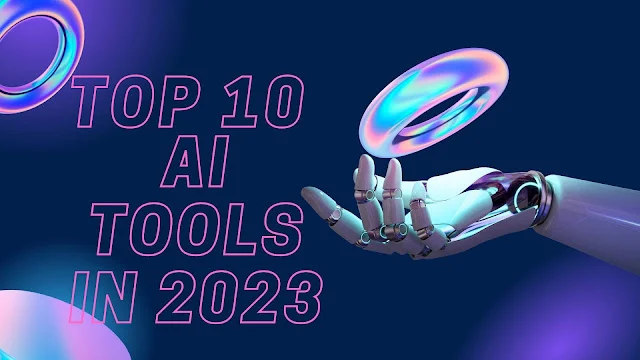
The landscape of technology is undergoing a profound transformation, driven by the rapid advancements in Artificial Intelligence. In 2023, AI tools are no longer niche innovations but essential components driving efficiency, fostering creativity, and automating complex tasks across virtually every industry. From enhancing natural language processing to generating sophisticated visual content and streamlining development workflows, these intelligent systems are redefining productivity. This article delves into ten of the most impactful AI tools currently available, exploring their functionalities, market relevance, and the significant implications they hold for businesses and individuals alike. The global artificial intelligence market, valued at an estimated $150.2 billion in 2023, is projected to grow substantially in the coming years, underscoring the widespread adoption and critical importance of these technologies.
The Rise of Generative AI and Language Models
The past few years have witnessed an explosion in generative AI capabilities, particularly in natural language processing (NLP) and image generation. These tools are not merely assisting human efforts but are increasingly capable of creating original content, driving new paradigms in creative and business applications.
1. ChatGPT
Developed by OpenAI, ChatGPT has rapidly become a benchmark for large language models (LLMs), captivating public and professional attention since its release. Based on the sophisticated GPT-3.5 and GPT-4 architectures, this conversational AI is designed to understand and generate human-like text responses to an extraordinarily wide array of prompts. Its applications span from language translation and question answering to content creation, summarization, and even sophisticated brainstorming.
ChatGPT’s core strength lies in its ability to produce coherent, contextually relevant, and stylistically versatile text. It can mimic various writing styles, explain complex concepts, assist with coding challenges, and engage in extended dialogues, making it an invaluable asset for writers, researchers, customer service professionals, and educators. The model’s training on a vast dataset of internet text allows it to draw from an immense pool of information, enabling it to handle diverse topics with remarkable fluency. However, its generative nature also presents limitations; responses can sometimes be factually incorrect, reflect biases present in its training data, or even produce nonsensical information, a phenomenon often referred to as "hallucination." Users are therefore advised to exercise critical judgment and verify information, especially when accuracy is paramount. Despite these caveats, ChatGPT continues to evolve, pushing the boundaries of human-computer interaction and demonstrating the transformative potential of advanced NLP.
2. DALL-E
Another groundbreaking creation from OpenAI, DALL-E represents a paradigm shift in visual content generation. Building on the transformer-based neural network architecture akin to GPT-3, DALL-E translates textual descriptions into unique, high-resolution images. This generative model empowers users to create entirely new visuals from simple text prompts, opening unprecedented avenues for artists, designers, marketers, and content creators.
The tool’s ability to interpret nuanced language and synthesize novel images, often combining disparate concepts in imaginative ways, sets it apart. Users can specify styles, subjects, environments, and even emotional tones, with DALL-E producing multiple variations for selection. This capacity for rapid image generation significantly accelerates creative workflows, allowing for quick prototyping, conceptualization, and the production of custom visuals without the need for traditional design expertise or stock photography. While DALL-E’s output is impressive, the quality can sometimes vary, and the tool, like all generative AI, carries implications regarding originality and copyright. The images are derived from patterns learned from its vast training dataset, raising questions about potential influences and the distinction between AI-generated and human-created art. Nevertheless, DALL-E stands as a testament to AI’s burgeoning creative capabilities, fundamentally altering how visual content can be conceived and produced.
3. Jasper AI
Emerging as a prominent player in the content generation space, Jasper AI leverages sophisticated artificial intelligence to assist marketers, writers, and businesses in crafting high-quality textual content more efficiently. Unlike general-purpose language models, Jasper is specifically optimized for various content marketing formats, including blog posts, social media updates, ad copy, website content, and email campaigns.
Jasper’s strength lies in its ability to adapt to specific brand voices and target audiences. Users can input keywords, topics, and desired tones, and Jasper will generate drafts that align with these parameters. It incorporates features like a "Boss Mode" for longer-form content creation and integrates with SEO tools, aiming to produce content that not only reads well but also performs effectively in search engine rankings. This focused application makes it a powerful tool for teams struggling with content velocity or seeking to scale their content production without compromising quality. The primary benefit is significant time savings in content creation, allowing human writers to focus on editing, strategizing, and adding unique insights rather than starting from scratch. However, like all AI writing assistants, Jasper requires human oversight to ensure factual accuracy, maintain brand consistency, and inject the unique human touch that resonates deeply with audiences. Its efficacy is maximized when used as a collaborative partner, augmenting human creativity rather than replacing it entirely.
4. Compose AI
Compose AI specializes in Natural Language Generation (NLG) software, a branch of AI focused on transforming structured data into readable human language. This tool is designed to automate the creation of written or spoken text from various data sources, such as spreadsheets, databases, or APIs. Its applications are particularly valuable in scenarios where repetitive textual content needs to be generated at scale, such as financial reports, product descriptions, personalized marketing messages, or even dynamic news summaries based on real-time data.
The core advantage of Compose AI is its ability to extract insights from data and present them in a coherent, grammatically correct, and contextually appropriate narrative. This eliminates the manual effort and potential for error involved in translating data points into prose. For businesses, this translates into increased efficiency, faster content production cycles, and the ability to personalize communications on a mass scale. While highly effective for data-driven content, the quality of the generated output is heavily dependent on the clarity and structure of the input data. The tool excels at generating factual, objective text, but may struggle with nuanced expression, creative storytelling, or content requiring deep emotional intelligence. Therefore, human review remains crucial to ensure the generated content perfectly aligns with brand voice, legal requirements, and the desired impact. Compose AI exemplifies how AI can bridge the gap between raw data and understandable communication, making complex information accessible.
Enhancing Productivity and Workflow Automation
Beyond content creation, AI is revolutionizing how individuals and organizations manage their daily tasks and workflows. These tools focus on augmenting human capabilities, automating mundane processes, and optimizing operational efficiency.
5. Grammarly
Grammarly has become an indispensable AI-powered writing assistant for millions globally, designed to enhance the clarity, correctness, and overall effectiveness of written communication. Operating as a platform, browser extension, and desktop application, it meticulously checks for grammar, punctuation, spelling errors, and stylistic inconsistencies in real-time. Its sophistication extends beyond basic error detection, offering suggestions for conciseness, vocabulary enrichment, tone adjustments, and overall readability.
The tool’s AI algorithms analyze text against a vast repository of linguistic rules and patterns, providing context-aware recommendations. For professionals, students, and casual writers, Grammarly significantly reduces the time spent on proofreading and editing, allowing them to communicate more effectively and confidently. It adapts to various writing styles and goals, offering tailored suggestions for academic papers, business reports, creative writing, and casual correspondence. While incredibly powerful, Grammarly is an aid, not a replacement for human judgment. It may occasionally misinterpret context or suggest changes that alter the intended meaning or stylistic nuance. Users must still critically evaluate its recommendations to ensure they align with their specific communication objectives. Nevertheless, its continuous evolution, incorporating advanced AI to understand intent and context better, solidifies its position as a vital tool for improving written output across diverse applications.
6. Lumen5
Lumen5 leverages artificial intelligence to simplify and accelerate video content creation, a task traditionally requiring significant time, skill, and resources. This platform is particularly valuable for marketers, businesses, and content creators looking to transform text-based content, such as blog posts or articles, into engaging video formats for social media, websites, or presentations.
The AI-driven process typically involves users inputting text or a link to an article, which Lumen5 then analyzes to identify key sentences and concepts. It automatically matches these with relevant video clips, images, and background music from its extensive media library. Users can then customize fonts, colors, branding, and edit the generated video to refine the narrative and visual flow. This automation drastically reduces the learning curve and production time associated with video editing, making high-quality video content accessible to those without professional video production experience. Lumen5’s efficiency allows for rapid content repurposing and scaling of video marketing efforts. However, while the AI provides a strong foundation, the artistic and storytelling elements often benefit from human intervention. The AI’s selection of media might not always perfectly capture the desired emotional tone or specific nuance, requiring manual adjustments to achieve optimal impact. Despite this, Lumen5 stands out as a powerful enabler for content creators in an increasingly video-centric digital landscape.
7. Zapier
Zapier is a leading web automation tool that empowers users to connect disparate web applications and automate repetitive tasks without writing a single line of code. It acts as a digital bridge between over 5,000 applications, allowing users to create "Zaps"—automated workflows that trigger actions in one app based on events in another. For instance, a Zap could automatically save email attachments to cloud storage, add new CRM leads to a marketing spreadsheet, or post new blog entries to social media.
This no-code platform democratizes automation, making sophisticated integrations accessible to individuals and businesses regardless of their technical expertise. By automating mundane, recurring tasks, Zapier significantly boosts productivity, reduces manual errors, and frees up valuable human time to focus on more strategic and creative endeavors. It’s a cornerstone for building efficient digital ecosystems, integrating sales, marketing, support, and operational tools into seamless workflows. While incredibly versatile, setting up complex Zaps requires careful planning and understanding of the integrated applications’ functionalities. The platform offers a free tier, but advanced features and higher usage volumes typically require a paid subscription. Nonetheless, Zapier embodies the AI-driven principle of working smarter, not harder, by orchestrating digital tools to perform tasks autonomously, thereby optimizing operational efficiency and accelerating business processes across the board.
AI in Development and Digital Optimization
AI’s influence extends deeply into the technical realms of software development and digital marketing, providing intelligent assistance that accelerates coding, improves code quality, and optimizes online presence.
8. OpenAI Codex
OpenAI Codex represents a significant leap in AI-assisted software development, capable of generating code from natural language descriptions. This system, also built upon the GPT-3 architecture, understands and translates human language instructions into various programming languages, including Python, JavaScript, Go, and Ruby. It can complete code, suggest functions, explain code snippets, and even debug, essentially acting as an AI pair programmer.
The implications of Codex are profound. For developers, it automates boilerplate code, accelerates prototyping, and helps in understanding unfamiliar codebases, thereby increasing efficiency and reducing development time. For non-technical individuals, it lowers the barrier to entry for programming, allowing them to describe desired functionalities in plain English and have the AI generate the underlying code. This democratizes access to software creation, potentially enabling more innovation across diverse sectors. However, the quality and security of the generated code can vary. While Codex is powerful, it is not infallible; the code still requires thorough review, testing, and understanding by a human developer to ensure it meets specifications, is optimized, and is free from vulnerabilities. It serves as a powerful aid, complementing human programming skills, rather than entirely replacing the critical thinking and problem-solving abilities of experienced developers.
9. Tabnine
Tabnine is an AI-powered code completion tool designed to significantly enhance developer productivity by providing intelligent, context-aware code suggestions in real-time. Compatible with dozens of programming languages and integrated across popular IDEs (Integrated Development Environments) like VS Code, IntelliJ, and Sublime Text, Tabnine learns from publicly available code and, optionally, from a user’s private codebase to offer highly relevant suggestions.
Unlike traditional autocomplete tools that rely on static keyword matching, Tabnine uses deep learning models to predict the most probable next pieces of code, including full lines, function calls, and complex snippets. This predictive capability goes beyond simple keyword matching, understanding the project’s context, syntax, and even the developer’s coding patterns. The benefits are tangible: reduced typing, fewer errors, faster coding, and a smoother development experience. It helps developers adhere to consistent coding styles and discover API usages more quickly. While highly effective, developers must remain vigilant, as AI suggestions, while often accurate, are not always perfect and require human validation to ensure correctness and adherence to specific project requirements. Tabnine also offers privacy controls, allowing users to choose whether their code contributes to the model’s learning, addressing concerns about intellectual property. It exemplifies how AI can augment human expertise, making the complex task of software development more efficient and accessible.
10. Surfer SEO
Surfer SEO is an AI-driven software tool specifically crafted to assist website owners, content creators, and digital marketers in optimizing their content for search engines. It moves beyond traditional keyword stuffing, focusing on comprehensive on-page SEO analysis and content strategy. The tool analyzes top-ranking content for a given keyword, identifying critical factors that contribute to high search engine visibility.
Its features include content audits, keyword research, SERP (Search Engine Results Page) analysis, and a content editor that provides real-time feedback. Surfer SEO suggests optimal keyword density, relevant terms and phrases, ideal word count, heading structures, and even questions to address, all based on what successful competitors are doing. This data-driven approach empowers users to create content that is not only rich in keywords but also semantically relevant and comprehensive, directly addressing user intent as understood by search algorithms. The primary benefit is the ability to produce highly optimized content quickly, increasing the likelihood of ranking higher in search results, driving more organic traffic, and ultimately improving conversions. However, Surfer SEO is a powerful analytical tool, not a magic bullet. While it provides excellent data-driven recommendations, the quality, originality, and compelling nature of the content itself still depend on human creativity and expertise. Over-reliance on numerical scores without understanding the underlying strategic goals can lead to generic content. It serves as an invaluable guide, ensuring that human-generated content meets the technical and semantic demands of modern SEO.
Broader Implications and Future Outlook
The proliferation of these AI tools signals a pivotal moment in technological advancement. Their collective impact is far-reaching, influencing productivity, creativity, and the very structure of work.
Economic and Productivity Gains: The overarching theme across these tools is enhanced efficiency. Automation of repetitive tasks, accelerated content creation, and intelligent assistance in complex processes like coding translate into significant productivity gains for individuals and organizations. This drives cost savings, frees up human capital for more strategic endeavors, and enables faster innovation cycles. Industry analysts widely agree that AI-driven automation is a key driver for economic growth in the coming decade, with projections indicating billions, if not trillions, in added value to global GDP.
Reshaping the Workforce: While AI tools are designed to make life easier, their integration also necessitates a re-evaluation of human roles. Tasks that can be fully automated by AI will likely see a decline in demand, prompting a shift in required skill sets. The emphasis will move towards skills that complement AI, such as critical thinking, creativity, complex problem-solving, ethical reasoning, and the ability to effectively manage and leverage AI tools. This necessitates continuous learning and upskilling within the workforce.
Ethical Considerations and Responsible AI: As AI becomes more sophisticated, ethical considerations become paramount. Issues of bias in AI-generated content (as seen with ChatGPT and DALL-E), data privacy, intellectual property rights for AI-generated works, and the potential for misuse (e.g., deepfakes, misinformation) are pressing concerns. The development and deployment of these tools must be accompanied by robust ethical frameworks, transparent AI practices, and regulatory oversight to ensure they serve humanity’s best interests.
The Future of Innovation: The tools highlighted represent just the tip of the iceberg. As AI models become more powerful, accessible, and integrated, we can anticipate even more sophisticated applications. The convergence of different AI capabilities – for instance, AI that can understand natural language, generate code, create visuals, and automate workflows – promises integrated solutions that are truly transformative. The future will likely see AI as an omnipresent intelligent layer across all digital interactions, constantly learning, adapting, and empowering users in unprecedented ways.
Conclusion
The year 2023 stands as a testament to the transformative power of Artificial Intelligence. The top 10 AI tools explored here — from generative models like ChatGPT and DALL-E to productivity enhancers like Grammarly and Zapier, and specialized assistants such as OpenAI Codex and Surfer SEO — are not merely technological novelties but indispensable instruments shaping modern work and creativity. They are designed to automate, optimize, and inspire, fundamentally altering how we approach tasks across diverse sectors.
As AI technology continues its rapid evolution, these tools will only become more integrated, powerful, and versatile. Their strategic adoption is no longer a competitive advantage but a necessity for businesses and individuals aiming to thrive in an increasingly digital and automated world. However, harnessing their full potential requires a nuanced understanding of their capabilities and limitations, coupled with a commitment to responsible and ethical deployment. The future of business and technology will undoubtedly be profoundly shaped by AI, demanding adaptability, continuous learning, and a human-centric approach to innovation.