Lina Irawan
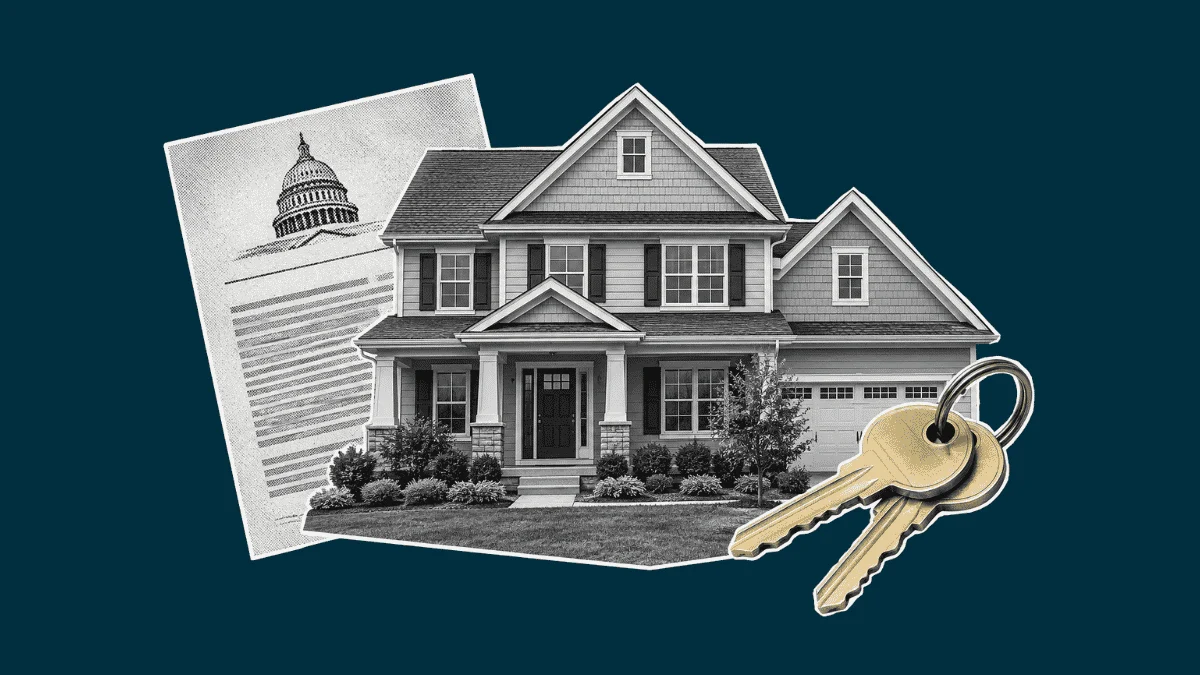
The average rate for a 30-year, fixed-rate mortgage, as reported by Freddie Mac, climbed to 6.55% for the week ending July 16, 2026, marking its highest point since the close of May. This upward trajectory in borrowing costs emerges from a complex interplay of global events and domestic economic data, yet paradoxically, housing market conditions are showing tentative signs of improvement driven by increased supply and stabilized home prices.
Mortgage Rate Movements and Economic Headwinds
The recent uptick in mortgage rates can be largely attributed to mounting geopolitical tensions, particularly in the Middle East. Such global instability often prompts investors to seek safer assets, leading to a "flight to safety" into U.S. Treasury bonds. While this increases demand for Treasuries, it simultaneously pushes their yields higher. Mortgage rates typically track the yield on the 10-year Treasury note, often maintaining a spread of approximately 1.8 percentage points above it. Consequently, as Treasury yields rise, so do the rates offered on home loans.
This upward pressure from international conflict is currently contending with more positive domestic economic news. June’s inflation data, which indicated a lower-than-anticipated increase in consumer prices, would ordinarily exert downward pressure on interest rates. Lower inflation typically signals a reduced need for aggressive monetary tightening by the Federal Reserve, which can translate into more favorable lending conditions. However, the persistent uncertainty surrounding the geopolitical landscape is effectively counteracting this potential relief, leaving mortgage rates in a precarious balance.
For prospective homebuyers and those considering refinancing, this dynamic suggests that rates are likely to hover within their current mid-6% range for the immediate future. The market is caught in a tug-of-war between inflationary concerns (exacerbated by global instability) and signs of cooling domestic price pressures, creating a volatile environment where significant directional shifts are challenging to predict.
A Look at Recent Rate Trends
The 6.55% average for a 30-year fixed-rate mortgage on July 16, 2026, reflects Freddie Mac’s comprehensive weekly analysis, which reviews rates offered by lenders nationwide up to each Thursday. This average rate serves as a benchmark for borrowers with strong credit profiles and a substantial 20% down payment. Individuals with lower credit scores or smaller down payments will generally encounter higher rates, underscoring the personalized nature of mortgage lending.
Looking back, the housing market has experienced considerable rate volatility. Mortgage rates had trended lower for a period after reaching a peak of 7.08% in November of the previous year (2025). While many market analysts and economists anticipate a eventual return to the 5% range, current forecasts suggest that rates will largely remain within the 6% to 7% band for the foreseeable future. This prolonged period of elevated rates contrasts sharply with the historically low rates observed during the pandemic era, which fueled a significant surge in housing demand and price appreciation.
Despite the rise in rates, Freddie Mac’s analysis points to slowly improving homebuying conditions. This improvement is primarily driven by an increased supply of homes on the market and a stabilization of home prices. The higher borrowing costs have naturally cooled buyer demand, allowing inventory levels to gradually recover from their historic lows. This rebalancing of supply and demand, coupled with price stability, offers a more favorable environment for some buyers, even with higher mortgage rates, as it reduces intense bidding wars and allows for more thoughtful decision-making.
Understanding Mortgage Types: Fixed vs. Adjustable
Navigating the mortgage landscape requires a clear understanding of the various loan products available. The two primary categories are fixed-rate mortgages and adjustable-rate mortgages (ARMs), each offering distinct interest rate arrangements.
Fixed-Rate Mortgages: As their name implies, fixed-rate loans come with an interest rate that remains constant throughout the entire loan term. The most common terms are 30 years and 15 years, though some lenders may offer other durations. Generally, a 30-year fixed-rate loan will have a slightly higher interest rate than a 15-year loan, but it provides significantly lower monthly payments due to the extended repayment period. This predictability makes fixed-rate mortgages highly popular, as homeowners can budget with confidence, knowing their principal and interest payments will not change. However, it’s important to remember that other components of the monthly payment, such as homeowners’ insurance and property taxes, can fluctuate over time.
Adjustable-Rate Mortgages (ARMs): ARMs offer an initial fixed-rate period, after which the interest rate becomes variable and adjusts at regular intervals. The length of the initial fixed period and the subsequent adjustment periods are defined in the mortgage terms. For instance, a common ARM is a 5/6 ARM, where the interest rate is fixed for the first five years and then adjusts every six months thereafter. Other options include 7/6 and 10/6 ARMs. ARMs typically offer lower interest rates during their initial fixed-rate phase compared to fixed-rate loans, making them attractive for borrowers who anticipate selling their home or refinancing before the fixed period expires. However, the inherent risk lies in the uncertainty of future rate adjustments, which could lead to significantly higher monthly payments if market rates increase.

Key Financial Terms for Mortgage Borrowers
When comparing mortgage offers, two crucial figures stand out: the interest rate and the Annual Percentage Rate (APR).
- Interest Rate: This is the base cost a lender charges on the principal amount borrowed. It represents the fundamental cost of borrowing money for your home.
- Annual Percentage Rate (APR): The APR provides a more comprehensive measure of the total cost of borrowing. It includes the interest rate plus various fees associated with originating the loan, such as processing fees, underwriting fees, and discount points. Consequently, the APR will always be higher than the interest rate. For example, a $300,000 loan at a 3.1% interest rate with $2,100 in associated fees might have an APR of 3.169%. Comparing APRs across different lenders is essential for understanding the true, all-in cost of a loan.
Factors Influencing Today’s Mortgage Rates
Beyond broad economic trends, several specific factors determine the ultimate cost of a mortgage and your individual rate.
- Loan Term: As a general rule, shorter loan terms (e.g., 15-year fixed) typically come with lower interest rates but higher monthly payments. While the monthly payment is larger, the total interest paid over the life of the loan is significantly reduced. Longer terms (e.g., 30-year fixed) offer lower monthly payments but accumulate more interest over time.
- Loan Type: The type of mortgage selected plays a critical role. Conventional loans are the most common, but government-backed options like FHA, VA, and USDA loans have specific eligibility requirements and often offer more flexible terms or lower down payment options. Jumbo loans, which exceed federal loan limits, typically have lower rates but stricter credit requirements due to the larger loan amount.
- Borrower’s Financial Profile: Your individual creditworthiness is paramount. A higher credit score signals lower risk to lenders, typically resulting in a more favorable interest rate. Lenders also assess your debt-to-income (DTI) ratio, employment history, and down payment amount. A larger down payment (e.g., 20% or more) reduces the loan-to-value (LTV) ratio, signifying less risk for the lender and often securing a better rate.
- Private Mortgage Insurance (PMI): For conventional loans, if your down payment is less than 20% of the home’s purchase price, lenders typically require Private Mortgage Insurance (PMI). PMI premiums, which can range up to 1.5% of the loan amount annually, are often bundled into your monthly mortgage payment. Borrowers can avoid PMI by making a substantial down payment or by building at least 20% equity in their home. FHA loans, however, require a mortgage insurance premium (MIP) for the entire life of the loan in most cases.
- Closing Costs: These are one-time fees paid at the close of the loan, typically ranging from 2% to 5% of the mortgage amount. They include origination fees, appraisal fees, title insurance, legal fees, and other administrative expenses. While often paid upfront, some buyers opt to finance closing costs into the loan, which increases the principal balance and, consequently, the monthly payment and total interest paid.
- Economic Factors: Beyond the immediate geopolitical and inflation news, broader economic indicators heavily influence mortgage rates. The Federal Reserve’s monetary policy, particularly its target for the federal funds rate, indirectly impacts long-term mortgage rates. Strong economic growth, low unemployment, and rising inflation generally lead to higher interest rates, while economic slowdowns or recessionary fears can push rates lower. Global capital flows and investor sentiment towards U.S. debt also play a role.
Impact of Rates on Home Affordability
Mortgage rates are a cornerstone of homeownership affordability, directly influencing the size of monthly payments and the overall cost of a home. Even a fractional change in the interest rate can have a substantial impact over the life of a 30-year loan.
Consider an example: for a $200,000 home loan (after a 20% down payment on a $250,000 home), a 30-year fixed-rate mortgage at 6.55% would result in a significantly different monthly payment and total interest paid compared to a lower rate. Every percentage point, or even half-percentage point, can translate into hundreds of dollars per month and tens of thousands over the loan’s term. Online mortgage calculators and home affordability tools are invaluable resources for prospective buyers to model different rate scenarios and understand their true purchasing power. The Consumer Financial Protection Bureau also offers resources to explore rate ranges offered by lenders across various states.
Strategies for Securing the Best Mortgage Rate
In a market characterized by fluctuating rates, proactive steps can help borrowers secure the most favorable terms.
- Shop Around Aggressively: Freddie Mac emphasizes that comparing offers from multiple lenders is the single most effective way to find the best rate. Data suggests that borrowers who obtain just one additional rate quote can save an average of $600 over the life of the loan, while those who obtain three quotes could save up to $1,200 or more. Explore options from traditional banks, credit unions, and online lenders, which have expanded their market share due to their efficiency in pre-approvals.
- Improve Your Credit Score: A robust credit score is a lender’s primary indicator of your financial reliability. Paying bills on time, reducing outstanding debt, and avoiding new credit applications before applying for a mortgage can significantly boost your score and qualify you for lower rates.
- Increase Your Down Payment: A larger down payment reduces the loan-to-value (LTV) ratio, signaling lower risk to the lender. This often translates into a more attractive interest rate and can help you avoid private mortgage insurance (PMI).
- Consider Discount Points: Borrowers can "buy down" their interest rate by purchasing discount points at closing. Each point typically costs 1% of the loan amount and can reduce the interest rate by approximately 0.25 percentage points. This strategy can be advantageous for borrowers who plan to stay in their home for an extended period, as the upfront cost can be recouped through lower monthly payments over time.
- Understand Loan Types and Lender Specialties: Not all lenders offer every type of mortgage. If you qualify for specific government-backed loans like FHA, VA, or USDA loans, ensure the lenders you approach specialize in these products. Verify a lender’s credentials by requesting their NMLS number and checking their reputation online.
- Secure a Rate Lock: Once you have an accepted offer on a home and are comfortable with a quoted rate, obtaining a mortgage rate lock is crucial. A rate lock guarantees your agreed-upon interest rate for a specified period, typically 30 to 60 days, protecting you from potential market fluctuations before closing. Inquire about "float-down" options, which allow you to benefit if market rates drop during your lock period, often for a small fee.
- Obtain Pre-Approval: A pre-approval letter from a lender not only clarifies your budget but also demonstrates to sellers that you are a serious and qualified buyer, strengthening your offer in a competitive market.
Refinancing Opportunities
Homeowners may consider refinancing their mortgage for several reasons: to lower their interest rate, reduce monthly payments, shorten the loan term, or access their home equity (cash-out refinance). Refinance rates tend to be slightly higher than purchase rates, so a careful cost-benefit analysis is essential. Most experts suggest considering a refinance if your current mortgage rate is at least 0.50 percentage points higher than prevailing rates. However, the decision should also factor in closing costs associated with the new loan and how long it will take to break even on those expenses. Refinancing makes the most sense when it offers a tangible financial benefit aligned with your long-term housing and financial goals.
Outlook for Mortgage Rates
While the immediate future sees mortgage rates caught between conflicting economic and geopolitical forces, the broader consensus among housing economists suggests that rates will likely remain within their current mid-6% range for the time being. However, if inflation continues to moderate consistently and geopolitical tensions ease, there remains an expectation that rates could eventually trend towards the 5% range. For now, borrowers should prepare for continued volatility and focus on strengthening their financial profiles and thoroughly comparing offers to navigate the evolving mortgage market successfully.