Lana Rhoades
The landscape of digital commerce has undergone a radical transformation over the last decade, shifting from a localized endeavor to a borderless marketplace where small and medium-sized businesses (SMBs) can reach customers across the globe with a single click. However, this expansion has brought with it a labyrinth of regulatory hurdles, most notably the increasingly complex requirements of United States sales tax and international Value Added Tax (VAT). In a strategic move to address these challenges, Stripe and its subsidiary TaxJar have announced a further solidification of their unified tax infrastructure, aiming to provide a seamless, end-to-end compliance solution that handles everything from real-time calculations to automated remittance across thousands of jurisdictions.
Since its inception 13 years ago, TaxJar has been positioned as the primary benchmark for SMBs navigating the intricacies of US sales tax. Following its acquisition by the financial infrastructure platform Stripe in 2021, the two entities have spent the last five years merging their engineering capabilities and tax law expertise. The result is a dual-product strategy designed to cater to different business archetypes: TaxJar, the dedicated specialist for multi-channel US sellers, and Stripe Tax, the global engine built for businesses scaling across international borders.
A History of Compliance: The Evolution of TaxJar and the Wayfair Catalyst
To understand the significance of the current Stripe-TaxJar ecosystem, one must look back at the pivotal shifts in American tax law. When TaxJar was founded in 2013, the primary concern for online retailers was "physical nexus"—the requirement to collect sales tax only in states where they maintained a physical presence, such as an office or warehouse. This changed dramatically in June 2018 with the United States Supreme Court decision in South Dakota v. Wayfair, Inc. The ruling overturned the physical presence requirement, allowing states to mandate tax collection based on "economic nexus"—essentially, a business’s volume of sales or number of transactions within a state.
This legal shift created an overnight compliance crisis for SMBs. Suddenly, a small business based in Maine could be legally obligated to collect and remit taxes in California, Texas, and Illinois, provided they met specific revenue thresholds. With over 11,000 different local tax jurisdictions in the US, each with its own rates and filing deadlines, manual compliance became an impossibility. TaxJar rose to prominence during this era by automating the identification of these "nexus" obligations, providing businesses with a clear roadmap of where they owed taxes and how much they needed to collect.
The 2021 acquisition by Stripe marked a new chapter, integrating TaxJar’s deep domain expertise in US filing with Stripe’s massive transaction processing engine. By 2026, this integration has matured into a unified dashboard experience that attempts to remove the "friction of tax" from the growth equation of modern enterprises.
Strategic Product Differentiation: TaxJar vs. Stripe Tax
As of mid-2026, the company has clarified the distinct roles of its two flagship tax products to help businesses select the solution that matches their operational footprint.

TaxJar: The Multi-Channel US Specialist
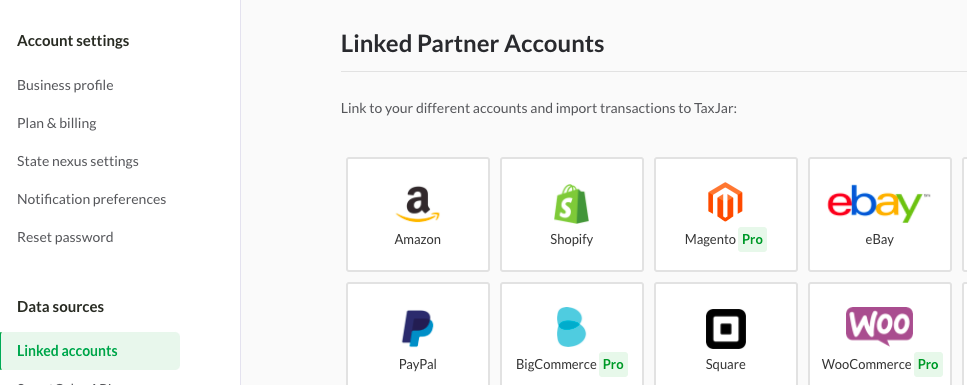
TaxJar remains the preferred choice for businesses that operate primarily within the United States but utilize a diverse array of sales channels. In the current e-commerce environment, many SMBs do not sell exclusively through their own websites; they leverage marketplaces like Amazon, Walmart, and eBay, while also maintaining storefronts on platforms such as Shopify, Magento, and BigCommerce.
TaxJar’s primary value proposition lies in its ability to aggregate data from these disparate sources. It provides a centralized "source of truth" for US sales tax, ensuring that calculations are accurate regardless of where the transaction originated. The platform automates the entire tax lifecycle, including:
- Real-time Calculations: Applying the correct tax rate based on the customer’s precise rooftop address.
- Nexus Monitoring: Alerting businesses the moment they approach or exceed the economic nexus thresholds in any of the 46 US states that collect sales tax.
- AutoFile: A flagship service that automatically submits tax returns and remits payments to state agencies, ensuring that deadlines are never missed.
Recent updates to the TaxJar platform have focused on enhancing the user experience and scaling infrastructure. While the company recently implemented its first price adjustment in over six years, officials indicate that this move was necessary to fuel ongoing research and development. The investment is reportedly being directed toward more robust reporting tools and deeper integrations with emerging e-commerce technologies.
Stripe Tax: The Engine for Global Expansion
In contrast, Stripe Tax is engineered for businesses that view the world as their marketplace. It is built natively into the Stripe financial stack, meaning it requires no separate integration for those already using Stripe for payments, billing, or invoicing. Stripe Tax’s primary strength is its global reach, supporting compliance in over 100 countries, including the management of VAT in Europe and GST in Australia, Canada, and India.
For a SaaS company or a digital goods provider, Stripe Tax offers a "set and forget" model. It monitors international tax thresholds and automatically applies the correct tax treatment to every transaction. Furthermore, it supports platforms and marketplaces that wish to offer tax compliance as a service to their own sub-merchants, a feature that has become increasingly popular in the "creator economy."
The "Last Mile" of Compliance: Integrated US Filing
One of the most significant technical milestones in the Stripe-TaxJar roadmap is the introduction of Stripe Tax filing, powered directly by TaxJar’s infrastructure. This feature bridges the gap between calculation and remittance for Stripe users.
Historically, even if a payment processor calculated the tax, the business owner was still responsible for the "last mile"—logging into state government portals, filling out forms, and sending payments. The new integrated workflow allows Stripe users to manage the entire process within the Stripe Dashboard. When a user enables Stripe Tax, the system can now automatically trigger TaxJar’s filing engine. This creates a closed-loop system where the same entity that processed the payment is also responsible for ensuring the tax reaches the state treasury.
For users on the "Tax Complete" plan, these filing entitlements are bundled, reducing the administrative overhead that typically plagues growing businesses. According to internal data from Stripe, businesses using automated filing services save an average of 40 to 60 hours per year on administrative tax tasks, allowing them to reallocate those resources toward product development and customer acquisition.
Industry Analysis: The Economic Impact of Automated Compliance
Financial analysts view the consolidation of tax services by major fintech players like Stripe as a response to the "complexity tax" that burdens the global economy. A report from the National Federation of Independent Business (NFIB) has previously noted that tax compliance is one of the most significant non-labor costs for small businesses. By automating these processes, Stripe and TaxJar are effectively lowering the barrier to entry for international commerce.
Furthermore, the move puts significant pressure on traditional tax compliance competitors such as Avalara and Vertex. While these legacy players have long dominated the enterprise market, the Stripe-TaxJar ecosystem is winning over the "prosumer" and SMB segments by offering a more modern, API-first approach that prioritizes developer experience and ease of setup.
"The goal is to turn tax from a business blocker into a growth lever," stated a spokesperson for the integrated tax team. "When a business owner no longer fears the regulatory repercussions of selling into a new state or country, they are more likely to pursue aggressive expansion. We are providing the safety net that allows them to scale with confidence."
Looking Ahead: The Future of Regulatory Technology
As the 2020s progress, tax authorities worldwide are becoming more sophisticated, moving toward real-time reporting requirements and digital-first enforcement. In Europe, many countries are implementing "e-invoicing" mandates, while in the US, states are increasingly aggressive in auditing digital transactions.
The partnership between Stripe and TaxJar is positioned to evolve alongside these regulations. Future product roadmaps suggest an increased focus on artificial intelligence to predict tax liability and the expansion of automated filing services into international markets. By leveraging Stripe’s global transaction data, the company is uniquely positioned to provide insights that standalone tax software cannot, such as benchmarking tax burdens against industry peers or identifying tax-saving opportunities through more efficient jurisdictional routing.
In conclusion, the unification of TaxJar’s specialized US expertise with Stripe’s global financial infrastructure represents a significant maturation of the "RegTech" (Regulatory Technology) sector. For the modern business, tax compliance is no longer a localized accounting task but a critical component of global infrastructure. As Stripe and TaxJar continue to refine their integrated offerings, the promise of a truly borderless economy moves closer to reality, where the only limit on a business’s reach is the quality of its product, not the complexity of its tax obligations.