Nila Kartika Wati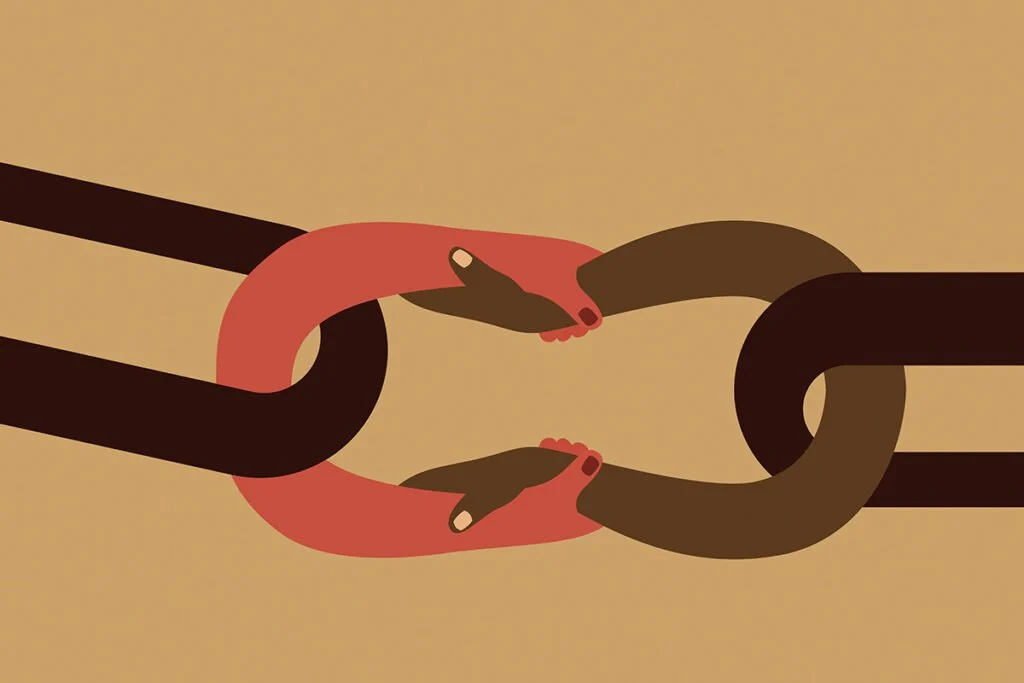
The landscape of modern human rights advocacy is increasingly defined by the recognition that foreign policy and domestic civil liberties are not isolated silos but are instead deeply intertwined components of a singular global system. Azadeh Shahshahani, the legal and advocacy director for Project South and a prominent human rights attorney, argues that the mechanisms of state repression utilized in the Global South—often fueled by US militarism and economic interests—frequently mirror the tactics deployed against marginalized communities within the United States, particularly in the American South. This intersectional perspective suggests that the "war economy" and the infrastructure of surveillance do not stop at international borders; rather, they form a continuous loop of policy and practice that impacts Black, brown, and Muslim communities globally and locally.
Historical Context: The Blueprint of Intervention and Its Human Cost
To understand the current state of US-led interventionism, one must look to the historical precedents set in the late 20th century. Shahshahani’s personal history serves as a poignant entry point into this analysis. Born in Iran just days after the 1979 Revolution, her early life was shaped by the immediate aftermath of geopolitical shifts. The revolution, which initially held the promise of self-determination for the Iranian people, was quickly followed by a period of intense instability exacerbated by foreign interference.
A critical turning point was the Iran-Iraq War (1980–1988), a conflict in which the United States played a controversial role. History records that the US government provided intelligence, economic aid, and military support to the regime of Saddam Hussein. This support included the provision of dual-use technology and agricultural credits that helped sustain the Iraqi war effort even as Hussein’s forces utilized chemical weapons. The human toll of this eight-year conflict was staggering, with estimates suggesting more than one million people lost their lives across both nations. For children of that era, the trauma of aerial bombardments and the constant threat of state violence became a foundational experience—one that Shahshahani notes is being echoed today in contemporary conflicts involving US-backed military operations.
Chronology of Domestic Repression: From COINTELPRO to Post-9/11 Surveillance
The evolution of domestic surveillance in the United States follows a clear historical trajectory, often justified under the guise of national security. Analysts point to the FBI’s Counterintelligence Program (COINTELPRO), which operated between 1956 and 1971, as the foundational model for state monitoring of political activists. COINTELPRO famously targeted civil rights leaders, anti-war protesters, and socialist organizations, using tactics that included infiltration, psychological warfare, and legal harassment.
The 25th anniversary of the September 11 attacks provides a significant milestone for evaluating how these tactics were modernized and expanded. In the wake of 2001, the US government implemented a vast architecture of surveillance that disproportionately targeted Muslim, Arab, and South Asian communities. Programs such as the National Security Entry-Exit Registration System (NSEERS) and the broad authorities granted by the PATRIOT Act created a precedent for the systematic monitoring of specific ethnic and religious groups.
Shahshahani and other legal experts argue that this infrastructure of repression is rarely dismantled once the immediate "crisis" has passed. Instead, it is often repurposed to target other movement-building organizations and immigrant communities, creating a permanent state of heightened policing that undermines the fundamental right to organize and dissent.
Data and Realities of the Immigrant Detention System
A primary site of domestic human rights concern is the sprawling network of Immigration and Customs Enforcement (ICE) detention centers. In the US South, these facilities have become symbols of what advocates describe as "extremist violence" within the administrative state. The Stewart Detention Center in Lumpkin, Georgia—operated by the private prison corporation CoreCivic—stands as one of the most prominent examples of this system.
Data regarding the Stewart Detention Center paints a grim picture of the conditions faced by detainees:
- Death Toll: At least 14 deaths have been recorded at the facility in recent years.
- Suicides: At least four of these deaths were confirmed suicides, often occurring after prolonged periods of solitary confinement.
- Medical Neglect: Advocacy groups have documented systemic failures in providing adequate medical and mental health care, leading to preventable fatalities.
- Recent Incident: In May 2026, the suicide of a 33-year-old Cuban immigrant at the facility reignited calls for federal investigations into the facility’s management.
The rhetoric used to justify these detention centers often parallels the language used in foreign military interventions. By "othering" migrants and depicting them as inherent threats to national security, the state normalizes levels of violence and neglect that would otherwise be seen as unacceptable. This normalization is a key tool of the establishment, allowing for the application of repressive tactics against various groups, from Haitian migrants in Ohio to Central American asylum seekers at the southern border.
The Erosion of Democratic Norms and Global Autocracy
The weakening of democratic institutions within the United States is increasingly viewed through a global lens. Legal scholars point to the Supreme Court’s decisions over the past decade—such as Shelby County v. Holder (2013) and Brnovich v. DNC (2021)—as pivotal moments that have systematically dismantled the protections of the Voting Rights Act.
This erosion of voting rights is not merely a domestic political issue; it reflects a broader global trend of "democratic backsliding." Autocratic leaders in various parts of the world have utilized similar strategies:
- Undermining Checks and Balances: Reducing the power of judicial or legislative bodies that provide oversight.
- Restricting Political Participation: Implementing administrative hurdles that prevent marginalized populations from casting ballots.
- Consolidating Power: Using state resources to suppress opposition movements.
By observing these patterns in the Global South, domestic organizers in the US South are identifying the early warning signs of authoritarianism. The exchange of information between US-based activists and their counterparts in countries like the Philippines has become essential for developing strategies of resistance that are effective against modern state power.
Organizing Strategies: The People’s Tribunal Model
In response to the perceived failures of formal judicial systems to hold state actors accountable, human rights organizations have turned to alternative models of justice. One of the most successful strategies adapted from the Global South is the "People’s Tribunal."
The People’s Tribunal is a community-led evidentiary hearing where victims of human rights violations can testify before a jury of peers and international legal experts. While these tribunals lack the formal enforcement power of state courts, they serve several critical functions:
- Documentation: They create a permanent, public record of state violence and corporate complicity.
- Validation: They provide a platform for marginalized voices that are often ignored by mainstream legal institutions.
- International Pressure: Findings from these tribunals are often used to lobby international bodies like the United Nations or the International Criminal Court (ICC).
A notable success of this model is seen in the Philippines. Following a People’s Tribunal held in Brussels in 2018, the National Union of People’s Lawyers (NUPL) presented evidence of human rights abuses committed under the administration of former President Rodrigo Duterte. This grassroots documentation contributed to the ICC’s decision to open a formal investigation into "crimes against humanity" allegedly committed during Duterte’s "War on Drugs."
Analysis of Implications: Toward a Joint Struggle
The synthesis of these foreign and domestic issues suggests that the future of human rights advocacy lies in "transnational solidarity." The isolation of movements is a primary goal of repressive state forces; therefore, the counter-strategy must be one of radical connectivity.
The "war economy"—characterized by massive military spending and the privatization of security—benefits from a state of perpetual conflict, whether that conflict is an overseas war or a domestic "war on crime" or "war on immigrants." For organizations like Project South, the path forward involves regular exchanges with comrades in the Global South to share strategies for survival and resistance. This includes quarterly webinars, delegations, and joint legal filings that challenge the legality of US interventions and domestic detention practices simultaneously.
The broader implication for US policy is the need for a fundamental shift in how "security" is defined. Advocacy groups argue that true security is not found in the expansion of military bases or the construction of more detention centers, but in the protection of civil liberties, the ensurance of voting rights, and the dismantling of systemic racism. As long as the US government continues to export militarism abroad, the tools of that militarism will inevitably be turned inward, affecting the very fabric of American democracy.
In conclusion, the work of human rights attorneys and grassroots organizers today is focused on breaking the cycle of violence that links the US South to the Global South. By documenting the deaths in ICE prisons, challenging the rollback of voting rights, and standing in solidarity with those facing US-backed repression abroad, these movements are building a unified front against what they describe as a global architecture of state violence. The goal is a world where "free-spirited" aspiration—the meaning of Shahshahani’s own name—is not a casualty of geopolitical maneuvering, but a protected reality for all.