Nila Kartika Wati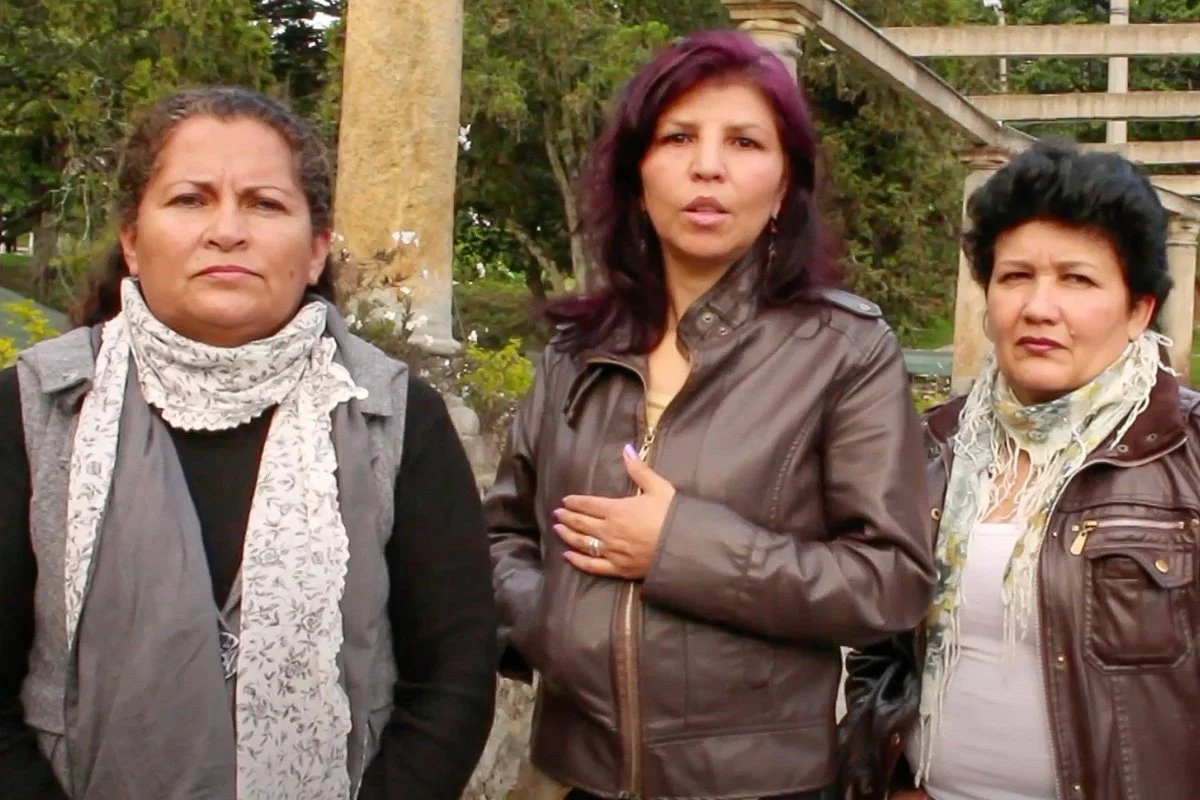
The transformation of maternal identity from a private, domestic role to a formidable force of public political resistance represents one of the most significant sociological shifts in contemporary Latin American history. In Colombia, this metamorphosis was catalyzed by a period of profound state-sponsored violence during the early 21st century, a time when the traditional expectations of motherhood were shattered by the disappearance and extrajudicial execution of thousands of young men. This phenomenon, known as "false positives," forced women from the margins of society—specifically the municipality of Soacha—into the center of a national struggle for truth and justice. By analyzing the transition of these mothers from the silence of their homes to the corridors of the Colombian Congress and the Inter-American Court of Human Rights, a clearer picture emerges of how grief, when politicized, can destabilize dominant state narratives and demand institutional accountability.
Understanding the "False Positives" Phenomenon
The term "false positives" serves as a clinical euphemism for a gruesome state policy involving the systematic murder of civilians by the Colombian National Army. Between 2002 and 2008, during the administration of President Álvaro Uribe Vélez, military units were placed under immense pressure to demonstrate progress in the country’s decades-long internal armed conflict against guerrilla groups like the FARC and the ELN. To fulfill performance quotas and secure incentives—ranging from administrative promotions and medals to extra vacation days—soldiers lured marginalized young men with false promises of employment. Once transported to remote locations, these civilians were murdered, dressed in guerrilla fatigues, and presented as "combat casualties."
While the Colombian National Center for Historical Memory (CNMH) documents the broader toll of the armed conflict since 1944 at over 282,000 lives, the Special Jurisdiction for Peace (JEP) has identified a specific and alarming figure: at least 6,402 individuals were victims of extrajudicial executions between 2002 and 2008. This practice was not the result of a few "rotten apples" within the military but was facilitated by institutional frameworks, such as Ministry of Defense Directive 029 of 2005, which formalized a rewards system for combat kills.
A Chronology of Deception: The Soacha Disappearances
The specific case of the "Madres de Soacha" (Mothers of Soacha) began to unfold in 2008, marking a turning point in public awareness of the military’s crimes. Soacha, a densely populated and impoverished municipality on the outskirts of Bogotá, became a primary hunting ground for recruiters seeking vulnerable targets.
In early 2008, nineteen young men vanished from Soacha over a period of several months. The victims were predominantly from low-income backgrounds, many of them unemployed or working in the informal sector. Their families initially filed missing persons reports, which were largely ignored by local authorities. The breakthrough occurred in September 2008, when the bodies of several of these men were discovered in mass graves in Ocaña, a municipality in the Norte de Santander department, approximately 400 miles away from their homes.
Official military reports claimed these men were guerrillas killed in fierce combat. However, the families immediately recognized the impossibility of these claims. Many of the victims had been seen in Soacha just 24 to 48 hours before their reported deaths in a distant war zone. The logistical impossibility of these "guerrillas" traveling hundreds of miles across rugged terrain and engaging in combat within a single day provided the first cracks in the state’s narrative.
Systemic Failures and the Mechanics of Execution
As the Mothers of Soacha began to organize, they uncovered a macabre pattern of evidence that suggested a high degree of coordination within the military. The physical evidence found on the bodies was often nonsensical:
- Uniform Inconsistencies: Victims were found in brand-new camouflage uniforms that showed no signs of wear, yet they were riddled with bullet holes that did not align with the holes in the clothing.
- Improper Equipment: In several instances, victims were found wearing rubber boots on the wrong feet—a clear sign that they had been dressed post-mortem by soldiers in a hurry.
- The Case of Cognitive Disability: One of the most damning pieces of evidence involved a young man with a severe cognitive disability. Despite having the mental capacity of a child and requiring constant supervision, he was officially reported by the army as a dangerous "guerrilla leader" who had been killed while directing operations.
These inconsistencies revealed that the military was not just committing murder but was engaged in a sophisticated theater of war designed to deceive the public and the international community. The "Democratic Security Policy," which aimed to regain territorial control and combat drug trafficking, had inadvertently created a "body count" culture where the lives of the poor were traded for institutional prestige.
Institutional Denial and the Stigmatization of Victims
The reaction from the highest levels of the Colombian government was one of immediate defensiveness and stigmatization. In October 2008, as the scandal broke, President Álvaro Uribe Vélez made a televised statement that would become a symbol of the state’s cruelty. He suggested that the young men "didn’t go to pick coffee," implying they were involved in criminal activities and that their deaths were justified.
This rhetoric served a dual purpose: it protected the military from scrutiny and it revictimized the grieving families. By casting doubt on the character of the deceased, the state attempted to silence the mothers and prevent their private grief from becoming a public grievance. This institutional reluctance to accept responsibility was mirrored in the judicial system, where cases were initially funneled into military courts rather than civilian ones, ensuring a high degree of impunity for the officers involved.
However, the state’s attempt to marginalize these women had the opposite effect. The "ultimate insult" of being told their sons were criminals acted as a catalyst. The mothers realized that if they remained silent, the official lie would become the historical truth. This realization marked the birth of their political agency.
The Politicization of Grief: From the Domestic to the Public Sphere
The transition of the Mothers of Soacha into political actors represents a subversion of traditional Latin American gender roles. Historically, the "ideal" mother in these societies is confined to the private sphere, responsible for the moral and physical upbringing of children. When the state—the theoretical protector of the family—murders these children, it violates the fundamental social contract.
The "politicization of grief" describes the process by which these women took their mourning out of the home and into the streets. They began to use their bodies and their presence as political tools. By wearing white headscarves (reminiscent of the Mothers of the Plaza de Mayo in Argentina) or carrying large portraits of their sons, they forced the public to look at the faces of those the state had tried to erase.
This activism was not born of a political manifesto but of "affective logic." The search for truth became the only path that made sense in a world turned upside down by the state’s betrayal. As one mother stated, the act of speaking out was the only way to "breathe" in the face of such overwhelming injustice. Their movement successfully moved the discourse from "combat casualties" to "extrajudicial executions," a shift in terminology that had profound legal and international implications.
Broader Implications for Colombian Democracy and Human Rights
The persistence of the Mothers of Soacha eventually forced the hand of the government. In late 2008, a purge of the military took place, resulting in the dismissal of 27 officers, including three generals. This was an unprecedented move in a country where the military had long enjoyed near-total autonomy.
The legacy of this maternal resistance is woven into the current Colombian peace process. The creation of the Special Jurisdiction for Peace (JEP) as part of the 2016 Peace Accord with the FARC was, in many ways, a response to the demands for truth championed by these mothers. The JEP’s focus on uncovering the full scale of the "false positives" scandal is a direct result of the decade-long struggle of the Madres de Soacha.
Furthermore, their activism has challenged the "reductionist and colonizing narrative" of Colombia as a country merely defined by drug cartels and guerrilla warfare. It has highlighted a more complex reality: a stable electoral democracy where state institutions were nonetheless capable of systematic human rights violations. By organizing from the margins, these women have shown that collective action can destabilize dominant power structures and redefine the meaning of justice.
The metamorphosis of the Mothers of Soacha serves as a global lesson in human rights. It demonstrates that identity is not static; even those relegated to the most private and marginalized spheres of society can, through the necessity of survival and the demand for truth, become the most effective challengers of state authoritarianism. Their journey from the domestic to the political proves that when a mother’s private grief is poured into the public square, it becomes a fury capable of demanding a different future for an entire nation.