Nila Kartika Wati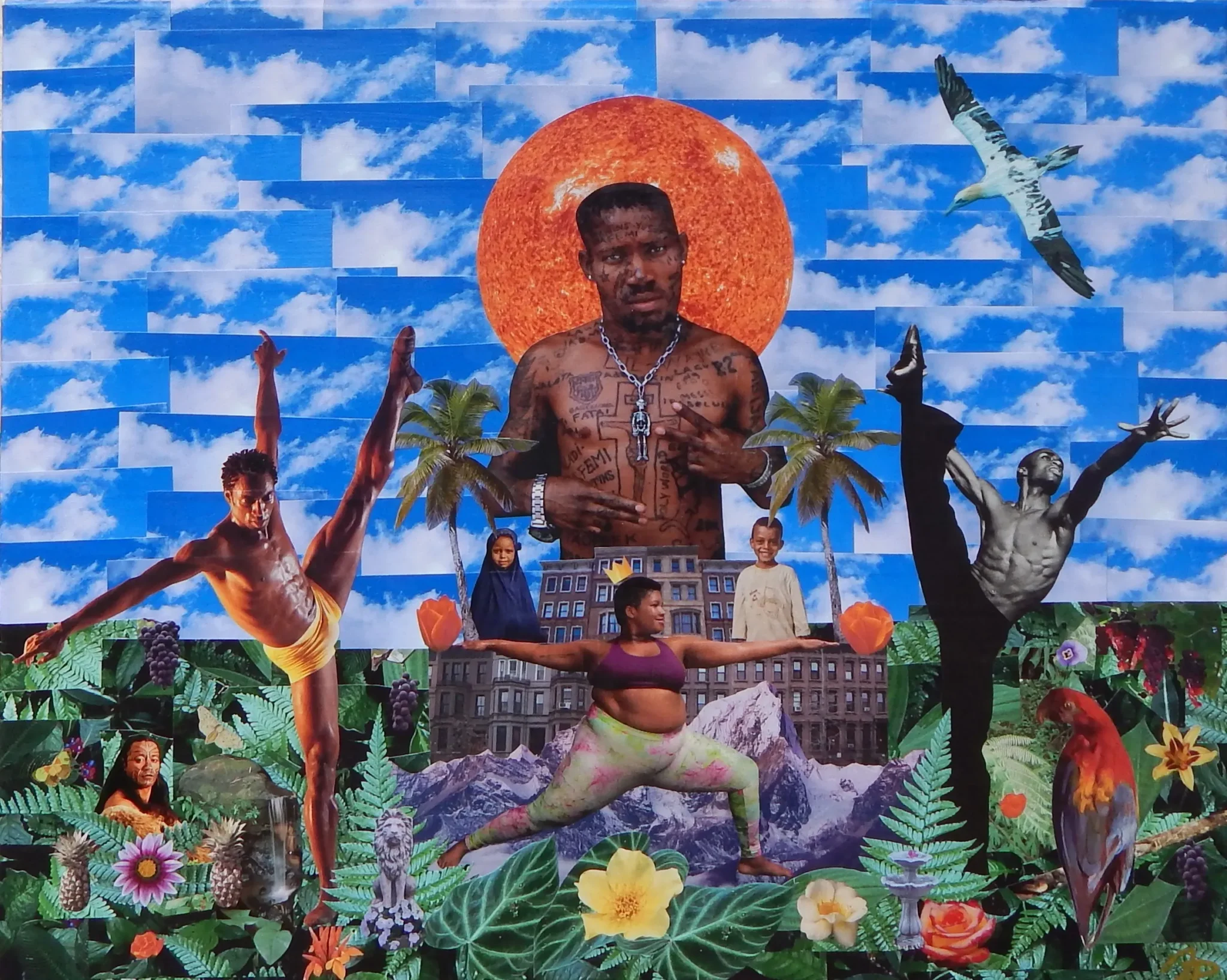
The unveiling of the visual narrative titled "Of Liberty" by acclaimed Georgia-based artist Nancey B. Price marks a significant moment in the contemporary discourse surrounding American iconography and the representation of marginalized communities. Through a meticulous process of analog collage, Price has challenged the traditional permanence associated with national monuments, specifically the Statue of Liberty, by refocusing the narrative on the lived experiences, cultural evolution, and physical resilience of Black Americans. This artistic intervention arrives at a time when the role of public art and the preservation of multiracial democratic ideals are under intense scrutiny across the United States.
By intentionally omitting the word "statue" from the title, Price signals a departure from the concept of liberty as a static, copper-clad figure. Instead, her work posits that true liberty resides in the fluid, evolving bodies and cultures of those who have historically been excluded from the American promise. The artwork, which features a central figure of a tattooed Black man framed by a sun halo and a thriving community engaged in movement and communal activities, serves as a counter-narrative to the "palatable" immigration stories often prioritized in national history. Price highlights that while many arrived at the nation’s shores seeking refuge, her ancestors arrived in chains, facing systemic hostility that persisted long after the formal abolition of slavery.
The Conceptual Framework of Of Liberty
The conceptual foundation of "Of Liberty" rests on the distinction between a monument and a movement. In her artist statement, Price emphasizes that Black culture and ways of being are not static; they are characterized by growth, evolution, and the ability to move freely across generations. This perspective challenges the 19th-century European ideals embodied in the original Statue of Liberty, which was a gift from France to the United States. While the original statue was intended by its designer, Édouard de Laboulaye, to celebrate the end of the American Civil War and the abolition of slavery, its popular meaning shifted toward immigration following the addition of Emma Lazarus’s poem, "The New Colossus," in 1903.
Price’s work reclaims the original, often obscured, connection between liberty and the Black experience. By centering the Black body—specifically bodies that have been devalued or overlooked—Price forces a confrontation with the reality of American history. The resilience cultivated by Black communities despite centuries of systemic oppression is described by Price as "glorious," a sentiment reflected in the vibrant, layered visuals of her collage. The use of analog collage—a method involving the physical cutting and layering of found materials—serves as a metaphor for the construction of memory and the piecing together of histories that have been fragmented by time and prejudice.
A Chronology of Artistic Development and Influence
Nancey B. Price’s rise as a prominent voice in American art is rooted in the landscapes and traditions of rural Georgia. Her practice is deeply informed by Southern Gothic traditions, oral histories, and the complex relationship between Black communities and the land they inhabit. Over the past decade, Price has transitioned from a local storyteller to a nationally recognized artist whose work bridges the gap between everyday life and the extraordinary.
- Early Foundations: Raised in the South, Price’s early exposure to folklore and the oral traditions of her elders laid the groundwork for her narrative-driven art. She began exploring analog collage as a way to visualize the layers of memory inherent in Black Southern life.
- Professional Recognition: Her unique aesthetic caught the attention of major publications, leading to features in O, The Oprah Magazine, Garden & Gun Magazine, and Southern Cultures. These platforms allowed her to bring the nuances of rural Black life to a broader audience.
- Notable Commissions: Price’s ability to translate complex social themes into visual media resulted in high-profile commissions. This includes the cover art for The Unboxing of a Black Girl by Angela Shanté, a work nominated for the National Book Award, and the album artwork for Harlem Renaissance by the Cincinnati Symphony Orchestra.
- Expansion into Media: Beyond visual art, Price hosts the podcast Dreaming in Color with Nancey B. Price, where she explores the intersections of creativity, identity, and the Black experience, further solidifying her role as a multifaceted storyteller.
Data and Context: The State of Black Representation in Public Art
The release of "Of Liberty" occurs against a backdrop of significant disparity in the representation of Black history within the American commemorative landscape. According to a 2021 study by the Monument Lab, a nonprofit public art and history studio, the vast majority of public monuments in the United States honor white men, many of whom were slaveholders or proponents of systemic inequality.
Of the top 50 individuals represented in American monuments, only a small fraction are people of color. Furthermore, monuments dedicated to Black history often focus on the trauma of slavery or the struggles of the Civil Rights Movement, rather than the "glorious" resilience and cultural evolution highlighted in Price’s work. This data underscores the necessity of Price’s intervention. By reimagining a symbol as potent as the Statue of Liberty, she contributes to a broader movement aimed at diversifying the national narrative and acknowledging the contributions of Black Americans to the concept of freedom.

The nonprofit sector has played a crucial role in supporting these artistic efforts. Organizations like the Nonprofit Quarterly (NPQ) provide platforms for artists like Price to share their insights, particularly as journalism and multiracial democracy face increasing political and social pressure. The support of these organizations ensures that voices traditionally excluded from mainstream media can reach the public, providing essential perspectives on the health and future of American society.
Supporting Voices and Institutional Impact
The impact of Price’s work extends into the educational and community spheres. As a facilitator, she has led workshops at institutions such as the DEEP Center, the Savannah Black Art Expo, the University of South Carolina, and the University of Rhode Island. These workshops utilize collage as a tool for personal storytelling and reflection, empowering participants to explore their own histories and identities.
Reactions from the academic and artistic communities suggest that Price’s approach is part of a larger "archival turn" in Black contemporary art. Scholars argue that by using found materials and historical references, artists like Price are performing a type of "speculative recovery"—filling in the gaps left by traditional archives that failed to record the full humanity of Black subjects.
"Of Liberty" has been praised by curators for its ability to balance the weight of history with a sense of forward-looking optimism. The inclusion of yoga and dance in the collage suggests a focus on wellness and joy as acts of resistance. This aligns with contemporary social movements that emphasize "Black Joy" as a necessary component of liberation, moving beyond narratives defined solely by suffering.
Broader Implications for National Identity
The reimagining of national symbols has profound implications for how a society understands its past and envisions its future. When artists like Nancey B. Price deconstruct and rebuild icons of liberty, they invite the public to question who is included in the "we" of "We the People."
The omission of the word "statue" is perhaps the most radical aspect of the work. It suggests that the American project is unfinished and that liberty is a living, breathing process rather than a cold monument. In a journalistic context, this reflects a growing trend where the focus shifts from institutional stability to the rights and evolutions of the individual and the community.
As the United States continues to grapple with its history of racial injustice, the role of the artist becomes increasingly vital. Works like "Of Liberty" serve as both a mirror and a map—mirroring the complexities of the current social climate while mapping out new ways to perceive freedom. The resilience cultivated by Price’s ancestors, which she describes as the catalyst for the culture seen today, remains a foundational element of the American story, even if it has not always been given its due in the halls of power or the plazas of public squares.
Through the support of nonprofit entities and the engagement of the public, the narratives presented by Price contribute to the protection of a multiracial democracy. By ensuring that these stories are told, paid for, and preserved, the artistic community provides a necessary defense against the erosion of diverse voices in the public sphere. "Of Liberty" stands as a testament to the fact that while statues may be fixed in stone or metal, the spirit of liberty is defined by the people who continue to move, grow, and redefine it for themselves.