Julia Chirkova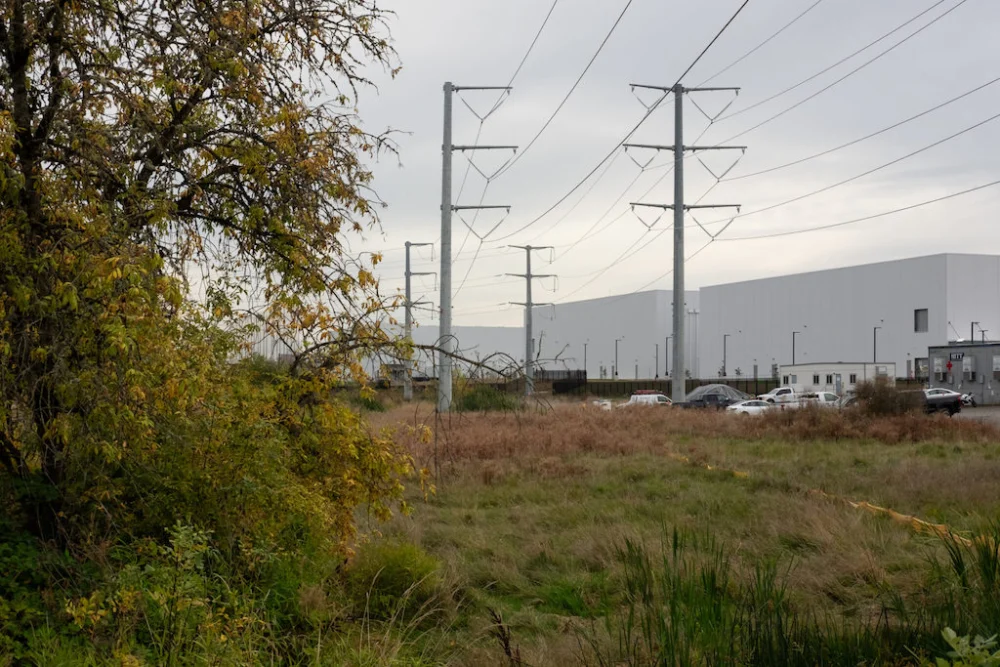
After years of actively wooing data center development with lucrative incentives, a growing number of states are now re-evaluating their policies, with some legislators pushing to limit or even repeal the tax breaks that paved the way for these massive digital infrastructure projects. This shift in legislative sentiment reflects mounting public concern over rising electricity bills, environmental impacts, and the perceived imbalance between the benefits offered to tech companies and the financial burden on state and local taxpayers.
The national conversation surrounding data centers has also seen a notable evolution. In a significant pivot from his previous stance, former President Donald Trump, who in July of the previous year issued an executive order and other federal initiatives aimed at accelerating data center infrastructure development, recently voiced concerns about escalating electricity costs. In a post on Truth Social, he stated that technology companies building data centers must “pay their own way,” signaling a potential shift in federal policy or rhetoric towards greater corporate responsibility for infrastructure and energy demands.
This evolving landscape has spurred legislative action across several states. Lawmakers are introducing or passing measures designed to rein in data center expansion by repealing tax exemptions, imposing stricter conditions on existing incentives, or even implementing moratoriums on new projects. Virginia, a state with a substantial concentration of data centers, is currently contemplating the termination of a significant tax break for these facilities, which the Virginia Department of Accounts reports costs the state approximately $1.6 billion annually.
"Who is actually benefiting from these massive data centers that, in many cases, are the size of one or two shopping malls combined?" questioned Michigan Democratic State Representative Erin Byrnes, who has introduced a proposal to repeal the state’s data center tax exemptions. "They have a large footprint in terms of land and energy usage. And by and large, it’s not going to be the average resident who lives near a data center who’s going to benefit.” This sentiment encapsulates a growing unease among some policymakers who question whether the promised economic advantages of data centers adequately compensate for their significant resource consumption and potential local impacts.
The surge in data center construction over recent years has been driven by an insatiable demand for digital processing power, fueled in large part by the rapid proliferation of artificial intelligence systems. These facilities, housing thousands of servers, are the digital backbone of the internet, responsible for storing, processing, and transmitting the vast quantities of data required for online services to function. However, as more data centers come online, local communities are increasingly voicing their discontent over the escalating electricity prices and environmental concerns, including significant water and energy consumption, associated with these operations.
This public outcry is prompting state legislators to reconsider their approach. By limiting incentives or imposing moratoriums, lawmakers are seeking to gain more time to thoroughly assess whether the massive facilities are a worthwhile trade-off for millions in foregone annual tax revenue.
Some experts also suggest that the economic benefits touted by data center developers and tech companies may have been overstated. While the promise of new jobs is appealing, local leaders are increasingly grappling with other concerns, such as the diversion of construction resources from other essential projects and the amplified energy costs driven by AI demands. Michael Hicks, an economics professor at Ball State University in Indiana, notes, “A lot of households—and the people that are elected by households—and local governments are becoming more unnerved by the public pushback to data centers.”
The data center industry, however, expresses concern that these policy shifts could hinder the rapid growth of a vital sector. Dan Diorio, vice president of state policy for the Data Center Coalition, a lobbying group, argues that most states and localities already impose specific requirements on developers utilizing incentives. He emphasizes that lawmakers must consider the long-term business implications of altering incentive programs, which can disrupt years of planned construction and investment. “I think data centers are very much the backbone of the 21st-century economy,” Diorio stated. “We’re generating economic activity in states, contributing to state-level GDP, contributing significantly to labor income and state and local tax revenue, and creating significant amounts of jobs. I mean, we’re just jumping into something preemptively here.”
A History of Incentives: States Compete for Digital Infrastructure
The competition among states to attract data center investment has historically been fierce, leading to a widespread adoption of various incentive programs. According to the National Conference of State Legislatures (NCSL), at least 37 states currently offer incentives specifically tailored for data centers. These incentives commonly include sales tax exemptions on equipment and property tax abatements. Sales tax exemptions, the most prevalent form of incentive, allow data center developers to acquire essential hardware such as servers and networking equipment at a significantly reduced cost, thereby lowering initial capital expenditure.
“I think these are one of many factors that the data centers are looking at, along with the cost of electricity, the cost of construction, land and things like that,” explained Nicholas Miller, a policy associate at NCSL. “These incentives are one way that states are trying to pitch themselves as competitive to this industry.”
Maryland, for instance, implemented a program in 2020 that exempts data centers from state sales and use taxes, provided they create at least five jobs within three years of application and invest a minimum of $2 million in data center personal property. While the program initially cost the state $22 million over its first four years, Democratic State Delegate Julie Palakovich Carr highlighted that the costs escalated dramatically, reaching $11 million in 2024 alone.
Concerned by this escalating financial commitment and the impact on residents’ electricity bills, Palakovich Carr introduced legislation in the current session that would repeal Maryland’s sales and use tax exemptions for personal property used in data centers. The bill, currently under consideration in the House, also aims to prevent local governments from reducing or eliminating assessments on data center personal property, a provision that has drawn opposition from the Maryland Association of Counties.
“Unfortunately, that’s the turn we’re seeing across many other states,” Palakovich Carr remarked, referring to the growing cost of these tax breaks. “The price starts out maybe in line with what we think it’s going to be. But over time it just costs more and more.”
Similar legislative efforts are underway in other states. In Arizona and Georgia, bills have been filed to repeal or halt state incentives for data centers. “When we look at potential subsidies for businesses, I’m really looking at it from a frame of incentivizing new behavior rather than just giving away money for things that the companies were going to already do anyways,” Palakovich Carr emphasized. “I think it’s really important that once these things get put in place, we look at the data and see what’s happening on the ground.”
In Michigan, the landscape has also seen a dramatic shift. In 2024, the state enacted sales and use tax exemptions for certain data centers, with the provisions extending through at least 2050. However, public sentiment has soured considerably since then. Representative Erin Byrnes, who voted against the 2024 measure, noted that with developers eyeing more than a dozen potential data center sites across the state, communities have begun organizing to oppose new projects due to environmental concerns and rising energy costs. This growing public outcry prompted Byrnes to co-sponsor a bipartisan package of three bills aimed at repealing the 2024 law. “We’re taking a stand with this legislation to say that we don’t believe data centers should be offered these exemptions,” she stated. “I believe it aligns with public sentiment.”
Beyond repealing existing incentives, some states are exploring temporary pauses on development. Legislators in New York, Oklahoma, and Vermont have introduced bills proposing moratoriums on all new data center projects, coupled with requirements for comprehensive impact studies.
Georgia State Representative Ruwa Romman introduced a measure that would impose a moratorium on new data center projects until March 2027. This proposal aims to provide the legislature with sufficient time to study the multifaceted impacts of data centers on the state’s natural resources, environment, and other critical areas. “We have such a beautiful state and it would be a damn shame to completely and utterly wreck it and its landscape for short-term gain,” Romman asserted. “These data centers aren’t bringing jobs. They’re saying they’re bringing the revenue, but there’s a ton of fine print on the revenue that’s coming in. So, I’ve been urging my colleagues from every side of the political spectrum to just take a beat.”
Oklahoma’s legislative approach has also evolved. In 2021, the state legislature approved a measure introduced by then-Republican House Speaker Kyle Hilbert, which excluded new data centers from qualifying for an exemption program that offers certain manufacturers a five-year property tax holiday. However, data centers that had already qualified for the program in the preceding five years could continue to receive exemptions. This year, in response to an increasing number of project proposals, Hilbert introduced legislation to ensure no data centers could “slip through the cracks.” He commented, “These aren’t the days of being able to build a data center, cut deals with NDAs, then start turning dirt before the constituents even know what’s happened. Those days are over, and data centers need to be proactive in their messaging and talking to people about their concerns.”
Quantifying Costs and Benefits: A Growing Discrepancy
The financial implications of data center incentives are becoming increasingly stark. Virginia, which hosts the largest number of data centers in the United States, forfeited an estimated $1.6 billion in sales and use tax revenues from these facilities in the last fiscal year, according to state data. This represents a staggering 118% increase from the previous year, as reported by Good Jobs First, a watchdog organization that scrutinizes economic development incentives. A separate report from Good Jobs First indicates that Georgia is projected to lose at least $2.5 billion in sales tax revenue due to data center exemptions this year, a figure 664% higher than the state’s initial estimate.
In Virginia, lawmakers are currently considering legislation that would make data centers eligible for sales and use tax exemptions only if they meet stringent energy efficiency standards and reduce their reliance on diesel backup generators. This measure has already passed the House and is now proceeding through the Senate.
The state’s budget discussions have also highlighted the contentious nature of these incentives. Former Virginia Governor Glenn Youngkin, a Republican, had proposed extending the data center tax incentive from 2035 to 2050 as part of his state budget proposal. However, the Virginia Senate’s budget bill seeks to terminate the incentive altogether on January 1, 2027. The stance of current state leadership, including Democratic Governor Abigail Spanberger, on this matter remains unclear.
While states can readily quantify the tax revenue they forgo, determining the precise economic contribution of data centers to local communities and the broader state economy is considerably more complex. Nicholas Miller of NCSL acknowledges this challenge, stating, “This is the big question. With all economic development projects, it’s generally a lot easier to measure the cost of the incentive directly versus the benefits.” He points out that while Virginia does generate significant revenue from property taxes on each facility, and local businesses benefit from construction activities, the overall economic calculus remains a subject of debate.
The Data Center Coalition’s Dan Diorio warns that the fluctuating incentive landscape could introduce instability into the data center industry. Given that data center projects represent substantial, multi-year capital investments, abrupt changes in state policies could significantly disrupt development plans. “When states look at these policies or consider abrupt ends to programs, that creates significant market uncertainty,” Diorio stated. “It will have a significant long-term impact on the viability of that market for data center development. Industries are very responsive to market signals, and any kind of uncertainty will bring up a red flag because you’re looking to invest for the long haul.”
This ongoing re-evaluation of state-level incentives reflects a broader societal debate about the true cost and benefit of rapid technological expansion and the infrastructure required to support it. As the demand for digital services continues to grow, states are increasingly tasked with balancing economic development goals with the imperative to ensure fiscal responsibility and environmental sustainability.
Photo caption: Data centers operate in Hillsboro, Oregon on Oct. 11, 2024. Some states are scaling back their data center incentives as the facilities contribute to increasing electric bills and raise environmental concerns. (Rian Dundon/Oregon Capital Chronicle/TNS)
Stateline is part of States Newsroom, a national nonprofit news organization focused on state policy. ©2026 States Newsroom. Visit at stateline.org. Distributed by Tribune Content Agency LLC.