Candice Horbacz
The United States’ aggressive tariff strategy, initiated in 2025, has faced a significant legal setback with a landmark Supreme Court decision, recalibrating the nation’s trade landscape and underscoring the complex interplay between executive authority, economic policy, and judicial oversight. While certain tariffs remain in effect, notably those imposed under Section 232 of the Trade Expansion Act of 1962, the highest court’s ruling against the broad application of the International Emergency Economic Powers Act (IEEPA) tariffs has profound implications for import costs, federal revenues, and the broader U.S. economy. The legal challenge, culminating in the Supreme Court’s 6-3 decision in Learning Resources Inc. v. Trump and V.O.S. Selections v. United States, asserted that IEEPA does not grant the President unlimited authority to impose tariffs, leading to a substantial recalculation of economic projections and a mandate for significant refunds of collected duties.
The Genesis of a Tariff Strategy: A Look Back at 2025
The tariff initiatives began in earnest on January 20, 2025, when then-President Trump signed an executive order directing cabinet secretaries to conduct comprehensive reviews of existing trade practices. These reports, due by April 1, 2025, were intended to identify potential unfair trade practices and recommend remedial actions, including the imposition of new tariffs. The administration’s stated objectives for these tariffs were multifaceted: to protect domestic industries, reduce the persistent U.S. trade deficit, and compel trading partners to negotiate more favorable terms. This period marked a distinct shift towards a more protectionist trade stance, utilizing various statutory authorities to implement new duties on a wide range of imported goods.
The tariffs were primarily implemented under two distinct authorities: Section 232 of the Trade Expansion Act of 1962, which permits tariffs on imports deemed a threat to national security, and the International Emergency Economic Powers Act (IEEPA), typically reserved for foreign policy emergencies. A temporary 10 percent Section 122 tariff was also introduced. While Section 232 tariffs, such as those on steel, aluminum, autos, and auto parts, were rooted in national security justifications, the IEEPA tariffs encompassed a broader range of goods from numerous countries, often justified by claims of unfair trade practices or national emergencies. These measures were met with immediate domestic and international scrutiny, leading to retaliatory tariffs from affected countries and a series of legal challenges within the United States.
A Tumultuous Timeline: From Executive Orders to Supreme Court Mandate
The journey of these tariffs through the U.S. legal system was swift and decisive. Following the executive order in January 2025, the administration proceeded to impose tariffs under both Section 232 and IEEPA. The IEEPA tariffs, in particular, became the subject of intense legal challenge due to concerns about the scope of presidential authority.
On May 28, 2025, a panel of judges at the U.S. International Court of Trade delivered a unanimous verdict, ruling that the IEEPA tariffs were illegal. This initial judicial setback for the administration’s trade policy was subsequently upheld by the U.S. Court of Appeals. The cases, Learning Resources Inc. v. Trump and V.O.S. Selections v. United States, eventually reached the Supreme Court, which rendered its final judgment on February 20, 2026. In a 6-3 decision, the Supreme Court unequivocally ruled that "IEEPA does not authorize the President to impose tariffs." This landmark decision effectively invalidated all tariffs imposed under IEEPA, necessitating a re-evaluation of economic forecasts and triggering a complex process of refunds for previously collected duties. This ruling, however, did not affect tariffs imposed under Section 232, which continue to be in force, or the temporary Section 122 tariffs.
Recalibrating US Import Costs: The Shifting Landscape of Tariff Rates
The Supreme Court’s decision has dramatically altered the landscape of U.S. tariff rates. Prior to the ruling, U.S. imports faced a weighted-average applied tariff rate estimated at 13.8 percent. This figure was a substantial increase from the 1.5 percent weighted average applied tariff observed in 2022, according to the World Bank. The IEEPA tariffs were a major contributor to this elevation, significantly raising the cost of a vast array of goods.
With the IEEPA tariffs now ruled illegal, the weighted-average applied tariff rate is estimated to fall to 10.2 percent while the 10 percent Section 122 tariffs remain in effect. If the Section 122 tariffs were instead levied at 15 percent, the rate would be 12.1 percent. Following the expiration of the temporary Section 122 tariffs, this rate is projected to further decrease to 6.7 percent. These figures represent the statutory tax rate imposed on different products from various countries, distinct from averages derived from actual tariff revenues as a share of total goods imports.
The "effective" tariff rate, measured by tariff revenues as a share of total goods imports, also saw significant fluctuations. In 2025, before the Supreme Court ruling, the actual average effective tariff rate had soared from 2.4 percent in 2024 to 7.7 percent, marking the highest level since 1947. This sharp increase reflected the full impact of the IEEPA tariffs. Looking ahead, if the 10 percent Section 122 tariffs conclude after their 150-day period, the average effective tariff rate for 2026 is estimated to be 5.6 percent, which would still represent the highest level since 1972. Should the Section 122 tariffs be set at 15 percent, this rate would rise to 6.0 percent, the highest since 1971. These historical comparisons underscore the profound and lasting impact of the tariff regime, even in its truncated form.
Fiscal Consequences: Billions in Revenue, Billions in Refunds
The imposition of tariffs had a significant, albeit temporary, impact on federal revenue collections. In calendar year 2025, customs duties generated an estimated $264 billion for the federal government, a substantial increase from $79 billion collected in 2024. This surge included revenues from both the newly imposed tariffs and pre-existing duties, such as those initiated during President Trump’s first term. However, the Supreme Court’s invalidation of the IEEPA tariffs means that a significant portion of these revenues, specifically those linked to IEEPA, must be refunded to importers. This will undoubtedly complicate federal budgeting and potentially necessitate adjustments in fiscal planning.
It is crucial to note that the total net revenue raised by tariffs is generally less than the direct collections. This is because tariffs mechanically reduce the bases of other taxes, such as income and payroll taxes, due to their negative effects on economic activity and incomes. The government was estimated to have netted $36 billion from the new Section 232 tariffs in 2025, highlighting the difference between gross collections and net fiscal impact.
Looking at the longer-term revenue projections, the Section 232 tariffs are conventionally estimated to increase U.S. federal tax revenue by $635 billion from 2026 through 2035 if imposed on a permanent basis. The temporary 10 percent Section 122 tariffs are expected to raise $25 billion in 2026 (or $33 billion if levied at 15 percent), serving to replace approximately 52 percent (or nearly 70 percent, respectively) of the revenue that the IEEPA tariffs would have generated over 150 days. The IEEPA tariffs, had they remained in effect, were projected to generate an additional $1.4 trillion in revenue over the next decade, with lower collections in 2025 due to their partial-year implementation.
However, a dynamic analysis, which accounts for the negative economic effects of tariffs on U.S. economic output and, consequently, on incomes and tax revenues, paints a different picture. On a dynamic basis, the Section 232 and temporary Section 122 tariffs are projected to raise $515 billion from 2026 through 2035, which is about $145 billion less than the conventional estimate. The IEEPA tariffs, under this dynamic model, would have raised an additional $1.1 trillion over the next decade, approximately $264 billion less than their conventional projection. Furthermore, the impact of retaliatory tariffs, which were imposed by other countries in response to U.S. duties, would further reduce 10-year revenue by an estimated $136 billion.
In 2026, the combined Trump tariffs, including the now-illegal IEEPA tariffs, would have constituted a federal tax revenue increase of $171.1 billion, or 0.54 percent of GDP, making it the largest tax hike since 1993. With the IEEPA tariffs struck down, the Section 232 and 10 percent Section 122 tariffs are now estimated to increase federal tax revenues by $79 billion in 2026, or 0.25 percent of GDP. This revised figure still ranks as the 20th largest tax increase since 1940. If the Section 122 tariffs were at 15 percent, the combined new tariffs would raise $87 billion in 2026, or 0.28 percent of GDP, ranking as the 18th largest tax increase since 1940. These figures illustrate the significant fiscal impact of these trade policies, even after the legal challenges.
Macroeconomic Headwinds: GDP, Jobs, and the Elusive Trade Balance
The economic repercussions of the tariffs extend beyond mere revenue collection, influencing the nation’s gross domestic product (GDP) and employment levels. The Section 232 tariffs alone are estimated to reduce long-run U.S. GDP by 0.2 percent, even before accounting for foreign retaliation. The temporary nature of the Section 122 tariffs means they are expected to have no long-run economic impact. Had the IEEPA tariffs, including the scheduled "reciprocal" tariffs, remained in force, they would have further reduced long-run GDP by an additional 0.3 percent.
These aggregate GDP figures translate into significant job losses. The Section 232 tariffs are projected to result in the loss of approximately 154,000 full-time equivalent jobs in the long run. Breaking this down, Section 232 tariffs on steel and aluminum are linked to a loss of 27,000 jobs, while those on autos and auto parts are projected to cost 98,000 jobs. Tariffs on furniture, kitchen cabinets and vanities, and lumber account for 3,000 lost jobs, and heavy trucks and parts tariffs contribute to another 23,000 job losses. Had the IEEPA tariffs been upheld, they would have been responsible for a far more substantial reduction of 282,000 jobs.
A critical factor in the overall economic impact is foreign retaliation. As of September 1, 2025, threatened and imposed retaliatory tariffs affected $223 billion of U.S. exports, based on 2024 import values. If fully imposed, these retaliatory measures are estimated to reduce long-run U.S. GDP by an additional 0.2 percent and lead to the loss of 141,000 full-time equivalent jobs. This highlights the interconnected nature of global trade and the adverse feedback loops that protectionist policies can generate.
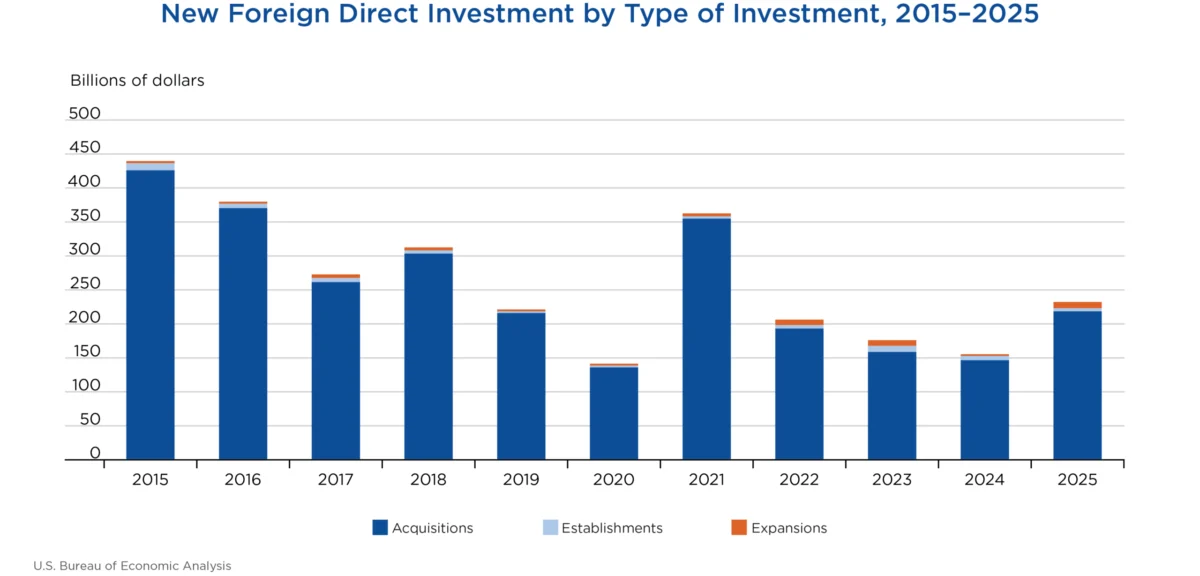
One of President Trump’s primary stated goals for imposing tariffs was to shrink the U.S. trade deficit. However, established economic theory suggests that a country’s balance of trade is fundamentally driven by broader macroeconomic balances between domestic saving and investment, rather than trade policy alone. In the United States, domestic investment consistently outpaces domestic saving, necessitating a capital inflow from the rest of the world to bridge this gap. This capital inflow represents net lending to the U.S. from other countries, financing both business investment and the government’s budget deficit. Because tariffs do not directly alter the fundamental balance between domestic saving and investment, they cannot permanently change the trade balance.
The U.S. has consistently run a trade deficit every year since 1975, the last time it experienced a trade surplus. This enduring deficit, often referred to as net imports, is not inherently an "imminent economic problem." It can, in fact, reflect the strength of the U.S. economy in attracting foreign investment and serving as a stable haven for international capital. When net imports finance the capital stock, it can enable the U.S. to achieve higher levels of productivity and economic growth than would otherwise be possible. In 2025, the trade deficit saw a modest reduction of just $2.1 billion compared to 2024. This minor change was primarily attributed to an increase in the trade surplus of services, while the goods deficit actually expanded by $25.5 billion year over year, further illustrating the limited efficacy of tariffs in fundamentally altering the trade balance.
The Burden on Households: Distributional Impacts of Tariff Policy
Beyond macroeconomic aggregates, tariffs also impose a tangible burden on American households, effectively functioning as a regressive tax. In 2026, the tariffs are projected to reduce after-tax incomes for all income groups, though the top 1 percent of earners would see a comparatively smaller reduction. Prior to the Supreme Court ruling, the tariffs, if fully implemented, would have amounted to an average tax increase of $1,000 per U.S. household in 2025 and an estimated $1,300 in 2026.
With the IEEPA tariffs now ruled illegal, the average tax increase for U.S. households is significantly smaller, projected at $400 in 2026, stemming solely from the Section 232 tariffs. The inclusion of the 10 percent Section 122 tariffs would increase this average tax burden to $600 per household. It is critical to recognize that these averages do not fully capture the additional, often hidden, costs borne by U.S. households, such as higher prices for imported goods, increased costs for domestically produced goods that rely on imported components, and a reduction in consumer choice due to restricted market access. These indirect costs further diminish household purchasing power and overall welfare.
Legal Precedent and the Future of Presidential Trade Authority
The Supreme Court’s decision in Learning Resources Inc. v. Trump and V.O.S. Selections v. United States sets a crucial legal precedent regarding the limits of presidential power in trade policy. By ruling that IEEPA does not authorize the President to impose tariffs, the Court has clarified that this emergency powers act, primarily designed for financial sanctions and asset freezes in response to national emergencies, cannot be broadly invoked for tariff imposition. This decision restricts a significant avenue through which future administrations might seek to unilaterally implement wide-ranging trade barriers without specific congressional authorization.
The ruling draws a clear distinction between IEEPA and other statutory authorities like Section 232. While Section 232 tariffs, justified by national security concerns, have been upheld by courts, the IEEPA ruling underscores that not all perceived emergencies grant the executive branch carte blanche to levy import duties. This judicial check on executive power could compel future administrations to seek more explicit congressional approval or rely on narrower statutory frameworks for implementing trade protection measures, fostering a more balanced approach to trade policy formulation.
Industry and Expert Reactions: Navigating Uncertainty
The Supreme Court’s decision was met with a mix of reactions from various stakeholders. Importers and retailers, who had borne the brunt of the IEEPA tariffs, likely welcomed the ruling with a sense of relief, anticipating refunds and a reduction in their cost of doing business. Trade associations and advocacy groups, many of whom had opposed the broad tariff strategy, lauded the decision as a victory for rule of law and stable international trade relations. Economists, who largely cautioned against the negative impacts of tariffs on economic growth and consumer welfare, viewed the ruling as a validation of their analyses regarding the detrimental effects of protectionism.
However, the continued existence of Section 232 tariffs, particularly on goods like steel, aluminum, and autos, means that uncertainty persists for many industries. Businesses that rely on these imported inputs still face higher costs, impacting their competitiveness and potentially leading to ongoing price increases for consumers. The broader implications for global supply chains, which had already adapted to the tariff regime, will now require another round of adjustments. The ruling also ignites fresh debates about the appropriate balance of power between the executive and legislative branches in trade policy, and the extent to which national security justifications can be invoked for economic measures.
Conclusion: A Complex Legacy and Enduring Questions
The tariff policies initiated in 2025 and their subsequent legal challenges have left a complex and indelible mark on U.S. trade policy and its economic landscape. While the initial imposition of tariffs under IEEPA generated significant federal revenue, this came at a measurable cost to U.S. GDP, jobs, and household incomes. The Supreme Court’s decisive ruling against the IEEPA tariffs has led to a recalibration of these economic impacts, necessitating substantial refunds and shifting the focus to the enduring effects of Section 232 tariffs.
The saga underscores several key lessons: the profound economic consequences of protectionist trade policies, the intricate relationship between trade policy and macroeconomic fundamentals like saving and investment, and the crucial role of the judiciary in defining the boundaries of executive power. As the U.S. navigates this altered trade environment, businesses and policymakers alike will need to adapt to a landscape where unilateral tariff imposition is more constrained, and where the economic costs of trade barriers remain a central consideration in shaping the nation’s engagement with the global economy. The debate over the efficacy and fairness of tariffs as a tool for economic leverage and national security will undoubtedly continue, but the recent legal developments have certainly provided a clearer framework for future discussions and actions.