Candice Horbacz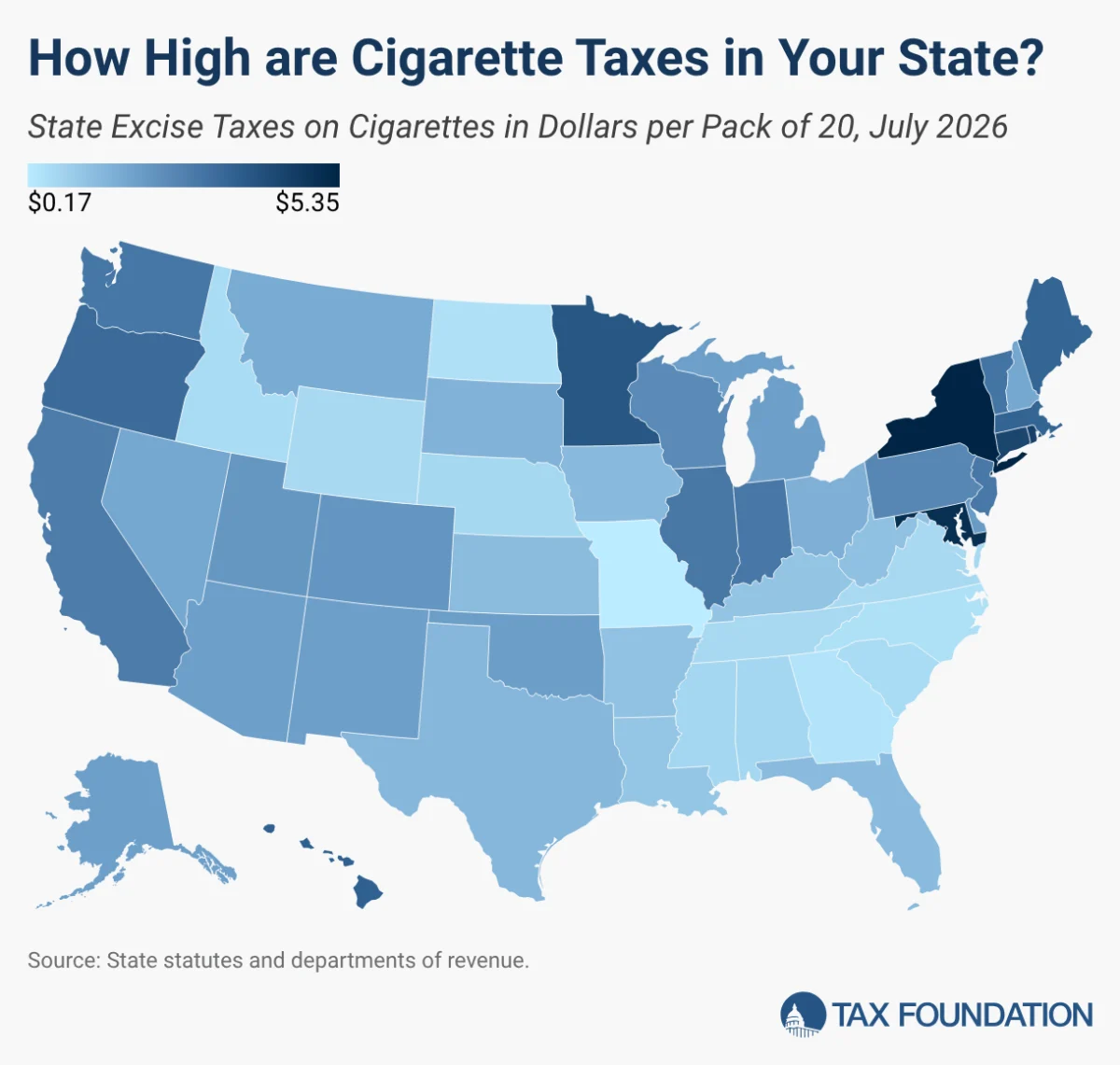
Cigarettes are consistently among the most heavily taxed consumer products within the United States, a reality that often remains opaque to the average smoker who may not fully grasp the significant portion of their purchase price dedicated to various government levies. This intricate system of taxation is not merely a mechanism for revenue generation but also serves as a multifaceted policy tool, aiming to address public health concerns, mitigate the societal costs of smoking, and influence consumer behavior. Every state, along with the federal government, imposes excise taxes on cigarettes, reflecting a widespread consensus on the need to regulate and disincentivize tobacco consumption.
A Patchwork of State Excise Taxes: Highs and Lows
The financial burden on smokers varies dramatically depending on their geographical location, illustrating a highly disparate tax environment across the nation. As of July 2026, New York levies the highest state excise tax on cigarettes, standing at a substantial $5.35 per pack of 20. This makes New York a clear outlier, setting a precedent for aggressive taxation. Close behind is the District of Columbia, where smokers face a $5.07 per pack tax. Maryland follows with a $5.00 per pack charge, while Rhode Island and Connecticut impose taxes of $4.50 and $4.35 per pack, respectively, rounding out the top five highest-tax jurisdictions. These states predominantly represent regions with historically strong public health advocacy and significant urban populations, often associated with higher costs of living and a greater emphasis on public health initiatives.
Conversely, the southern and midwestern states generally impose significantly lower tax burdens. Missouri stands out with the lowest state tax rate at a mere $0.17 per pack of 20 cigarettes. This stark contrast highlights a philosophical divide in how states approach tobacco taxation. Following Missouri, Georgia taxes cigarettes at $0.37 per pack, North Dakota at $0.44, and North Carolina at $0.45 per pack. These lower rates are often attributed to a combination of factors, including historical agricultural ties to tobacco, a different approach to state revenue generation, and potentially less aggressive public health campaigns targeting tobacco through taxation.
The National Overview: State-by-State Breakdown
The comprehensive data for state excise taxes on cigarettes in dollars per pack of 20, as of July 2026, provides a detailed picture of this varied landscape:
| State | Cigarette Tax Rate per Pack of 20 | Rank |
|---|---|---|
| Alabama | $0.68 | 40 |
| Alaska | $2.00 | 22 |
| Arizona | $2.00 | 22 |
| Arkansas | $1.15 | 36 |
| California | $2.87 | 15 |
| Colorado | $2.24 | 18 |
| Connecticut | $4.35 | 4 |
| Delaware | $2.10 | 20 |
| Florida | $1.34 | 33 |
| Georgia | $0.37 | 49 |
| Hawaii | $3.60 | 6 |
| Idaho | $0.57 | 45 |
| Illinois | $2.98 | 14 |
| Indiana | $3.00 | 13 |
| Iowa | $1.36 | 32 |
| Kansas | $1.29 | 34 |
| Kentucky | $1.10 | 37 |
| Louisiana | $1.08 | 38 |
| Maine | $3.50 | 8 |
| Maryland | $5.00 | 2 |
| Massachusetts | $3.51 | 7 |
| Michigan | $2.00 | 22 |
| Minnesota | $3.88 | 5 |
| Mississippi | $0.68 | 39 |
| Missouri | $0.17 | 50 |
| Montana | $1.70 | 28 |
| Nebraska | $0.64 | 41 |
| Nevada | $1.80 | 26 |
| New Hampshire | $1.78 | 27 |
| New Jersey | $3.00 | 12 |
| New Mexico | $2.00 | 22 |
| New York | $5.35 | 1 |
| North Carolina | $0.45 | 47 |
| North Dakota | $0.44 | 48 |
| Ohio | $1.60 | 29 |
| Oklahoma | $2.03 | 21 |
| Oregon | $3.33 | 9 |
| Pennsylvania | $2.60 | 16 |
| Rhode Island | $4.50 | 3 |
| South Carolina | $0.57 | 45 |
| South Dakota | $1.53 | 30 |
| Tennessee | $0.62 | 42 |
| Texas | $1.41 | 31 |
| Utah | $2.20 | 19 |
| Vermont | $3.08 | 10 |
| Virginia | $0.60 | 43 |
| Washington | $3.03 | 11 |
| West Virginia | $1.20 | 35 |
| Wisconsin | $2.52 | 17 |
| Wyoming | $0.60 | 43 |
| DC | $5.07 | 2 |
Source: State statutes and departments of revenue.
The Federal Layer: An Additional Burden
Beyond state-specific taxes, every pack of 20 cigarettes sold in the United States incurs an additional federal excise tax of $1.01. This federal levy further contributes to the overall cost, bringing the total tax burden per pack significantly higher than any single state tax suggests. For instance, a smoker in New York effectively pays $6.36 in combined state and federal taxes per pack, while a smoker in Missouri pays $1.18. This federal component ensures a baseline level of taxation nationwide, regardless of state policy.
Rationale Behind the Taxation: Public Health, Revenue, and Sin
The rationale behind such heavy taxation on cigarettes is multifaceted and has evolved over decades. Primarily, these taxes are framed as a public health intervention. Policymakers aim to discourage smoking, particularly among younger populations, by making cigarettes less affordable. The hope is that higher prices will lead to reduced consumption, thereby lowering rates of smoking-related diseases and improving overall public health outcomes. This aligns with statements from organizations like the American Lung Association, which consistently advocate for higher tobacco taxes as a proven method to reduce smoking and save lives.
Secondly, cigarette taxes are often categorized as "sin taxes" or "excise taxes" levied on behaviors or products deemed socially undesirable. This philosophical underpinning suggests that individuals engaging in such activities should bear a greater financial responsibility, either as a corrective measure for the negative externalities they impose on society (e.g., healthcare costs associated with smoking, the impact of secondhand smoke) or simply as a punitive measure. These externalities represent significant costs to healthcare systems and public services, which advocates argue are partially offset by tax revenues.
Lastly, and perhaps most pragmatically, these taxes serve as a source of revenue for state and federal governments. In many instances, the funds generated are earmarked for specific programs, such as tobacco cessation initiatives, healthcare services, or educational campaigns. However, a significant portion often flows into general funds, supporting a wide array of government services.
Fiscal Volatility and Declining Revenues: A Policy Dilemma
Despite the allure of significant revenue, excise taxes on cigarettes present inherent fiscal challenges for states. Revenues generated from these taxes tend to be more volatile and less predictable than those from broader-based taxes, such as income or sales taxes. This volatility is primarily driven by the declining rates of smoking in the United States. For decades, smoking prevalence has been on a downward trend, a monumental success story for public health. However, this success directly translates into fewer packs of cigarettes being purchased, and consequently, less tax revenue being collected.
This creates a peculiar dilemma for state budgets. While public health officials celebrate the reduction in smoking, state treasurers grapple with shrinking revenue streams that many states have become fiscally reliant upon. To counteract these declining revenues, many states have resorted to increasing cigarette tax rates. While such increases can provide a short-term boost in revenue, they often accelerate the long-term decline by further discouraging smoking or pushing consumers towards lower-tax jurisdictions and illicit markets. This "chasing revenue" strategy can become a self-defeating cycle, leading to ever-decreasing real revenues, especially when accounting for inflation and the erosion of currency value over time.
"Policymakers often find themselves in a bind," noted a tax policy analyst for a national think tank, speaking on background. "They want to promote public health, which means fewer people smoking, but their budgets are structured to depend on that very consumption. It’s a fundamental conflict that needs a more sustainable long-term solution than just hiking rates."
The Regressive Nature of Cigarette Taxes: An Equity Concern
Beyond fiscal volatility, a significant critique of cigarette taxes centers on their highly regressive nature. Consumption taxes, including excise taxes, are generally regressive because lower-income individuals tend to spend a larger proportion of their disposable income on consumer goods, while higher-income individuals save or invest a greater share. Cigarette taxes exacerbate this regressivity to an extreme degree. Studies consistently show that individuals with lower incomes are disproportionately affected by these taxes, bearing a much heavier burden relative to their earnings.
Data from 2023 illustrates this disparity starkly. The top 10 percent of income earners, who paid an estimated 70 percent of federal income taxes, contributed only 18.9 percent of federal tobacco taxes, compared to 32.2 percent of federal alcohol taxes. This highlights that the burden of tobacco taxes falls much more heavily on lower and middle-income groups.
At the state level, this regressivity is even more pronounced. New York, with its highest tax rate, also exhibits the most regressive cigarette tax structure: the effective tax rate on the lowest income quintile is an astonishing 22.2 times higher than on the highest income quintile. While Utah boasts the least regressive cigarette tax among states, its effective tax rate on the lowest income quintile is still 11.2 times higher than on the highest income quintile. This profound disparity raises serious questions about economic equity and the impact of such policies on vulnerable populations.
International Comparison and Market Dynamics: Smuggling and Illicit Trade
The United States’ approach to cigarette taxation also stands out in an international context. For instance, the European Union’s minimum cigarette excise tax of $2.11 per pack of 20, if applied to US states, would rank as the 19th highest rate. However, New York’s $5.35 per pack would be the 7th highest among EU countries, underscoring the aggressive stance of some US states. This international comparison highlights that while some US states have adopted very high rates, the overall system is highly fragmented.
These significant differentials in tax rates across state borders create powerful economic incentives for smuggling and cross-border trade. When a short drive across a state line can result in substantial savings—for example, $4.40 per pack when traveling from Maryland to Virginia—many smokers are economically motivated to purchase cigarettes in lower-tax jurisdictions. This phenomenon is not insignificant; more than 1.5 billion packs of cigarettes are estimated to be smuggled annually within the United States.
The illicit market thrives on these tax differentials, circumventing both taxes and regulations. Black markets benefit immensely when policymakers enact prohibitive policies, such as flavor bans, which grant illicit actors a monopoly on certain products. Similarly, burdensome tax policies give illicit products a competitive advantage over legal ones, undermining the revenues of legitimate businesses and state coffers, and complicating public health efforts. Law enforcement agencies, like the Bureau of Alcohol, Tobacco, Firearms and Explosives (ATF), consistently work to combat illicit tobacco trade, but the economic incentives remain a formidable challenge.
The Retail Price Component and Future Outlook
As of 2025, excise taxes accounted for approximately 31.1 percent of the final retail price of cigarettes on average, according to data from Orzechowski and Walker. This percentage varied widely, from a low of 14.7 percent in Missouri to a high of 44.8 percent in Maryland, not including additional sales taxes, business taxes, or local taxes. This illustrates the substantial portion of the consumer’s payment that goes directly to government coffers, underscoring the financial weight of these taxes.
In conclusion, while cigarette taxes have proven effective in reducing smoking rates—a clear public health victory—their inherent fiscal volatility and profound regressivity make them a problematic source for funding general government services. Policymakers face an ongoing challenge to balance public health objectives with fiscal responsibility and economic equity. Many experts suggest that excise taxes should ideally be reserved for funding related programs, such as tobacco cessation and healthcare, while broader-based taxes are better suited for generating reliable and principled revenues for general government spending. The debate over how to best tax tobacco, and what role it should play in the broader tax system, will undoubtedly continue to evolve as smoking rates decline further and states seek more stable and equitable funding mechanisms.