Lana Rhoades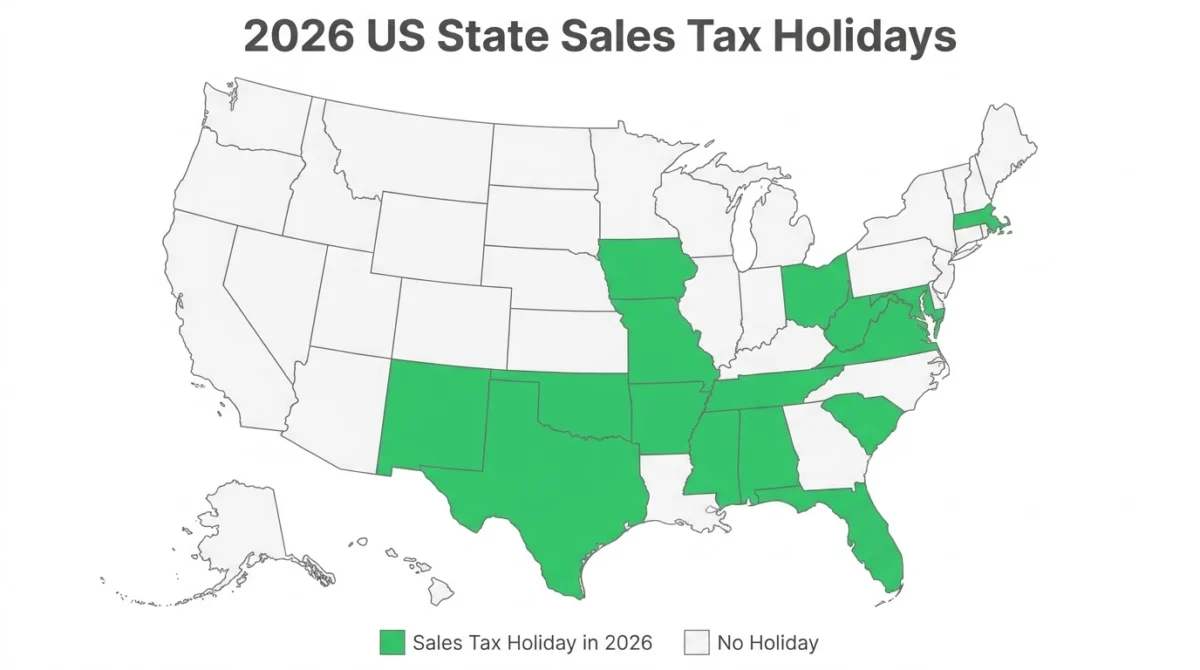
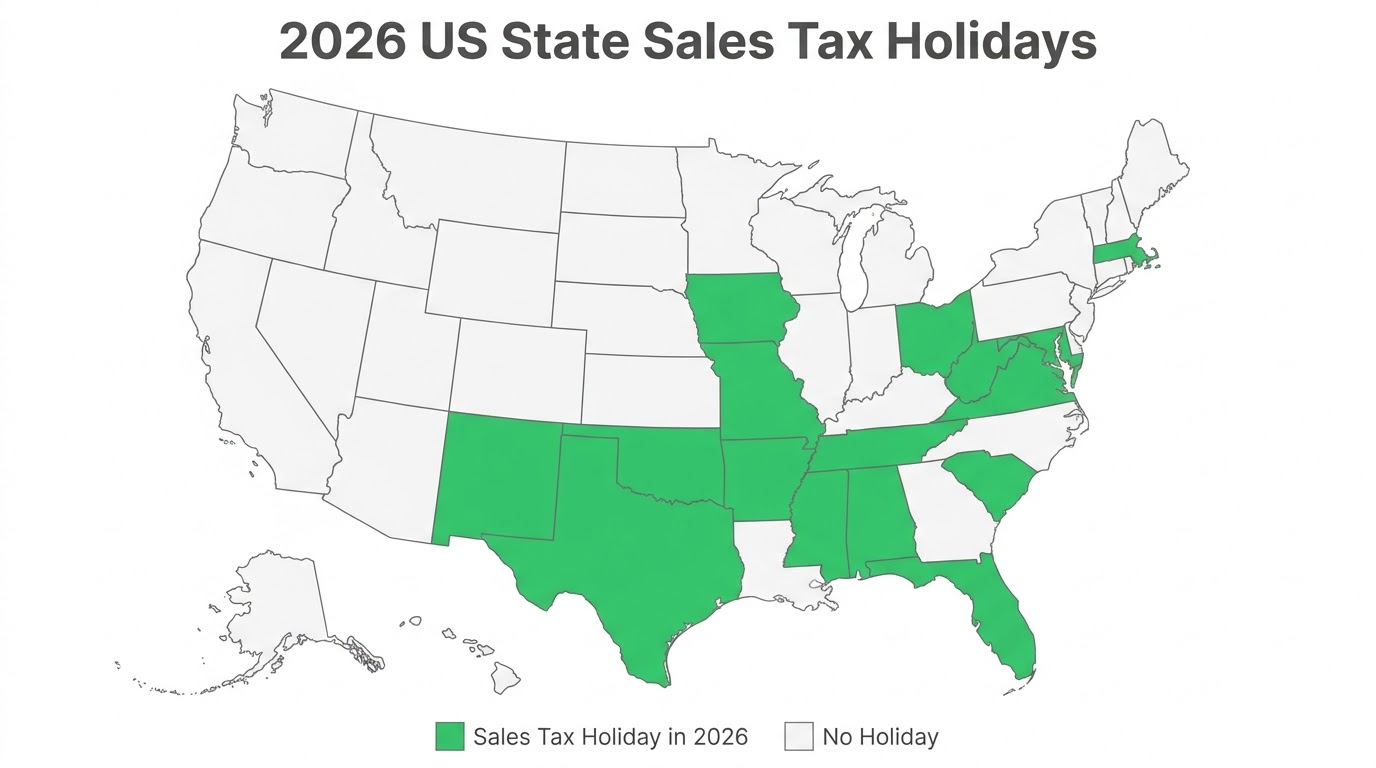
Sales tax holidays have become a staple of the American retail calendar, offering a temporary reprieve from state and local taxes on specific categories of goods ranging from school supplies to emergency preparedness equipment. For the 2026 fiscal year, over 20 U.S. states and territories have scheduled these "holidays," creating a complex patchwork of dates, exemptions, and price thresholds that businesses must navigate to remain compliant. While these events are politically popular and often viewed as a boon for consumer purchasing power, they present significant operational hurdles for retailers, particularly those operating in the e-commerce space with multi-state tax nexus.
The primary objective of a sales tax holiday is twofold: to provide financial relief to households during high-spending periods—such as the "Back-to-School" season—and to stimulate local retail activity. However, the administrative burden of these events often falls on the business owner. Unlike permanent tax exemptions, these holidays are fleeting and frequently subject to annual legislative approval, meaning dates and qualifying items can change with little notice. For 2026, the schedule begins as early as February with energy-efficiency and weather-preparedness events, peaking in late July and August with a concentrated wave of education-focused exemptions.
The Economic Context of Sales Tax Holidays
Economists remain divided on the long-term efficacy of sales tax holidays. Proponents argue that the holidays encourage consumers to make large purchases they might otherwise delay, providing a concentrated boost to the retail sector. Retail associations often report significant increases in foot traffic and online cart conversions during these windows. Conversely, critics, including organizations like the Tax Foundation, often point out that these holidays do not necessarily increase total consumer spending but rather shift the timing of purchases.
From a state revenue perspective, these holidays represent a calculated loss of tax receipts. For example, a typical "Back-to-School" weekend in a mid-sized state can result in millions of dollars in waived revenue. To mitigate these losses, many states implement strict price caps. In 2026, many states have set a $100 limit on individual items of clothing to ensure the tax relief targets middle- and lower-income families rather than luxury purchases.
Chronology of the 2026 Sales Tax Calendar
The 2026 cycle is characterized by three distinct phases: Spring Preparedness, the Summer Educational Peak, and Autumn Specialty Holidays.
Phase I: Spring Preparedness and Energy Efficiency
The year begins with a focus on infrastructure and safety. Maryland kicks off the season from February 14–16 with its "Shop Maryland Energy" weekend, focusing on Energy Star-certified appliances. Alabama follows closely from February 21–23 with its Severe Weather Preparedness holiday, an event designed to encourage citizens to stock up on generators, batteries, and first-aid kits before the peak of the storm season.
In April and May, the focus shifts toward sustainability and emergency readiness. Missouri’s "Show Me Green" holiday (April 19–25) and Texas’s triple-header of Emergency Preparation (April 25–27), Energy Star, and WaterSense holidays (May 23–25) highlight a growing trend of using tax policy to promote environmental and safety goals. Puerto Rico also joins this phase with a Hurricane Preparedness holiday from May 22–25, a critical window for the island’s residents.
Phase II: The Back-to-School Surge
The most intensive period for retailers occurs between July and August. Mississippi initiates this wave on July 10–12, focusing on clothing and footwear under $100. This is followed by a flurry of activity in Alabama, Florida, Tennessee, and West Virginia.
The first weekend of August (August 7–9, 2026) represents the "Super Bowl" of sales tax compliance. During this 72-hour window, at least seven states—including Missouri, Ohio, Oklahoma, South Carolina, and Texas—simultaneously waive taxes on clothing, school supplies, and, in some cases, high-value electronics. Florida’s event is particularly notable for its duration, running for a full month from July 20 to August 20, providing a sustained challenge for automated tax systems.
Phase III: Autumn and Specialty Holidays
As the school year begins, the focus turns to outdoor activities and constitutional rights. Mississippi (August 28–30) and Louisiana (September 4–6) host "Second Amendment" weekends, where firearms, ammunition, and hunting supplies are exempt from tax. Florida rounds out the year with a massive four-month "Hunting, Fishing, and Camping" holiday starting September 1, reflecting the state’s emphasis on tourism and outdoor recreation.
State-Specific Compliance Nuances
The complexity of 2026 compliance is best illustrated by the granular differences between state laws.
Alabama’s Local Opt-in Complexity: Unlike many states where the holiday is mandatory statewide, Alabama allows cities and counties to "opt-in" or "opt-out" of the holiday. This means a retailer might be required to waive the 4% state tax but still collect a 2% or 3% local tax depending on the specific jurisdiction of the customer. For e-commerce sellers, this requires destination-based tax software capable of pinpointing the exact tax rules for thousands of different zip codes.
Massachusetts’ Broad Exemption: Massachusetts takes a unique approach with its August 8–9 holiday. Rather than limiting exemptions to specific categories like "pencils" or "shirts," the state waives tax on almost all retail items for personal use, provided the item costs $2,500 or less. This makes it one of the most lucrative weekends for high-end electronics and furniture retailers, but also one of the most difficult to manage regarding "bundled" transactions.
Texas and the Definition of "Backpacks": Texas law during its August 7–9 holiday specifically includes backpacks under $100 as exempt, but excludes "luggage, briefcases, or athletic bags." Distinguishing between a student’s backpack and a hiking pack or a laptop bag requires precise product categorization (SKU mapping) to avoid audit risks.
Operational Risks and the Necessity of Automation
For modern businesses, the risks of mismanaging a sales tax holiday are twofold: consumer dissatisfaction and financial liability. If a retailer fails to apply an exemption, customers may abandon their carts or demand refunds, damaging the brand’s reputation. Conversely, if a retailer fails to collect tax on an item that did not qualify—such as an item exceeding a price cap—the business is still liable for that tax during a state audit.
Tax professionals emphasize that "manual" updates are no longer feasible in a multi-channel environment. "The hidden chaos of these holidays lies in the definitions," notes Logan from Stripe Tax. "A state might exempt ‘clothing,’ but then exclude ‘belt buckles’ or ‘protective gloves.’ Without a robust API that updates these rules in real-time, a business is essentially guessing."
Furthermore, shipping and handling charges add another layer of difficulty. In some states, if the shipping charge pushes the total cost of an item over the $100 threshold, the entire item becomes taxable. In others, the shipping is treated as a separate, non-taxable service.
Stakeholder Reactions and Policy Outlook
Retailers generally welcome these holidays as a means to clear inventory and attract new customers. The National Retail Federation (NRF) has historically noted that these holidays are among the busiest days of the year, rivaling Black Friday in certain categories. Small business owners, however, often express frustration over the "administrative tax" of setting up their systems for a 48-hour event.
State revenue departments view these holidays as a double-edged sword. While they fulfill a political promise of tax relief, they create significant work for auditors who must ensure that retailers aren’t using the holiday as a cover to under-report total sales. As e-commerce continues to dominate, many states are looking toward "Wayfair" legislation and marketplace facilitator laws to ensure that even out-of-state sellers are strictly adhering to these temporary windows.
Conclusion: Strategic Preparation for 2026
As 2026 approaches, businesses are advised to take a proactive stance toward tax compliance. This involves auditing current product taxability codes (PTCs) to ensure they align with state-specific definitions of "school supplies," "energy-efficient," and "emergency prep."
The 2026 sales tax holiday schedule serves as a reminder of the volatility of the American tax landscape. For the consumer, it is a weekend of savings; for the retailer, it is a test of technological infrastructure and regulatory agility. By leveraging automation and staying informed on legislative updates, businesses can turn these "compliance traps" into opportunities for growth and customer loyalty in an increasingly competitive market.