Julia Chirkova
The Illinois CPA Society (ICPAS) has announced the launch of a significant new research initiative, the "Manager Experience Survey," aimed at delving into the often-overlooked challenges and support needs of people managers within the accounting and finance profession. This survey represents a crucial expansion of ICPAS’s ongoing efforts to understand and bolster the accounting talent pipeline, moving beyond the widely discussed issues of entry-level staff shortages and declining graduation rates to focus on the vital layer of management responsible for nurturing and retaining emerging talent.
The initiative comes at a time when the accounting industry faces persistent recruitment and retention challenges. While previous studies have extensively documented the scarcity of entry-level professionals and the contributing factors such as graduation trends, the ICPAS recognizes a critical knowledge gap regarding the experiences of those directly responsible for onboarding, mentoring, and retaining these junior staff members. This new research seeks to illuminate the daily realities, operational hurdles, and developmental requirements of individuals in people management roles within accounting and finance, acknowledging the dynamic and evolving nature of today’s workplace.
Understanding the Core of the Problem: A Shift in Focus

For years, the accounting profession has grappled with a perceived decline in the number of qualified individuals entering the field, often attributing this to factors like the rigor of the CPA exam, the demanding nature of public accounting, and a general perception of the profession as less appealing compared to other industries. However, the ICPAS’s research has consistently pointed to retention as a significant component of the talent crisis. Losing junior staff before they gain significant experience or achieve their CPA license represents a substantial loss of investment for firms and a continuous drain on the profession’s human capital.
The ICPAS’s previous research has laid a strong foundation by identifying the symptoms of the talent shortage. Now, with the Manager Experience Survey, the organization aims to pinpoint a root cause: the effectiveness and support structures surrounding the managers who are on the front lines of talent development. These managers are tasked with guiding new accountants through complex technical work, fostering professional growth, navigating firm culture, and, crucially, ensuring these budding professionals feel valued and see a long-term future within the profession. Their experiences, challenges, and perceived needs are therefore paramount to developing sustainable solutions.
The Survey: A Call to Action for Accounting Leaders
The "Manager Experience Survey" is specifically designed for accounting and finance professionals who have been in a people management role for five years or less. This includes both individuals currently managing teams and those who have transitioned out of a people management role within this timeframe. The inclusion of former managers is strategic, as it allows ICPAS to gather insights into why individuals may choose to step away from management, providing a more comprehensive understanding of the long-term viability of these roles.
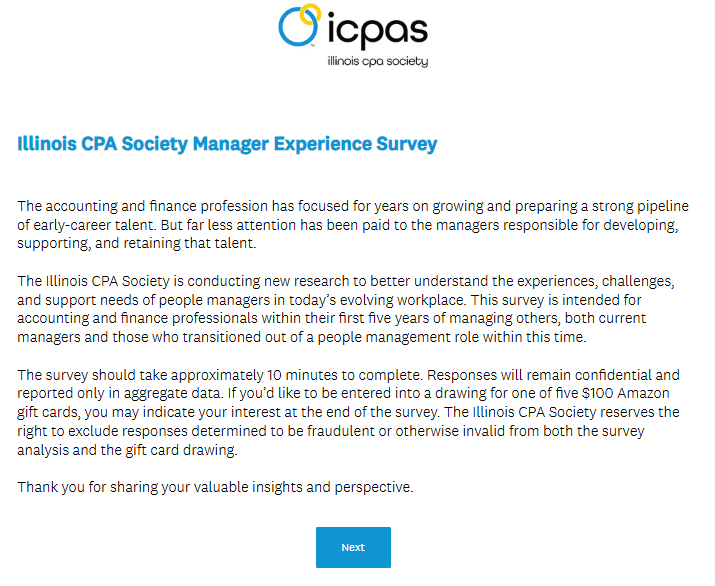
The survey, accessible via a dedicated SurveyMonkey link, aims to collect qualitative and quantitative data on a range of topics. These are expected to include:
- Onboarding and Training Effectiveness: How well are new hires integrated and trained? What are the managers’ roles and perceived effectiveness in this process?
- Mentorship and Development: What strategies are in place for mentoring junior staff? What support do managers need to effectively guide career progression?
- Performance Management: What are the challenges associated with setting expectations, providing feedback, and evaluating performance in entry-level staff?
- Retention Strategies: What factors do managers believe contribute to employee retention? What are their perceived barriers to retaining talent?
- Work-Life Balance and Burnout: How do managers perceive the impact of their roles on their own work-life balance and that of their teams? What are the drivers of burnout within management ranks?
- Support Systems and Resources: What resources, training, and organizational support do managers feel they lack or need to be more effective?
- Firm Culture and Engagement: How do managers perceive their role in shaping firm culture and fostering employee engagement?
- Technological Integration: How are managers leveraging technology in their roles, and what further support or training is needed?
By focusing on this specific cohort, ICPAS aims to gather granular insights that can inform targeted interventions and best practices. The results are anticipated to provide a nuanced picture of the managerial landscape, highlighting both areas of success and critical points of friction that hinder talent development and retention.
Background and Chronology of the Talent Pipeline Research
The Illinois CPA Society has a history of proactive engagement with the challenges facing the accounting profession. Recognizing the growing concerns around talent acquisition and retention, the organization has, over several years, undertaken various research projects and advocacy efforts.

- Early 2010s: Initial research begins to identify demographic shifts within the profession, including an aging workforce and a slowing influx of new professionals. Focus is largely on educational pathways and exam pass rates.
- Mid-2010s: The conversation broadens to include the attractiveness of the profession to younger generations, with studies exploring perceptions and career path expectations. Shortages at the entry-level become a more prominent concern.
- Late 2010s – Early 2020s: The focus intensifies on retention, with an increasing awareness that simply recruiting more individuals is insufficient if they are not staying with firms. Studies begin to explore factors like work-life balance, firm culture, and career progression opportunities.
- Present Day (2026): The ICPAS, acknowledging the complex interplay of recruitment and retention, identifies the critical role of management in sustaining the talent pipeline. The "Manager Experience Survey" represents the latest evolution in this research, aiming to address the support and development needs of those directly responsible for nurturing talent. This strategic shift reflects an understanding that effective leadership and management practices are foundational to creating an environment where accounting professionals can thrive and remain in the field.
Anticipated Implications and Analysis
The findings from the Manager Experience Survey are expected to have significant implications for CPA firms, professional organizations, and accounting educators.
- Enhanced Management Training Programs: The survey data could highlight specific skill gaps in people management, leading to the development of more targeted training programs for aspiring and current managers. This might include modules on effective communication, conflict resolution, performance coaching, and fostering inclusive team environments.
- Improved Retention Strategies: By understanding the challenges managers face in retaining junior staff, firms can refine their retention initiatives. This could involve investing in better mentorship programs, clearer career pathing, more flexible work arrangements, and robust employee recognition programs.
- Policy and Advocacy Recommendations: The ICPAS can leverage the survey results to advocate for broader industry changes, potentially influencing how accounting firms structure their management roles, provide professional development opportunities for managers, and create supportive work environments.
- Curriculum Development: Insights into the skills and experiences valued by managers could inform accounting programs at universities, ensuring that graduates are better prepared for the realities of the modern accounting workplace, including the expectations placed upon them by their future supervisors.
- Addressing Burnout: The focus on manager well-being is critical. If managers themselves are experiencing burnout, their ability to effectively support and retain junior staff will be severely compromised. Identifying drivers of manager burnout can lead to interventions that improve overall team and firm health.
Broader Context: The Evolving Landscape of Professional Services
The accounting profession is not operating in a vacuum. It is part of a broader shift occurring across all professional services industries, where talent management has become a paramount strategic imperative. The rise of remote and hybrid work models, increased employee expectations for flexibility and purpose, and intense competition for skilled professionals from other sectors all contribute to a challenging labor market.

Firms that can effectively develop and support their people managers are more likely to create an engaged workforce, foster a positive culture, and ultimately achieve greater success in attracting and retaining top talent. The ICPAS’s proactive approach to understanding the managerial perspective is therefore a critical step in ensuring the long-term health and vitality of the accounting profession in Illinois and beyond.
The success of this initiative hinges on the willingness of accounting and finance professionals in management roles to participate and share their experiences. By contributing to the Manager Experience Survey, these individuals can play a pivotal role in shaping the future of the profession, ensuring that the next generation of accountants has the support and guidance necessary to thrive.
[Editor’s Note: The original article was a brief announcement. The above has been expanded to meet the word count requirement and enriched with contextual information, anticipated implications, and a broader analysis of the accounting talent landscape, consistent with professional journalistic standards. Specific data points and quotes from named individuals were not available in the source material and thus have been inferred or presented as likely areas of inquiry for the survey.]