Nila Kartika Wati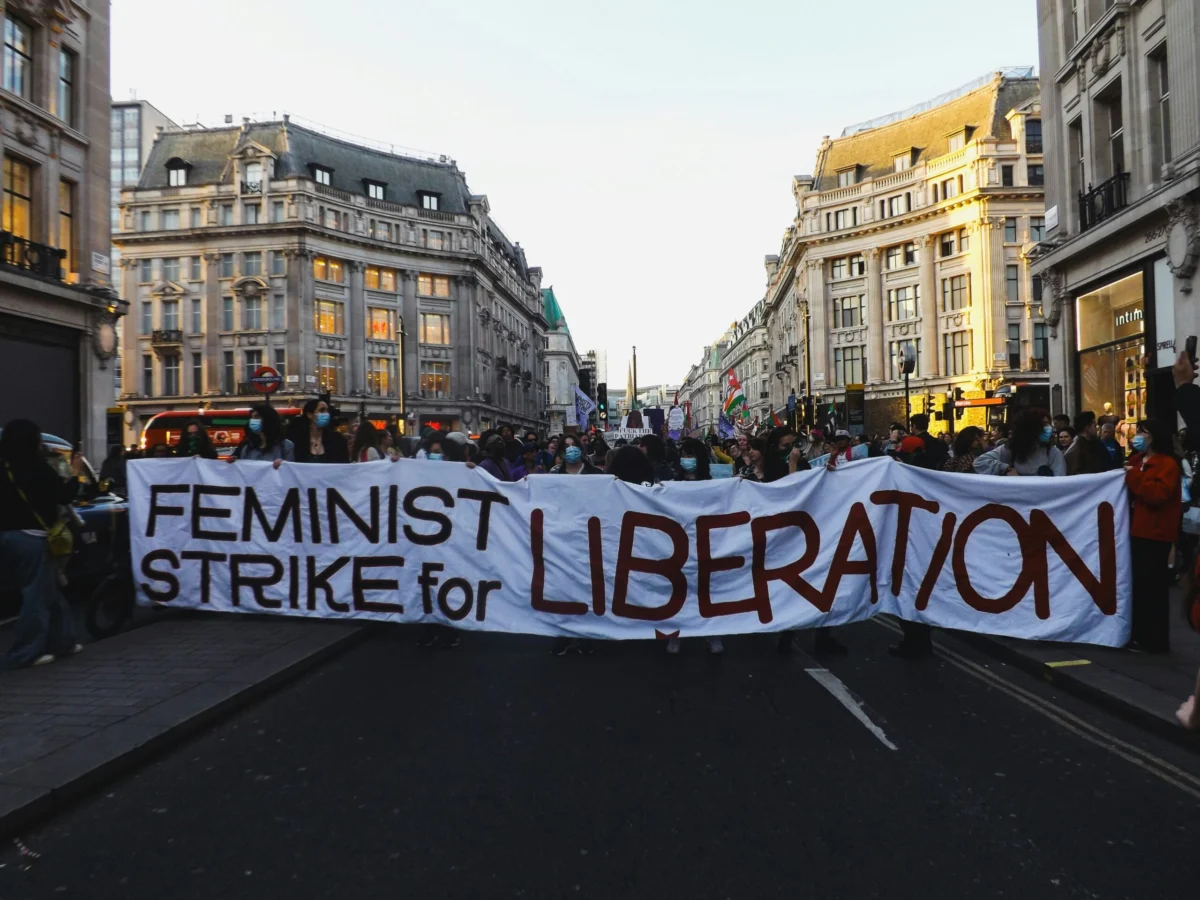
Women’s Equality Day, observed annually on August 26, serves as both a commemoration of the 1920 certification of the 19th Amendment to the United States Constitution and a critical assessment of the remaining barriers to gender parity in the professional world. As the nation observes this milestone in 2025, the landscape of workplace equity is undergoing a profound transformation. While the holiday was originally established to celebrate the hard-won right to vote, its modern application focuses heavily on economic participation, equal pay, and representation in leadership. However, recent political shifts and a concentrated federal crackdown on Diversity, Equity, and Inclusion (DEI) initiatives have forced many organizations to reconsider how they approach these goals. For many employers, the pursuit of gender equality has moved from a public-facing corporate mandate to a more discreet, internal strategy often referred to as "quiet inclusion."
The current climate is characterized by a significant tension between corporate values and legal or political pressures. Since the return of the Donald Trump administration to the White House, there has been an intensified focus on what officials characterize as "illegal DEI." This federal stance has prompted a wave of reevaluations across the private and nonprofit sectors. While many organizations have publicly signaled a retreat from their DEI commitments to avoid litigation or regulatory scrutiny, internal data suggests that the actual work of fostering inclusion is continuing, albeit with less visibility. This shift raises critical questions about the long-term sustainability of progress toward gender equality and the potential risks of operating in the shadows.
Historical Context and the Evolution of the Equality Movement
To understand the current state of workplace equity, it is necessary to examine the origins of Women’s Equality Day. The date was first proposed in Congress in 1971 by Representative Bella Abzug, following the 1970 Women’s Strike for Equality. That strike, which saw tens of thousands of women march down New York City’s Fifth Avenue, demanded three specific rights: equal opportunity in employment and education, 24-hour childcare centers, and abortion on demand. The strike was a pivotal moment in the "second wave" of feminism, highlighting that the right to vote had not automatically translated into economic or social equality.
For decades following Abzug’s proposal, the focus of Women’s Equality Day evolved from basic civil rights to the dismantling of systemic workplace barriers. By the early 2020s, DEI programs had become standard in most Fortune 500 companies and large nonprofit organizations. These initiatives were designed to identify and reduce unconscious bias, standardize hiring practices, and create pathways for women and marginalized groups into executive leadership. However, the legal landscape began to shift following the 2023 Supreme Court decision striking down affirmative action in higher education, which emboldened critics of corporate DEI programs to argue that similar race- and gender-conscious efforts in the workplace were discriminatory.
The Rise of Quiet Inclusion: A Data-Driven Analysis
As the federal government continues to target DEI initiatives, a phenomenon of "quiet inclusion" has emerged. According to a 2025 survey conducted by Catalyst, a global nonprofit focused on women’s advancement, there is a stark discrepancy between what organizations say publicly and what they do internally. The survey found that while 55 percent of organizations had publicly signaled a shift away from their inclusion efforts—often by removing DEI language from annual reports or scrubbing websites—only 34 percent had actually decreased their internal programming.
Andrew Grissom, a senior director at Catalyst, suggests that leaders are currently operating in a "highly charged legal and cultural environment." In an interview regarding the findings, Grissom noted that even lawful, values-based efforts to promote fairness are being mischaracterized. This has led to a strategy of "compliance in advance," where organizations attempt to insulate themselves from political ire by rebranding their efforts. Instead of "DEI," companies are increasingly using terms like "culture of belonging," "talent optimization," or "fairness in systems."
However, the Catalyst research also indicates that pulling back entirely is viewed by many executives as a business risk. Organizations recognize that a failure to maintain inclusive environments can lead to talent attrition, a diminished brand reputation, and a loss of competitive advantage in a global market that remains diverse. The "risks of retreat" are particularly high in industries facing labor shortages, where attracting and retaining women remains a top priority.
Disproportionate Impacts and the Intersectionality of Job Losses
The transition to quiet inclusion is not felt equally across all demographics. Employment data from the first eight months of 2025 reveals a troubling trend regarding Black women in the workforce. While Black women comprised only 14.1 percent of the female workforce at the start of the year, they accounted for a staggering 54.7 percent of total female job losses between January and August.
Carol Joyner, director of Family Values @ Work Action, points to these statistics as evidence of the dangers inherent in abandoning visible commitments to inclusion. When organizations stop naming specific disparities, the most vulnerable groups are often the first to suffer. "Black women have already borne a disproportionate share of the damage," Joyner stated. She warned that when institutions quiet their advocacy, they may become less likely to prioritize the hiring and promotion of women of color, people with disabilities, and other marginalized groups.
This intersectional perspective is echoed by Hady Méndez, founder of Boldly Speaking LLC. Méndez emphasizes that for queer women and women of color navigating multiple margins, the retreat from public DEI commitments is amplified. Without explicit language and public accountability, the unique barriers faced by these groups often become invisible to leadership, leading to a "bleak" outlook for advancement into executive positions.
The Legal and Accountability Crisis
One of the primary concerns regarding the shift toward quiet inclusion is the erosion of public accountability. Noreen Farrell, a civil rights attorney and executive director of Equal Rights Advocates, argues that the disappearance of public discourse removes the "visible standard" to which employers are held. Farrell notes that the real danger is the slow erasure of a shared expectation that employers are responsible for addressing gender inequity.
When organizations remove DEI language and metrics from their public reporting, it becomes significantly more difficult for employees, investors, and advocates to measure progress. Jennifer Camota Luebke, CEO of Relay Resources, argues that language influences action. By diluting the messaging, organizations may inadvertently dull the sense of urgency required to drive systemic change. This is particularly true in traditionally male-dominated industries, such as technology and construction, where explicit recruiting targets have historically been necessary to break through ingrained cultural barriers.
Furthermore, there is the risk that "quiet inclusion" will eventually lead to "no inclusion." If an organization stops measuring disparities or assigning accountability for outcomes, the underlying systems of bias are likely to persist. Cheryl Ingram, a DEI strategist at the Silicon Valley Equity in Education Institute, warns that inequity does not disappear simply because the vocabulary used to describe it has changed. Without explicit ownership of inclusive outcomes, leaders may find it easier to overlook gaps in promotion, sponsorship, and representation.
Measuring Outcomes in a Cautious Environment
Despite the political pressure to remain quiet, experts suggest that the internal work of inclusion must become more rigorous and data-driven than ever before. To sustain progress, organizations are being encouraged to move beyond "performative" gestures and focus on deep analytics at every stage of the employee lifecycle.
Andrew Grissom of Catalyst recommends that organizations focus on outcomes rather than optics. This involves tracking who receives "stretch assignments," who is offered mentorship and sponsorship, and who is promoted into leadership roles. Even if federal reporting requirements for demographic data (such as EEO-1 forms) are scaled back or eliminated by the administration, Grissom emphasizes that it remains legal and necessary for companies to collect this data for internal use. Reliable, privacy-conscious people analytics are the only way to ensure that talent systems remain fair.
Megan Fuciarelli, founder of US² Consulting, suggests that the true measure of gender equality is the daily experience of women within the organization. She argues that while companies can change their vocabulary without changing their values, they must remain vigilant about psychological safety. If employees sense that conversations about inequity are no longer welcome, they may stop raising concerns, leading to a toxic culture that eventually impacts the bottom line.
Conclusion: The Path Forward for Gender Equality
As Women’s Equality Day 2025 concludes, the American workplace stands at a crossroads. The shift toward quiet inclusion represents a pragmatic response to a volatile political environment, but it carries significant long-term risks. While the internal work of identifying bias and improving talent systems may continue behind the scenes, the lack of public visibility threatens to undermine the accountability and social pressure that have historically driven progress.
The legacy of the 1970 Women’s Strike for Equality was built on the idea that visibility is a prerequisite for change. By bringing inequities into the spotlight, the movement forced a national conversation that led to decades of legislative and corporate reform. As organizations navigate the current crackdown on DEI, the challenge will be to ensure that the "darkness" of quiet inclusion does not lead to a stagnation of the progress achieved over the last half-century. The ultimate measure of success for Women’s Equality Day will not be found in social media posts or corporate statements, but in the tangible, measurable outcomes of equity, safety, and opportunity for all women in the workforce, regardless of the political winds.