Lana Rhoades
The financial burden of higher education continues to be a central point of contention in American fiscal policy, with the cost of required learning materials representing a significant portion of student expenditures. As of August 2026, the landscape of sales tax applicability to textbooks remains a complex patchwork of state-level mandates, reflecting a broader national debate over educational accessibility and state revenue requirements. While some jurisdictions view textbook exemptions as a vital tool for reducing the "hidden costs" of education, others maintain these taxes to bolster general funds, often leading to a convoluted set of regulations that vary wildly across state lines.
Recent data from the National Center for Education Statistics suggests that the average undergraduate student at a four-year institution spends between $1,200 and $1,300 annually on books and supplies. In states with high sales tax rates, this can add an additional $100 or more to the annual cost of attendance. To mitigate these costs, several states have implemented specific exemptions, though the eligibility for these breaks often depends on the type of institution, the age of the student, or the specific nature of the seller.
The Economic Context of Educational Tax Policy
The push for textbook tax exemptions has gained momentum over the last decade as student loan debt reached record highs. Economists specializing in education policy note that sales tax on essential goods like textbooks acts as a regressive tax, disproportionately affecting low-income students who already struggle with tuition and housing.
In response, legislative bodies have taken varied approaches. Some states, such as Massachusetts and Kentucky, have adopted a broad-brush approach, exempting all textbooks from sales tax to simplify the process for both retailers and consumers. Conversely, states like California and Texas continue to treat textbooks as general tangible personal property, subject to the same tax rates as consumer electronics or furniture. The rationale in these high-population states often centers on the significant revenue loss that would occur if such a large category of retail goods were exempted.
State-by-State Breakdown of Textbook Taxability
The following analysis details the current tax status of textbooks across the United States, highlighting the specific conditions under which students and parents may find relief from sales tax.
States with Broad Exemptions
A minority of states have opted for a relatively straightforward exemption policy. In these jurisdictions, the primary goal is to lower the barrier to obtaining educational materials regardless of the seller’s status.
- Arizona: Both the purchase and rental of textbooks are exempt from sales tax, making it one of the more student-friendly states in the Southwest.
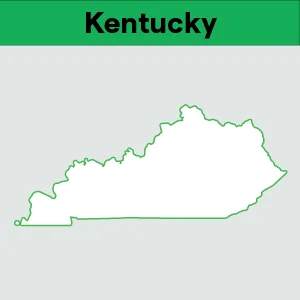
- Kentucky: Textbooks are broadly tax-exempt under state law.
- Massachusetts: The state maintains a long-standing exemption for textbooks.
- Minnesota: Textbooks are classified as exempt goods, reflecting the state’s historical emphasis on educational funding.
- Mississippi: Textbooks are exempt from the state’s sales tax.
- New Jersey: State law provides a clear exemption for textbooks.
- North Dakota: Educational textbooks are not subject to sales tax.
- South Carolina: The state provides a categorical exemption for textbooks.
- Tennessee: Textbooks remain tax-exempt across the state.
- West Virginia: The state recognizes textbooks as exempt items.
States with Institutional and Conditional Exemptions
The most common approach among U.S. states is the "conditional exemption." In these cases, the tax status is determined by who is selling the book, who is buying it, or the grade level of the student.
- Alabama: The rules here are highly specific. Textbooks are generally taxable unless sold by a school (excluding institutions of higher learning) operated by a county or municipality. Additionally, sales by private or state-owned elementary and secondary schools are exempt if the proceeds are used exclusively for the school’s benefit.
- Connecticut: For an exemption to apply, textbooks must be sold to students at institutions of higher learning or private occupational schools. For younger students, the books must cost no more than $20 and be sold by elementary or secondary schools.
- Florida: The exemption is restricted to textbooks sold to K-12 students. College-level materials generally remain taxable.
- Indiana: Similar to Florida, the exemption is limited to textbooks sold to children in grades K-12.
- Iowa: Textbooks are taxable by default, but an exemption exists for sales to students by private nonprofit educational institutions, provided all proceeds are directed toward educational purposes.
- Kansas: While sales are generally taxable, the rental of nonsectarian textbooks by elementary or secondary schools is exempt.
- Louisiana: Exemption is granted only to textbooks sold by private elementary and secondary schools, provided the revenue supports the institution.
- Michigan: Only textbooks sold by a school directly to K-12 students qualify for an exemption.
- Missouri: Textbooks sold by elementary/secondary schools or postsecondary bookstores are exempt from state tax. However, postsecondary students should note that local sales and use taxes may still apply.
- Nebraska: Sales are taxable unless the transaction occurs at an elementary or secondary school-operated store where proceeds support the school.
- Nevada: The state offers a unique split. Textbooks sold within the University of Nevada System are exempt from sales, use, and local school support taxes. However, those sold within the Community College System are only exempt from the local school support tax.
- New Mexico: Textbooks are taxable unless sold by a school or a campus bookstore at a public post-secondary institution operating under a specific contractual agreement.
- New York: The state provides an exemption specifically for textbooks purchased by college students, acknowledging the high cost of higher education.
- Oklahoma: Textbooks are taxable unless the seller is a school.
- Pennsylvania: To qualify for an exemption, the book must be sold by a bookstore officially designated by a school, college, or university to act on its behalf.
- Rhode Island: All used textbooks are exempt from sales tax regardless of the seller. New textbooks are only exempt if sold by an educational institution.
- Utah and Vermont: Both states exempt textbooks only when sold by a school or a bookstore located on school premises.
- Virginia: This state allows exemptions for books sold by local boards or authorized agencies. It also exempts books sold for use by nonprofit college students if sold by the institution or a dealer certified by the institution.
- Wisconsin: The exemption is strictly for textbooks sold by elementary and secondary schools.
- Wyoming: Only textbooks sold by K-12 schools for fundraising purposes are exempt.
States Where Textbooks are Fully Taxable
In several states, textbooks are treated as standard retail items with no specific exemptions, though some may include them in temporary "Sales Tax Holidays."
- Arkansas: Generally taxable, though they may be included in the state’s annual sales tax holiday.
- California, Colorado, Georgia, Idaho, Illinois, Maine, Maryland, North Carolina, Ohio, South Dakota, Texas, and Washington: These states currently do not offer a permanent sales tax exemption for textbooks.
- Washington D.C.: The district maintains a standard tax on all textbook purchases.
Chronology of Legislative Shifts
The evolution of these tax laws has followed a clear timeline of economic pressure and legislative response.
- 2015–2019: A period of "Tax Holiday" expansion. Many states, including Arkansas and Florida, began including school supplies and textbooks in annual back-to-school tax-free weekends.
- 2020–2022: The COVID-19 pandemic accelerated the shift toward digital learning. This created a legal gray area, as many state laws specifically cited "printed" materials. States like New York and Virginia had to issue clarifications on whether access codes and digital licenses qualified as "textbooks."
- 2023–2025: Several states, including New Mexico and Nevada, updated their statutes to include more specific language regarding university bookstores to compete with online retailers like Amazon, which often had different tax collection obligations based on "nexus" (physical presence) laws.
- 2026: The current landscape shows a trend toward "Institutional-Only" exemptions, where states provide tax relief only when the purchase directly supports the educational infrastructure.
Stakeholder Reactions and Advocacy
The complexity of these rules has drawn criticism from student advocacy groups. The National Student Student Public Interest Research Groups (PIRGs) have frequently called for a federal standard or at least a simplified state-level "Educational Materials Exemption."
"The fact that a student in New York gets a tax break while a student in California pays an extra 7% to 10% on the same chemistry book is a matter of geographic inequity," a PIRG representative stated in a recent policy briefing. "Furthermore, the requirement that a book must be bought at a campus bookstore to be tax-exempt often prevents students from seeking lower prices in the open market, effectively canceling out the tax savings."
Retailers, represented by organizations like the National Association of College Stores (NACS), have expressed concern over the administrative burden of these laws. For a bookstore to correctly apply exemptions in states like Pennsylvania or Virginia, they must maintain rigorous certification and designation records, which increases overhead costs.
Implications and Future Outlook
The disparity in textbook taxability has significant implications for the "Total Cost of Attendance" (TCOA) calculations used by financial aid offices. When textbooks are taxable, the TCOA rises, potentially increasing the amount of student loans required.
Furthermore, the rise of "Inclusive Access" programs—where the cost of digital materials is bundled into tuition—is fundamentally changing how these taxes are collected. In many jurisdictions, if the textbook cost is labeled as a "fee" rather than a "sale," it may bypass sales tax entirely, even in states where physical books are taxable.
As we move into the latter half of the decade, tax experts predict a move toward "Content Neutral" tax laws. These would exempt educational content regardless of whether it is delivered via a hardcover book, a PDF, or a web-based interactive platform. However, until such a consensus is reached, students and parents are advised to consult their state’s Department of Revenue or a tax professional to navigate the specific, and often changing, fine print of textbook taxability.
For businesses and educational institutions, staying compliant requires sophisticated tax automation software, as the definition of a "textbook" and the eligibility of a "seller" can change with each legislative session. The current patchwork system serves as a reminder of the ongoing tension between state fiscal needs and the national goal of affordable education.