Candice Horbacz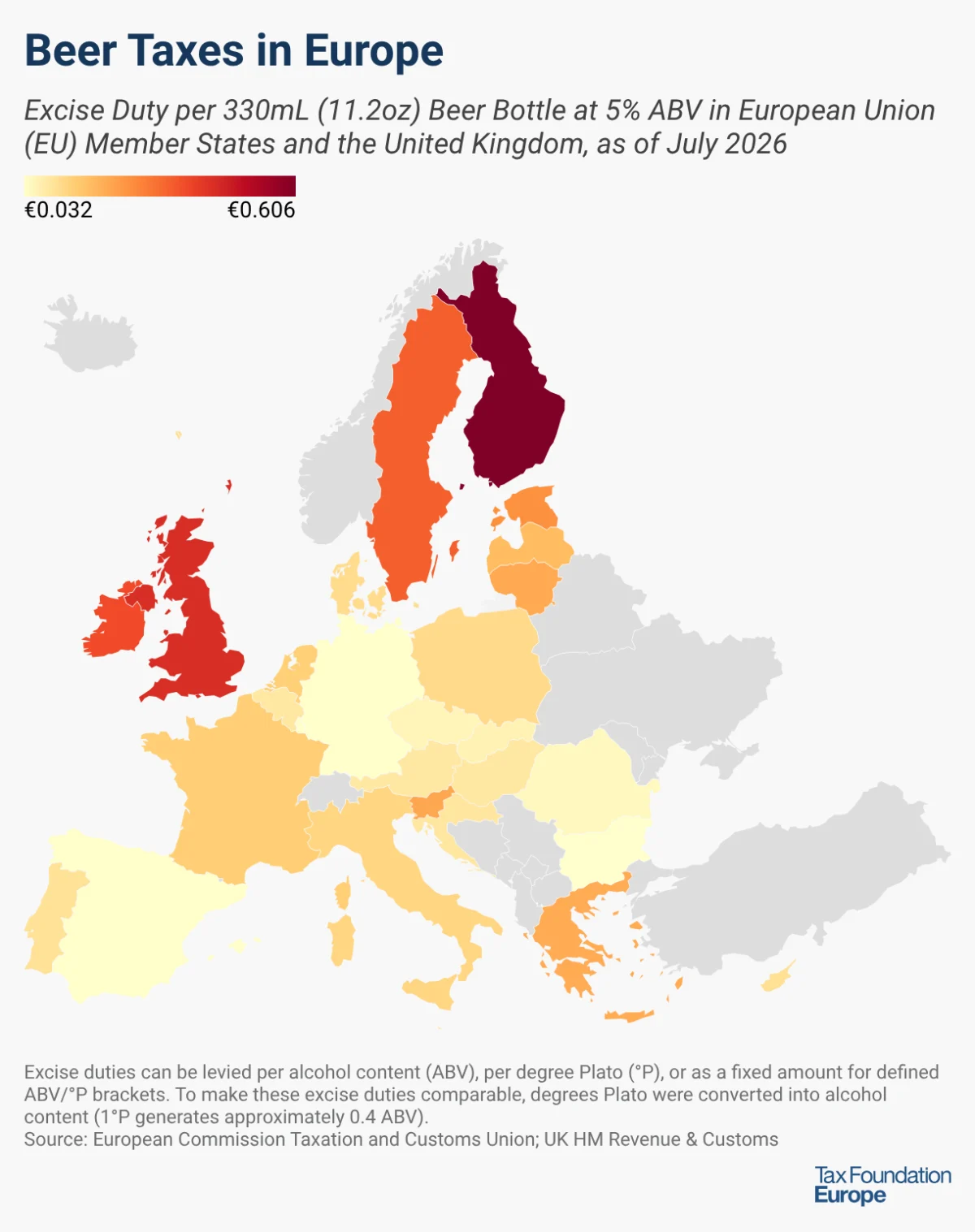
The European alcohol taxation landscape is poised for potentially profound transformations, with the year 2026 emerging as a critical inflection point for reforms aimed at modernizing fiscal frameworks. Policymakers across the continent are increasingly scrutinizing the efficacy and equity of existing excise duties, particularly as they pertain to beer and other alcoholic beverages. The current system, characterized by its historical origins and often disparate treatment of various alcohol categories, faces growing calls for simplification and greater alignment with public health objectives and market realities.
The Enduring Rationale for Excise Taxes: Revenue and Public Health
The motivations behind levying excise taxes on alcoholic beverages, including beer, are fundamentally dual-pronged and deeply rooted in fiscal history. Governments have long utilized these taxes to generate substantial revenues from products that are broadly consumed but also carry social costs. Historically, sumptuary laws often targeted items deemed luxuries or those associated with social ills, and alcohol fit neatly into this category. Beyond mere revenue generation, a primary contemporary objective is to discourage excessive consumption, thereby mitigating associated public health and social harms such as alcoholism, impaired driving, and related healthcare burdens. This dual purpose positions alcohol excise taxes as a key instrument in both national treasuries and public health strategies.
However, the effectiveness of beer taxes, as currently structured, in achieving comprehensive harm reduction is increasingly being questioned. Critics argue that the existing framework often functions as a blunt tool, failing to precisely target the most harmful consumption patterns or adequately differentiate between products based on their actual alcohol content in a consistent manner. This lack of nuance can lead to inefficiencies, where lower-alcohol options might be disproportionately taxed relative to their societal impact, while higher-alcohol alternatives in different categories might enjoy more favorable treatment. This inherent limitation underscores the urgency for a more sophisticated and equitable approach to alcohol taxation.
A Patchwork of Policies: European Alcohol Tax Landscape
The tax treatment of alcohol across Europe is notably diverse, reflecting a complex interplay of historical precedents, national cultural consumption patterns, and varying policy priorities. This variation is particularly evident when comparing excise duties on beer, wine, and spirits. Generally speaking, within the European Union, beer is taxed more heavily than wine. Several member states, including traditional wine-producing nations like Italy, Germany, Spain, Portugal, and Austria, place no excise tax whatsoever on wine, treating it more as an agricultural product or a cultural staple rather than solely an alcoholic beverage subject to specific sin taxes. This historical exemption for wine has long been a point of contention and a significant differentiator in the broader alcohol market.
In stark contrast, spirits are almost universally subjected to the highest rates of excise duty across the EU. This disparity is often justified by the higher alcohol content of spirits, aligning with the principle of taxing more potent products more heavily to discourage excessive consumption. However, the categorical approach rather than a purely alcohol-content-based one creates inconsistencies. An excise tax, as defined, is a tax imposed on a specific good or activity, commonly levied on items like cigarettes, alcoholic beverages, and gasoline. While these taxes typically constitute a relatively small portion of overall government revenue, their impact on consumer prices and industry dynamics can be significant. The current patchwork of rates and exemptions across different alcohol categories and member states creates market distortions, encourages cross-border shopping in some instances, and complicates administrative compliance for producers and distributors operating across multiple jurisdictions. For instance, a 2021 study by the Tax Foundation highlighted the vast differences in tax burdens on a liter of pure alcohol, with spirits often taxed many times more than beer, and wine sometimes entirely exempt. These disparities can influence consumer choices, potentially shifting demand towards less taxed categories, irrespective of their actual alcohol content or public health implications.
Innovation Blurs the Lines: The Modern Alcohol Market
The alcohol industry has experienced a period of unprecedented innovation in recent decades, leading to a proliferation of new products and categories that have effectively blurred traditional categorical lines. This evolution presents a significant challenge to existing tax structures, which were largely designed for a simpler market of distinct beer, wine, and spirits.
A prime example of this transformative change is the craft brewing revolution. What was once a relatively homogenous industry dominated by a few large producers has fragmented into thousands of microbreweries and craft operations. These innovators have introduced a diverse flavor profile and, crucially, a much wider range of alcohol content (Alcohol By Volume, ABV), from low-alcohol session beers to high-ABV imperial stouts and barleywines. This exponential increase in the variety of beers available to global consumers has fundamentally altered the beer industry, making it increasingly difficult to apply uniform tax rates based solely on the "beer" category without considering its vast internal diversity.
Another product that exemplifies this blurring is malt liquor. By its very name, "malt liquor" clearly signifies a category stratifier – a higher-alcohol-content beer brewed with extra malt, often positioning it closer to the alcohol potency of some wines or even weaker spirits, yet it is taxed as beer. This highlights the inadequacy of category-based taxation when the alcohol content within a category can vary so dramatically.
Furthermore, the recent surge in popularity of ready-to-drink (RTD) cocktails has added another layer of complexity. Many RTDs are distilled spirits drinks at their core, but after combining the spirit with various mixers, the final product available to purchase often has an alcohol content closer to that of a beer or a strong wine than a traditional bottle of liquor. Depending on how these products are classified (e.g., as pre-mixed spirits, flavored malt beverages, or even wine-based coolers), they can be subjected to vastly different tax rates, creating an uneven playing field and arbitrary price differences for products with similar alcohol content and consumer appeal. This market dynamism necessitates a more adaptable and future-proof tax framework.
Current Taxation Models: ABV vs. Category-Based
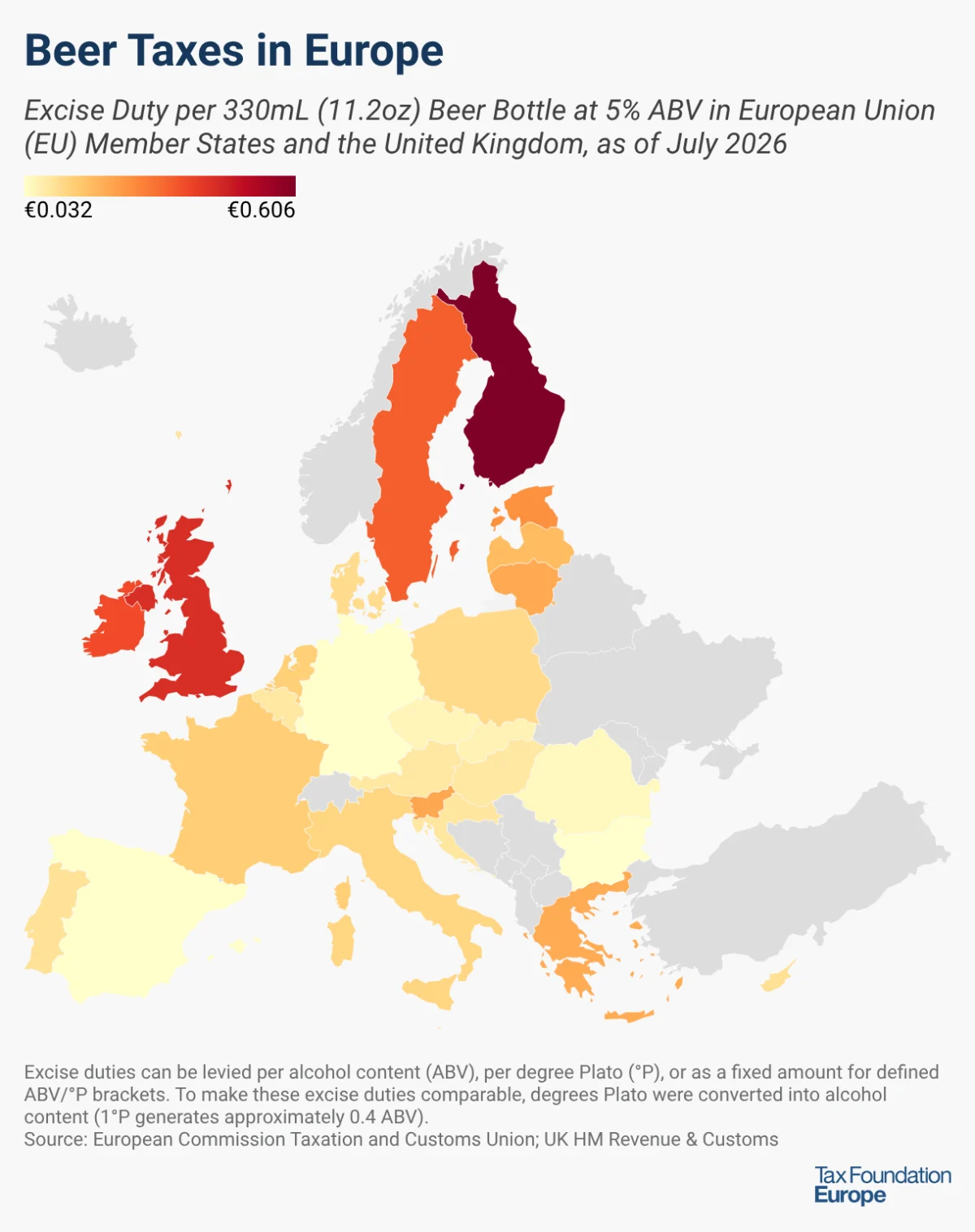
Across the European Union, beer is generally already taxed by its alcohol content, whether measured by percent alcohol (ABV) or degree Plato (a measure of original gravity that correlates with final alcohol content). This approach acknowledges the direct relationship between alcohol strength and potential societal impact. However, this method is not consistently applied across all alcohol categories within the EU. While beer taxation often aligns with an ABV-centric model, other categories, notably wine and many spirits, are frequently taxed based on their classification rather than a strict per-unit-of-alcohol basis. This creates significant discrepancies.
In contrast, the United Kingdom has taken a more harmonized approach. The duties levied by the UK government are largely similar or uniform for most products by alcohol content across virtually all alcohol categories. This means that a unit of pure alcohol in a beer, wine, or spirit typically faces a comparable tax burden, promoting greater neutrality and discouraging producers from manipulating product classifications to achieve lower tax rates. The UK’s system, while not without its own complexities, offers a compelling alternative model for how a more unified, ABV-based taxation could function.
As the alcohol product landscape continues to develop at a rapid pace, the current categorical treatment of alcohol is likely to become increasingly complex, inefficient, and costly, both for tax authorities to administer and for businesses to comply with. The administrative burden of classifying new and hybrid products, the constant need for updated regulations, and the potential for legal challenges over classification ambiguities all contribute to an unwieldy system. This administrative friction ultimately translates into higher operational costs for businesses, which can then be passed on to consumers.
The Case for Modernization: Towards an ABV-Centric System
Modernizing alcohol taxation by discarding these clunky, outdated categorical systems in favor of a tax levied uniformly on alcohol content (per unit of pure alcohol) represents a significant policy shift. Such a reform would fundamentally equalize the tax treatment of different types of alcohol, making the entire tax system more efficient, transparent, and fair.
The advantages of an ABV-centric system are multifaceted. Firstly, it promotes greater fairness and neutrality in competition across the alcohol market. By taxing all alcoholic beverages based on their actual alcohol content, it removes the artificial advantages or disadvantages that arise from arbitrary categorical classifications. This means a strong craft beer would be taxed comparably to a wine of similar strength or an RTD cocktail, fostering genuine competition based on product quality and consumer preference rather than tax loopholes.
Secondly, it aligns more directly with public health objectives. An ABV-based system would inherently tax stronger drinks more heavily, regardless of whether they are beer, wine, or spirits. This provides a clearer incentive for consumers to choose lower-strength options and for producers to innovate in the low- and no-alcohol categories, directly supporting harm reduction goals. Public health organizations consistently advocate for policies that make stronger alcoholic beverages relatively more expensive.
Thirdly, it promises significant administrative simplification. Tax authorities would no longer need to grapple with complex classification rules for novel products or adjudicate disputes over whether a particular beverage falls into the "beer," "wine," or "other fermented products" category. Compliance for businesses would also be streamlined, reducing the burden of navigating a labyrinthine set of rules that vary by category and sometimes by country. This transparency would benefit consumers, who could more easily understand the tax component of the price they pay.
Economically, such a system could be viewed through the lens of Pigouvian taxes, where the tax is levied in direct proportion to the negative externality (in this case, alcohol-related harm). By taxing pure alcohol consistently, the system becomes a more precise tool for internalizing these external costs.
Stakeholder Perspectives and Reactions
The prospect of significant alcohol tax reform naturally elicits diverse reactions from various stakeholders:
- Governments and Fiscal Authorities: Primarily focused on maintaining stable revenue streams and improving administrative efficiency. They would likely support reforms that simplify collection, reduce compliance costs, and provide a more predictable tax base. The alignment with public health objectives also serves political and social mandates.
- Public Health Advocates: Would strongly endorse a shift to an ABV-centric system. Organizations like the World Health Organization (WHO) and national public health bodies consistently advocate for taxing alcohol based on its content as one of the most effective strategies for reducing alcohol-related harm. They would view this as a progressive step towards a more robust public health policy.
- Alcohol Industry: The industry’s reaction would be more nuanced. Producers of spirits, already facing the highest tax rates, might see an ABV-centric system as a step towards greater equity, provided the overall tax burden doesn’t increase disproportionately. The beer industry, particularly craft brewers with high-ABV products, might face increased costs for stronger offerings but could benefit from simplified compliance for their diverse range. The wine industry, which has historically enjoyed significant tax exemptions in many EU countries, would likely be the most resistant, fearing new excise taxes on products previously untaxed. Industry representatives would also emphasize the need for predictable policy and sufficient transition periods to adapt business models.
- Consumers: The impact on consumers would vary by product. Stronger beers, wines, and spirits might see price increases, while lower-alcohol options could become relatively more affordable. Overall, consumers might benefit from greater price transparency, as the tax component would be directly linked to the alcohol content, making it easier to compare value.
The Road to 2026: A Chronology of Anticipated Discussions
While "as of 2026" implies a potential implementation date, the journey to such significant policy changes would involve an intricate chronology of discussions, proposals, and legislative processes.
- Initial Policy Discussions (Ongoing): The groundwork for reform has likely been laid through ongoing reports, academic studies, and discussions within EU institutions (e.g., the European Commission, European Parliament) and national finance ministries, highlighting the inefficiencies of current systems.
- Formal Proposals (Early to Mid-2020s): Member states or the European Commission might table formal legislative proposals or directives advocating for a harmonized, ABV-based approach, perhaps drawing inspiration from models like the UK’s.
- Consultation Periods (Mid-2020s): Extensive consultation would be required with industry associations (brewers, vintners, distillers), public health organizations, consumer groups, and national tax authorities. These consultations would aim to gather feedback, assess economic impacts, and refine proposed legislative texts.
- Legislative Debate and Negotiation (Mid- to Late-2020s): Any EU-wide harmonization would necessitate complex negotiations among member states, each with unique economic interests and cultural traditions regarding alcohol. National legislatures would also need to debate and approve any changes to domestic tax laws.
- Transition and Implementation (Leading up to and post-2026): Should reforms be agreed upon, a phased implementation period would be crucial. This would allow businesses to adjust their pricing, supply chains, and administrative systems to the new tax regime. Training for tax authorities and widespread communication campaigns would also be necessary. The "as of 2026" marker could signify either the date a directive is issued, or a target for national implementation, allowing for flexibility in the exact rollout.
Broader Economic and Social Implications
The implications of a shift to an ABV-centric alcohol taxation system would extend far beyond mere tax collection.
- Pricing Strategies: Producers would likely re-evaluate their pricing strategies. Products with traditionally low tax burdens (e.g., wine in some countries) could see significant price increases, while high-strength products in categories like spirits might see marginal shifts depending on the base rate chosen. This could lead to a re-calibration of the entire alcohol market’s price architecture.
- Consumer Preferences: Price changes, combined with greater transparency about alcohol content, could influence consumer purchasing habits. There might be a noticeable shift towards lower-ABV options across all categories, aligning with public health goals. Conversely, consumers might become more conscious of the "value per unit of alcohol" when making purchasing decisions.
- Cross-Border Trade: Within the EU, a more harmonized system could reduce incentives for cross-border shopping driven by tax differentials, leading to a more level playing field for retailers in border regions.
- Administrative Burden: While the transition phase would undoubtedly present an initial administrative challenge for both tax authorities and businesses, the long-term goal is to simplify ongoing compliance and reduce administrative overhead.
- Public Health Outcomes: Over time, a consistent and progressive taxation of alcohol by content is expected to contribute to a reduction in harmful alcohol consumption, leading to improved public health indicators, reduced healthcare costs, and fewer alcohol-related social problems.
In conclusion, the discussions and potential legislative changes anticipated by 2026 represent a significant juncture for alcohol taxation in Europe. The drive towards modernizing these frameworks reflects a growing recognition of the evolving alcohol market, the limitations of current categorical systems, and the imperative to align fiscal policy more effectively with public health objectives. The shift towards an alcohol-content-based taxation model, while challenging to implement, promises a more equitable, efficient, and transparent system that is better equipped to serve the dual goals of revenue generation and harm reduction in the 21st century. The journey will involve complex negotiations and significant adjustments for all stakeholders, but the potential long-term benefits for public finances and public health are substantial.