Lina Irawan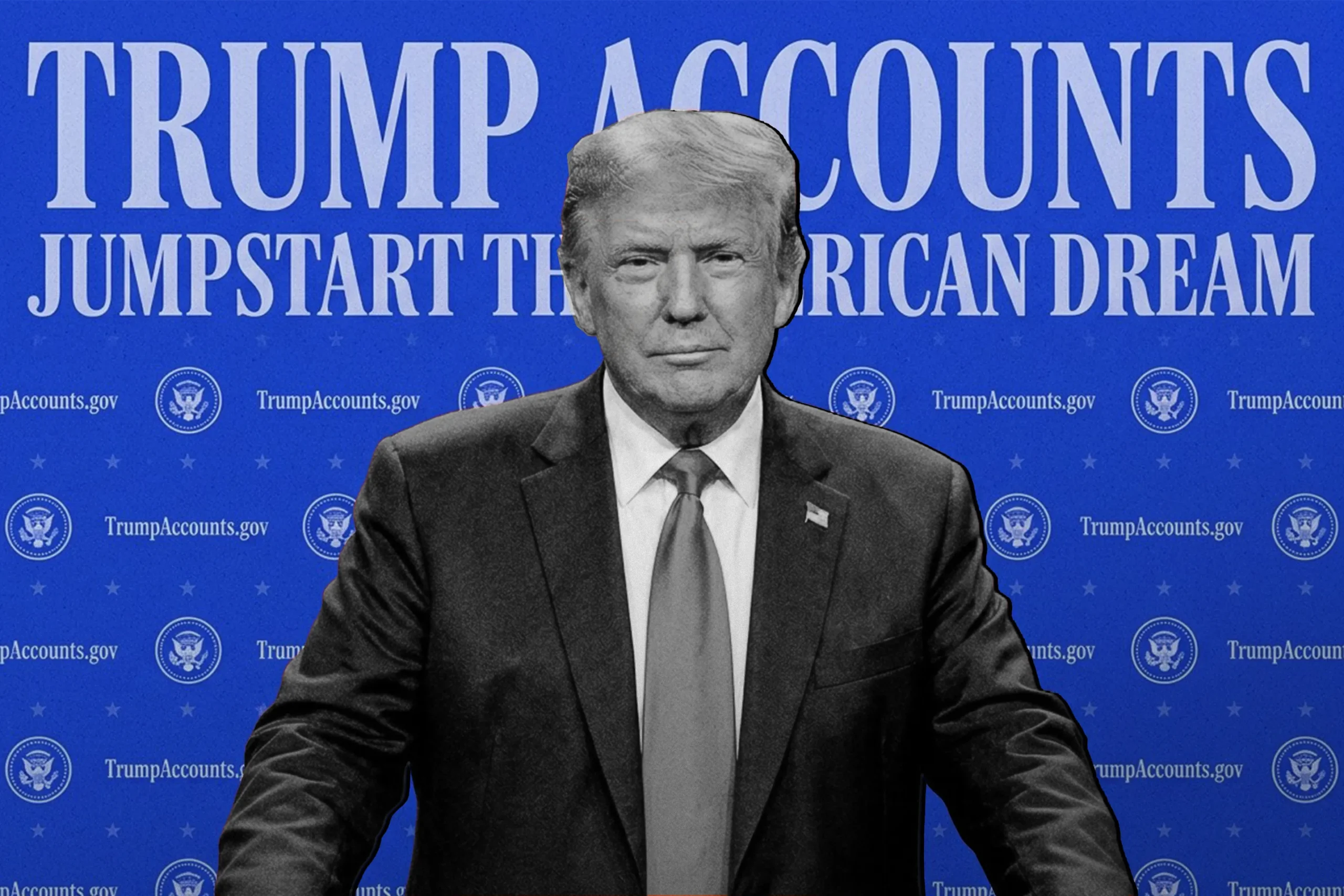
The U.S. Treasury Department has officially launched an automatic enrollment system for "Trump Accounts," a significant shift in how these tax-deferred investment vehicles are established for minors. This new process, implemented Thursday, automatically creates approximately 60 million new accounts – one for nearly every eligible child with a Social Security number. While the initial setup is now hands-off for parents, families must actively "claim" and activate these accounts to unlock their full benefits, including the ability to make or receive most contributions and direct investments. This move represents a substantial expansion of the program, which aims to foster long-term financial growth and literacy among American youth.
The transition to automatic enrollment marks a pivotal moment for the Trump Accounts program, which was formally introduced in July under the provisions of the One Big Beautiful Bill Act. Previously, parents and guardians were required to proactively opt their children into the program through various channels, including Form 4547 filed with their taxes, the official TrumpAccounts.gov website, or the dedicated Trump Accounts app. This proactive step is no longer necessary for the initial account creation, as the Treasury Department is now leveraging existing federal data to generate these accounts on a massive scale. Approximately 7 million accounts established under the prior opt-in system remain unaffected by these changes, continuing under their existing terms.
Background: The Genesis of Trump Accounts and the One Big Beautiful Bill Act
The Trump Accounts program is a cornerstone initiative established by the One Big Beautiful Bill Act, a comprehensive legislative package passed with the stated aim of bolstering economic growth, enhancing family financial security, and promoting long-term savings nationwide. Unveiled as a bipartisan effort, the Act sought to address various economic challenges, from infrastructure development to workforce training, with a particular focus on intergenerational wealth building. The Trump Accounts component was designed as a novel approach to empower future generations financially, offering a free, tax-deferred investment vehicle similar in structure to custodial brokerage accounts and individual retirement accounts (IRAs) but specifically tailored for children.
The primary objective behind creating Trump Accounts was to democratize access to investment opportunities for all children, regardless of their family’s immediate financial standing. Lawmakers envisioned a system that could introduce children to the principles of saving and investing early in life, potentially mitigating future wealth disparities and fostering a culture of financial prudence. The program’s tax-deferred status means that earnings within the account are not taxed until withdrawal, allowing investments to grow more rapidly over time through compounding. This feature aligns with other long-term savings vehicles like Roth IRAs, which encourage sustained investment for retirement. The initial rollout in July was met with considerable interest, though the previous opt-in mechanism presented administrative hurdles that the Treasury Department now seeks to streamline through automatic enrollment.
The Paradigm Shift: From Opt-In to Auto-Enrollment
The Treasury Department’s decision to implement automatic enrollment stems from a desire to maximize program participation and ensure that no eligible child misses out on the opportunity to have a Trump Account. Officials recognized that relying solely on parents to opt-in could lead to lower enrollment rates, particularly among underserved communities or families with limited awareness of financial programs. By automatically creating accounts for approximately 60 million children, the department aims to establish a foundational investment vehicle for a vast majority of the nation’s youth. With an estimated U.S. child population (under 18) of around 73-74 million, this initial wave covers a substantial segment of eligible individuals.
Temporary regulations enacted Wednesday, preceding Thursday’s launch, outlined the procedural framework for this auto-enrollment process. The department confirmed that new accounts will be established periodically in waves, starting with the initial 60 million this year and continuing to add millions more in subsequent years as new children become eligible or obtain Social Security numbers. These automatically generated accounts are officially referred to by the Treasury Department as "auto Trump Accounts." However, it is crucial for the public to understand that despite the "auto" designation, the full enrollment and activation process for families remains far from automatic. The Treasury Department maintains control over these accounts on behalf of the child until a legally authorized individual claims them. In essence, "auto Trump Accounts" are best understood as unclaimed Trump Accounts, awaiting parental or guardian activation to become fully functional.
Navigating the Activation Process: Claiming an "Auto Trump Account"
While the initial burden of creating an account has been lifted, the responsibility has now shifted to parents and guardians to actively claim these automatically generated accounts. This claiming process is essential for unlocking the vast majority of benefits and functionalities associated with Trump Accounts. A Treasury official emphasized, "Automatic enrollment is now complete so parents and guardians can go to the app at any time and claim their child’s Trump Account."
The method for claiming an auto Trump Account differs significantly from the previous opt-in process. Before Thursday, parents could use Form 4547 as part of their tax filing or directly through TrumpAccounts.gov. However, with the new system, the primary method for verification and claiming is through the official Trump Accounts app. This digital-first approach requires parents, legal guardians, or beneficiaries (once they turn 18) to engage directly with the application to complete the necessary verification steps.
The regulations indicate that the information required to claim an auto Trump Account is "more extensive" than simply filling out Form 4547. This increased verification is due to the protected nature of the information within these auto accounts. Under Section 6103 of the U.S. tax code, taxpayer information is considered confidential and protected. Since the Treasury Department has generated these accounts using taxpayer data, it must ensure that only legally entitled individuals can access and manage them. This necessitates a robust identity verification process to prevent unauthorized access.
A Treasury official elaborated on the required steps: "Using the Trump Accounts app, parents will need to verify their identity, verify their relationship with their child, review their child’s information and accept the terms." This multi-layered verification ensures compliance with federal data protection laws and safeguards the financial interests of the child. While the intent is to streamline the initial creation, the claiming process itself appears to introduce a new layer of administrative complexity for parents, potentially posing challenges for those without easy access to digital tools or who find extensive identity verification cumbersome. This digital requirement also raises concerns about the "digital divide," potentially excluding some families who lack reliable internet access, smartphones, or the technical literacy required to navigate the app-based claiming system.
Unlocking Full Benefits: Contributions and Investment Choices
A critical distinction exists between claimed Trump Accounts and unclaimed "auto Trump Accounts," particularly concerning contribution eligibility and investment control. According to the Treasury Department’s new rules, unclaimed auto accounts have significant limitations on the types of contributions they can accept. Specifically, these accounts are only eligible for contributions made on a "class basis." This refers to donations made to a broad group of people, which are easier for the department to manage and distribute uniformly. The Treasury Department noted in its new rules that this approach would lead to "More eligible donors will make general funding contributions, more children will receive qualified general contributions, and the total value of class contributions will be larger."
However, the crucial drawback for unclaimed accounts is their ineligibility for other, more direct forms of funding. This includes the federal government’s one-time seed-money contribution of $1,000, employer contributions, and personal deposits made by parents, family members, or friends. Furthermore, parents or guardians cannot make investment decisions or choose how any general contributions are allocated until the account is formally claimed and activated. This means that while an account might exist, its wealth-building potential is severely limited until the necessary steps are taken by a guardian.
The full spectrum of benefits, including customized investment strategies, the ability to accept diverse contributions, and access to the government’s seed money, only becomes available once a parent or guardian completes the rigorous claiming process through the Trump Accounts app. If an account remains unclaimed, the beneficiary can eventually claim it themselves upon turning 18. However, this delay comes at a substantial cost: potentially years of missed contributions, lost investment opportunities, and the significant compounding gains that could have accumulated over their childhood. This makes the prompt claiming and activation by parents a vital step for maximizing the program’s intended impact.
The Power of Early Investment: Seed Money’s Long-Term Impact
One of the most compelling features of the Trump Accounts program is the federal government’s one-time seed-money contribution of $1,000. This payment is specifically earmarked for U.S. citizens born between January 1, 2025, and December 31, 2028, provided funding lasts. Children born outside this specific four-year window may still be eligible for an account but will not receive this initial government payment. This targeted approach aims to give a specific cohort of newborns a significant head start in their financial journey.
The potential for this $1,000 to grow over time is substantial, particularly when invested early and allowed to benefit from the power of compounding. Financial models illustrate that a $1,000 investment, if consistently growing at an average annual return (e.g., 9-10%, reflecting historical equity market averages over long periods), could potentially exceed $5,000 by the time a child reaches 18 years of age. The long-term implications are even more striking; if left untouched until retirement age (e.g., 65-67 years old), that initial $1,000 could theoretically grow to upward of $750,000. This remarkable potential underscores the urgency for eligible parents to claim their child’s account promptly. Delaying activation means missing out not only on potential future contributions but also on the significant compounding effect that makes early investment so powerful. For a newborn eligible for the seed money, a delay of even a few years in claiming the account represents a forfeiture of crucial early growth opportunities.
Expert Perspectives and Broader Implications
The automatic enrollment of Trump Accounts is largely viewed by economic policy analysts and child advocacy groups as a positive step towards improving financial literacy and addressing intergenerational wealth disparities. By creating accounts for virtually all eligible children, the program inherently broadens access to investment opportunities, moving beyond families who are already financially sophisticated or actively seeking such programs. This universal approach could, in the long run, help normalize saving and investing from an early age, potentially leading to a more financially resilient future generation.
However, experts also point to the complexities of the claiming process as a potential hurdle that could undermine the program’s intended universality. While automatic creation solves one problem (initial access), the "more onerous" verification required to claim an auto account presents another. Financial literacy advocates suggest that robust public awareness campaigns and accessible support channels will be critical to ensure parents understand the importance of claiming these accounts and can navigate the app-based verification. Without effective outreach, a significant portion of the 60 million auto accounts could remain unclaimed, sitting dormant and failing to realize their wealth-building potential. This could lead to a paradox where universal creation doesn’t translate to universal benefit, particularly if the administrative burden disproportionately affects lower-income families or those with limited digital access.
Furthermore, the government’s role as a custodian for unclaimed accounts raises questions about long-term management and the potential for a large pool of inactive funds. While the Treasury Department has provisions for beneficiaries to claim accounts at age 18, the lost opportunity cost for years of growth remains a concern. This initiative also highlights the ongoing evolution of government programs leveraging digital platforms, emphasizing both the efficiencies gained and the new challenges posed by digital inclusivity. The success of the Trump Accounts program, particularly with this automatic enrollment model, will ultimately depend on striking a delicate balance between ease of access and robust security, coupled with effective communication to empower parents to take the crucial next step of activation.
Future Outlook and Next Steps
The automatic enrollment of Trump Accounts represents a bold expansion of a program designed to foster long-term financial stability for American youth. While the initial creation of 60 million accounts is a monumental step, the responsibility now firmly rests with parents and guardians to activate these accounts to unleash their full potential. The Treasury Department’s move signals a commitment to universal financial access, but it also places a new onus on families to engage with a multi-step digital claiming process.
Parents and guardians of eligible children are strongly encouraged to download the Trump Accounts app, verify their identity and relationship, and formally claim their child’s account. This proactive measure is essential not only for accessing the potential $1,000 federal seed money (if eligible) but also for enabling all future contributions and allowing for strategic investment decisions. The long-term implications of these accounts, particularly through the power of compounding, underscore the importance of immediate action. As the program continues to evolve, ongoing monitoring of claiming rates and user feedback will be crucial for the Treasury Department to ensure that this ambitious initiative truly serves its purpose in building a financially stronger future for millions of American children.