admin
admin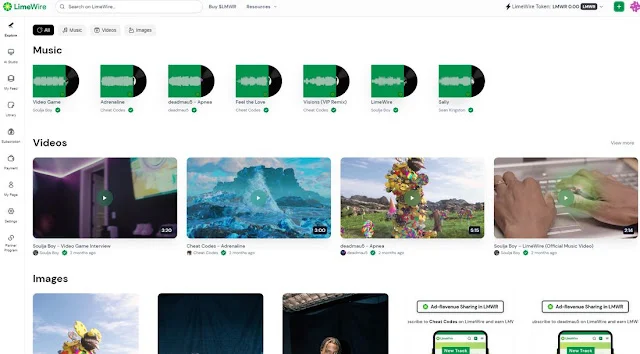
In a significant pivot from its controversial past, LimeWire, a name once synonymous with peer-to-peer file-sharing in the early 2000s, has re-entered the digital landscape as a sophisticated and forward-thinking AI content publishing platform. This transformation marks a strategic move to capitalize on the burgeoning fields of generative artificial intelligence and Web3 technologies, offering creators innovative avenues for content generation, sharing, and monetization. The platform aims to distinguish itself in a crowded market by integrating advanced AI tools with a robust blockchain-powered ecosystem, enabling users to mint their creations as Non-Fungible Tokens (NFTs) and earn revenue through ad sharing and tokenomics.
A Phoenix from the Ashes: LimeWire’s Evolution
To fully appreciate the scope of LimeWire’s current iteration, it is essential to contextualize its origins. The original LimeWire gained notoriety as a popular, albeit legally contentious, file-sharing application that facilitated the exchange of digital media, primarily music, through the Gnutella network. Its prominence peaked in the mid-2000s, but it ultimately faced numerous lawsuits from record labels and copyright holders, leading to its permanent injunction and shutdown in 2010. For over a decade, the brand remained dormant, a relic of an earlier internet era defined by the wild west of digital distribution.
The decision to resurrect the LimeWire brand in 2022 was met with both curiosity and skepticism, yet the new entity bears little resemblance to its predecessor beyond the name. The re-launch was spearheaded by new ownership, positioning LimeWire as a fully regulated, digital collectibles marketplace, with a clear focus on the creator economy, Web3, and now, generative AI. This strategic rebranding leverages the brand recognition while decisively moving away from its illicit past, aiming instead to foster a legitimate and empowering environment for digital artists and content creators. This represents not merely a technological update but a fundamental philosophical shift: from unauthorized sharing to verified ownership and creator empowerment.
Navigating the Generative AI Revolution
The backdrop for LimeWire’s re-emergence is the explosive growth and increasing accessibility of generative AI. Tools like OpenAI’s DALL-E, Midjourney, and Stability AI’s Stable Diffusion have democratized content creation, allowing individuals without specialized artistic skills to produce high-quality images, text, and even code from simple text prompts. The global generative AI market, valued at approximately $11.3 billion in 2023, is projected to grow at a compound annual growth rate (CAGR) exceeding 35% through 2030, according to various market intelligence reports. This rapid expansion highlights a significant opportunity for platforms that can effectively integrate these technologies into user-friendly and commercially viable models.
LimeWire’s initial focus on AI image generation places it directly within this burgeoning market. The platform supports advanced models such as Stable Diffusion 2.1, Stable Diffusion XL, and DALL-E 2, providing users with a sophisticated toolkit. This multi-model approach allows creators to experiment with different AI engines, each offering unique stylistic outputs and capabilities. Users can initiate the creative process with prompts ranging from simple keywords to elaborate descriptive passages, guiding the AI to produce bespoke visuals tailored to their artistic vision.
Beyond mere generation, LimeWire Studio offers a spectrum of design styles, including cinematic, digital art, pixel art, anime, and analog film, enabling creators to impart a distinct visual identity to their AI-generated art. Customization options, samplers for fine-tuning quality and detail, and prompt guidance further enhance the user experience, making the platform accessible to both novice and experienced digital artists. A notable development is LimeWire’s active development of its proprietary AI model, signaling a commitment to continuous innovation and the potential for even more unique creative capabilities in the future. This move suggests a long-term strategy to build a distinct competitive advantage rather than solely relying on third-party models.
The Web3 Integration: Monetization and Ownership
A core differentiator for the new LimeWire is its deep integration with Web3 technologies, particularly Non-Fungible Tokens (NFTs) and cryptocurrency. This integration addresses a critical challenge for digital creators: establishing verifiable ownership and creating new monetization streams beyond traditional advertising or subscription models.
Upon completing a creative endeavor within LimeWire Studio, creators are given the option to publish their content. An innovative feature automatically mints the creation as an NFT on either the Polygon or Algorand blockchain. This automated process transforms a digital file into a unique, verifiable asset, securing its authenticity and ownership on a decentralized ledger. This stands in stark contrast to traditional digital content, which is often easily duplicated and difficult to track for ownership.
Creators retain significant control over the accessibility of their NFT creations. They can opt for a public release, making the content discoverable and tradable by anyone within the LimeWire community and beyond. This fosters a vibrant marketplace where fans can not only consume but also acquire and trade digital collectibles. Alternatively, creators can choose to share their posts exclusively with premium subscribers, creating an intimate and personalized experience for dedicated fans and adding an exclusive tier to their content offerings. This flexibility empowers creators to tailor their distribution strategy to their specific audience and monetization goals.
Beyond direct sales and subscriptions, LimeWire introduces a multi-faceted revenue model:
- Ad Revenue Share: Creators receive a substantial 70% of all ad revenue generated from other users viewing their images, music, and videos on the platform. This is a significant share compared to many mainstream content platforms, which often offer much lower percentages to creators, sometimes as little as 30-50%. This model incentivizes content creation and engagement, offering a passive income stream based on viewership.
- LMWR Tokens: All earnings on the platform are paid out in LMWR tokens, LimeWire’s native cryptocurrency. These tokens serve multiple purposes: they are the medium of exchange for creator earnings, can be used to pay for prompts when utilizing LimeWire’s generative AI tools, and are tradable on popular cryptocurrency exchange platforms such as Kraken, ByBit, and UniSwap. This token economy aligns LimeWire with the broader decentralized finance (DeFi) movement, offering transparency and liquidity to creators’ earnings.
- NFT Royalties: A particularly compelling feature for artists is the 2.5% royalty creators earn each time their NFT content is traded on the secondary market. This mechanism ensures that creators continue to benefit from the long-term value and popularity of their work, providing an ongoing income stream that transcends the initial sale. This royalty system is a cornerstone of the Web3 creator economy, fundamentally altering how artists can generate sustainable income from their digital assets.
The Creator Economy and Market Impact
LimeWire’s comprehensive approach positions it as a significant player in the evolving creator economy. The global creator economy, estimated to be worth over $100 billion, is constantly seeking new tools and platforms that offer better monetization and control to artists. By blending advanced AI generation with robust Web3 monetization, LimeWire addresses several pain points for creators: the difficulty of creating high-quality content without extensive technical skills, the challenge of proving digital ownership, and the struggle to secure fair compensation for their work.
The involvement of acclaimed artists and musicians, such as Deadmau5, Soulja Boy, and Sean Kingston, who have reportedly embraced the platform to publish content in the form of NFT music, videos, and images, lends credibility to LimeWire’s Web3 vision. This adoption by established figures suggests a growing acceptance of blockchain-based content distribution and monetization within the mainstream creative industries. Industry analysts suggest that LimeWire’s hybrid model could attract a diverse range of creators, from emerging digital artists to established professionals seeking new revenue streams and greater control over their intellectual property.
Pricing Structure and Accessibility
LimeWire prioritizes accessibility with a tiered pricing structure that includes a free option. New users can sign up and receive 10 credits, allowing them to generate up to 20 AI images per day, along with a 50% ad revenue share. This free tier serves as an excellent entry point for individuals to experiment with generative AI and the platform’s core features without immediate financial commitment.
For more prolific creators or those seeking enhanced benefits, LimeWire offers several premium plans:
- Basic Plan ($9.99/month): Provides 1,000 credits (up to 2,000 image generations), early access to new AI models, and a 50% ad revenue share.
- Pro Plan ($29/month): Offers 3,750 credits (up to 7,500 image generations), early access to new AI models, and a 60% ad revenue share.
- Advanced Plan ($49/month): Includes 5,000 credits (up to 10,000 image generations), early access to new AI models, and a 70% ad revenue share.
- Expert Plan ($99/month): Delivers 11,250 credits (up to 22,500 image generations), early access to new AI models, and a 70% ad revenue share.
All premium plans come with additional perks, including a Pro profile badge, full creation history access, faster image generation speeds, and an ad-free experience, enhancing the overall professional utility of the platform.
Future Horizons: Music and Video Generation
LimeWire’s strategic roadmap includes ambitious plans to broaden its offerings beyond AI image generation. The platform has announced intentions to introduce AI music and video generation tools in the near future. This expansion promises to unlock even more avenues for creative expression and audience engagement, positioning LimeWire Studio as a dynamic and evolving platform across multiple media formats. The integration of AI for music composition and video editing would place LimeWire at the forefront of multimodal generative AI, potentially attracting a broader spectrum of creators, including musicians, filmmakers, and animators. This foresight demonstrates a commitment to staying ahead of technological trends and continuously expanding the value proposition for its user base.
Implications and Challenges
LimeWire’s re-emergence as an AI and Web3 content hub carries significant implications for the creative landscape. It democratizes access to advanced creative tools, potentially fostering a new generation of digital artists and content producers. The platform also offers a compelling model for sustainable creator monetization, moving beyond the often-criticized ad-revenue share models of traditional platforms by incorporating genuine digital ownership and perpetual royalties.
However, the journey is not without its challenges. The nascent Web3 and NFT markets are subject to volatility and regulatory scrutiny, which could impact the value of LMWR tokens and the tradeability of NFTs. Ethical considerations surrounding AI-generated content, such as copyright, attribution, and potential for misuse, are also ongoing debates that platforms like LimeWire will need to navigate carefully. Content moderation in a decentralized environment, ensuring quality and preventing harmful content, will also be a continuous effort. Despite these hurdles, LimeWire’s commitment to innovation and its multi-faceted approach to empowering creators position it as a noteworthy entity in the convergence of AI, blockchain, and the evolving digital economy.
In conclusion, LimeWire has executed a remarkable transformation, shedding its past to embrace the future of digital content creation and ownership. By integrating cutting-edge generative AI tools with a robust Web3 monetization framework, it offers an inclusive platform where anyone can unleash their artistic potential, secure verifiable ownership of their work through NFTs, and earn revenue with unprecedented control. As LimeWire continues to evolve and expand its generative AI capabilities into music and video, it stands poised to become a significant force in shaping how digital art is created, distributed, and valued in the decentralized era.