admin
admin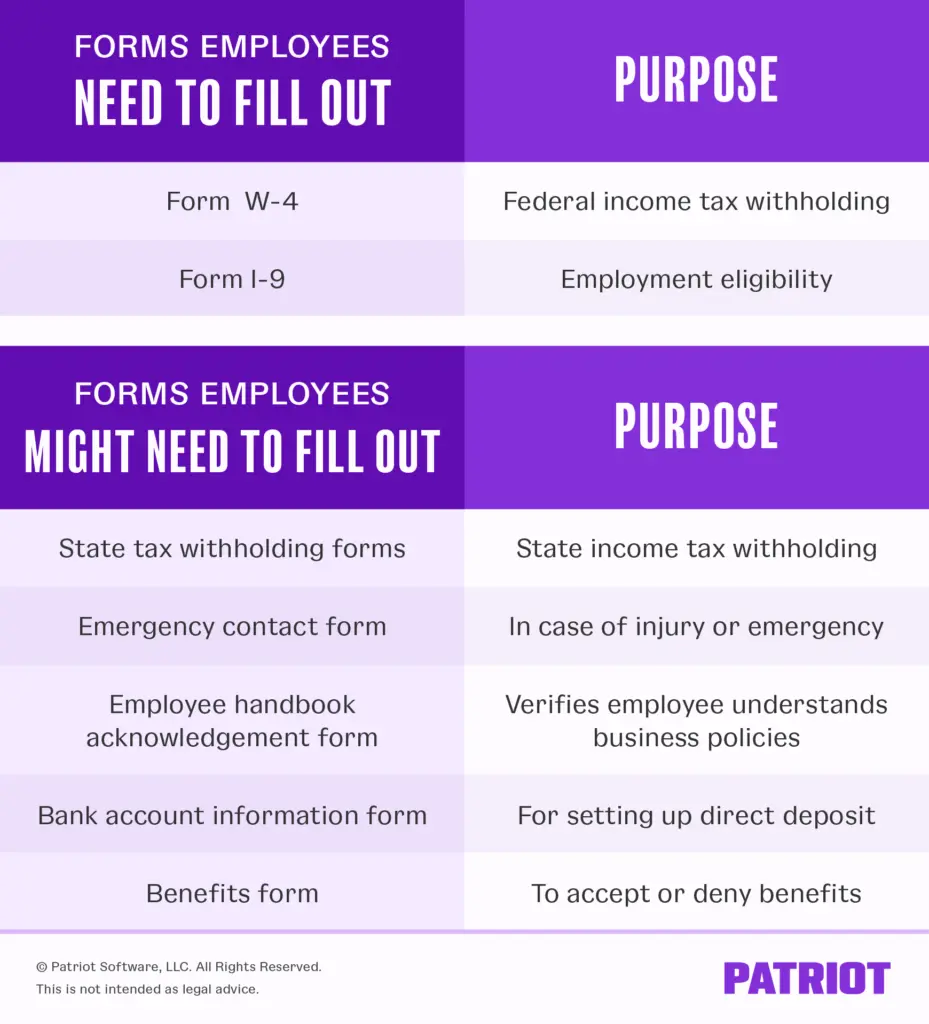
The process of bringing a new employee into an organization is multifaceted, extending far beyond the initial offer letter and first day. A critical, foundational element of this transition is the meticulous completion and management of new employee forms. These documents are not merely bureaucratic hurdles but indispensable tools for ensuring legal compliance, accurate payroll processing, appropriate tax withholding, and the overall operational integrity of a business. Without proper adherence to federal, state, and internal requirements, companies risk significant penalties, operational disruptions, and a compromised employee experience.
The Foundational Pillars: Federal Employment Eligibility and Tax Forms
At the core of new hire documentation are forms mandated by federal law, primarily focused on verifying an individual’s legal eligibility to work in the United States and establishing the framework for income tax withholding. These forms serve as crucial safeguards for both the government and the employer, ensuring adherence to immigration and tax laws.
Form I-9: Verifying Employment Eligibility
Central to federal compliance is Form I-9, the Employment Eligibility Verification form. Mandated by the Immigration Reform and Control Act (IRCA) of 1986, this document serves a singular, critical purpose: to confirm that every hired individual is legally authorized to work in the United States. Employers are legally responsible for verifying the identity and employment eligibility of all new hires, regardless of their citizenship status, to prevent the hiring of unauthorized workers.
The completion of Form I-9 is a time-sensitive process. Section 1 must be completed by the employee no later than their first day of employment. This section requires the employee to attest to their citizenship or immigration status and provide personal information such as their name, address, and Social Security number. Notably, if an employee does not possess a Social Security number, they are typically directed to apply for one using Form SS-5, as a Social Security number is essential for accurate wage reporting on forms like W-2.
Following the employee’s completion, the employer must complete Section 2 within three business days of the employee’s first day of work. This involves physically examining original, unexpired documents presented by the employee to establish both identity and employment authorization. The form provides three lists of acceptable documents: List A documents establish both identity and employment authorization (e.g., a U.S. passport); List B documents establish identity only (e.g., a driver’s license); and List C documents establish employment authorization only (e.g., a Social Security card). Employees must provide either one document from List A or one document from List B and one from List C. Employers must meticulously record the document information and certify, to the best of their knowledge, that the documents appear genuine and relate to the individual.
Non-compliance with I-9 requirements carries substantial risks. Penalties for paperwork violations, such as incorrect or incomplete forms, can range from hundreds to thousands of dollars per violation, depending on the number of individuals involved and the severity of the infraction. More severe penalties, including higher fines and even criminal charges, can be imposed for "knowing hire" violations, where an employer knowingly hires or continues to employ an unauthorized worker. The Department of Homeland Security (DHS), through its agencies like Immigration and Customs Enforcement (ICE) and U.S. Citizenship and Immigration Services (USCIS), actively enforces these regulations through audits and investigations.
In a modern workforce increasingly embracing remote work, USCIS has introduced an alternative remote document examination procedure for Form I-9 for qualified employers enrolled in E-Verify. E-Verify, an internet-based system that compares information from an employee’s Form I-9 to data from DHS and Social Security Administration records, is mandatory for some federal contractors and in certain states, and voluntary for others. This remote option, contingent on specific guidelines, highlights the evolving landscape of compliance in a digital age.
Form W-4: Navigating Federal Income Tax Withholding
Equally critical for new hires is Form W-4, the Employee’s Withholding Certificate. This Internal Revenue Service (IRS) document empowers employees to inform their employer how much federal income tax should be withheld from their paychecks. Accurate withholding is vital for employees to avoid underpayment penalties at tax time or excessive overpayment throughout the year.
The Form W-4 underwent significant revisions in 2020, moving away from the concept of "withholding allowances" to a more direct method of indicating adjustments based on marital status, multiple jobs, dependents, and other income or deductions. Employees provide their personal information, marital status, and any adjustments they wish to make, such as claiming dependents or requesting additional withholding. Employers then use this information, in conjunction with tax tables published in IRS Publication 15, Employer’s Tax Guide, to calculate the appropriate federal income tax to deduct from each paycheck.
If an employee fails to submit a Form W-4, current IRS guidance dictates that employers must default to withholding federal income tax at the highest rate, as if the employee is single with no adjustments. This default can result in significant over-withholding for many employees, underscoring the importance of timely submission. Employees have the flexibility to update their W-4 at any point during the year should their financial or personal circumstances change. In rare instances, an employee may claim exemption from federal income tax withholding, typically if they had no tax liability in the prior year and expect none in the current year. Employers must honor such claims but should be aware that these exemptions expire annually and require re-certification.
State and Local Tax Compliance: A Layer of Complexity
Beyond federal requirements, employers and employees must also navigate state and, in some cases, local tax obligations. The landscape of state income tax is diverse, with varying requirements across the United States.
Many states that levy income tax require employees to complete a state-specific withholding form, akin to the federal W-4. These forms enable employees to specify their state tax withholding preferences, often utilizing "withholding allowances" or a percentage-based system. For instance, an employee in California would complete a DE-4 Withholding Certificate. Conversely, nine states currently do not impose a state income tax on wages: Alaska, Florida, Nevada, New Hampshire, South Dakota, Tennessee, Texas, Washington, and Wyoming. In these states, a state W-4 form is not required.
The complexity further deepens when considering local income taxes. Certain cities, counties, or municipalities may impose their own income taxes, which employers are typically responsible for withholding from employee wages. These local taxes are often a flat percentage of income and generally do not involve employee-completed withholding forms, but require careful adherence to local ordinances. The varying requirements across different jurisdictions necessitate that employers maintain a comprehensive understanding of all applicable federal, state, and local tax laws to ensure full compliance and avoid penalties from multiple governmental entities.
Internal Business Documentation: Tailoring the Employee Experience

While federal and state forms are mandatory for legal operation, businesses also utilize a range of internal forms to manage operations, ensure employee well-being, and establish clear expectations. These forms, though not always legally mandated in the same way as I-9s or W-4s, are critical for efficient administration and a positive work environment.
Emergency Contact Information: One of the most vital internal documents is the emergency contact form. In the event of a workplace accident, medical emergency, or any unforeseen crisis involving an employee, immediate access to reliable emergency contact information is paramount. This form typically requests the names, relationships, addresses, and phone numbers (home and work) of one or more individuals to be notified. Employers are advised to encourage employees to select contacts who are readily reachable and to update this information regularly to ensure its accuracy.
Employee Handbook Acknowledgment: An employee handbook serves as a comprehensive guide to a company’s policies, procedures, cultural expectations, and legal obligations. It covers everything from codes of conduct and attendance policies to benefits information, anti-discrimination policies, and disciplinary procedures. Requiring employees to sign an acknowledgment form verifying that they have received, read, and understood the handbook is a critical step. This not only clarifies expectations for the employee but also provides legal protection for the employer, demonstrating that policies were communicated and acknowledged. Many businesses leverage digital tools, such as employee handbook builders, to streamline the creation and dissemination of these essential documents.
Direct Deposit Authorization: In an increasingly cashless economy, direct deposit has become the preferred method for wage payment due to its efficiency, security, and convenience for both employers and employees. A direct deposit authorization form collects the necessary banking details from employees, including their bank name, account number, and routing number. Employees must sign this form to authorize the electronic transfer of their wages. While some states allow employers to mandate direct deposit, others require employee consent. Implementing direct deposit streamlines payroll processes, reduces administrative overhead, and enhances financial security by eliminating the need for physical checks.
Benefits Enrollment Forms: For businesses that offer employee benefits – such as health insurance, dental and vision plans, life insurance, retirement plans (e.g., 401(k)s), paid time off, or flexible spending accounts – a suite of benefits enrollment forms is necessary. These forms allow employees to elect their participation, choose specific plans, designate beneficiaries, and provide any required personal health information. Even if an employee opts out of certain benefits, a waiver form acknowledging their decision is often collected. Providing a clear and comprehensive benefits package, along with the necessary forms, is crucial for attracting and retaining talent, as benefits are a significant component of total compensation.
The Holistic Approach: Beyond Paperwork to Onboarding Excellence
While the accurate completion of new hire forms is non-negotiable, it represents only the initial phase of a successful employee integration process. Effective onboarding extends far beyond paperwork, encompassing a strategic approach to assimilate new hires into the company culture, equip them with necessary tools and knowledge, and foster engagement from day one. Studies consistently demonstrate that robust onboarding programs significantly improve employee retention, accelerate productivity, and enhance overall job satisfaction.
Key elements of a comprehensive onboarding program include:
- Pre-boarding Communication: Engaging with new hires even before their start date, providing necessary information, and setting expectations.
- Structured Orientation: A formal introduction to the company’s mission, values, organizational structure, and key personnel.
- Role-Specific Training: Providing the necessary skills, knowledge, and resources for the new employee to perform their job effectively.
- Cultural Integration: Facilitating connections with colleagues, understanding workplace norms, and embracing the company’s ethos.
- Performance Management and Goal Setting: Clearly outlining expectations, providing initial goals, and establishing a framework for ongoing feedback and development.
- Mentorship or Buddy Programs: Pairing new hires with experienced employees to provide support, guidance, and a friendly point of contact.
When new hires feel supported, informed, and integrated from the outset, they are more likely to become productive, loyal, and long-term contributors to the organization.
Regulatory Oversight, Recordkeeping, and Continuous Compliance
The regulatory environment surrounding employment is dynamic, with agencies like the IRS, USCIS, and state labor departments continuously issuing updated guidance and regulations. Employers bear the ongoing responsibility of staying informed and ensuring their practices remain compliant.
Recordkeeping Requirements: Employers must maintain diligent records of all new hire forms. Form I-9s must be retained for the longer of three years after the date of hire or one year after the date employment ends. Form W-4s and other payroll records typically must be kept for at least four years after the date the last tax was due or paid. These documents must be stored securely, maintaining confidentiality, and be readily accessible in the event of an audit by relevant government agencies. It is critical to note that I-9s and W-4s are generally not submitted routinely to the government but are kept on file by the employer unless specifically requested during an audit or investigation.
Audit Preparedness: Government audits can be initiated by various agencies to ensure compliance with labor, tax, and immigration laws. Being prepared for an audit involves maintaining meticulous, accurate, and easily retrievable records. Any discrepancies or missing documentation can lead to significant fines and legal complications.
Leveraging Technology for Streamlined Compliance
The complexities of new hire documentation and ongoing compliance have made human resources (HR) and payroll software indispensable tools for modern businesses. These technological solutions automate many aspects of the hiring and onboarding process, significantly reducing the administrative burden and mitigating risks associated with manual processes.
HR and payroll software platforms often include features for:
- Digital Form Completion: Allowing employees to complete I-9s, W-4s, and other forms electronically, often with guided instructions and error checks.
- Secure Document Storage: Providing a centralized, secure repository for all employee documents, ensuring easy retrieval and adherence to recordkeeping requirements.
- Automated Reminders: Notifying employers and employees of upcoming deadlines, such as I-9 reverifications or W-4 updates.
- Compliance Updates: Automatically incorporating changes to federal and state regulations into the system, helping businesses stay compliant with evolving laws.
- Employee Self-Service: Empowering employees to access their own documents, update personal information, and manage benefits elections, reducing HR inquiries.
- Payroll Integration: Seamlessly linking tax withholding information from W-4s directly into payroll processing, ensuring accurate deductions.
By streamlining forms, automating calculations, and providing robust recordkeeping capabilities, these software solutions enable businesses to focus more on their core operations and less on the intricacies of compliance, while simultaneously enhancing the new employee experience.
In conclusion, the meticulous management of new employee forms is a fundamental aspect of operating a legally compliant, efficient, and ethical business. From verifying employment eligibility and ensuring accurate tax withholding to facilitating critical internal processes and fostering a positive onboarding experience, these documents lay the groundwork for a successful employer-employee relationship. Adhering to regulatory requirements, understanding the purpose of each form, and leveraging modern technological solutions are paramount for businesses seeking to navigate the complex landscape of employment documentation effectively.