Lina Irawan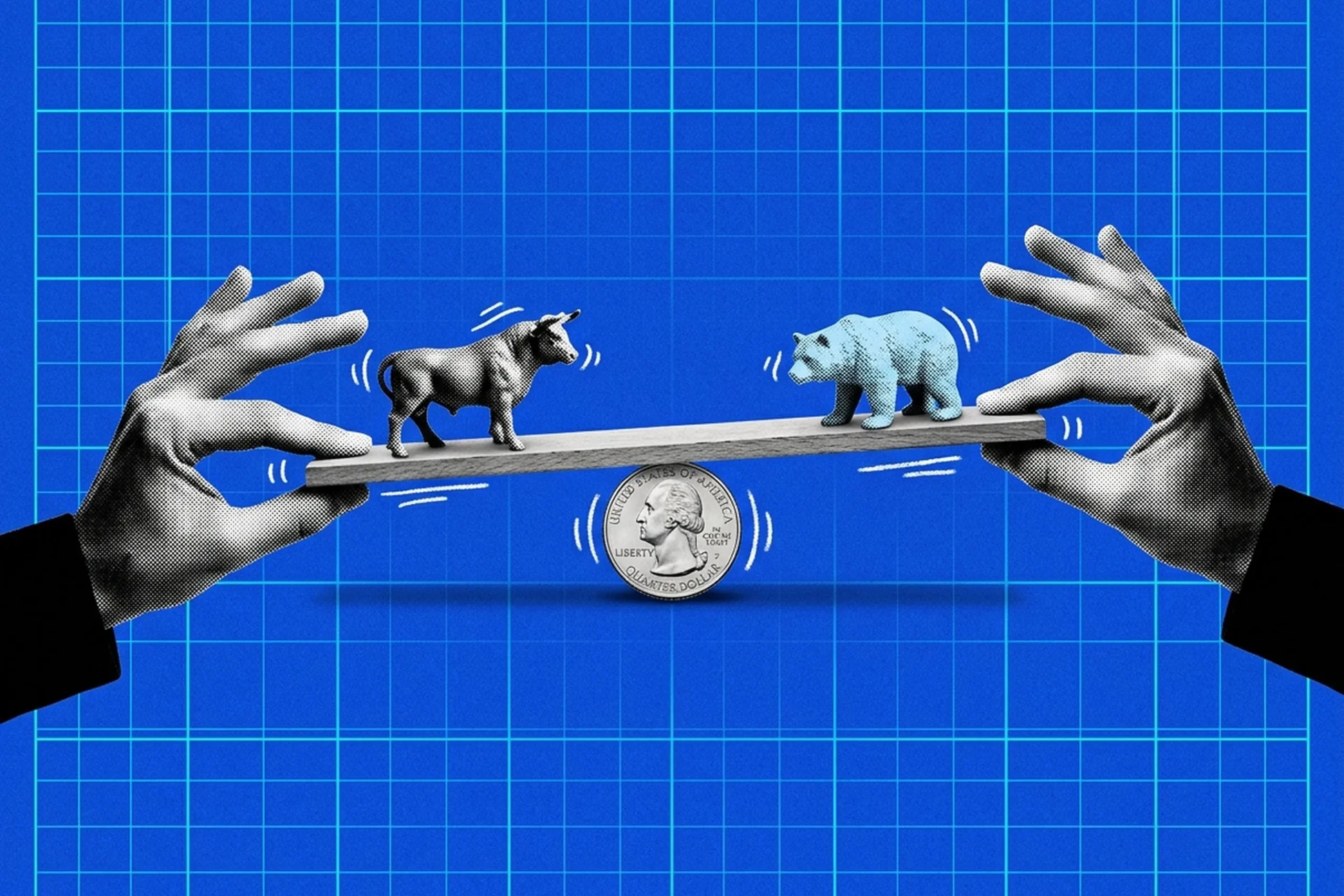
The year 2026 presents a perplexing dichotomy for the American economy, echoing Charles Dickens’ famous opening, "It was the best of times, it was the worst of times." On one hand, the stock market continues its ascent, shattering records and significantly boosting the 401(k) balances of millions of Americans. Major indices like the S&P 500 and Nasdaq Composite have reached unprecedented heights, fueled by robust corporate earnings in specific sectors and continued optimism around technological advancements. Yet, beneath this glittering surface of market performance, a pervasive sense of unease lingers, driven by persistently high inflation, escalating borrowing costs, and growing skepticism regarding the broader economic impact and return on investment of the artificial intelligence boom. This stark divergence creates a complex and often contradictory financial reality for households and investors alike.
The Dual Realities of 2026: A Chronology of Contrasts
The journey to this bifurcated economic state began in the aftermath of the post-pandemic recovery, which, while initially strong, laid the groundwork for the current challenges. By late 2024 and throughout 2025, inflation, initially deemed "transitory" by many policymakers, proved more entrenched. Supply chain bottlenecks eased, but strong consumer demand, particularly in the services sector, and wage growth kept price pressures elevated. The Federal Reserve, having aggressively raised interest rates in previous years, found itself navigating a delicate balance, aiming to cool inflation without tipping the economy into recession.
Simultaneously, the stock market, particularly the technology sector, experienced a renaissance. The AI narrative, which gained significant traction in 2023, matured into a tangible, albeit concentrated, investment theme. Companies involved in AI chip manufacturing, cloud infrastructure, and large language model development saw their valuations soar, pulling the broader market higher. This momentum carried through 2025 and into 2026, creating a "wealth effect" for those with significant market exposure. However, this market strength often felt disconnected from the everyday financial struggles of many Americans grappling with rising costs.
Persistent Economic Headwinds
Despite the market’s exuberance, several fundamental economic indicators continue to signal caution.
-
Stubborn Inflation and the Diesel Ripple Effect: While headline energy prices have retreated from their eye-watering highs seen earlier in the year, particularly crude oil, the cost of refined fuels, notably diesel, remains stubbornly elevated. Diesel prices, which were within pennies of last month’s record highs, exert a profound ripple effect across the entire American economy. Nearly every good consumed in the U.S., from agricultural products to manufactured goods, relies on diesel-powered transportation for its journey from farm or factory to retail shelves. High diesel costs translate directly into higher freight charges, which producers and retailers inevitably pass on to consumers. This contributes significantly to the persistent inflation in everyday necessities, eroding purchasing power even as wages might nominally increase. Analysts at the American Trucking Associations noted in a recent report that "a sustained period of high diesel prices acts as a de facto tax on the entire supply chain, making it harder for businesses to absorb costs and easier to justify price increases to consumers." This structural inflationary pressure, distinct from the more volatile energy commodity swings, forms a key component of consumer financial stress.
-
Mounting National Debt and Rising Borrowing Costs: The U.S. national debt recently eclipsed the staggering $40 trillion mark, a significant milestone that has amplified investor anxieties regarding fiscal sustainability. This unprecedented level of indebtedness, driven by years of deficit spending, particularly during the pandemic, has led to a noticeable uptick in borrowing costs for the government. As the supply of U.S. Treasury bonds increases to finance this debt, and as global investors demand a higher premium for holding what they perceive as increasingly risky assets, Treasury yields have climbed. This directly impacts borrowing costs across the economy, from mortgages and auto loans to corporate debt and state and local government financing. For example, the average 30-year fixed mortgage rate, which had normalized somewhat from its peak, saw another incremental rise in early 2026, further squeezing potential homebuyers. Economists at the Committee for a Responsible Federal Budget (CRFB) have repeatedly warned that "the trajectory of the national debt is unsustainable and poses a long-term threat to economic growth and national security, by potentially crowding out private investment and increasing the risk of fiscal crises."
-
The AI Investment Conundrum: The artificial intelligence boom has undeniably been a primary driver of recent market gains, with trillions of dollars poured into research, development, and infrastructure by tech giants and startups alike. This massive investment has certainly propped up certain segments of the economy, particularly in the semiconductor, cloud computing, and specialized software industries. However, a growing chorus of analysts and investors is beginning to question the immediate and widespread return on these "enormous" investments. Concerns revolve around the scalability of AI solutions beyond niche applications, the significant energy consumption and computing power required, and the often-unclear path to profitability for many AI-centric ventures. While a handful of companies have seen their market capitalizations explode, the broader economic impact, in terms of productivity gains across all sectors, remains somewhat elusive. A recent report from a prominent venture capital firm highlighted that "while the foundational AI models are revolutionary, the widespread integration and monetization across legacy industries are proving more complex and capital-intensive than initially projected, leading to a longer runway for ROI." This skepticism fuels doubts about the sustainability of the current tech-led market rally.
Public Sentiment and Expert Warnings
The chasm between robust market performance and persistent economic challenges has not gone unnoticed by the American public. A new survey released by the Allianz Center for the Future of Retirement reveals that a significant majority—roughly 3 in 4 Americans—believe that recent market highs are "unsustainable" and anticipate a market correction on the horizon. This sentiment underscores a fundamental disconnect between perceived wealth generation in portfolios and daily financial realities. Furthermore, nearly 2 in 3 respondents reported feeling compelled to delay significant financial decision-making, such as retirement planning, major purchases, or investment shifts, due to the perceived "unpredictability" of today’s economy.
Kelly LaVigne, Vice President of Consumer Insights at Allianz Life, encapsulates this sentiment as "financial whiplash." He notes, "There’s all the bad news we’re getting on the amount it costs just to keep your standard of living. On the other hand, however, you’ve got the market continuing to hit all these records. It’s these two almost opposite headlines that leave people feeling disoriented." This internal conflict highlights a deep-seated anxiety that belies the headline figures of market prosperity.
Adding to these concerns, a key "bubble" metric, the cyclically adjusted price-to-earnings (CAPE) ratio, also known as the Shiller PE, stands at its second-highest level ever recorded. This long-term valuation measure, which smooths out earnings over a decade to account for business cycles, has only surpassed its current level once: just before the devastating dot-com crash of the early 2000s. While a high CAPE ratio strongly suggests overvaluation, financial professionals universally caution against using it as a precise market timing tool. Ron Johnson, a wealth planner at Baird, emphasizes, "It’s really, really hard to predict a correction. We know it’s coming, but we don’t know when. And if you over-prepare, meaning move to cash, you could be out of the market during some really nice runs." This highlights the inherent difficulty for investors in navigating an environment where warning signs are clear, but their actionable timing remains obscure.
Strategic Pathways for Discerning Investors
In this environment of high uncertainty and contradictory signals, smart investors are advised to adhere to long-term plans that inherently account for inevitable market downturns. Financial experts advocate for proactive steps to protect assets and position portfolios to capitalize on opportunities that a less frothy market might present.
-
Maintain Strategic Diversification and Prepare for Bargain Buying: While the temptation to heavily concentrate holdings in surging sectors like technology is understandable, especially given recent performance, maintaining a truly diversified portfolio remains paramount. Ron Johnson critiques the "recency bias" that leads some to declare the "60/40 portfolio is dead," referring to the traditional allocation of 60% equities and 40% fixed income. While younger investors with longer time horizons may indeed tolerate a higher equity allocation, he warns against abandoning fixed income entirely. "If you don’t have any fixed income, if the market were to take a large correction, you wouldn’t have any powder in your keg to rebalance and buy equities at a low price," Johnson notes. A diversified portfolio, including a prudent allocation to bonds or other less correlated assets, provides a crucial buffer and the necessary capital to "buy the dip" when valuations become more attractive during a market correction. This strategy allows investors to take advantage of downturns rather than being solely exposed to them.
-
Safeguard Shorter-Term Capital for Imminent Needs: For individuals nearing retirement or those already in their golden years, protecting a portion of their assets from market volatility is a critical consideration. Thomas Martin, Senior Portfolio Manager and Partner at Globalt Investments, explains the core principle: "What you don’t want to do is be forced to sell them when they’re down." The amount of money to shelter is highly personalized, dependent on reliance on portfolio income for living expenses, and an individual’s willingness and ability to adjust spending during market fluctuations. Martin advises a self-reflective approach: "What do you need the money for and how certain do you want to be?" For many retirees, this translates to keeping three to five years’ worth of living expenses out of the equity market. With interest rates having normalized from their extreme post-pandemic lows, investors now have viable options. Laddered Certificates of Deposit (CDs) or Treasury bonds offer a way to preserve capital, generate predictable income, and prevent its value from being eroded by inflation, all while ensuring access to funds without liquidating depreciated stock holdings.
-
Embrace Dollar-Cost Averaging and Resist Emotional Selling: For 401(k) investors, one of the most powerful and accessible strategies is to simply "stay the course" by continuing payroll contributions, regardless of market movements. This practice, known as dollar-cost averaging, involves investing a fixed amount of money at regular intervals. When the market is high, your fixed contribution buys fewer shares; when the market falls, it buys more shares. Over time, this averages out the purchase price, significantly mitigating the financial hit of a falling market. Ron Johnson highlights this as "your best chance to buy equities at a discount," adding that "it’s called dollar-cost averaging, and that helps to mitigate" the overall impact of market fluctuations on one’s total balance. Above all, financial experts vehemently warn against the impulse to yank money out of stocks and stash it in cash during a downturn. While understandable, this emotional reaction invariably "creates a permanent loss," according to Kelly LaVigne. He underscores a critical insight from behavioral finance: "One of the reasons individual investors don’t do as well as the S&P is because of human behavior. It’s not because of market performance, it’s because of human performance." Disciplined adherence to a long-term plan, devoid of knee-jerk reactions, is often the most effective path to wealth accumulation.
Broader Economic Implications and Outlook
The current economic paradox carries significant broader implications. For homeowners, rising interest rates could temper housing market activity, while for renters, persistent inflation continues to strain budgets. Young workers entering the job market face a complex landscape where wage growth might not keep pace with the cost of living, even as their 401(k)s might show healthy gains. Retirees, balancing fixed incomes with market volatility, face unique challenges in preserving their nest eggs.
Looking ahead, economists are sketching out various scenarios. A "soft landing," where inflation gradually recedes without a significant economic contraction, remains a hopeful possibility, but its path is fraught with challenges. A "hard landing" involving a more pronounced recession, particularly if the Federal Reserve is forced to hike rates further to combat persistent inflation, cannot be entirely ruled out. Alternatively, a period of prolonged stagnation, where economic growth remains sluggish while asset prices remain elevated, presents its own set of risks. The resolution of the AI investment conundrum – whether the massive capital outlays translate into widespread productivity gains or remain concentrated wealth generators – will be a pivotal factor in shaping the economic narrative beyond 2026.
In conclusion, the year 2026 demands a nuanced understanding of economic realities. While the stock market’s ascent offers a sense of prosperity for many, the underlying currents of inflation, debt, and technological uncertainty necessitate a cautious yet strategic approach. For investors, the key lies in disciplined planning, robust diversification, and an unwavering commitment to long-term goals, all while remaining acutely aware of the "two almost opposite headlines" that define this complex financial era.