Lana Rhoades
The U.S. Bureau of Economic Analysis (BEA) today unveiled its comprehensive annual statistics for 2024, offering an in-depth look at real personal consumption expenditures (PCE), real personal income, and regional price parities (RPPs) across all 50 states and the District of Columbia. This release provides critical insights into the economic performance and cost of living variations at the subnational level, enabling a more nuanced understanding of economic trends shaping the nation.
National Economic Landscape and State-Level Performance
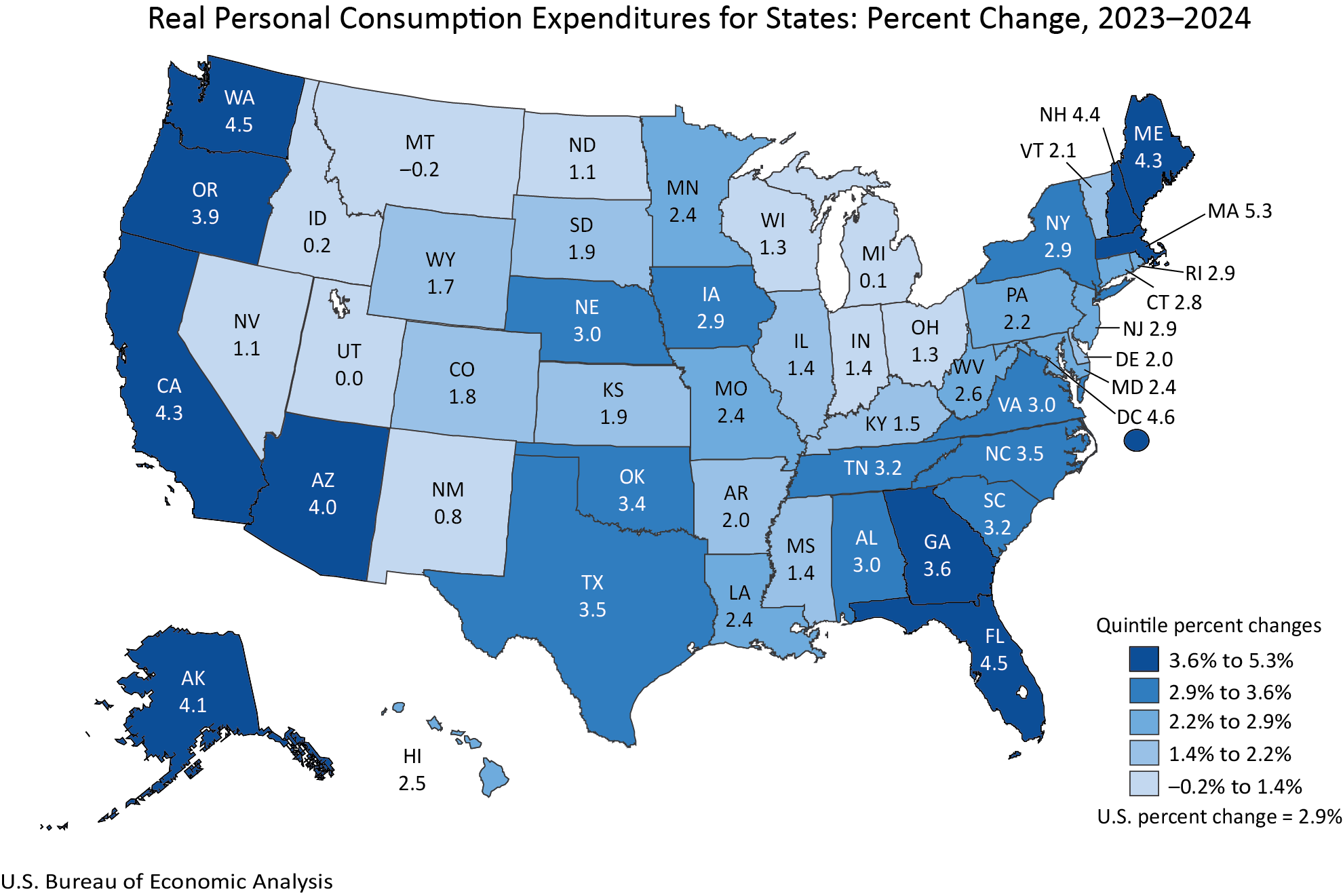
The release highlights that the U.S. economy, as measured by real PCE, saw a national increase of 2.9 percent in 2024. This growth outpaced the national PCE price index, which registered at 2.6 percent, indicating a modest increase in the purchasing power of consumers nationwide. Current-dollar PCE saw a more substantial rise of 5.6 percent, underscoring the impact of inflation on nominal spending figures.
At the state level, the picture is one of widespread growth, with 48 states and the District of Columbia experiencing an increase in real personal consumption expenditures. The dynamism in consumer spending varied significantly, with Massachusetts leading the nation with a robust 5.3 percent surge in real PCE. Conversely, Montana experienced a slight contraction, with real PCE decreasing by 0.2 percent. This divergence suggests varying economic conditions and consumer confidence across different regions.
Real personal income, a key indicator of household financial well-being, also showed broad-based growth. Nationally, real personal income rose by 2.9 percent in 2024. Similar to PCE, the majority of states reported gains, with 46 states and the District of Columbia witnessing an increase. California emerged as a frontrunner in real personal income growth, achieving a 5.5 percent increase. North Dakota, however, faced a decline of 2.2 percent in real personal income, highlighting potential sector-specific challenges or broader economic headwinds in that state. Current-dollar personal income across the nation grew by 5.6 percent, mirroring the trend seen in PCE, with inflation playing a significant role in nominal figures.
Understanding Regional Price Parities
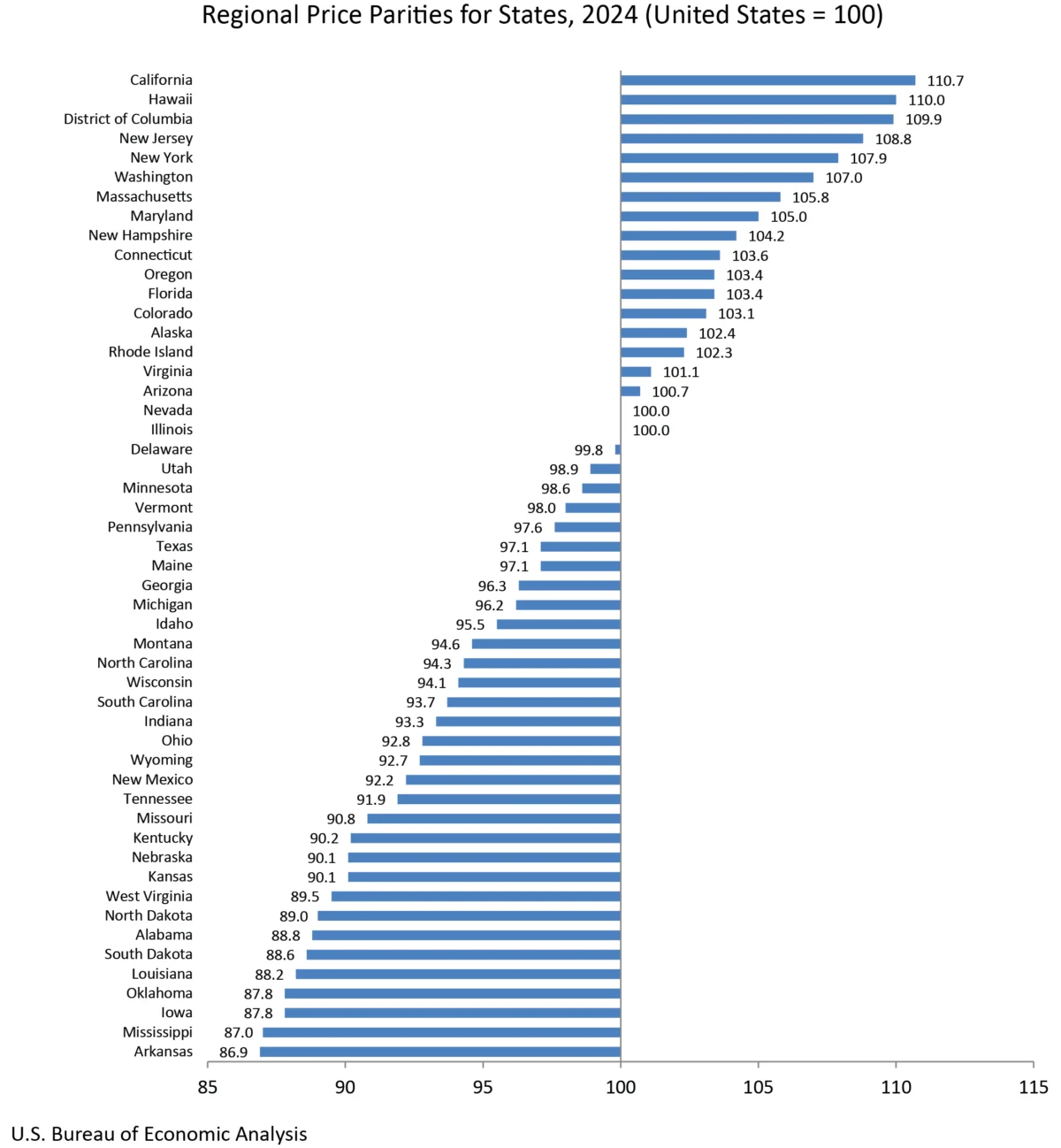
Complementing the data on income and spending, the BEA’s release includes crucial information on regional price parities (RPPs). RPPs serve as a vital tool for comparing price levels across different geographic areas. They measure the differences in the cost of a basket of goods and services, expressed as a percentage of the national average. This allows for a more accurate assessment of real purchasing power and economic well-being, as it accounts for variations in the cost of living.
The "all items RPP" encompasses all consumption goods and services, with housing rents identified as a primary driver of price level differences between states. For instance, states with high housing costs will generally exhibit higher RPPs, meaning that a dollar in those states buys less than a dollar in states with lower housing expenses. The BEA’s interactive data application provides detailed RPP statistics, including those for metropolitan areas, offering granular insights into cost-of-living disparities.
Timeline and Revisions to Historical Data
This year’s release is not just about new annual figures; it also incorporates significant revisions to historical data. The BEA has updated its annual estimates for real PCE and real personal income by state dating back to 2008. These revisions are a standard practice for the agency, aimed at incorporating the most comprehensive and detailed source data available. This process ensures that the state-level economic indicators remain accurate and reflective of the evolving economic landscape.
The revisions align with the BEA’s broader updates to national economic accounts, including the National Income and Product Accounts (NIPA) and Gross Domestic Product (GDP) by industry statistics. Such coordinated updates on September 25, 2025, and GDP, personal income, and PCE by state statistics on September 26, 2025, contribute to a more coherent and consistent picture of the U.S. economy.
Furthermore, the BEA has released new estimates for real per capita PCE and real per capita personal income for 2024. These per capita figures, calculated using U.S. Census Bureau population data from 2020 through 2024, offer another layer of analysis, indicating the average economic output and income available to individuals within each state.
Shifts in Data Presentation and Availability
A notable change accompanying this release is the discontinuation of the publication of statistics for metropolitan statistical areas and their constituent metropolitan and nonmetropolitan portions for real PCE and real personal income. While these granular data will no longer be published as part of the standard news release, real PCE and real personal income estimates will continue to be available at the state level. RPPs will still be published for both state and local areas, ensuring that some level of sub-state price comparison remains accessible. This shift reflects the BEA’s strategic effort to streamline its data offerings and focus on core state-level reporting for these specific indicators.
In line with its commitment to modernizing data dissemination, the BEA has also updated the presentation of its tables. Data previously embedded within news releases are now exclusively available through the BEA’s online Interactive Data Application. This application offers greater flexibility, allowing users to customize tables, access full time series, and download data in various formats, including PDF, Excel, and CSV. This move aims to reduce duplication, enhance efficiency, and direct users to the most comprehensive and dynamic data resources.
Implications and Broader Economic Context
The data released today provides a snapshot of economic activity and cost of living across the United States, offering valuable insights for policymakers, businesses, and individuals alike. The widespread growth in real PCE suggests a resilient consumer base, even amidst inflationary pressures. However, the varied rates of growth and income gains underscore the uneven nature of economic recovery and expansion across different states.
The significant role of housing costs in RPPs highlights the ongoing affordability challenges in many parts of the country. As RPPs adjust for price differences, they reveal how the purchasing power of income can vary dramatically. For instance, a high real income in a state with a high RPP may not translate into a higher standard of living compared to a moderate real income in a state with a lower RPP.
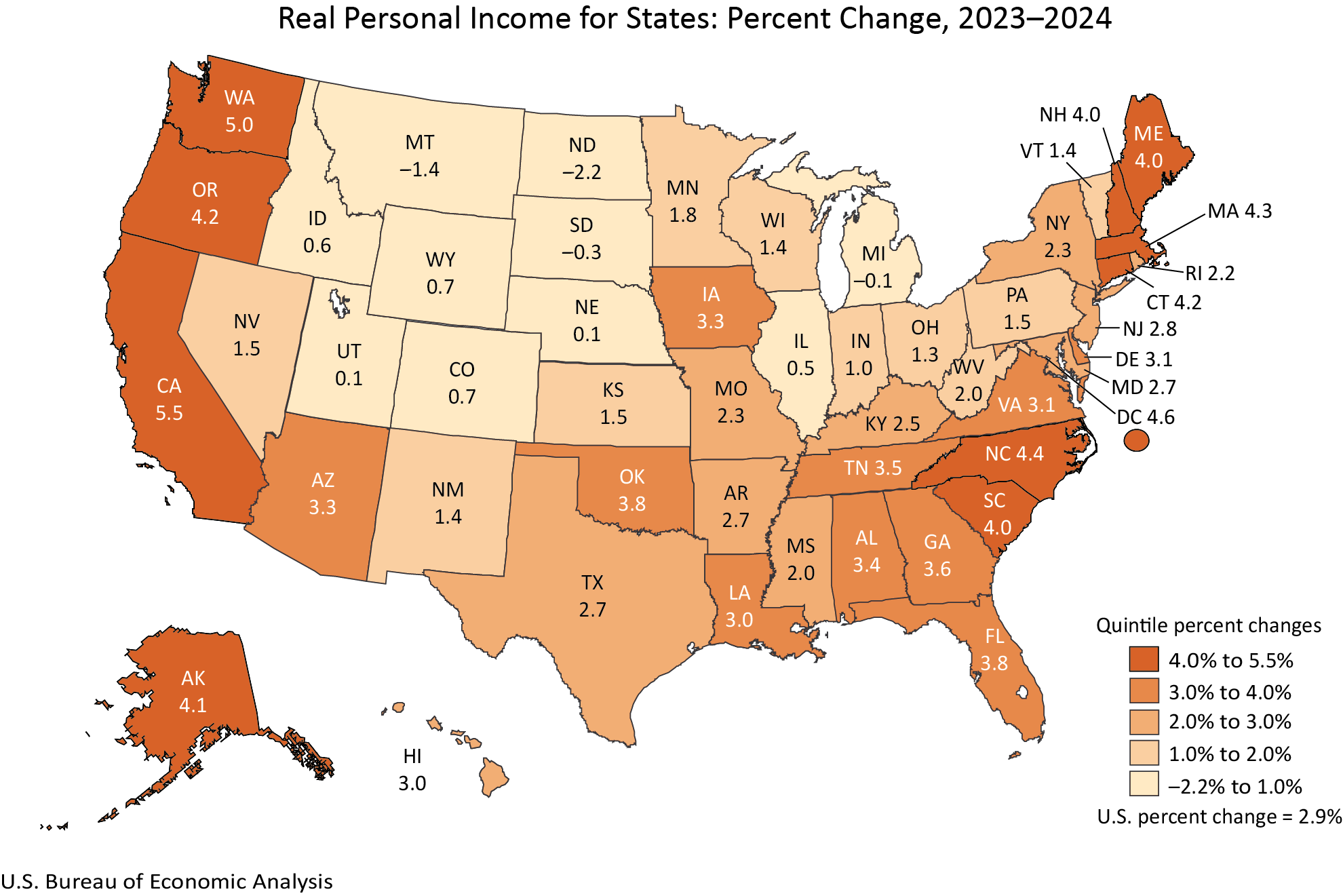
The revisions to historical data are crucial for understanding long-term economic trends. By incorporating more complete and detailed source data, these updates enhance the accuracy of past economic assessments and provide a more reliable foundation for future analysis and forecasting.
The discontinuation of metropolitan-level PCE and income data, while a shift, is balanced by the continued availability of state-level data and local RPPs. This ensures that key economic trends can still be tracked, albeit with a different focus on geographic aggregation.
Future Releases and Data Access
The BEA’s commitment to providing timely and accurate economic data continues with its scheduled releases. The next release, slated for December 10, 2026, at 8:30 a.m. EST, will feature the 2025 statistics for Real Personal Consumption Expenditures by State and Real Personal Income by State. These forthcoming data will supersede the 2024 figures, and links within BEA releases will be updated to reflect the latest information. For users needing to access the original data from this release after it has been superseded, the BEA’s Data Archive will serve as the repository.
The BEA’s Interactive Data Application remains the primary portal for accessing detailed historical time series and customizable data tables for real PCE, real personal income, and RPPs by state. Links provided in the release direct users to specific tables, such as "Table SARPI. Real PCE by State—Percent Change From Preceding Period" and "Table SARPI. Real Personal Income by State—Percent Change From Preceding Period," allowing for in-depth exploration of the released statistics. Similarly, "Table SARPP. RPPs by State—All Items (Index)" and "Table SARPP. RPPs by State—Services: Rents (Index)" offer detailed breakdowns of price parity data.
The comprehensive nature of this annual release from the Bureau of Economic Analysis underscores the agency’s role in providing essential economic intelligence that informs decision-making at all levels of government and across the private sector. By offering detailed state-level data on consumption, income, and prices, the BEA empowers stakeholders with the insights needed to navigate the complexities of the U.S. economy.