Candice Horbacz
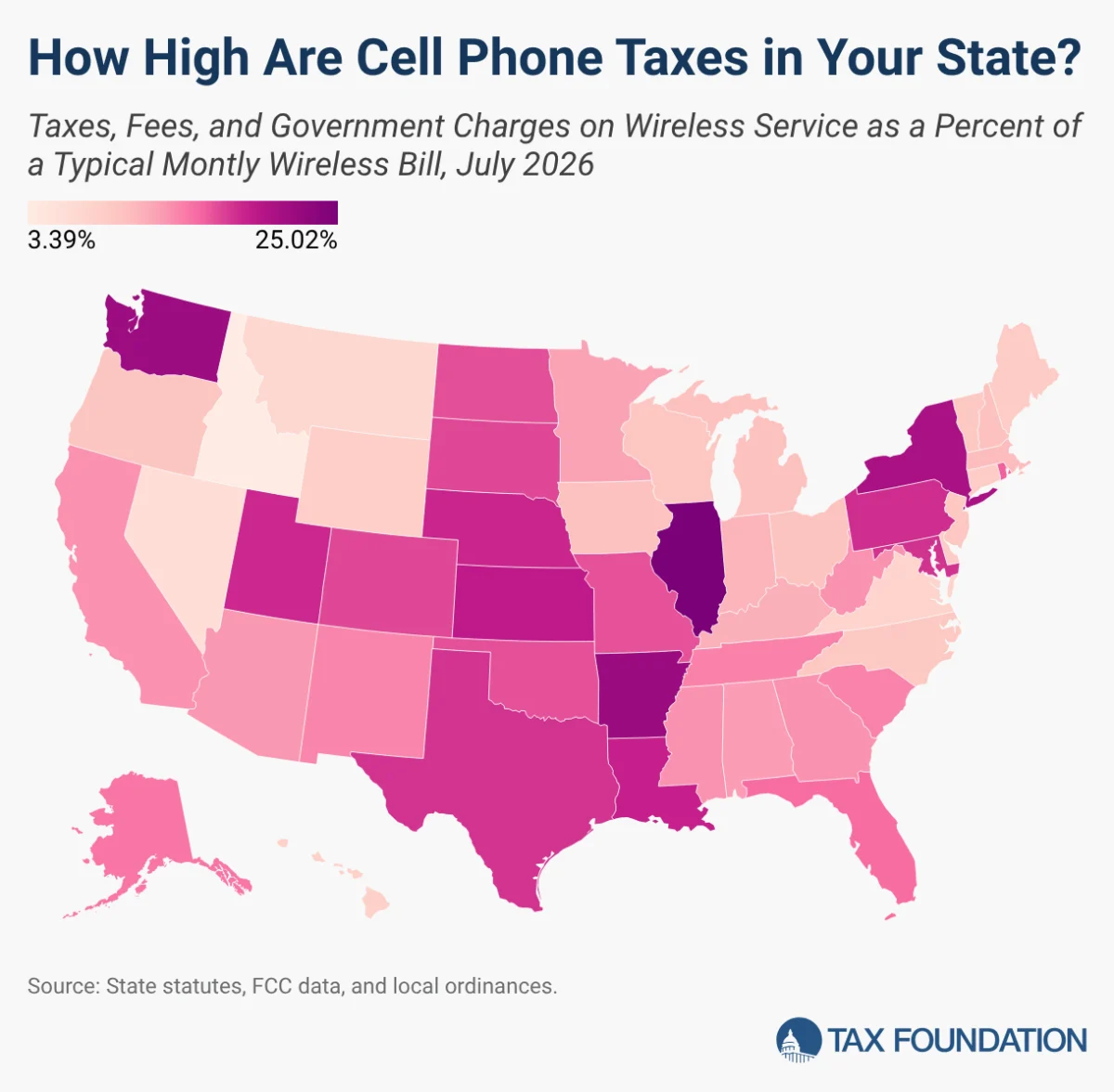
American households are bracing for another increase in wireless service taxes and fees, with projections indicating record highs by 2026. Wireless services have evolved from a luxury to an indispensable utility, serving as the primary, and often sole, means of communication and internet connectivity for millions, particularly younger demographics and low-income households. Despite fierce market competition driving down the base cost of services, government-imposed taxes, fees, and surcharges continue their upward trajectory, offsetting consumer savings and placing a disproportionate burden on vulnerable populations.
The Escalating Cost of Connectivity
By 2026, a typical American household with four mobile phones on a shared plan, paying an average of $100 per month for taxable wireless service, is projected to incur approximately $345 annually in various government levies. This represents an increase from an estimated $330 in 2025, continuing a persistent trend that has seen these government-mandated costs steadily rise over the past two decades. This increase is particularly stark when viewed against the backdrop of declining average prices for wireless services. Over the last two decades, the average monthly revenue per wireless line has fallen significantly, from $50.64 to $33.14. However, this substantial price reduction for consumers has been partially, and in some cases entirely, negated by the parallel surge in taxes, which have climbed from 16.2 percent to a staggering 28.8 percent of a monthly bill over the same period.
The latest surge in wireless taxes is primarily attributed to a confluence of factors, including another increase in the federal Universal Service Fund (FUSF) surcharge rate and a modest rise in state and local taxes. Specifically, the FUSF surcharge rate has increased from 13.26 percent to 14.39 percent, while the collective state and local tax burden saw a slight uptick from 14.25 percent to 14.42 percent. These figures underscore a growing reliance by various levels of government on wireless consumers to fund a diverse array of public services and initiatives.
With nearly 600 million wireless subscriber connections across the United States, the cumulative financial impact of these taxes is substantial. Projections for 2026 indicate that wireless subscribers will collectively contribute an estimated $11.4 billion in taxes to state and local governments alone, in addition to the federal surcharges. This immense revenue stream highlights the significant role wireless services play not just in daily life but also in public finance.
A Deeper Dive into the Tax Landscape: Federal and State Components
Understanding the various components of wireless taxation requires examining both federal and state-level impositions. The federal Universal Service Fund (FUSF) is perhaps the most significant federal surcharge. Established by the Telecommunications Act of 1996, the FUSF aims to ensure that all Americans have access to affordable telecommunications services, particularly in rural and high-cost areas, and for schools, libraries, and rural healthcare providers. While its mission is laudable, the method of funding through a percentage-based surcharge on interstate telecommunications revenues has led to a steadily increasing rate as the demand for subsidies grows and the pool of revenue subject to the charge shifts.
At the state level, a patchwork of taxes and fees contributes to the overall burden. Many states impose their own State Universal Service Fund (SUSF) charges, mirroring the federal fund’s objectives by subsidizing intrastate telecommunications services. Historically, these were often percentage-based charges on intrastate revenues. However, a notable trend has seen some states transition from percentage-based SUSF charges to per-line impositions. This shift has significant implications, as it means multi-line wireless plans, common in American households, bear a disproportionately larger share of the SUSF burden, regardless of actual usage or revenue generated per line.
Beyond these universal service funds, emergency services fees constitute another major category of wireless taxation. The ubiquitous 911 emergency system is largely funded through flat, per-line taxes levied by state and local governments. These fees are designed to cover the capital and operational expenses of emergency dispatch centers and systems. The variation in these fees is considerable across the nation; for instance, many counties in Missouri charge no 911 fee, while the city of Chicago imposes a substantial $5.00 per line per month charge. Such disparities can significantly impact the overall tax burden for residents depending on their geographic location.
A more recent addition to the wireless tax landscape is the 988 suicide prevention hotline fee. In 2021, the Federal Communications Commission (FCC) mandated the establishment of a three-digit national number, 988, for suicide prevention and mental health crisis hotlines. Congress subsequently authorized states to impose specific taxes to fund the creation and ongoing operation of these critical crisis centers. Virginia was the pioneering state, enacting a $0.12 per line per month 988 tax in 2021. Since then, at least ten additional states have followed suit, adding another layer of cost to wireless consumer bills. This development reflects a growing societal recognition of mental health crises and the need for accessible support, funded, in part, by telecommunications users.
Furthermore, 13 states levy wireless taxes that are either supplementary to general sales taxes or are applied in lieu of sales taxes but at a higher rate. This "discriminatory" taxation specifically targets wireless services, often without the broader justifications typically associated with excise taxes, such as a "user-pays" system for specific infrastructure (like gasoline taxes for roads) or the internalization of social costs (like tobacco taxes for public health). A notable recent development occurred in 2025 when the Maine legislature voted to repeal its Service Provider Tax, which had imposed a higher state tax rate on wireless services, indicating a potential legislative recognition of the burden such targeted taxes can create.
A Geographic Overview of Wireless Tax Burdens
The combined impact of these federal, state, and local levies results in significant geographic disparities in wireless tax burdens across the United States. Illinois currently holds the dubious distinction of having the highest wireless taxes in the country, with state and local rates exceeding 25.0 percent. This high rate is significantly influenced by substantial local fees, such as Chicago’s aforementioned $5.00 per line 911 fee. Following Illinois, Arkansas ranks second with a combined rate of 22.0 percent, and Washington state is close behind at 21.9 percent. These states exemplify the cumulative effect of various state-specific taxes, high local fees, and universal service fund contributions.
Conversely, some states maintain considerably lower wireless tax burdens. Idaho boasts the lowest rates, with combined taxes and fees at a mere 3.4 percent. Nevada follows at 6.1 percent, and Montana at 7.1 percent. The stark contrast between these states and the high-tax states highlights the policy choices made at the state and local levels regarding how to fund public services and the extent to which wireless consumers are targeted. These lower rates often reflect a legislative environment that either has fewer specific wireless surcharges or relies more heavily on broad-based general consumption taxes rather than targeted telecommunications levies.
It is crucial to note the methodology used to compare these rates: flat rate impositions, such as a fixed dollar amount per line for 911 fees, are converted into a percentage. This conversion is achieved by using the average monthly industry revenue per line, as tracked by the Cellular Telecommunications and Internet Association (CTIA), to ensure a standardized comparison across states and tax types. This approach allows for an "apples-to-apples" comparison of the overall burden, regardless of whether a charge is fixed or percentage-based.
Policy Considerations and Broader Implications
The ongoing escalation of wireless taxes and fees raises several critical policy concerns. First and foremost, these taxes are inherently regressive. They disproportionately affect low-income consumers, who often rely on wireless services as their sole means of communication and internet access, bypassing traditional landlines and broadband connections due to cost or availability. For these households, every additional dollar in taxes and fees directly increases the cost of accessing an essential service, potentially exacerbating the digital divide and hindering access to education, employment, and critical information. As wireless services become increasingly vital for participation in modern society, making them more expensive through targeted taxation runs counter to efforts to promote digital inclusion and equity.
Secondly, discriminatory taxes on wireless services can impede crucial investment in wireless infrastructure. The telecommunications industry requires continuous, substantial capital investment to build out and upgrade networks, expand coverage, enhance speeds, and innovate new services (e.g., 5G deployment, future 6G research). When a significant portion of consumer bills is siphoned off by taxes and fees, it can reduce the available revenue for network operators to reinvest. Ample evidence demonstrates that robust investments in wireless networks yield significant economic benefits across the broader economy. Sectors ranging from transportation and healthcare to energy, education, and even government itself leverage wireless networks to boost productivity, improve efficiency, and foster innovation. During crises like the COVID-19 pandemic, the resilience and capacity of wireless networks were paramount, enabling remote work, online learning, and telehealth services, underscoring their critical role in national infrastructure. These benefits are not merely transient but continue post-pandemic, making sustained network investment vital for consumers, businesses, and the entire American economy.
Policymakers are urged to exercise caution when considering the expansion of wireless taxes, fees, and government surcharges. While a traditional, broad-based consumption tax like a general sales tax applied to wireless services is generally considered appropriate, the imposition of excessive targeted excise taxes on wireless services often lacks the conventional justifications. True excise taxes are typically justified either by a "user-pays" principle (where those who use a specific service or infrastructure pay for its upkeep) or by the need to internalize social costs (where taxes offset negative externalities, like pollution). Wireless services, while essential, do not inherently fit these criteria in the same way, for instance, gasoline taxes fund roads or tobacco taxes address public health costs. Imposing high, targeted excise rates on wireless services primarily serves to inflate consumer costs and disincentivize the very investment needed to maintain and advance the nation’s critical digital infrastructure.
The ongoing debate surrounding wireless taxation highlights a tension between the immediate revenue needs of various government entities and the long-term economic and social benefits of affordable, ubiquitous, and advanced wireless connectivity. As the United States moves further into the digital age, ensuring that access to wireless services remains affordable and that incentives for network investment are preserved will be paramount for sustained economic growth and social equity.