admin
In a significant pivot from its controversial past, LimeWire, a name once synonymous with peer-to-peer file sharing, has re-emerged as a sophisticated platform at the vanguard of generative artificial intelligence and the Web3 creator economy. This transformation positions LimeWire not merely as another tool in the rapidly expanding AI landscape, but as a comprehensive ecosystem designed to empower creators with cutting-edge AI generation capabilities, robust monetization models, and verifiable ownership through blockchain technology. The platform’s strategic focus on AI-driven image creation, with ambitious plans to integrate music and video generation, coupled with an innovative NFT and ad revenue sharing model, signals a bold new direction for the brand and a potential paradigm shift for digital content creators worldwide.
From P2P Controversy to AI Innovation: A Strategic Rebirth
The original LimeWire gained notoriety in the early 2000s as a popular, albeit legally contentious, file-sharing client that facilitated the exchange of digital media, primarily music and movies, through a decentralized network. Its widespread use, particularly among younger demographics, eventually led to protracted legal battles with the recording industry, culminating in its shutdown in 2010. This period marked a significant chapter in the history of digital distribution and copyright law, cementing LimeWire’s place in internet lore.
Fast forward to the 2020s, and the digital landscape has undergone a seismic shift. The rise of generative AI tools, capable of creating original images, text, and soon, audio and video from simple prompts, has captivated the technology world. Simultaneously, blockchain technology has matured, giving birth to Web3 concepts like Non-Fungible Tokens (NFTs) and decentralized autonomous organizations (DAOs), which promise verifiable digital ownership and new economic models for creators. It is against this backdrop that LimeWire’s new iteration has been meticulously crafted, leveraging these convergent technologies to offer a platform that is both innovative and timely.
The decision to resurrect the LimeWire brand, albeit with an entirely new purpose and ownership, was a calculated move. While the original brand carried a legacy of controversy, it also possessed immense recognition. The new LimeWire, launched in 2022 by Australian entrepreneurs Paul and Julian Zehetmayr, aims to capitalize on this brand recall while shedding its problematic past, presenting itself as a legitimate and forward-thinking player in the digital creative space. This strategic rebranding involved significant investment in AI research and development, as well as the integration of blockchain infrastructure to support its creator-centric economy.
Unleashing Creativity: The LimeWire AI Studio
At the heart of the new LimeWire experience is its AI Studio, a creative hub designed to democratize access to advanced generative AI tools. Currently, the platform’s primary focus is on AI image generation, offering users a versatile suite of capabilities for both creating and editing digital art. The studio integrates industry-leading models such as Stable Diffusion 2.1, Stable Diffusion XL, and DALL-E 2, providing a robust foundation for high-quality image output. These models represent some of the most advanced neural networks available for image synthesis, allowing users to translate textual prompts into visually stunning artwork.
The user experience within the AI Studio is crafted for both novices and seasoned digital artists. Users can initiate the creative process with prompts ranging from simple keywords to highly detailed, intricate instructions, guiding the AI to generate images that align with their artistic vision. A key differentiator for LimeWire is its seamless integration of diverse AI models and a wide array of design styles. Creators can effortlessly switch between various artistic paradigms, exploring options like cinematic realism, vibrant digital art, nostalgic pixel art, expressive anime, and the distinctive aesthetic of analog film. Each style imparts a unique visual identity, enabling unparalleled creative exploration and the generation of a broad spectrum of digital aesthetics.
Beyond core generation, LimeWire enhances the creative workflow with additional features such as samplers, which allow for fine-tuning the quality and detail levels of generated images. Customization options and intuitive prompt guidance further streamline the process, making sophisticated AI art creation accessible to a wider audience. The platform’s commitment to continuous innovation is underscored by its active development of a proprietary AI model. This future addition is expected to introduce unique capabilities and further expand the creative horizons for LimeWire users, reinforcing its position as an evolving and dynamic platform in the generative AI art space.
Looking ahead, LimeWire has articulated ambitious plans to expand its offerings beyond images. The roadmap includes the introduction of AI music and video generation tools, which promise to transform the platform into a multi-modal creative powerhouse. This strategic expansion is anticipated to provide creators with even more avenues for expression and engagement, allowing them to produce a holistic range of digital content—from visual art to soundtracks and animated shorts—all within a single, integrated environment. Industry analysts suggest that this multi-modal approach could give LimeWire a significant competitive edge, positioning it as a comprehensive solution for digital content creation in the Web3 era.
Pioneering the Creator Economy: NFTs and Monetization
One of LimeWire’s most compelling innovations is its deep integration with Web3 technologies, particularly Non-Fungible Tokens (NFTs), to empower creators with verifiable ownership and new monetization streams. Upon completing a creative endeavor within the AI Studio, users are given the option to publish their content. This publishing step triggers an automated NFT minting process, leveraging either the Polygon or Algorand blockchain. This seamless integration lowers the barrier to entry for creators into the NFT space, transforming digital artwork into unique, verifiable, and tradable assets on a decentralized ledger. Polygon and Algorand were chosen for their efficiency, low transaction fees, and scalability, making the minting process cost-effective and environmentally conscious.
Creators on LimeWire retain significant control over the accessibility and distribution of their NFT creations. They can opt for a public release, making their content discoverable by anyone and fostering community engagement and potential trading. This public visibility can lead to increased exposure and the potential for secondary market sales, from which creators earn royalties. Alternatively, creators can choose to share their posts exclusively with premium subscribers, creating an intimate and personalized experience for their most dedicated fans. This flexibility allows artists to build tiered content strategies, offering exclusive access to specialized works while also reaching a broader audience.
Beyond NFT sales and royalties, LimeWire introduces a multifaceted monetization model designed to reward creators for their contributions to the platform. A significant component of this model is an ad revenue sharing program, where creators receive 70% of all ad revenue generated from other users viewing their published images, music, and videos on the platform. This model represents a substantial departure from traditional social media platforms, which typically offer creators a much smaller share, if any, of advertising revenue. For designers, musicians, and artists, this provides a direct incentive to produce and share high-quality content, offering a consistent income stream alongside other monetization avenues.
All earnings on LimeWire are disbursed in LMWR tokens, the platform’s native cryptocurrency. Paid out monthly, these tokens can then be traded on popular crypto exchange platforms such as Kraken, ByBit, and UniSwap, providing creators with liquidity and control over their digital assets. Furthermore, LMWR tokens have practical utility within the LimeWire ecosystem, allowing users to pay for prompts and other generative AI tool usage, thereby creating a circular economy that benefits both the platform and its creators. This token-based economy aligns with the broader Web3 vision of decentralization and creator ownership, moving away from centralized control of digital assets and revenue streams.
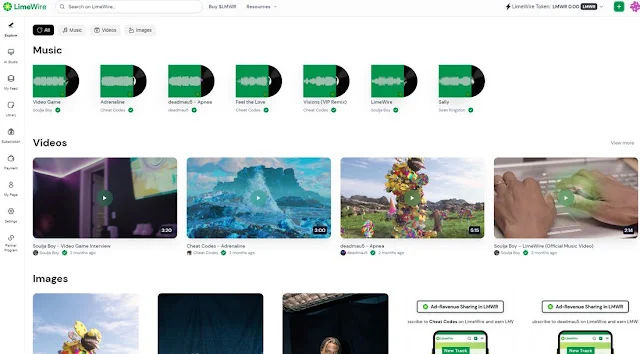
The platform’s appeal has already attracted notable artists and musicians, including Deadmau5, Soulja Boy, and Sean Kingston, who have embraced LimeWire to publish their content in the form of NFT music, videos, and images. Their early adoption lends significant credibility to the platform and showcases its potential for established artists seeking new ways to connect with fans and monetize their work in the evolving digital landscape. This celebrity endorsement serves as a powerful signal to the wider creative community about the viability and potential of LimeWire’s model.
Accessibility and Premium Offerings
LimeWire is designed to be accessible to a broad audience, offering a free tier that allows anyone to experiment with its AI tools. Upon signing up, users receive 10 credits, enabling them to generate up to 20 AI images per day. The free tier also includes a 50% share of ad revenue, providing a taste of the platform’s monetization potential. This generous free offering serves as an entry point for aspiring creators and those curious about generative AI, allowing them to explore the tools without immediate financial commitment.
For creators seeking more extensive capabilities and enhanced benefits, LimeWire offers a range of premium subscription plans:
- Basic Plan ($9.99/month): Provides 1,000 credits per month (up to 2,000 image generations), early access to new AI models, and a 50% ad revenue share.
- Creator Plan ($29/month): Offers 3,750 credits per month (up to 7,500 image generations), early access to new AI models, and a 60% ad revenue share.
- Pro Plan ($49/month): Includes 5,000 credits per month (up to 10,000 image generations), early access to new AI models, and a 70% ad revenue share.
- Elite Plan ($99/month): Delivers 11,250 credits per month (up to 22,500 image generations), early access to new AI models, and a 70% ad revenue share.
All premium plans come with additional advantages, including a Pro profile badge, full creation history access, faster image generation speeds, and an ad-free experience. These tiered offerings cater to varying levels of creative output and professional needs, ensuring that both hobbyists and high-volume creators can find a plan that suits their requirements. The progressive increase in ad revenue share with higher tiers further incentivizes creators to invest in the platform, rewarding their commitment with a greater share of the economic benefits.
Broader Implications and Future Outlook
LimeWire’s re-emergence as an AI and Web3 content platform carries significant implications for the creative industry. It represents a potent fusion of two transformative technologies: generative AI, which automates and scales content creation, and blockchain, which provides verifiable ownership and new economic models. This convergence has the potential to democratize creativity, enabling individuals without traditional artistic skills to generate high-quality content and participate in a global digital economy.
The platform’s emphasis on direct monetization for creators, through ad revenue sharing, NFT royalties, and subscriber models, challenges the prevailing revenue distribution models of traditional centralized platforms. By offering creators a substantially larger share of the revenue, LimeWire could foster a more equitable and sustainable environment for digital artists and musicians. This shift aligns with the broader Web3 ethos of empowering individuals and decentralizing control, potentially setting a new standard for creator compensation in the digital realm.
However, the journey for LimeWire will not be without challenges. The generative AI space is rapidly evolving and highly competitive, with established players and new entrants constantly innovating. Ethical considerations surrounding AI-generated content, such as copyright, authenticity, and potential misuse, will also require careful navigation. Market adoption of Web3 technologies, while growing, is still nascent, and educating creators and consumers about the benefits of NFTs and tokenized economies remains crucial.
Despite these hurdles, LimeWire’s strategic positioning at the intersection of AI and Web3 presents a compelling vision for the future of digital content. Its commitment to ongoing innovation, including the development of its proprietary AI model and the expansion into music and video generation, suggests a long-term strategy to remain at the forefront of this technological frontier. As LimeWire continues to evolve, it has the potential to become a significant force in shaping how digital content is created, owned, distributed, and monetized, offering a blueprint for a more empowered and economically sustainable creative landscape. For artists, designers, and musicians, LimeWire represents an exciting opportunity to explore new creative possibilities and build thriving careers in the burgeoning digital frontier.