Julia Chirkova
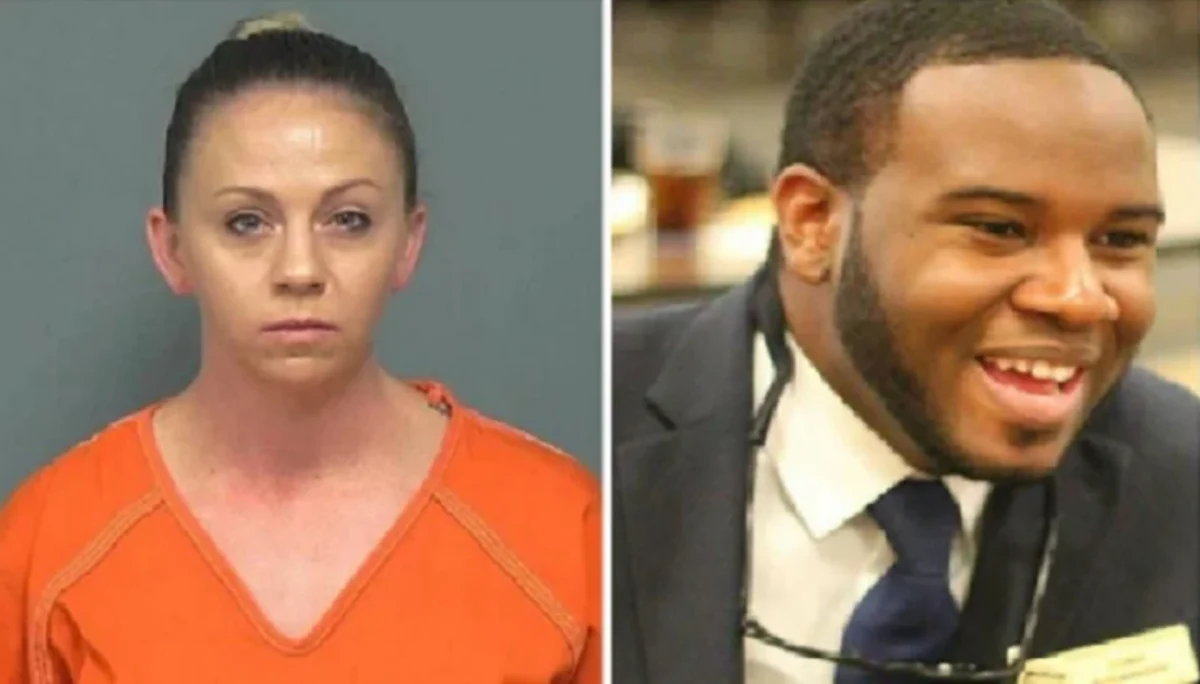
Former Dallas Police Officer Amber Guyger was released from prison Friday morning, concluding a seven-year sentence for the 2018 murder of Botham Jean, an accountant for PwC. Guyger, 38, walked free from the Christina Melton Crain Unit in Gatesville, Texas, after being granted parole earlier this month. Her release occurred after 10 a.m., with Texas Department of Criminal Justice officials confirming she was placed under community supervision. While live news coverage was present outside the facility, Guyger’s physical departure was not captured by media cameras.
The tragic incident unfolded on the evening of September 6, 2018. Guyger, who was off-duty but still in her police uniform, entered apartment 14B at the Southside Flats complex. She claimed she mistook Jean’s apartment for her own, believing he was an intruder. Jean, a 26-year-old native of St. Lucia, was reportedly at home eating a bowl of ice cream when Guyger entered. He resided on the fourth floor, while Guyger lived directly below him on the third floor. The ensuing confrontation resulted in Guyger firing her service weapon, fatally wounding Jean.
Guyger was arrested and subsequently charged with murder. In October 2019, after a highly publicized trial, she was convicted of murder and sentenced to 10 years in prison. The sentence, while significant, was viewed by some as lenient for the taking of a life. The conviction and sentencing were met with a mixture of relief and continued anguish from Jean’s family and supporters, who had sought justice for his death.
The path to parole was not a direct one. In 2024, Guyger was initially denied parole. At that time, the state parole board cited concerns that she had not demonstrated sufficient rehabilitation or readiness for release. However, a subsequent review, according to a spokesperson for the Texas Board of Pardons and Paroles in early October, found that Guyger’s institutional record indicated no documented pattern of violence. Furthermore, she had maintained a "satisfactory institutional adjustment" and successfully completed a treatment plan deemed likely to enhance her prospects of securing and retaining full-time employment. This assessment led to the board’s approval of her parole request.
Timeline of Key Events:
- September 6, 2018: Amber Guyger, then a Dallas police officer, fatally shoots Botham Jean in his apartment.
- September 7, 2018: Guyger is arrested and charged with manslaughter. The charge is later elevated to murder.
- September 2018: Protests erupt in Dallas and other cities, demanding justice for Botham Jean and accountability for police misconduct.
- October 2019: Amber Guyger is convicted of murder.
- October 2019: Guyger is sentenced to 10 years in prison.
- 2024 (date unspecified): Guyger is initially denied parole.
- Early October (year unspecified): Texas Board of Pardons and Paroles reviews Guyger’s case again and grants parole.
- Friday morning (date unspecified): Amber Guyger is released from the Christina Melton Crain Unit.
Upon her release, Guyger was required to adhere to standard Texas parole protocols. This included traveling directly to her designated new residence and immediately reporting to her assigned parole officer. She was permitted to take personal belongings accumulated during her incarceration. For her departure from the facility, she could wear either state-issued civilian clothing or attire provided by visitors or those picking her up. Guyger left the prison with her parole papers, a temporary identification, and a prepaid debit card or check representing any funds remaining in her inmate trust account.
The parole granted to Guyger is categorized as direct release with no additional restrictions beyond the standard parole conditions. This represents the least restrictive form of parole approval available to inmates in Texas, signifying that the board deemed her ready for reintegration into society with minimal oversight. Her parole conditions, which are typically confidential and determined by individual circumstances and behavior, will remain in effect until September 2029.
Parole Conditions and Oversight:
Standard parole conditions in Texas are designed to ensure public safety and facilitate the reintegration of former inmates. While Guyger’s specific conditions are not publicly disclosed, general requirements for parolees include:
- Regular Check-ins: Parolees must report to their assigned parole officer at scheduled intervals.
- Employment/Education: They are typically required to be employed or enrolled in an educational program.
- Geographical Restrictions: Permission from a parole officer is necessary to change residences or leave the state.
- Substance Testing: Random alcohol and drug testing is a common requirement.
- Prohibitions: Parolees are forbidden from breaking the law, possessing firearms or ammunition, and having any direct or indirect contact with victims or their families.
- Financial Obligations: Restitution payments and reimbursement for certain prison programs may be mandated.
- Searches: Parolees are subject to unannounced searches of their person, property, and vehicle.
Failure to comply with these conditions can lead to a range of consequences, from minor sanctions such as curfew adjustments or brief incarceration in a facility for parole violators, to the revocation of parole, resulting in the inmate being returned to prison to serve the remainder of their original sentence.
Broader Impact and Legacy of the Case:
The murder of Botham Jean by Amber Guyger sent shockwaves through Dallas and garnered national and international attention. The case highlighted critical issues concerning police conduct, accountability, and the use of force. It ignited widespread public discourse and fueled calls for police reform.
In the wake of Jean’s death, Texas lawmakers passed the Botham Jean Act, also known as Bo’s Law. This significant legislation mandates that law enforcement officers must keep their body cameras activated for the entirety of their participation in an investigation. This ensures greater transparency and provides a critical record of interactions between officers and the public. In the same year as the legislative action, the city of Dallas honored Botham Jean by renaming a portion of South Lamar Street in his memory, a poignant recognition of the young man whose life was tragically cut short.
The Jean family has consistently articulated the profound and enduring pain caused by their loss. In an official statement released earlier this year, they conveyed, “The past eight years have been an incredibly traumatic and painful experience for Botham Jean’s family. The loss of Botham has left our family forever dismembered, and that is something we continue to live with every day.” Their ongoing grief underscores the human cost of the events of that night.
Guyger’s former trial attorney, Robert Rogers, who no longer represents her, commented on her release. He stated that Guyger is "hopeful, optimistic, tremendously remorseful," and that the experience is "probably something she’ll always live with." Rogers indicated that she has secured employment that will keep her out of the public eye and has made private living arrangements.
Beyond the criminal proceedings, Guyger also faces a substantial civil judgment. A federal civil suit connected to Jean’s murder resulted in a judgment of nearly $100 million against her. The outcome of this civil litigation and the extent to which this judgment will be satisfied remain ongoing matters.
The release of Amber Guyger marks a new chapter in a case that profoundly impacted the Dallas community and beyond. While the legal ramifications for Guyger have reached a critical juncture with her release from prison, the memory of Botham Jean and the systemic issues brought to light by his tragic death continue to resonate, influencing discussions about justice, policing, and accountability in the United States. The Botham Jean Act stands as a tangible legislative legacy, a constant reminder of the need for transparency and reform in law enforcement.