Nila Kartika Wati
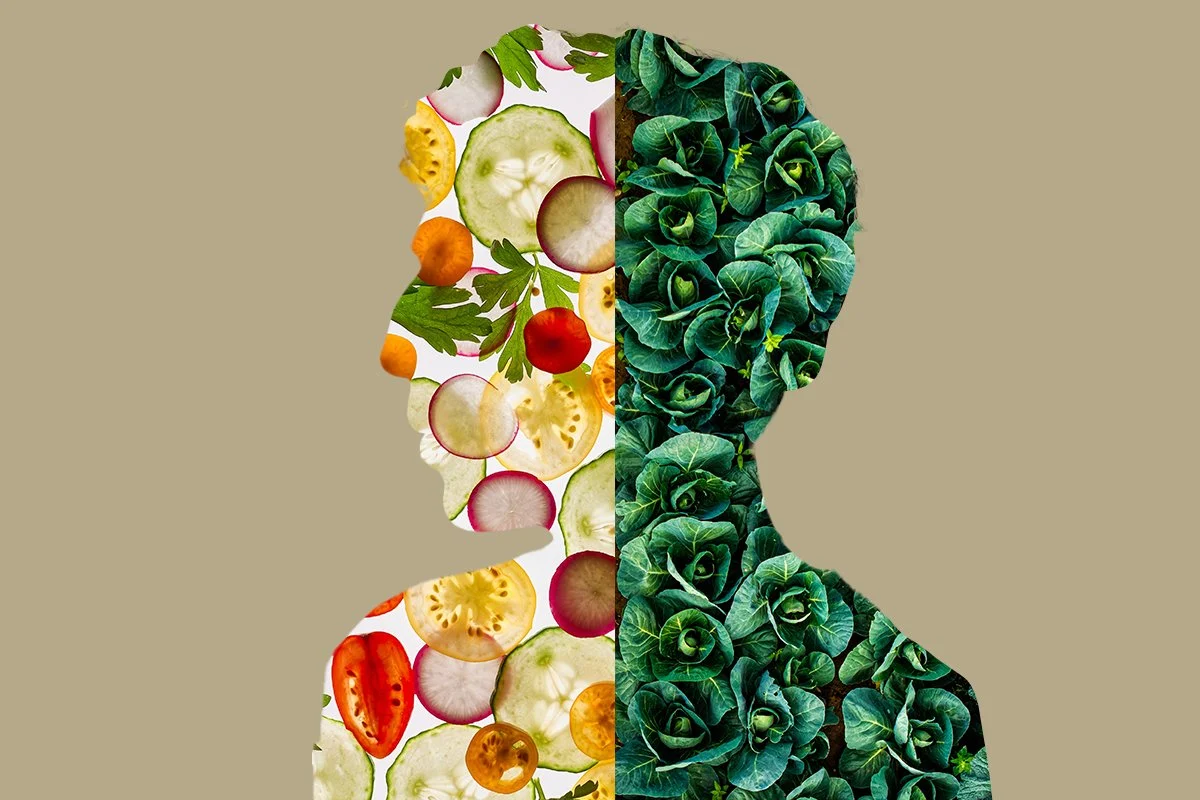
The global food system stands at a critical crossroads, where traditional metrics of success—yield, efficiency, and profit—are increasingly coming into conflict with the ecological and social realities of the 21st century. Despite decades of technological advancement, substantial financial investment, and rigorous policy interventions, the dual crises of global hunger and environmental degradation persist. In response to these enduring challenges, a burgeoning movement of philanthropists, policymakers, and agricultural experts is advocating for a fundamental shift in the human relationship with food. This movement reached a significant milestone in late August and early September 2026 with the convening of the first Global Conscious Food Systems Summit in Bhutan. Hosted in a nation renowned for its "Gross National Happiness" index and commitment to organic agriculture, the summit served as a catalyst for integrating mindfulness and "inner work" into the structural framework of food policy.
The Conscious Food Systems Alliance (CoFSA), an initiative spearheaded by the United Nations Development Programme (UNDP), posits that the missing link in food system reform is a transformation of mindset. Andrew Bovarnick, the global head of food systems work at the UNDP, argues that current industrial models are dangerously disconnected from the foundational elements of life: the farmers, the natural environment, and the well-being of the consumer. This extractive approach, which prioritizes mass production and export-oriented processing, has created a paradox of plenty where millions go hungry while the planet’s life-support systems are pushed to their limits.
The Global Imperative for Systemic Change
To understand the necessity of a conscious approach, one must examine the stark data defining the current global food landscape. According to the Food and Agriculture Organization of the United Nations (FAO), food systems are responsible for more than one-third of global greenhouse gas emissions. This includes emissions from land-use change, agricultural production, processing, transport, and waste. Furthermore, industrial agriculture is a primary driver of biodiversity loss, contributing to the degradation of nearly 40 percent of the world’s land.
The human cost is equally staggering. In the United States, a nation of immense agricultural wealth, Feeding America reports that approximately 48 million people face food insecurity. Globally, the situation is exacerbated by geopolitical instability. The recent and ongoing conflicts in the Middle East and Eastern Europe have exposed the extreme vulnerability of global supply chains. These disruptions have triggered price spikes and shortages that disproportionately affect the world’s most vulnerable populations, pushing millions more into poverty and chronic hunger.
The persistent nature of these problems suggests that technical solutions—such as improved seed varieties or precision irrigation—are insufficient on their own. Bovarnick notes that despite the UNDP and various nonprofits managing hundreds of projects aimed at agricultural reform, the systemic needle has not moved adequately. The "missing piece," according to CoFSA, is consciousness: an awareness of the inner and outer phenomena that influence how humans relate to themselves, each other, the natural world, and future generations.
Chronology of the Conscious Food Movement
The journey toward the Bhutan summit began several years ago as experts within the UNDP and environmental sectors began to recognize the limitations of purely external, material interventions. In 2022, the UNDP published the "Theoretical Foundations Report," which provided the intellectual scaffolding for CoFSA. This document defined consciousness not as an abstract spiritual concept, but as a practical tool for decision-making.
By 2024, the alliance had grown to include over 500 members, ranging from grassroots organizations to international NGOs. The movement gained momentum as the "poly-crisis"—the overlapping threats of climate change, pandemics, and war—intensified. In the lead-up to the 2026 summit, CoFSA expanded its network to more than 800 members, conducting pilot programs in diverse regions to test how mindfulness practices could improve farmer resilience and policymaker empathy.
The choice of Bhutan as the summit’s host was intentional. The Himalayan kingdom has long been a global leader in sustainable development, prioritizing environmental conservation over rapid industrialization. The summit brought together a diverse cohort, including the former President of Ireland, Mary Robinson, and leaders from organizations like ReBORN Farms and Commonland, to formalize a roadmap for scaling conscious practices globally.
Consciousness in Practice: From Soil to Policy
Transitioning from a theoretical framework to practical application requires a multi-faceted approach that spans local farming and international finance. At the heart of a conscious food system are practices such as regenerative farming, agroecology, and the integration of Indigenous knowledge. These methods prioritize the health of the soil and the restoration of biodiversity over the heavy use of synthetic fertilizers and pesticides.
In the Bronx, New York, ReBORN Farms exemplifies the conscious model through hyper-local food production. Founded by Henry Obispo, the organization addresses food insecurity by empowering residents to grow their own food, thereby reclaiming "sovereignty of choice." Obispo emphasizes that consciousness involves embedding culture and heritage into the food system—elements that are often ignored by industrial agribusiness. By reconnecting urban populations with the act of harvesting, ReBORN Farms fosters a sense of agency and environmental stewardship in communities that have historically been marginalized.
Similarly, the Hawthorne Valley Association in New York’s Hudson Valley has spent over five decades practicing biodynamic farming. Executive Director Martin Ping suggests that the industrial model has led to a profound "loss of connection" between people and the earth. Hawthorne Valley addresses this through educational programs that bring urban youth to the farm. When young people witness the labor and biological processes required to produce a single meal, their perception of food shifts from a mere commodity to a vital connection to the living world. This shift in awareness is the precursor to more ethical consumer choices and advocacy for systemic change.
Economic Shifts and the "Return on Inspiration"
One of the most significant hurdles to scaling conscious food systems is the existing market structure, which rewards short-term profit and high-volume production. To counter this, organizations like Commonland are reimagining the metrics of agricultural success. Pénélope Choussat, a landscape finance associate at Commonland, explains that the nonprofit utilizes a 20-year vision for land restoration. Instead of focusing solely on Return on Investment (ROI), they track the "Return on Inspiration."
This approach involves providing financial incentives for environmental stewardship, such as rewarding farmers for maintaining tree cover or enhancing soil carbon sequestration. This model is beginning to gain traction in the formal financial sector. For instance, Commonland has engaged with South African banks to fund resilient agricultural practices. These financial institutions, having recognized the rising cost of unpaid loans due to climate-induced droughts and floods, are increasingly willing to support "conscious" farming as a means of risk mitigation. This shift demonstrates that when the long-term costs of inaction are quantified, consciousness becomes a pragmatic economic strategy.
Global Reactions and the Role of Heritage
The summit in Bhutan also highlighted the importance of cultural memory in reshaping food systems. Mary Robinson, former President of Ireland and a prominent climate advocate, noted that many modern societies have "forgotten their past" and become dangerously remote from nature. She pointed to Ireland’s heavy reliance on food imports—currently at 80 percent—as a sign of systemic fragility.
Robinson advocated for a return to traditional concepts such as meitheal, an Irish term describing a community coming together to help one another, particularly during the harvest. Reconnecting with such traditions, she argued, could improve not only food security but also mental health and community resilience. "We have to be careful of our minds, our mental security," Robinson stated, suggesting that the stresses of the modern food crisis require a psychological and communal response as much as a technical one.
Analysis of Implications and the Scaling Challenge
The primary challenge facing the conscious food movement is the "scaling quandary." As Andrew Bovarnick noted, moving from 800 members to the eight billion people who inhabit the planet is a monumental task. The current food system is dominated by a handful of massive conglomerates that possess significant lobbying power and control over global distribution networks.
However, the transition may not require a total overhaul of the existing players, but rather a transformation of the individuals within them. Bovarnick suggests that "consciousness" in a corporate or governmental setting involves merging the professional self with the personal self. When a policymaker or executive approaches a project from a place of compassion and long-term care rather than purely transactional metrics, the resulting policies are more likely to be equitable and sustainable.
The implications of this shift are profound. If consciousness becomes a standard component of agricultural development, we may see:
- Policy Divergence: A move away from subsidies that favor monocropping and chemical-intensive farming toward those that support biodiversity and soil health.
- Supply Chain Transparency: Increased consumer demand for products that are not only "organic" but are produced under conditions that respect labor rights and ecological limits.
- Resilience Focused Funding: A shift in global aid and investment toward localized food systems that can withstand the shocks of climate change and geopolitical conflict.
Conclusion: A New Paradigm for a Sustainable Future
The Global Conscious Food Systems Summit has signaled that the conversation around food is no longer just about calories and logistics; it is about values and awareness. By acknowledging that the "inner work" of individuals is inextricably linked to the "outer change" of global systems, the movement provides a holistic roadmap for addressing the poly-crisis.
As Martin Ping of the Hawthorne Valley Association observed, the current state of the world requires a change in consciousness to avoid "rearranging the deck chairs on the Titanic." The success of this movement will depend on its ability to foster collaboration across disparate sectors—from Bronx urban farmers to South African bankers. Ultimately, the transition to a conscious food system is a recognition that the health of humanity is inseparable from the health of the earth. As the delegates left Bhutan, the consensus was clear: the path to global food security begins with a return to the roots of human connection and a renewed reverence for the natural world.