Nila Kartika Wati
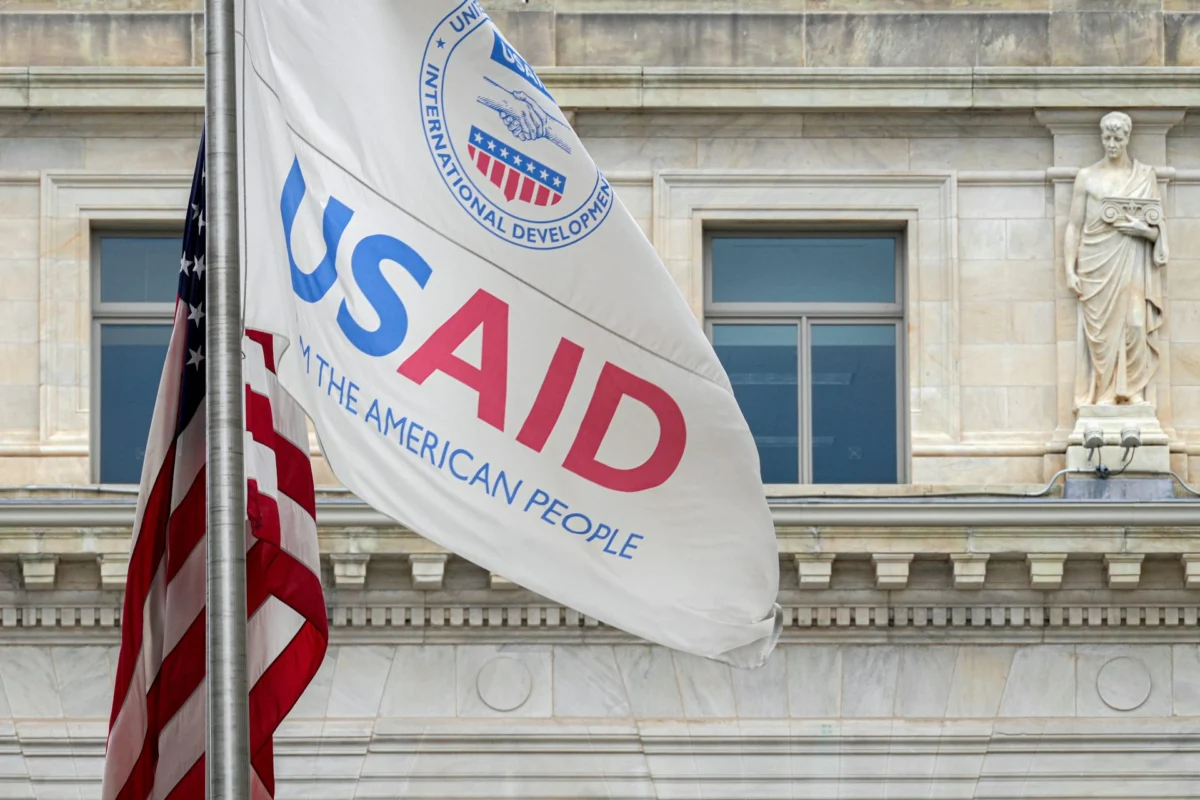
The landscape of international development underwent a seismic shift on January 20, 2025, when President Donald Trump, on his first day in office, moved to suspend the majority of United States foreign assistance. As the world’s largest provider of overseas aid, the U.S. government allocates approximately $68 billion annually to support a vast array of global initiatives. This funding, which accounts for roughly one percent of the federal budget, serves as a cornerstone for international stability, funding programs that range from pandemic prevention and disaster relief to the promotion of democratic governance and economic development.
The suspension was codified the following day, January 21, when Secretary of State Marco Rubio issued a formal "stop-work order." This directive mandated a 90-day halt on the disbursement of funds by agencies under the State Department’s purview, most notably the U.S. Agency for International Development (USAID). The order has sent ripples through the global humanitarian community, forcing thousands of partner organizations to evaluate their immediate survival and the continuity of life-saving services in some of the world’s most vulnerable regions.
A Chronology of Policy Shifts and Administrative Actions
The transition to the second Trump administration was marked by an immediate and aggressive re-evaluation of the U.S. government’s global footprint. The timeline of the aid freeze highlights the speed and scale of the administrative overhaul:
- January 20, 2025: President Trump signs an executive order suspending most foreign aid programs, citing the need to align international spending with "America First" priorities and domestic fiscal constraints.
- January 21, 2025: Secretary of State Marco Rubio issues a 90-day stop-work order. This order freezes active grants and contracts, effectively halting the flow of cash to implementing partners on the ground.
- January 24–26, 2025: Humanitarian organizations and internal USAID officials raise alarms regarding the "reckless" nature of a blanket freeze, warning of potential spikes in mortality rates in regions dependent on U.S.-funded health and nutrition programs.
- January 27, 2025: In a significant internal escalation, dozens of senior USAID officials are placed on administrative leave. Reports indicate the administration accused these career professionals of attempting to "circumvent" the freeze by expediting payments or securing waivers before the order took full effect.
- January 28, 2025: Following intense pressure from global health advocates and bipartisan members of Congress, the administration issues a partial waiver. This allows for the continued distribution of lifesaving medicines under the President’s Emergency Plan for AIDS Relief (PEPFAR), a program credited with saving over 25 million lives since its inception in 2003.
- January 29, 2025: The Office of Management and Budget (OMB) begins a comprehensive "pause and evaluate" period for all remaining foreign aid, scrutinizing every dollar to ensure it adheres to the new administration’s geopolitical strategies.
The Financial and Operational Architecture of U.S. Aid
To understand the impact of the freeze, one must look at the mechanics of how U.S. foreign assistance is distributed. Of the $68 billion total, USAID manages between $35 billion and $40 billion. While a portion of this is government-to-government assistance, the vast majority—approximately $22 billion—is channeled through grants and contracts with international and local nongovernmental organizations (NGOs).
These NGOs act as the primary implementers of U.S. policy. They are the entities that physically build schools in Afghanistan, vaccinate infants in the Democratic Republic of the Congo, and manage refugee camps in the Middle East. When a stop-work order is issued, the legal obligation of the U.S. government to pay these partners is paused. For many small, local organizations that operate with minimal cash reserves, a 90-day delay in funding is not merely an administrative hurdle; it is an existential threat.
Immediate Exemptions and Ongoing Risks
While the freeze was broad, certain strategic and humanitarian exemptions were carved out almost immediately. Aid to Israel and Egypt—long considered vital to U.S. national security interests in the Middle East—was largely spared from the initial suspension. Additionally, some emergency food aid was permitted to continue to prevent immediate famine in active conflict zones.
However, the "lifesaving" definition remains narrow. Programs focused on climate change mitigation, girls’ education, judicial reform, and long-term agricultural development remain in a state of suspended animation. Experts argue that even a temporary halt can lead to "aid scarring," where the trust between local communities and U.S.-backed programs is permanently damaged, and skilled local staff are forced to find employment elsewhere, depleting the human capital of the development sector.
Adaptation Strategies: How Local Nonprofits Survive Interruption
For decades, research into foreign aid volatility has shown that local service providers are often the most resilient, albeit the most strained, during funding gaps. When U.S. support vanishes, local nonprofits typically employ four primary strategies to maintain their operations.
1. Transitioning to National Government Support
In some instances, programs incubated by U.S. seed money have successfully transitioned to host-government budgets. A notable example is the "Accelerated Basic Cycle" in Ecuador, an educational initiative managed by the nonprofit Desarrollo y Autogestión. Originally supported by foreign donors, the program—which helps out-of-school youth complete elementary education—became so integral to the national fabric that it was eventually adopted and funded by the Ecuadorian Ministry of Education. For organizations currently facing the U.S. freeze, the ability to demonstrate value to their own national governments is now a matter of survival.
2. Revenue Generation and Social Enterprise
Many NGOs are moving away from a pure "charity" model toward "social enterprise." By charging nominal fees for services or selling goods, these organizations can cross-subsidize their humanitarian work. SEND Ghana, for instance, established a for-profit subsidiary, SENDFiNGO, which manages microfinance programs. The profits from these financial services help fund the parent organization’s advocacy for governance and equality. Similarly, the Grameen Bank in Bangladesh has long utilized self-sustaining financial models to weather shifts in international donor sentiment.
3. Cultivating Local Philanthropy and Crowdfunding
The rise of the middle class in many developing nations has led to a surge in local giving. Networks like the Global Fund for Community Foundations are encouraging organizations to look inward for support. In India, the 2014 Corporate Social Responsibility (CSR) law requires large companies to spend 2% of their net profits on social development, creating a domestic funding pool that is immune to U.S. executive orders. Crowdfunding platforms have also democratized giving, allowing local nonprofits to bypass traditional Western gatekeepers.
4. Leveraging Diaspora Contributions
Diaspora communities—individuals living abroad who maintain ties to their homelands—represent a massive and often untapped financial resource. In Colombia, organizations like Fundación Carla Cristina, which provides nursery schools and meals for low-income children, receive significant support from Colombian-led nonprofits in the United States, such as the New England Association for Colombian Children. These "remittance-plus" models provide a stable funding stream that is driven by personal connection rather than shifting political winds in Washington.
The Localization Debate and the "America First" Conflict
The Trump administration’s aid freeze has created a paradox regarding "localization." For years, the development community—including USAID under previous administrations—has advocated for "localization," the idea that aid should be managed by local authorities and organizations rather than massive Western contractors.
The current administration’s pause is, in a sense, a forced and abrupt form of localization. However, development professionals distinguish between "planned localization," which involves building local capacity over years, and "abrupt withdrawal," which can cause systems to collapse. The anonymous statement from a senior USAID official calling the move "reckless" underscores the fear that by cutting off local partners without warning, the U.S. is not empowering them, but rather abandoning them at a moment of peak global instability.
Broader Geopolitical and Humanitarian Implications
The implications of the U.S. retreat from global aid extend beyond the immediate loss of services. Analysts suggest that a prolonged vacuum in U.S. leadership could allow other global powers, such as China, to expand their influence through "Belt and Road" initiatives and other alternative aid structures.
Furthermore, the humanitarian toll is expected to be significant. In Ukraine, where U.S. aid supports local groups providing emergency heat, food, and medical care amidst ongoing conflict, a 90-day pause could be catastrophic. In Sub-Saharan Africa, the disruption of supply chains for non-PEPFAR health initiatives—such as malaria and tuberculosis prevention—could lead to a resurgence of diseases that were previously under control.
Conclusion: The Need for Responsible Exit Strategies
While every administration has the right to review and realign foreign policy, the consensus among development scholars is that "donor exit" must be handled with care. A responsible exit strategy involves clear communication, transition periods, and "bridge funding" to ensure that essential services do not disappear overnight.
The 90-day evaluation period initiated by the OMB will determine the future of thousands of programs worldwide. For the local nonprofits that have spent decades building trust and infrastructure in their communities, the coming months will be a test of their ability to diversify, innovate, and survive in an era where U.S. assistance can no longer be taken for granted. The shift toward self-reliance, while forced, may ultimately redefine the relationship between the global North and South, moving it from one of dependency to one of resilient, local autonomy.