Lana Rhoades
The global e-commerce landscape is undergoing a seismic shift, with total online sales projected to exceed $8.1 trillion by 2026. As digital storefronts replace traditional brick-and-mortar operations, the regulatory environment governing these transactions has become increasingly intricate. For modern retailers, the concept of "sales tax nexus" has evolved from a secondary accounting concern into a primary pillar of financial risk management. Understanding the intersection of physical presence, economic activity, and state-specific mandates is now essential for any business seeking to scale in a post-pandemic economy where consumer behavior has permanently shifted toward digital channels.
The Evolution of Nexus: From Quill to Wayfair
The current complexity of sales tax laws is rooted in a significant legal transition that occurred over several decades. Historically, the standard for tax collection was set by the 1992 Supreme Court case Quill Corp. v. North Dakota. Under the Quill standard, a state could only require a business to collect sales tax if that business had a "substantial physical presence" within the state’s borders, such as an office, warehouse, or sales force.
This standard became increasingly obsolete as the internet revolutionized commerce. States argued that they were losing billions in potential revenue because out-of-state "e-tailers" were not required to collect tax, despite selling significant volumes to local residents. The turning point arrived seven years ago with the landmark 2018 decision in South Dakota v. Wayfair, Inc. The Supreme Court overturned the physical presence requirement, ruling that states could mandate tax collection based on "economic nexus"—a connection established purely through a specific volume of sales or transactions within a state.
Since the Wayfair decision, nearly every state with a general sales tax has adopted economic nexus laws. This shift has created a patchwork of regulations that vary wildly by jurisdiction, forcing businesses to monitor their activity in 45 different states, plus the District of Columbia, each with its own set of rules.
Physical Nexus in the Modern Economy
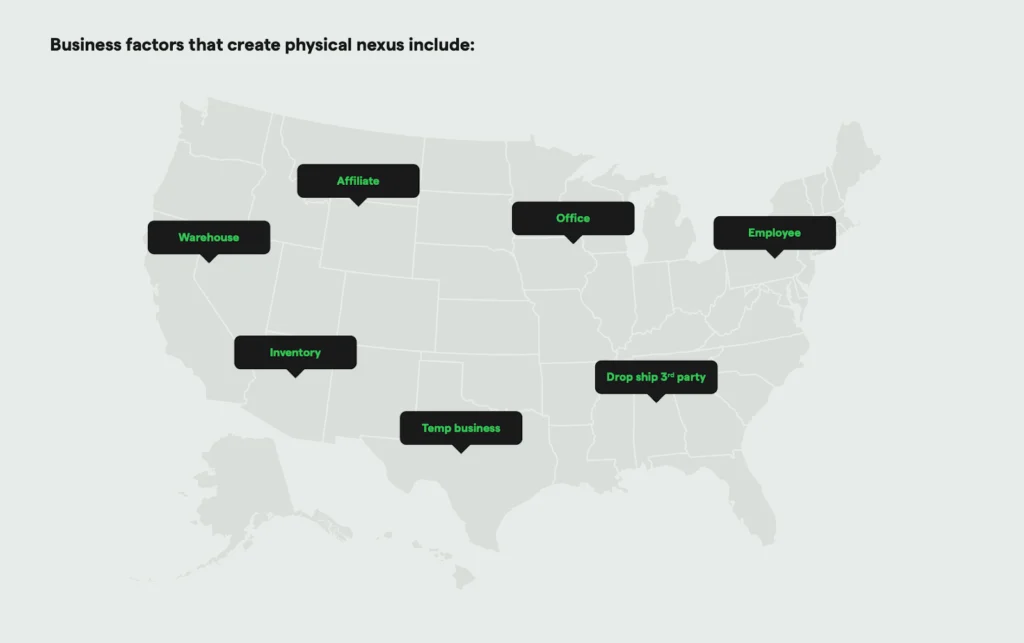
Despite the rise of economic nexus, the traditional "physical presence" standard remains in full effect. In the modern logistics environment, physical nexus is often triggered in ways that business owners might not immediately recognize. The proliferation of Third-Party Logistics (3PL) providers and programs like Fulfillment by Amazon (FBA) has complicated the map of physical liability.
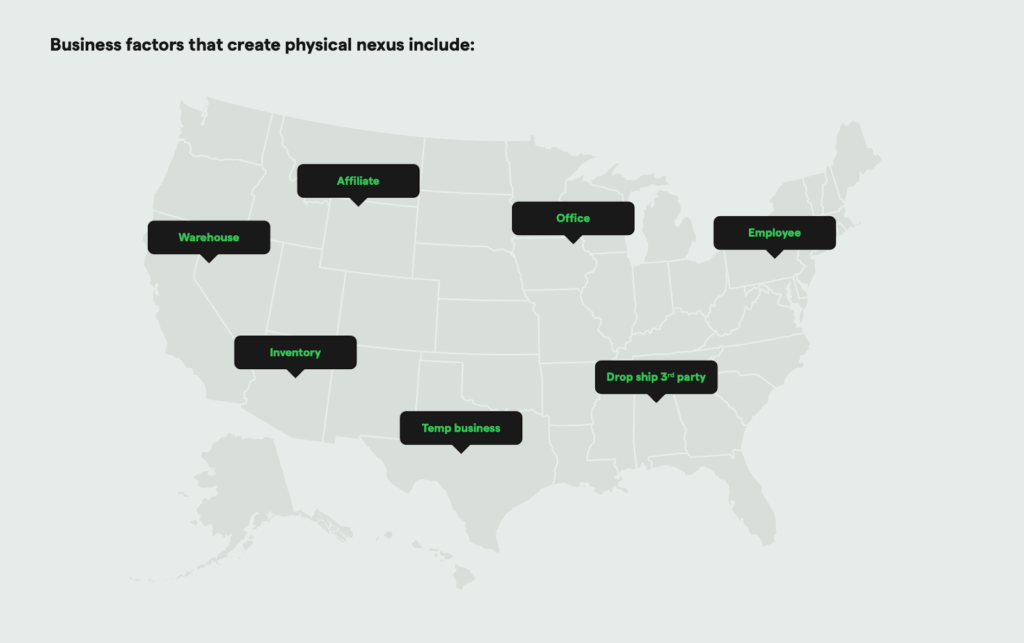
Physical nexus is generally established through several key indicators:
- Inventory Storage: If a business stores goods in a warehouse owned by a third party, that state typically considers the business to have a physical presence.
- Remote Workforce: The shift toward remote work has created new nexus triggers. An employee or even a long-term contractor working from a home office in a different state can establish a physical nexus for the employer.
- Temporary Presence: Attending trade shows, hosting "pop-up" shops, or sending technicians into a state to perform installations or repairs can trigger a sales tax obligation, even if the presence is only for a few days.
- Property Ownership: Owning or leasing any tangible property, including specialized equipment or vehicles, within state lines.
The Economic Threshold Maze
Economic nexus is defined by specific financial or transactional benchmarks. However, there is no federal standard for these thresholds, leading to a fragmented regulatory landscape. Retailers must track their "gross sales" or "number of transactions" on a state-by-state basis to determine when they have crossed the line into a tax-collecting obligation.
For example, Illinois mandates that a business must register and collect tax if it exceeds $100,000 in cumulative gross receipts or reaches 200 separate transactions within the preceding 12 months. Conversely, California—the nation’s largest economy—sets a much higher bar, requiring collection only after a business surpasses $500,000 in sales within a calendar year, regardless of the number of individual transactions.
Recent trends suggest a move toward simplification in some jurisdictions. Several states, including South Dakota and Indiana, have recently moved to eliminate the "transaction count" threshold (e.g., the 200-transaction rule), focusing solely on revenue. This change is intended to relieve small businesses that sell low-cost items from the administrative burden of tax compliance in states where their total revenue is minimal.
Product Taxability and State Exemptions
Determining where to collect tax is only half the battle; retailers must also determine what is taxable. While most tangible personal property—items like electronics, apparel, and home goods—is subject to sales tax, many states offer exemptions for what they deem "necessities."
The definitions of these necessities are far from uniform. Some states exempt groceries, while others tax them at a reduced rate or only tax "prepared" foods. Clothing is exempt in states like Pennsylvania and New Jersey, but taxable in others—unless the item falls below a certain price point, as seen in New York’s "under $110" exemption.
The digital economy introduces further nuance. Software as a Service (SaaS), digital downloads, and streaming services are taxed in some states but considered non-taxable "intangible services" in others. Furthermore, some jurisdictions distinguish between digital goods used for personal enjoyment versus those used for business purposes, adding a layer of intent-based complexity to the tax code.
Chronology of Compliance: A Strategic Roadmap
For a growing e-commerce business, compliance follows a specific chronological path. Failure to follow this sequence can result in significant financial penalties, as collecting tax without a permit is illegal in many jurisdictions.
- Nexus Determination: Periodically reviewing sales data to identify where physical or economic thresholds have been met.
- Registration: Once nexus is established, the business must apply for a sales tax permit with the state’s Department of Revenue.
- Setting Up Collection: After receiving a permit, the retailer must update their e-commerce platform (e.g., Shopify, Magento, BigCommerce) to calculate and collect the correct tax rate based on the buyer’s "ship-to" address.
- Filing and Remittance: Businesses must file tax returns—monthly, quarterly, or annually—and remit the collected funds to the state.
A critical component of this process is the "Marketplace Facilitator Law." In many states, if a business sells through a platform like Amazon, Walmart, or Etsy, the platform is responsible for collecting and remitting the tax. However, these sales still often count toward the business’s overall economic nexus threshold, potentially triggering a requirement for the business to collect tax on sales made through its own independent website.
Data Analysis: The Risk of Non-Compliance
The financial implications of ignoring nexus laws are substantial. State tax authorities have become increasingly aggressive in their auditing processes, utilizing sophisticated data-sharing agreements to identify out-of-state sellers who are not in compliance.
If a business is audited and found to have had nexus without collecting tax, the state can hold the business liable for the "uncollected" tax. Because the business failed to charge the customer at the point of sale, the tax amount must often come directly out of the business’s profit margins. When combined with penalties (which can reach 25% or more) and interest compounded over several years, the total liability can threaten the solvency of a mid-sized enterprise.
Market analysts suggest that as e-commerce continues its trajectory toward the $8 trillion mark, states will likely tighten enforcement to recapture "lost" revenue. In 2025 alone, domestic e-commerce growth is expected to surpass $220 billion, providing a massive incentive for state revenue departments to refine their auditing algorithms.
Industry Response and the Role of Automation
The sheer volume of data required to manage nexus manually has led to a surge in the tax-technology sector. Industry leaders and tax consultants increasingly advocate for automated solutions. Tools that offer real-time "nexus insights" have become standard for high-growth companies. These systems integrate directly with sales channels to monitor transaction volumes against state-specific thresholds, providing alerts before a business crosses a legal limit.
"The era of manual tax management is effectively over for any business selling across state lines," notes one industry analyst. "The risk of human error in calculating thousands of different local tax jurisdictions—there are over 11,000 in the U.S. alone—is simply too high."
Broader Implications and Future Outlook
Looking ahead, the debate over sales tax nexus may eventually move to the federal level. Various business advocacy groups have called for Congress to pass the "Mobile Workforce State Income Tax Simplification Act" or similar legislation to create a unified national standard for nexus thresholds. Proponents argue this would foster economic growth by reducing the "compliance tax" that currently burdens small businesses.
However, until federal intervention occurs, the responsibility remains entirely with the retailer. As e-commerce continues to integrate into every facet of global trade, the ability to navigate the tangled web of sales tax nexus will remain a defining characteristic of successful, resilient, and legally sound business operations. The transition from $5 trillion in global sales to a projected $8.1 trillion represents a massive opportunity, but only for those who respect the regulatory complexities that come with such scale.