Lana Rhoades
The most significant financial risk currently facing food and beverage retailers is not found in fluctuating commodity prices or supply chain disruptions, but rather within the silent rows of their own digital product catalogs. As of late 2026, the complexity of state and local tax codes has reached a critical point where a single Stock Keeping Unit (SKU) coded to an incorrect tax category can generate substantial, compounding liability across multiple jurisdictions. In the intricate world of taxability, the distinction between a tax-exempt grocery item and a taxable luxury can hinge on something as seemingly insignificant as a plastic fork or the presence of wheat flour in a chocolate bar.
For multi-state operators, the challenge is systemic. State departments of revenue often view nearly identical products through entirely different lenses. A rotisserie chicken sold hot is frequently taxed at a full retail rate, while the same bird sold raw and chilled is exempt as a grocery staple. A bottle of water remains exempt until a manufacturer adds a splash of sweetener, at which point it may be reclassified as a "soft drink" subject to the highest possible sales tax tier. These nuances, when applied to thousands of transactions across dozens of states, transform minor coding errors into multi-million dollar audit assessments.
The Evolution of Grocery Tax Policy: A 2024–2026 Chronology
The landscape of food taxation in the United States has undergone a dramatic transformation over the past thirty months. Driven by economic pressure on households and the argument that food taxes are inherently regressive—disproportionately affecting lower-income citizens who spend a larger share of their earnings on nutrition—legislatures across the country have moved toward broad exemptions.
The shift gained significant momentum in August 2024, when Oklahoma officially eliminated its 4.5% state grocery tax. This was followed by Kansas, which completed a multi-year phase-down, reaching a 0% grocery tax rate on January 1, 2025. The trend peaked on January 1, 2026, when both Arkansas and Illinois removed their state-level grocery taxes, signaling a near-national consensus on the exemption of unprepared food.
However, this "exemption era" has introduced a new layer of complexity: the decoupling of state and local tax rates. When Illinois removed its 1% state grocery tax in 2026, the legislation simultaneously authorized hundreds of municipalities to impose their own 1% local grocery taxes by ordinance. Consequently, a seller must now track not just a single state mandate, but a patchwork of local decisions that can change quarterly.
The Tri-Partite Test of Prepared Food
A primary source of audit friction is the definition of "prepared food." For businesses operating in any of the 24 states participating in the Streamlined Sales Tax (SST) agreement, the classification of a product as "prepared"—and therefore taxable—usually follows a strict three-part test. An item is considered prepared if:
- The seller sells the food in a heated state or heats the food for the consumer.
- The seller combines two or more ingredients into a single item (such as a deli sandwich or a pre-mixed salad).
- The seller provides eating utensils, including plates, napkins, straws, or cutlery.
The "utensil rule" is particularly hazardous for modern "grab-and-go" retailers. A cold, pre-packaged salad that would normally qualify as an exempt grocery item can become fully taxable simply because the retailer includes a plastic fork in the bag. From the perspective of a state auditor, the inclusion of a utensil signals that the food is intended for immediate consumption, shifting it from the "staple" category to the "service" category.
The "Flour Loophole" and the Candy Conundrum
Perhaps the most counterintuitive aspect of modern tax law involves the classification of confectionery. Under SST definitions, "candy" is defined as a preparation of sugar or sweeteners combined with chocolate, fruits, or nuts in bars or drops. Crucially, the definition excludes any product that contains flour or requires refrigeration.
This leads to a market reality where a plain milk chocolate bar is taxed at the full state rate as a luxury "candy," while a wafer-filled chocolate bar, such as a Kit Kat or Twix, is classified as "food" because it contains flour. For a snack brand with a diverse product line, applying a blanket "food" code to all items results in under-collection on flourless items, creating a deficit that auditors can extrapolate back through three to five years of sales history.
Similarly, the "soft drink" category is defined by precise percentages. A beverage is generally a taxable soft drink if it contains natural or artificial sweeteners and is less than 50% vegetable or fruit juice. This 50% threshold creates a "cliff" where a 49%-juice beverage is taxed as a soda, while a 51%-juice beverage is exempt as a grocery item.
State-Specific Tax Status as of 2026
The following data highlights the current taxability status of unprepared groceries across the United States. Sellers must note that even in "non-taxable" states, local jurisdictions may still apply levies.
| State | State Grocery Tax Status | Notable Exceptions and Local Context |
|---|---|---|
| Alabama | Taxable (2%) | Rate reduced from 4% in 2025; local rates still apply. |
| Arkansas | Exempt | State tax eliminated Jan 2026; prepared foods remain taxable. |
| California | Exempt | Broad exemptions for cold food; hot food remains taxable. |
| Georgia | Exempt | State rate is 0%, but most counties impose a 2-4% local tax. |
| Idaho | Taxable (6%) | Full rate applies; residents receive an income tax credit. |
| Illinois | Exempt (State) | State tax eliminated 2026; local 1% taxes widely adopted. |
| Mississippi | Taxable (5%) | Reduced from 7% in July 2025. |
| Missouri | Taxable (1.225%) | One of the lowest state rates in the nation. |
| Tennessee | Taxable (4%) | Associate SST member; local rates frequently added. |
| Utah | Taxable (1.75%) | Combined state/local food rate typically hovers at 3%. |
| Virginia | Taxable (1.5%) | Localities typically add an additional 1%. |
Alcohol, Excise Taxes, and Special Districts
Alcohol sales represent the most heavily regulated and taxed segment of the industry. Beyond standard sales tax, alcoholic beverages are subject to excise taxes calculated by volume (per gallon) which vary significantly by state.
In 2026, seventeen "control states" continue to maintain a government monopoly on the wholesaling or retailing of distilled spirits, effectively baking the tax into the product price. In "license states," however, the tax burden is multifaceted. For example, Washington, D.C., maintains a general sales tax of 6%, but applies a 10.25% rate to alcohol sold for off-premises consumption.
Furthermore, "liquor-by-the-drink" taxes create a separate liability for on-premises establishments. Tennessee (15%), Kansas (10%), and South Carolina (5%) apply these taxes on top of standard sales tax. A common error for direct-to-consumer (DTC) wine and spirits brands is failing to account for these "special district" rates, which can vary not just by state, but by zip code.
The Financial Impact of Misclassification
State auditors rarely perform a line-by-line review of every transaction. Instead, they typically use a sampling method. They will review a representative sample of invoices over a specific period (e.g., three months), identify an error rate, and apply that percentage to the company’s total revenue for the entire audit period—often three to four years.
If a snack brand misclassifies a $2.00 chocolate bar as exempt and sells 100,000 units a year across five states with a 6% tax rate, the uncollected tax is $12,000 annually. Over a four-year audit period, this becomes $48,000. However, once penalties (typically 5% to 25%) and compounded interest are added, the final assessment can easily exceed $75,000 for a single incorrectly coded SKU.
Industry analysts suggest that the move toward automation is no longer optional. "A tax engine is only as reliable as the data it is fed," notes one tax compliance expert. "If a retailer tells the system a product is ‘bread’ when it is actually ‘prepared sandwich,’ the system will calculate the wrong amount perfectly every time. The liability rests solely with the merchant’s internal classification process."
Strategic Audit and Compliance Framework
To mitigate these risks, food and beverage enterprises are encouraged to adopt a rigorous four-step internal audit framework:
1. Granular SKU Mapping
Retailers must move beyond broad categories like "Snacks" or "Drinks." Each item must be mapped to specific tax codes that account for ingredients (flour content), packaging (inclusion of utensils), and storage (refrigerated vs. shelf-stable).
2. Nexus and Definition Alignment
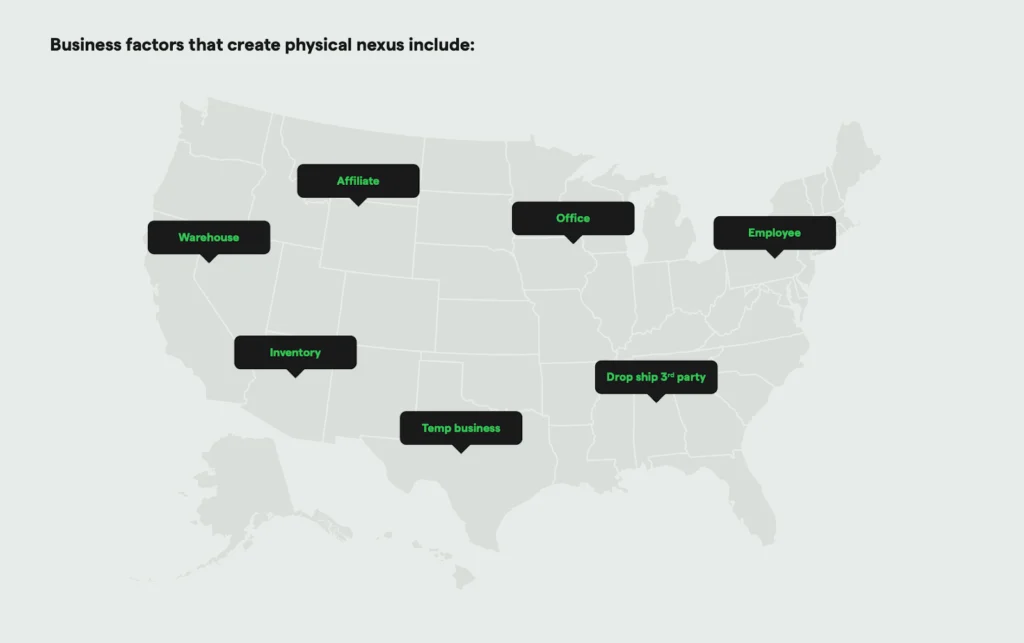
Businesses must verify their "nexus"—the legal connection that requires them to collect tax—in every state. Once nexus is established, the product catalog must be reconciled against that specific state’s definitions, which may differ from the SST standard.
3. Local Rate Validation
Because state-level exemptions often do not apply to local jurisdictions (as seen in Illinois and Georgia), tax engines must be configured to recognize "point-of-sale" or "point-of-delivery" local rates.
4. B2B Exemption Management
Wholesalers must maintain a digital, searchable database of resale certificates. An expired or unsigned certificate is viewed by auditors as a taxable sale. In the event of an audit, the burden of proof lies with the seller to show why tax was not collected.
Future Outlook
As we move toward 2027, the trend of eliminating state-level grocery taxes is expected to continue, but it will likely be offset by an increase in specialized taxes on sugar-sweetened beverages and highly processed snacks. For the food and beverage industry, the path to compliance lies in the marriage of real-time tax data and precise product metadata. Correcting a misclassified SKU today is a matter of a few keystrokes; defending that same SKU in an audit three years from now is a matter of significant capital. In the current regulatory environment, accurate product classification is not merely a back-office task—it is a fundamental component of fiscal health.