Lina Irawan
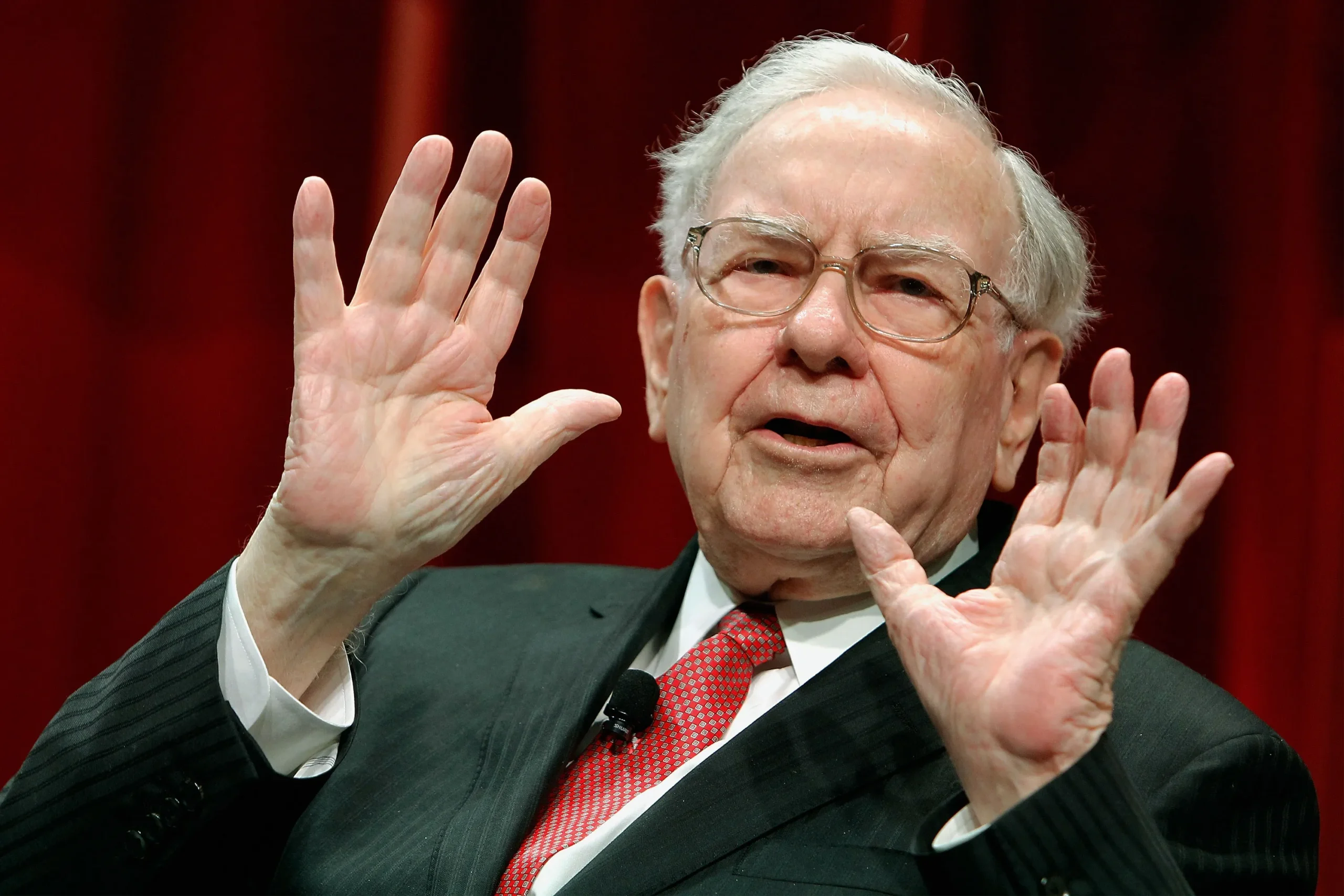
Billionaire investor Warren Buffett, often referred to as the "Oracle of Omaha," has consistently offered invaluable investment advice over many decades, establishing a philosophy deeply rooted in identifying and acquiring robust companies with enduring value, then committing to holding them for the long term. This enduring wisdom becomes particularly crucial and even more potent for individuals nearing retirement, a critical life stage where preserving accumulated wealth and ensuring its continued growth takes precedence. The transition from accumulation to preservation and distribution demands a strategic shift in financial management, making Buffett’s principles exceptionally pertinent. This article delves into the legendary investor’s core tenets, enriching them with supporting data, historical context, and analysis of their implications for those poised to embark on their golden years.
The Oracle of Omaha’s Enduring Wisdom: A Foundation for Financial Security
Warren Buffett’s journey, from a young paperboy to the head of Berkshire Hathaway, is a testament to the power of disciplined, long-term investing. His consistent outperformance of market benchmarks has not been achieved through complex trading algorithms or speculative ventures, but rather through a steadfast adherence to fundamental principles: value investing, a profound understanding of competitive advantages, and an unwavering emotional discipline. For those approaching retirement, understanding and applying these foundational concepts can serve as a robust framework for navigating the complexities of modern financial markets, mitigating risks, and securing a comfortable future. His insights transcend market cycles and economic shifts, offering a timeless roadmap for financial prudence.
Investing in Your Greatest Asset: Yourself
While the allure of stock market gains is undeniable, Buffett profoundly emphasizes that one of the most critical and often overlooked investments is in oneself. This multifaceted investment encompasses both intellectual and physical well-being, directly correlating to an individual’s earning potential and long-term financial health. Learning new skills, whether through formal education, online courses, or practical experience, can significantly enhance one’s marketability and lead to higher income streams. In an era of rapid technological advancement and evolving job markets, continuous skill development is not merely an advantage but a necessity. For example, a 2022 study by the Georgetown University Center on Education and the Workforce highlighted that workers with a bachelor’s degree earn 75% more over their lifetimes than those with only a high school diploma, illustrating the tangible return on educational investment. This concept extends beyond formal degrees; acquiring digital literacy, project management skills, or even proficiency in a new language can unlock new career opportunities or enhance existing ones, allowing for greater financial flexibility as retirement approaches.
Furthermore, taking diligent care of one’s mind and body is an investment with profound financial implications. A healthy individual is generally more energetic, productive, and resilient in the workplace, potentially extending their earning years and enhancing their overall quality of life. Conversely, neglecting health can lead to significant financial burdens in the form of high healthcare costs. According to Fidelity’s 2023 Retiree Health Care Costs Estimate, a 65-year-old couple retiring today could need approximately $315,000 to cover healthcare expenses in retirement, a figure that does not include long-term care. Proactive health management—through regular exercise, a balanced diet, and preventative medical care—can mitigate these costs, preserving valuable retirement savings. This holistic approach to self-investment creates a stronger foundation for financial security, ensuring that one remains a valuable asset to themselves, both personally and economically, well into their later years.
The Power of Simplicity: Embracing Low-Cost Index Funds
Buffett is famously not a proponent of complexity in investing. His counsel to most investors, particularly those without the time or inclination for deep fundamental analysis, is to adopt a simple yet profoundly effective strategy: invest in low-cost S&P 500 index funds. This advice stands in stark contrast to the often-frenzied pursuit of individual stock picking and the constant monitoring of market news cycles. S&P 500 index funds offer immediate diversification across 500 of the largest and most established U.S. companies, representing approximately 80% of the total U.S. equity market capitalization.
The mechanism is straightforward: when a company within the index underperforms or no longer meets the stringent criteria set by S&P Dow Jones Indices (which include market capitalization, liquidity, and sector representation), it is replaced by another, more robust company. This automatic rebalancing and removal of underperformers ensures the fund continually reflects the dynamism and strength of the broader U.S. economy. The benefits for pre-retirees are substantial. Firstly, diversification inherently reduces risk; the failure of a single company has a minimal impact on the overall portfolio. Secondly, the passive nature of index funds typically results in significantly lower expense ratios compared to actively managed funds, where high fees can erode returns over time. Over a 30-year investment horizon, even a 1% difference in annual fees can translate into hundreds of thousands of dollars in lost gains due to the power of compounding.
Historical data consistently supports Buffett’s stance. The S&P Dow Jones Indices SPIVA (S&P Indices Versus Active) U.S. Mid-Year 2023 Scorecard revealed that over the past 15 years, 92.4% of large-cap active funds underperformed the S&P 500. This statistic underscores the difficulty, even for professional money managers, to consistently beat the market. For older investors, who have less time to recover from significant losses incurred through speculative individual stock bets or high-cost active management, the steady, diversified growth offered by an S&P 500 index fund becomes an even more valuable tool for preserving capital and ensuring reliable, long-term appreciation without undue risk or complexity.
Navigating Market Turbulence: The Virtue of Calm
Perhaps one of Warren Buffett’s most iconic and frequently quoted pieces of advice is, "Be fearful when others are greedy, and greedy when others are fearful." This profound statement encapsulates his contrarian approach to market psychology and serves as a critical beacon for investors, especially those nearing retirement. Market downturns, often fueled by fear and uncertainty, frequently trigger panic selling among investors, leading them to liquidate their holdings at depressed prices. This irrational behavior, driven by emotion rather than fundamental analysis, often results in significant financial losses. Conversely, patient, disciplined investors, understanding that market corrections are an inherent part of the economic cycle, often capitalize on these periods by acquiring assets at lower valuations, positioning themselves to "enjoy the ride to record highs" when the market inevitably recovers.
Consider the Global Financial Crisis of 2008-2009 or the swift, sharp downturn at the onset of the COVID-19 pandemic in early 2020. In both instances, widespread panic led to massive sell-offs. Yet, those who maintained their positions or even judiciously invested more capital during these periods of extreme fear were handsomely rewarded as the markets rebounded strongly. For individuals approaching retirement, the imperative to stay calm is amplified. With a shorter time horizon to recover from significant portfolio drawdowns, making impulsive decisions during a market correction can be catastrophic. Selling into a downturn locks in losses, reducing the capital base that would otherwise participate in the subsequent recovery.
Buffett’s advice implicitly champions the principles of behavioral finance, urging investors to counteract common cognitive biases like loss aversion and herd mentality. Ignoring the incessant, often sensationalized, 24-hour news cycle and maintaining a long-term perspective allows investors to ride out short-term volatility. This discipline is not merely about holding; it can also involve strategic rebalancing or dollar-cost averaging—investing a fixed amount regularly, regardless of market fluctuations—which allows investors to buy more shares when prices are low and fewer when prices are high, smoothing out the average cost over time. For pre-retirees, this steady hand can be the difference between a secure retirement and one marred by avoidable financial setbacks.
Building an Impenetrable Financial Moat: The Personal Finance Dimension
In the world of corporate strategy, Buffett famously seeks out companies possessing what he terms "moats"—sustainable competitive advantages that protect their profitability and market share from rivals. These moats can take various forms, such as strong brands, cost advantages, network effects, or patented technologies. Applying this powerful metaphor to personal finances, individuals can proactively develop their own "moats" to safeguard their financial future and make retirement not just feasible, but secure.
The most significant "moat killer" for those aspiring to retirement is high-interest debt, particularly credit card debt or personal loans. The average credit card interest rate in the U.S. frequently hovers around 20% or higher. Servicing such debt can consume a disproportionate amount of income, effectively siphoning away funds that could otherwise be directed towards savings and investments. For example, carrying an average credit card balance of $6,000 at 20% interest could mean paying over $1,200 annually in interest alone, an amount that could contribute significantly to a retirement fund. Therefore, aggressively paying off high-interest debt is a foundational step in building a personal financial moat. It liberates cash flow, allowing for increased contributions to retirement accounts and other investments.
Beyond debt reduction, constructing a robust financial moat involves several strategic actions:
- Emergency Fund: Establishing a substantial emergency fund, typically covering three to six months of essential living expenses, acts as a critical buffer against unexpected financial shocks, such as job loss, medical emergencies, or unforeseen home repairs. Without such a fund, individuals might be forced to tap into retirement savings prematurely or incur new debt, weakening their financial position.
- Budgeting and Expense Management: Systematically cutting unnecessary expenses liberates more capital for savings. This doesn’t necessarily mean extreme frugality but rather mindful spending that aligns with long-term financial goals. Every dollar saved and invested early has the potential to grow significantly over time due to compounding.
- Diversified Income Streams: For some, developing additional income streams, even modest ones, can fortify their financial position, providing resilience against economic downturns or job market shifts. This could include freelancing, consulting, or monetizing a hobby.
- Adequate Insurance Coverage: Protecting assets and income through appropriate insurance policies (health, disability, life, home, auto) prevents catastrophic financial losses that could decimate retirement savings. These policies act as a defensive barrier, ensuring that unforeseen events do not compromise one’s financial security.
By diligently paying off debt, carefully managing expenses, and consistently investing, individuals can construct a formidable financial moat, ensuring their retirement plans remain impervious to external pressures and unforeseen challenges.
The Long Game: Cultivating a Future-Oriented Mindset
One of the most defining characteristics of Warren Buffett’s unparalleled success is his unwavering commitment to long-term thinking. Unlike many market participants who are preoccupied with daily stock price fluctuations or quarterly earnings reports, Buffett consistently focuses on where a company’s intrinsic value and stock price will be several years down the line, often a decade or more. He meticulously implements strong financial habits and deliberately filters out the short-term "noise" that often induces panic and irrational decision-making among other investors. This profound patience and strategic foresight have allowed him to identify and hold truly great businesses through various economic cycles, reaping enormous rewards from the power of compounding.
For individuals approaching retirement, cultivating this long-term mindset is paramount. It means understanding that wealth accumulation is a marathon, not a sprint. The power of compounding interest, often called the "eighth wonder of the world," demonstrates how returns on investments themselves earn returns over time, leading to exponential growth. Even modest, consistent contributions to retirement accounts, when left to grow over decades, can accumulate into substantial sums. For example, a 30-year-old who invests $500 a month consistently at an average annual return of 7% would have over $600,000 by age 65, purely through the magic of compounding. Delaying contributions, even for a few years, can significantly diminish the final sum due to the lost compounding potential.
Patience, simplicity, and discipline are the triumvirate that defines Buffett’s investing approach. Patience allows investors to withstand market volatility and avoid impulsive decisions. Simplicity, as discussed, steers them towards effective, low-cost investment vehicles. Discipline ensures consistent saving and investing, regardless of prevailing market sentiment. For pre-retirees, this means resisting the urge to chase "hot" stocks or engage in speculative ventures in an attempt to quickly boost their nest egg. Such actions often introduce undue risk at a stage when capital preservation is critical. Instead, a disciplined adherence to a well-diversified portfolio, regular contributions, and a clear vision of long-term financial goals will prove far more effective in securing a prosperous retirement. By embracing Buffett’s long-term thinking, individuals can build a robust financial future, insulated from the distractions and anxieties of short-term market fluctuations.