Candice Horbacz
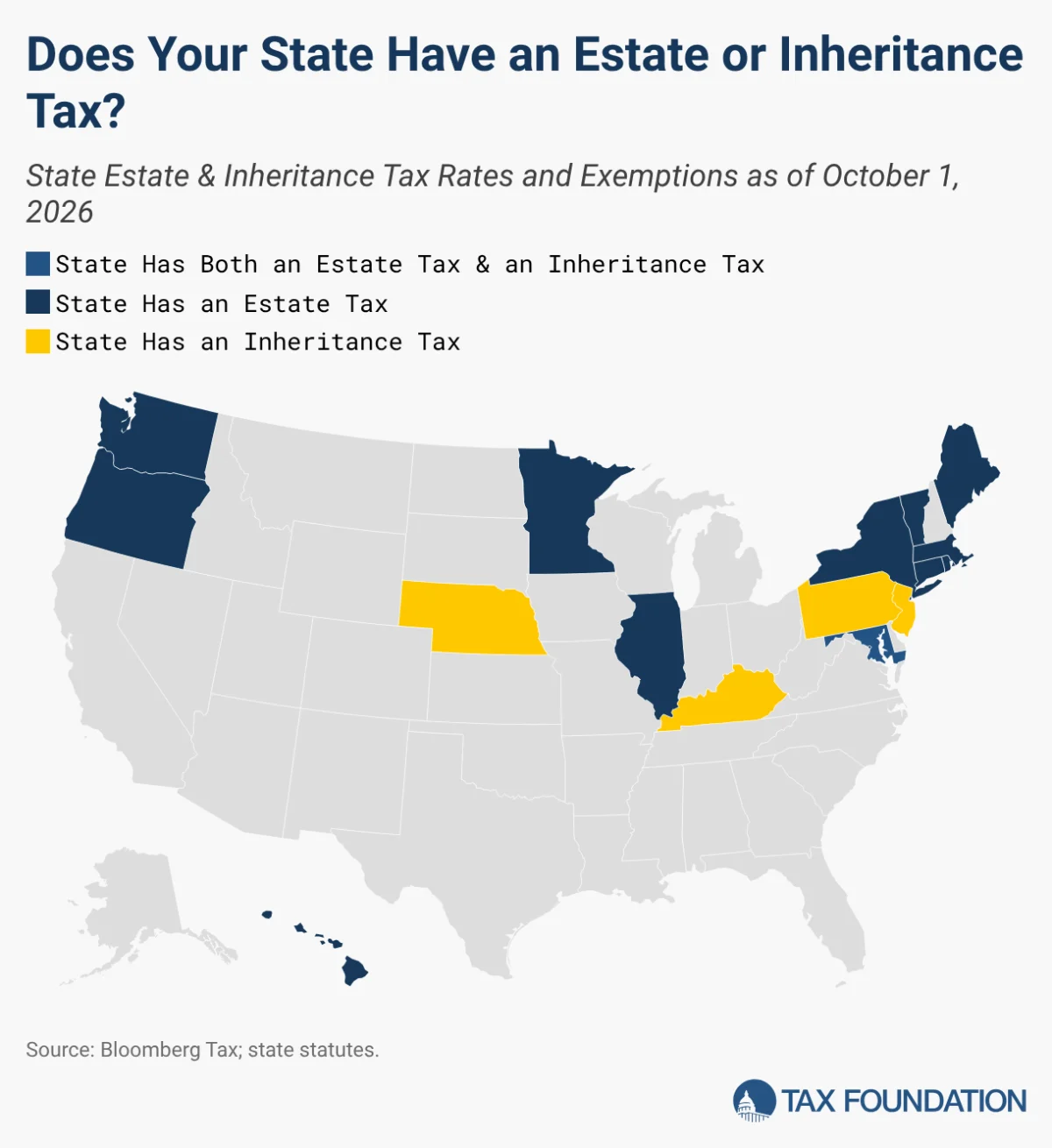
In the intricate tapestry of American taxation, the federal estate tax, boasting a top marginal rate of 40 percent, represents just one layer of the wealth transfer levies facing individuals and their heirs. Beyond this national imposition, 12 states and the District of Columbia currently administer their own estate taxes, while five states opt for inheritance taxes, creating a diverse and often challenging fiscal environment for generational wealth transfers. Maryland stands alone in its dual approach, uniquely levying both an estate tax and an inheritance tax on its residents and those with taxable property within its borders. This complex interplay of federal and state regulations necessitates a detailed understanding for individuals engaged in estate planning, as well as for policymakers grappling with the economic ramifications of such levies.
Understanding the Mechanics: Estate vs. Inheritance Taxes
To appreciate the nuances of wealth transfer taxation, it is crucial to differentiate between estate taxes and inheritance taxes. While both are imposed upon the transfer of assets following a decedent’s death, their fundamental mechanisms and incidence diverge significantly.
Estate taxes are levied directly on the net value of a decedent’s taxable estate before any assets are distributed to heirs. The responsibility for payment falls upon the estate itself, which must settle the tax liability prior to the disbursement of bequests. These taxes typically apply to the estates of residents who were domiciled in the taxing state at the time of death, as well as to non-resident decedents who owned taxable property within that state’s jurisdiction. The primary characteristic of an estate tax is its focus on the overall size of the wealth accumulated by the deceased.
In contrast, inheritance taxes are remitted by the recipient(s) of a bequest, meaning the tax is paid by the heir based on the value of the assets they receive. Unlike estate taxes, which consider the entire estate, inheritance taxes are calculated on the amount distributed to each individual beneficiary. The tax is paid to the state in which the decedent was domiciled or owned taxable property, irrespective of where the heir resides. A defining feature of inheritance taxes is their often progressive structure, with rates and exemption thresholds frequently varying based on the proximity of the relationship between the beneficiary and the decedent, typically offering preferential treatment to close relatives.
Both estate and some inheritance taxes are generally structured progressively, meaning the tax rates increase incrementally with marginal increases in the total value of the assets being transferred or inherited. This design aims to impose a higher tax burden on larger accumulations or transfers of wealth.
The Federal Landscape and Key State Players
The federal estate tax serves as the foundational layer, with its highest marginal rate of 40 percent applied after accounting for a substantial exemption. However, the federal exemption threshold has seen significant adjustments over time, most recently with the passage of the One Big Beautiful Bill Act (OBBBA) in 2025. Effective starting in 2026, the federal estate tax exemption dramatically increased to $15 million, and critically, this threshold is slated to be indexed for inflation from 2027 onward, providing a degree of stability and predictability for future estate planning. This substantial exemption means that only a fraction of the wealthiest estates are subject to federal estate tax, although its impact remains significant for those affected.
At the state level, the picture becomes more fragmented. Among the states imposing estate taxes, Hawaii and Washington distinguish themselves with the highest top marginal rates in the nation, both at 20 percent. However, the practical burden imposed by these states differs due to variations in their exemption thresholds and rate structures. In Hawaii, the 20 percent top rate applies to taxable estate values exceeding $10 million. Washington’s top rate also reaches 20 percent, but it applies to taxable estate values exceeding $9 million. While Washington’s top rate applies to a slightly lower taxable estate value, its estate tax is generally considered more burdensome. This is primarily due to Washington’s significantly lower exemption threshold of $3 million, which brings a broader range of estates into the tax net, contrasting with Hawaii’s more generous $5.49 million exemption. Furthermore, Washington’s marginal rates escalate more steeply, intensifying the financial impact on larger estates at lower thresholds.
Beyond Hawaii and Washington, eight states and the District of Columbia assess a 16 percent top estate tax rate. The thresholds at which this rate applies vary considerably, ranging from $5 million in Vermont to $10.1 million in Minnesota and New York, reflecting diverse approaches to taxing wealth. Connecticut, meanwhile, stands out with a flat estate tax rate of 12 percent. Despite this rate, Connecticut’s estate tax is often considered less burdensome than many others due to its notably high exemption value of $15 million, which aligns with the federal threshold. This strategic positioning has led many analysts to suggest Connecticut is in a prime position for further reforms or even eventual elimination of its estate tax, given its alignment with federal policy and its focus on economic competitiveness. Vermont, while also having a 16 percent rate, applies it as a flat rate, which differs from the progressive structure seen in other states.
State Exemption Thresholds: A Tale of Disparity
The exemption threshold is a critical factor in determining how many estates are subject to taxation. Currently, Connecticut is the sole state that fully conforms its estate tax exemption to the federal threshold of $15 million. New York follows with the second-highest exemption at $7.35 million. At the opposite end of the spectrum, Oregon and Rhode Island maintain the least generous exemptions, set at only $1 million and $1,838,056, respectively. These low thresholds mean that a significantly larger proportion of estates in these states are potentially subject to estate tax, impacting even moderately wealthy families.
Inflation indexing, a mechanism to prevent "bracket creep" where inflation pushes estates into higher tax brackets without a real increase in wealth, is also a varied practice among states. Four states—Connecticut, Maine, New York, and Rhode Island—along with the District of Columbia, currently index their exemption amounts for inflation, a crucial measure for long-term fairness and predictability in tax planning.
Inheritance Taxes: Relationship-Based Taxation
Five states currently levy inheritance taxes: Kentucky, Maryland, Nebraska, New Jersey, and Pennsylvania. A defining characteristic of these taxes is their structure, which dictates that the tax rate varies based on the proximity of the bequest recipient to the decedent. This approach allows states to offer preferential treatment, including lower rates and higher exemption thresholds, to close relatives such as spouses and lineal heirs (children, grandchildren), while taxing more distant beneficiaries (e.g., siblings, nieces, nephews, unrelated individuals) at significantly higher rates and with lower, or even no, exemption thresholds.
Among these states, Kentucky and New Jersey impose the highest top marginal inheritance tax rates, each at 16 percent. These rates can represent a substantial burden on beneficiaries, particularly those with less direct familial ties to the decedent. Maryland, which uniquely levies both an estate and an inheritance tax, has the lowest top inheritance tax rate among the five states, a flat 10 percent. However, this rate applies to all recipients who are not spouses or lineal heirs, who are typically exempt or face very low rates in all inheritance tax states. The combination of both an estate and an inheritance tax in Maryland makes it an outlier and potentially one of the most complex states for wealth transfer planning.
A Chronology of Policy Evolution and Reform Efforts
The landscape of estate and inheritance taxes has been far from static, undergoing significant policy shifts over the past two decades driven by changing economic philosophies and fiscal priorities.
Prior to 2005, the federal government played a significant role in incentivizing state-level estate taxes. This was achieved through a federal credit against state estate taxes paid. This credit effectively made state estate taxes an attractive option for states, as taxpayers would pay the same total amount in estate taxes whether their state levied its own tax or not; the state tax merely diverted a portion of what would have otherwise gone to the federal government.
The phase-out of this federal state estate tax credit in 2005 marked a pivotal moment. Many states had their estate tax provisions directly linked to this federal credit, meaning that when the credit disappeared, their state estate taxes ceased to be collected by default. Other states, which had decoupled their taxes from the federal credit, subsequently repealed their estate taxes through legislative action, recognizing the changed fiscal environment and the potential for economic disadvantage.
Following these federal changes, a growing number of states began to acknowledge the adverse economic impacts of estate and inheritance taxes. Concerns about economic competitiveness led many states to either substantially increase their exemption thresholds or eliminate these taxes entirely. This period saw a wave of reforms aimed at making states more attractive for wealthy individuals and businesses.
Notable changes include:
- 2018: Delaware repealed its estate tax, signaling a move towards a more business-friendly tax environment. In the same year, New Jersey completed the phase-out of its estate tax, though it maintained its inheritance tax.
- 2021: Vermont completed a phase-up of its estate tax exemption, nearly doubling it to $5 million, a step aimed at reducing the burden on a broader segment of estates.
- By 2023: Connecticut implemented a multi-year phase-in of its exemption increase, ultimately matching the federal estate tax exemption of $15 million. Concurrently, Connecticut transitioned to a flat tax rate, simplifying its estate tax structure.
- 2023: Nebraska increased its inheritance tax exemptions and reduced its rates, reflecting a move to lessen the burden on beneficiaries.
- 2025: Iowa completely repealed its inheritance tax, a significant policy shift that eliminated one of the five state inheritance taxes.
- 2025-2026 Biennium: Despite these changes, the debate continues. Policymakers in Maryland, Minnesota, Nebraska, New Jersey, Oregon, and Rhode Island introduced structurally sound changes to their estate and inheritance taxes. Although these proposed reforms were not ultimately adopted, their introduction serves as a clear indicator that legislators are increasingly acknowledging the substantial economic burdens and disincentives inherent in these wealth transfer taxes. While these particular legislative efforts did not reach fruition, their emergence underscores a growing legislative awareness of the need to reassess and potentially revise these fiscal instruments to enhance state competitiveness and foster economic growth.
Economic Implications and Broader Societal Impact
The sustained debate and ongoing reforms surrounding estate and inheritance taxes stem from widely recognized economic concerns. These taxes are often characterized by economists as economically harmful, leading to several adverse outcomes.
Firstly, they can disincentivize in-state investment. High estate or inheritance taxes may prompt wealthy individuals and business owners to invest their capital in states or jurisdictions with more favorable tax regimes, or even overseas. This diversion of investment can stifle local economic growth, job creation, and entrepreneurial activity.
Secondly, these taxes incentivize inefficient tax avoidance strategies. Rather than focusing on productive economic endeavors, individuals and their advisors may devote significant resources to complex estate planning mechanisms designed primarily to minimize tax liabilities. This effort represents a "deadweight loss" to the economy, as resources are diverted from productive uses towards mere tax avoidance, creating economic distortions without generating real value.
Thirdly, estate and inheritance taxes can drive high-net-worth individuals out of state. Faced with substantial tax burdens on their wealth transfers, affluent residents may choose to relocate their domicile to states that do not impose such taxes. This exodus not only reduces the tax base but can also lead to a loss of philanthropic contributions, local investments, and the broader economic activity associated with wealthy households.
A particularly acute impact is felt by family farms and businesses. Many owners of such enterprises are "asset rich but cash poor." Their wealth is tied up in illiquid assets like land, equipment, or the intrinsic value of the business itself, rather than readily available cash. When estate and inheritance taxes are levied on the assessed value of these illiquid assets, heirs may be forced to sell off portions of the inherited farm or business—or even the entire enterprise—to generate the cash needed to pay the tax bill. This can lead to the fragmentation or dissolution of multi-generational family legacies, undermining economic stability and continuity in critical sectors. The administrative burdens and legal complexities associated with these taxes further hamper economic growth and entrepreneurial activity, adding layers of cost and uncertainty.
Currently, 16 states and the District of Columbia continue to levy estate and/or inheritance taxes. The ongoing economic analysis consistently points to the punitive tax burdens these levies impose on generational transfers of wealth. Policymakers in these states are increasingly urged to consider phasing out or entirely eliminating these taxes. Such reforms are advocated as essential steps to promote the stability and continuity of family businesses and farms, minimize economic distortions, and prevent further financial hardships imposed on families already grieving the loss of a loved one. The trend of reforms and repeals across various states suggests a growing consensus on the need to re-evaluate the role and impact of these wealth transfer taxes in a competitive national and global economy.