

 Candice Horbacz
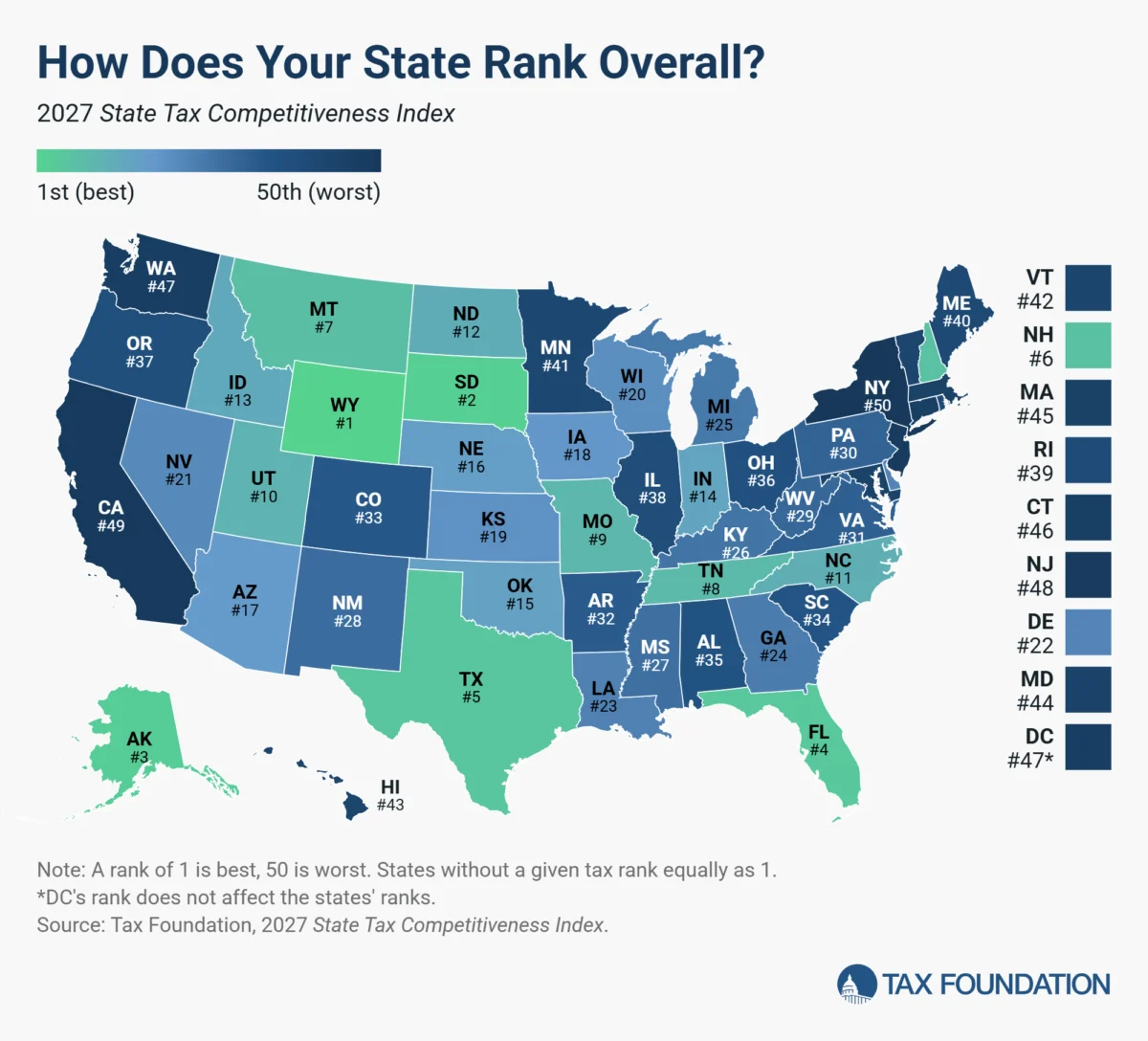
The Tax Foundation has unveiled its 2027 State Tax Competitiveness Index, a significantly revamped and rebranded analytical tool designed to offer policymakers, businesses, and taxpayers a clearer, more interactive understanding of state tax systems. Formerly known as the State Business Tax Climate Index since 2003, the publication has undergone a "ground-up" methodological overhaul and a name change to better reflect its broader scope: assessing overall state tax competitiveness, rather than solely the business tax climate. This extensive refresh, the third year under its new methodology, aims to keep pace with the accelerating evolution of tax policy nationwide.
A New Era for Tax Competitiveness: The 2025 Rebrand and Methodological Evolution
The decision to rebrand the index for the 2025 edition and introduce substantial methodological changes was driven by the rapid transformation of the tax landscape. According to Katherine Loughead, Vice President of State Policy at the Tax Foundation, this was "not just an exercise in slapping a new title on the cover," but a comprehensive effort to make the Index a more robust product. Over the past two decades, the Index has served as an invaluable roadmap for states seeking to evaluate and reform their tax codes. However, recent years have witnessed an unprecedented pace of change, including the federal Tax Cuts and Jobs Act (TCJA), the Supreme Court’s Wayfair decision on remote seller taxes, the rise of remote work impacting unemployment insurance regimes, and the adoption of new or expanded taxes on wealth, unrealized gains, data, and digital products. The One Big Beautiful Bill Act (OBBBA) further introduced significant federal changes, requiring states to re-evaluate their conformity.
To address these complex developments more comprehensively, the 2027 edition expands its analytical framework to over 150 variables. These variables, previously confined to appendix tables, are now integrated into a reimagined digital platform. The new online publication transcends a static PDF and interactive map, offering each state a dedicated summary that highlights notable tax code features, explains its ranking, and suggests state-specific reforms to enhance competitiveness. Users can now access interactive, sortable, and filterable datasets, alongside new visuals and historical rate tools, allowing for granular comparisons across states and variables. This digital transformation aims to make the wealth of tax policy information more accessible and actionable for all stakeholders.
The methodological refinements also involved a rigorous backcasting process, extending state rankings under the new methodology seven years prior to the current edition. This ensures an "apples-to-apples comparison," providing a transparent and accurate view of states’ actual movement in recent years, rather than shifts solely attributable to methodological updates.
The 2027 Rankings: Leaders and Laggards in Tax Structure
The 2027 State Tax Competitiveness Index identifies states with tax systems most conducive to economic growth and those that present significant barriers. The top 10 states generally share a common characteristic: the absence of one or more major tax types. South Dakota and Wyoming, for instance, levy no corporate or individual income tax, while Alaska and New Hampshire forgo individual income and state-level sales taxes. Florida, Tennessee, and Texas stand out for having no individual income tax, and Montana imposes no sales tax. This strategic omission allows them to score perfectly on entire subindices, granting them a significant competitive advantage.
However, the Index also demonstrates that states can achieve high rankings even while levying all major taxes, provided they maintain moderate rates and comparatively well-designed tax structures. Missouri and Utah, for example, rank within the top 10 while imposing corporate, individual income, sales, and property taxes. Other strong performers in this category, ranking between 11th and 16th, include North Carolina, North Dakota, Idaho, Indiana, Oklahoma, and Nebraska.
Conversely, the states consistently found in the bottom 10 typically exhibit complex, nonneutral tax systems coupled with high rates. New Jersey serves as a prime example, burdened by some of the nation’s highest property taxes, the highest-rate corporate income tax, and one of the highest-rate individual income taxes. The state further complicates its system with an inheritance tax and poorly structured individual income tax provisions. These characteristics contribute to an environment less favorable for economic activity and business growth.
Understanding the "Wins Above Replacement" in Tax Policy
The Tax Foundation likens tax competition to baseball’s "Wins Above Replacement" (WAR) statistic, suggesting that while a well-structured tax code won’t single-handedly transform a region, it plays a substantial and often critical role in a state’s economic success. Every state, regardless of its unique economic or geographic attributes, can benefit from a tax structure that is simple, neutral, transparent, and pro-growth.
The Index scores states across five primary subindices: corporate taxes, individual income taxes, sales and excise taxes, property and wealth taxes, and unemployment insurance taxes. These subindices are weighted not equally, but according to the variability of scores across states in each category. This means that areas where states exhibit greater differences in their tax structures (e.g., individual income taxes) are assigned a heavier weight, reflecting the larger competitive opportunities or disadvantages present. For instance, the individual income tax component accounts for 30.2% of a state’s total score, while unemployment insurance taxes comprise 11.6%.
The methodology acknowledges that states foregoing a major tax type (like individual income or corporate income) often achieve perfect scores in those respective subindices. This explains the strong performance of states like Wyoming and South Dakota. However, it also highlights the "Missouri, Utah, and North Carolina models," demonstrating that states can maintain all major tax types and still rank highly by adopting moderate rates and efficient, well-designed structures. For policymakers, the Index serves as a powerful diagnostic tool, offering not just rankings but also granular data on over 150 variables—from tax rates and throwback rules to expensing provisions and indexation—to guide targeted reforms.
Key Shifts and Notable Reforms in the 2027 Index
The 2027 Index reveals a dynamic period of state tax reform, with many states actively adjusting their codes in response to federal changes and competitive pressures. These shifts often led to significant movements in state rankings:
- Conformity to Federal Expensing: States that conformed to the One Big Beautiful Bill Act (OBBBA)’s restored full expensing under Section 168(k) and new Section 168(n) for certain structures, or the restoration of Section 174 expensing for R&D costs, generally saw improvements. Kansas, Missouri, Nebraska, New Mexico, Oklahoma, Utah, and West Virginia all benefited from such conformity. Conversely, Arizona, Arkansas, Georgia, Indiana, Michigan, South Carolina, and Virginia saw their corporate income tax rankings decline, partly due to non-conformity.
- Individual Income Tax Rate Reductions: Several states continued the trend of lowering individual income tax rates. Arkansas, Montana, Mississippi, Nebraska, North Carolina, Ohio, and Oklahoma all enacted rate cuts, improving their individual income tax standings. Ohio, notably, transitioned from a graduated to a flat individual income tax rate of 2.75 percent.
- Base Narrowing Provisions: The OBBBA also introduced temporary individual deductions for tips and overtime pay. States like Idaho, Indiana, Iowa, and Michigan, by conforming to these provisions, narrowed their tax bases and saw their individual income tax rankings fall, as these changes cost revenue without generating significant economic growth. Missouri and Oklahoma, however, resisted conforming to these exemptions, contributing to their improved competitiveness.
- Elimination of Damaging Taxes: Louisiana saw a remarkable 17-place improvement in its property tax rank due to the elimination of its capital stock tax, a particularly damaging tax levied regardless of profit.
- New or Increased Taxes: Maine’s adoption of a 2 percent "high-income surcharge," bringing its top individual income tax rate to 9.15 percent, caused it to slide seven places. Washington’s inclusion of digital advertising in its sales tax base, part of a broader expansion of B2B digital product taxation, dropped its sales and excise tax rank to 50th. Kansas, despite overall improvements, saw its property tax ranking fall due to a substantial increase in property tax collections per capita.
Anticipated Shifts: The Future of State Tax Policy
Looking ahead, several states have already enacted tax changes that will impact future editions of the Index, signaling continued dynamism in state tax policy:
- Income Tax Trajectories: Arkansas’s corporate income tax rate is scheduled to fall further in 2027. Georgia’s top individual income tax rate and standard deduction are subject to annual reductions if revenue thresholds are met. North Carolina plans even more aggressive individual income tax rate reductions (to 3.49% in 2027 and 2.99% in 2028) and a corporate rate drop (to 1% in 2028, with full elimination by 2030). Conversely, Hawaii and Rhode Island have adopted new, higher tax brackets for high-income earners (13% for Hawaii in 2027, and a phased surtax raising Rhode Island’s top rate to 8.99% by 2029), which will negatively impact their future rankings. Washington’s new 9.9% tax on income above $1 million, effective 2028, is also expected to significantly affect its future scores.
- Digital and Business Taxation: Illinois is set to introduce a targeted advertising services tax, a digital asset tax, and a social media platform fee in January 2027. Utah’s new tax on "targeted advertising" also takes effect in January 2027. New Mexico, meanwhile, is set to decouple from federal expensing provisions and expand its corporate tax base to include Net CFC Tested Income (NCTI) in 2027, an aggressive change that could lead to double taxation of foreign income.
- Property Tax Adjustments: Iowa has enacted legislation establishing a property tax levy limit for counties and municipalities, effective 2027, which will be reflected in future Index editions.
The Broader Implications: Taxes as a Lever for Economic Growth
The extensive literature review underpinning the Index reinforces a clear consensus among economists: taxes matter significantly for businesses and individuals. As early as 1956, Charles Tiebout’s "voting with their feet" hypothesis suggested that citizens choose communities based on preferred levels of public services and taxes. Over the decades, empirical research has increasingly solidified the understanding that tax structures profoundly influence location decisions, investment, and employment growth. While other factors like workforce quality, infrastructure, and market proximity are important, a state’s tax system is a critical, and immediately actionable, lever for policymakers.
Historical examples abound, illustrating the tangible impact of state tax policies. In the early 2000s, Illinois saw hundreds of millions in capital investments delayed due to a proposed gross receipts tax. Intel chose Arizona over California for a multi-billion-dollar chip-making facility, citing Arizona’s favorable corporate income tax system. Northrop Grumman moved its headquarters to Virginia, citing a better business tax climate. More recently, General Electric and Aetna threatened to leave Connecticut over increased corporate tax burdens, with GE ultimately relocating. Even high-profile Illinois companies like Sears and the Chicago Mercantile Exchange negotiated significant tax deals to remain in the state after major tax increases in 2011.
These anecdotes, supported by academic findings, underscore that businesses are highly responsive to tax considerations. Studies show that higher corporate income tax rates significantly reduce new firm entry and can increase the likelihood of headquarters relocation. Personal property and sales taxes have been linked to lower private-sector job growth. High-income individuals and entrepreneurs are particularly sensitive to tax changes, often exhibiting tax-driven migration.
The Index strongly advocates for broad-based tax reform over targeted incentives or subsidies. While states often use incentives to lure businesses, such practices complicate the tax system, narrow the tax base, and frequently fail to deliver sustained economic growth, as seen in North Carolina’s experience with Dell Computers. A far more effective approach is to systematically improve the overall business tax climate through adherence to sound tax principles: simplicity, neutrality, transparency, and a pro-growth orientation. Taxes should minimize economic distortions, allowing businesses and individuals to make decisions based on market forces rather than tax advantages.
The Tax Foundation, through its meticulously revised and digitally enhanced 2027 State Tax Competitiveness Index, continues to provide an invaluable guide for navigating state tax policy. By offering a robust analytical framework and granular data, it empowers policymakers to make informed decisions that can enhance their states’ economic competitiveness and foster long-term prosperity.








