

 Lina Irawan
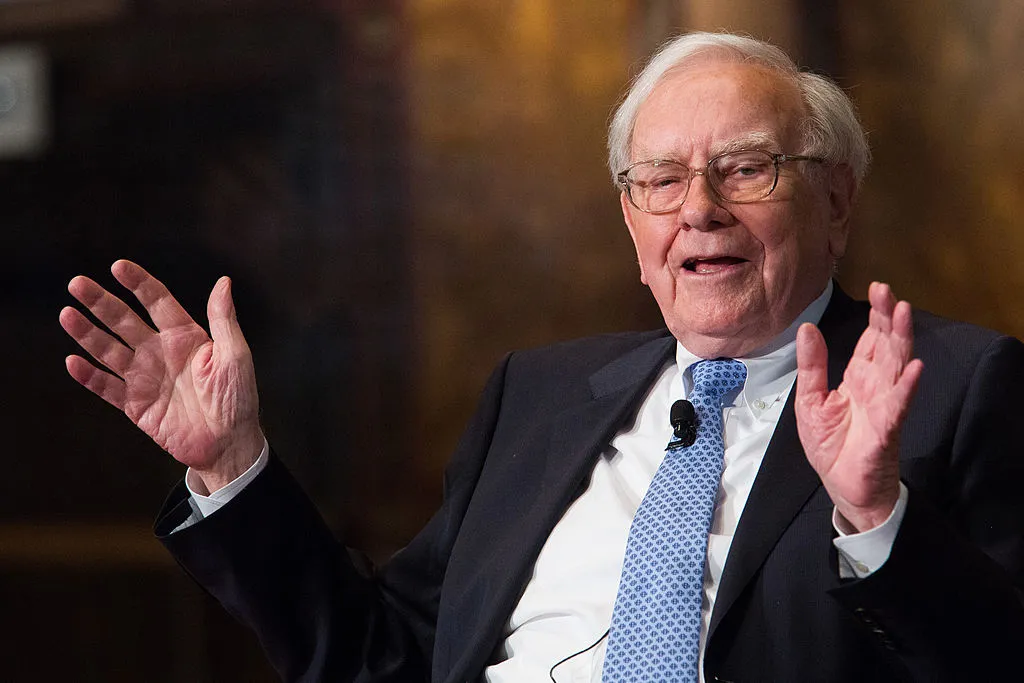
Back in 2008, legendary investor Warren Buffett initiated a famous wager, publicly betting that a low-cost S&P 500 index fund would outperform a selection of actively managed hedge funds over the ensuing decade. This strategic challenge, which concluded at the end of 2017, saw Buffett emerge victorious, delivering a compelling lesson on the efficacy of passive investing and the corrosive impact of investment fees, particularly for individuals saving for retirement.
The Genesis of a High-Stakes Wager
The bet, formally announced on January 1, 2008, was a direct response to a challenge posed by Protégé Partners, a New York-based asset management firm specializing in funds of hedge funds. Protégé co-founder Ted Seides publicly accepted Buffett’s long-standing assertion that active managers, despite their high fees and purported expertise, often fail to beat simple, broad-market index funds over extended periods. Buffett had previously advised his own family to invest in a low-cost S&P 500 index fund, a recommendation he frequently reiterated in his annual letters to Berkshire Hathaway shareholders.
The terms of the bet were straightforward: Buffett put his money into a Vanguard S&P 500 index fund, while Protégé Partners selected five hedge funds of funds, representing a diversified portfolio of hedge fund strategies. Each side committed $320,000 to purchase zero-coupon Treasury bonds, which, upon maturity at the end of 2017, would yield $1 million. The proceeds were designated for a charity of the winner’s choice. The period of the bet, 2008-2017, was particularly noteworthy as it spanned the tumultuous global financial crisis and the subsequent decade of recovery and growth, offering a robust test for both investment approaches.
A Decade of Performance: S&P 500 Triumphs
When the final results were tallied on December 31, 2017, the S&P 500 index fund had delivered a total return of 125.8% over the ten-year period. This translated to an impressive average annual gain of 8.5%. In stark contrast, the composite return for the five hedge funds chosen by Protégé Partners was a mere 87.7% over the same stretch. Individually, the hedge funds’ average annual gains ranged from a paltry 0.3% to a maximum of 6.5%, significantly lagging the market benchmark.
Buffett detailed the outcome in his 2017 shareholder letter, underscoring that the S&P 500’s cumulative return was nearly double that of the best-performing hedge fund selection. This outcome powerfully illustrated that even sophisticated investors with extensive resources and purportedly superior market insights can struggle to consistently outperform a diversified, low-cost market index. The bet served as a potent validation of Buffett’s long-held belief in the wisdom of simple, broad-market investing for the vast majority of individuals.
The Underlying Mechanics: Compound Interest as a Wealth Accelerator
Central to the long-term success of any investment strategy, including index fund investing, is the principle of compound interest. Often referred to as the "eighth wonder of the world" by Albert Einstein, compound interest is the process by which an investment earns returns not only on the initial principal but also on the accumulated interest from previous periods. This exponential growth mechanism is what makes investing for the long term so profoundly powerful.
Consider an initial investment of $100,000 growing over 30 years at a hypothetical annualized return of 7%. The impact of compounding becomes increasingly evident over time:
- Year 1: The investment grows to $107,000 ($100,000 principal + $7,000 interest).
- Year 5: The investment would reach approximately $140,255. At this point, the gains are already earning returns.
- Year 10: The balance would be around $196,715, nearly doubling the initial principal.
- Year 20: The investment accelerates to approximately $386,968.
- Year 30: The initial $100,000 investment would swell to an impressive $761,226.
This example clearly demonstrates how patient, long-term investing allows returns to build upon themselves, creating a snowball effect. The earlier an investor starts, the more time compound interest has to work its magic, highlighting the critical importance of consistent saving and investing over decades rather than years.
The Silent Erosion: How Fees Devour Returns
While compound interest works in an investor’s favor, investment fees, particularly high ones, work relentlessly against it, silently eroding balances over time. Buffett famously stated that "fees never falter," meaning that fund managers continue to collect their fees regardless of whether their investments perform well or poorly. This continuous drain can have a devastating cumulative effect on long-term returns.
Fees are typically expressed as an "expense ratio," which is the total annual percentage of a fund’s assets used to cover operating expenses, including management fees, administrative costs, and marketing expenses. This percentage is deducted from the fund’s assets before returns are calculated, meaning investors never directly see the deduction but feel its impact on their net returns.
To illustrate the profound impact of fees, let’s revisit the $100,000 initial investment growing over 30 years at a hypothetical gross annual return of 7%.
-
Scenario 1: High Fee (1.00% Expense Ratio)
- The net annual return after fees would be 6.00% (7.00% – 1.00%).
- Over 30 years, the $100,000 investment would grow to approximately $574,349.
-
Scenario 2: Low Fee (0.10% Expense Ratio)
- The net annual return after fees would be 6.90% (7.00% – 0.10%).
- Over 30 years, the $100,000 investment would grow to approximately $735,767.
The difference between these two scenarios is staggering: a $161,418 reduction in wealth due to just a 0.90 percentage point difference in annual fees over three decades. This substantial sum underscores why investors must scrutinize expense ratios before committing to any mutual fund or exchange-traded fund (ETF). Firms like Vanguard and Fidelity Investments have been instrumental in democratizing low-cost investing, offering many top-tier index funds with expense ratios well below 0.10%.
Hedge funds, by contrast, are notorious for their high fee structures, often adhering to a "2 and 20" model – a 2% annual management fee on assets under management plus a 20% performance fee on any profits generated above a certain hurdle rate. These exorbitant fees make it exceedingly difficult for hedge funds to outperform benchmarks consistently, as they must generate significantly higher gross returns just to break even with a low-cost alternative.
Strategic Choices for Astute Investors
Buffett’s bet and the clear financial implications of fees provide actionable guidance for individual investors:
- Prioritize Low-Cost Index Funds and ETFs: As Buffett demonstrated, index funds offer a simple, effective, and low-cost way to gain diversified exposure to the broader market. They inherently track a market index, removing the need for expensive active management and its associated fees. This approach aligns with the understanding that consistently beating the market is an exceptionally difficult endeavor.
- Understand and Analyze Expense Ratios: Before investing in any fund, investors should locate and understand its expense ratio. This critical piece of information is readily available in a fund’s prospectus or on financial websites. Opting for funds with expense ratios below 0.10% can significantly boost long-term returns.
- Embrace a Long-Term Perspective: The power of compound interest is maximized over decades. Investors should resist the temptation to time the market or chase short-term gains, instead focusing on consistent contributions and a buy-and-hold strategy. Market fluctuations are inevitable, but a long-term outlook helps mitigate their impact.
- Diversify Broadly: Index funds, by their nature, offer broad diversification across numerous companies and sectors within a given market. This inherent diversification helps reduce specific company risk and provides exposure to the overall growth of the economy.
- Regularly Review Your Portfolio: While a long-term strategy is crucial, periodic reviews of one’s investment portfolio are essential. This allows investors to ensure their asset allocation remains aligned with their risk tolerance and financial goals, and to identify and address any funds that may have excessively high fees or underperforming managers.
Broader Implications and Lasting Lessons
The outcome of the Buffett-Protégé bet extends beyond mere financial performance; it carries significant implications for the investment industry and individual wealth accumulation.
- Validation of Passive Investing: The bet provided a high-profile, real-world validation of the passive investing philosophy, challenging the traditional active management paradigm that often struggles to justify its costs. It reinforced the idea that for most investors, attempting to pick winning stocks or managers is a futile exercise that often leads to underperformance due to fees and behavioral biases.
- Democratization of Investing: Low-cost index funds have democratized investing, making sophisticated market exposure accessible to everyday savers. This allows individuals without specialized financial knowledge or large sums to invest with confidence, knowing they are participating in the market’s overall growth.
- Behavioral Finance Insights: The bet also touches upon aspects of behavioral finance. Many investors are drawn to the allure of "expert" managers promising superior returns, often overlooking the consistent, albeit less glamorous, returns of index funds. Buffett’s wager serves as a reminder to prioritize rational, evidence-based decision-making over emotional appeals or perceived exclusivity.
- Continued Relevance: In an era of increasing market volatility and complex financial products, Buffett’s simple yet profound lesson remains as relevant as ever. The principles of low costs, broad diversification, and long-term patience are timeless tenets for building durable wealth.
In conclusion, Warren Buffett’s decade-long bet against hedge funds was more than just a contest; it was a masterclass in investment philosophy. His decisive victory underscored the profound advantages of low-cost index funds and the insidious damage inflicted by excessive fees. For individuals planning their retirement or simply aiming to grow their wealth, the core message is clear: simplicity, patience, and unwavering attention to costs are not merely good ideas—they are fundamental pillars of long-term financial success.








