Lana Rhoades
As global e-commerce sales are projected to surpass $8.1 trillion by the end of 2026, the regulatory environment governing online retail has reached a level of unprecedented complexity. For modern e-commerce retailers, the concept of "sales tax nexus" has evolved from a secondary administrative concern into a foundational pillar of financial strategy and risk management. The shift is driven by the rapid digital transformation of the global marketplace and the aggressive efforts of state governments to capture tax revenue from remote commerce. Failing to maintain pace with these shifting legal requirements does not merely result in minor clerical errors; it exposes businesses to severe financial penalties, back-tax liabilities, and the disruptive potential of multi-state audits.
In the current fiscal landscape, the definition of nexus—the level of connection between a business and a taxing jurisdiction that allows the state to require the business to collect and remit sales tax—has moved far beyond the traditional "bricks-and-mortar" definition. Today’s retailers must navigate a dual reality of physical and economic presence, often across dozens of different jurisdictions simultaneously. This guide provides a detailed examination of the current nexus environment, the historical milestones that shaped it, and the strategic imperatives for businesses operating in the 2026 digital economy.
The Evolution of Nexus: A Historical Chronology
To understand the current complexity of sales tax laws, one must examine the legal shifts that occurred over the last three decades. The journey from a physical-only standard to the current economic standard was marked by significant litigation and legislative maneuvering.
In 1992, the United States Supreme Court ruled in Quill Corp. v. North Dakota that a state could only require a business to collect sales tax if that business had a physical presence in the state. This "physical presence rule" became the bedrock of the early internet economy, allowing burgeoning e-commerce giants to sell products across state lines without the burden of collecting local taxes. However, as online shopping transitioned from a niche activity to a dominant economic force, states began to report massive revenue "leakage," estimated in the billions of dollars.
The turning point arrived in June 2018 with the landmark decision in South Dakota v. Wayfair, Inc. The Supreme Court overturned the Quill precedent, ruling that physical presence was no longer a requirement for sales tax nexus. The court held that "economic nexus"—based on the volume of sales or transactions into a state—was a sufficient connection to justify tax collection. Following this decision, a "domino effect" occurred across the United States. Within three years, nearly every state that imposes a general sales tax had enacted economic nexus legislation. By 2026, these laws have matured, with states refining their thresholds and enforcement mechanisms to maximize compliance.
Defining the Modern Nexus Framework
In 2026, a business can trigger sales tax obligations through two primary channels: physical presence and economic activity. While the Wayfair decision focused on the latter, the former remains a potent trigger that many modern retailers overlook, particularly those utilizing complex supply chains.
The Persistence of Physical Nexus
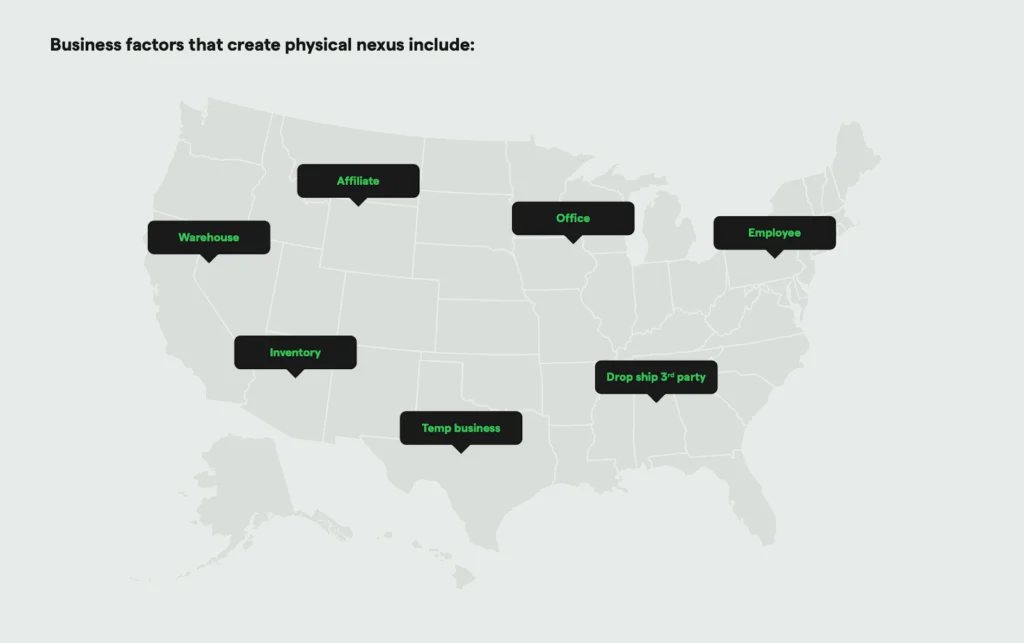
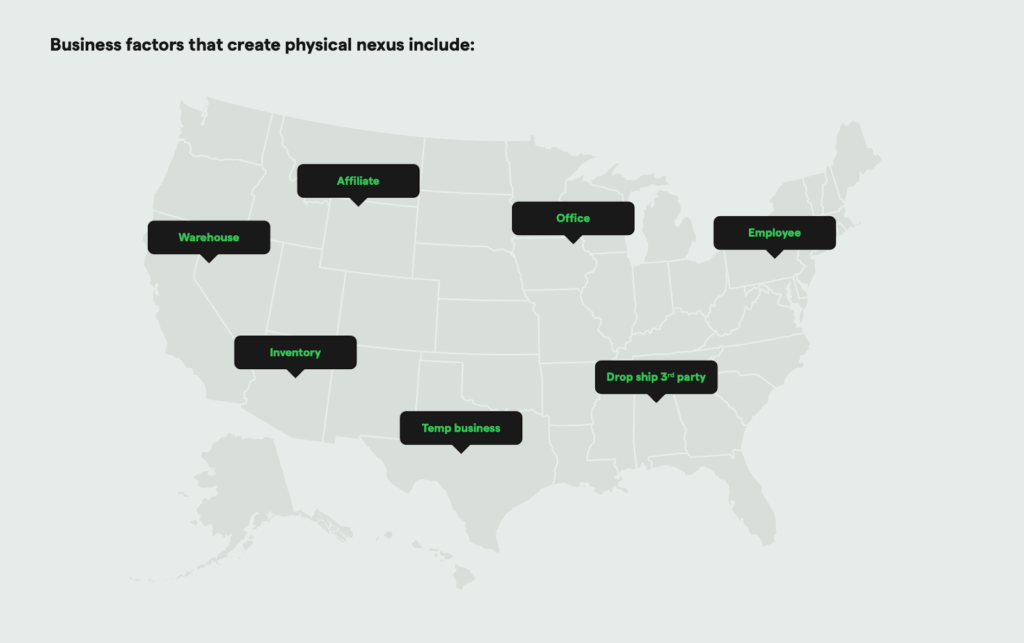
Physical nexus is established through traditional business activities. However, in the age of decentralized logistics, the definition of "physical" has expanded. Key indicators include:
- Office and Facilities: Owning or leasing an office, warehouse, or retail storefront.
- Remote Personnel: Employing staff, contractors, or sales representatives who reside or work in a different state.
- Inventory Placement: Storing goods in a third-party logistics (3PL) warehouse or through programs like Fulfillment by Amazon (FBA). Many sellers inadvertently trigger nexus when a marketplace moves their inventory to a distribution center in a new state.
- Temporary Presence: Attending trade shows, craft fairs, or hosting pop-up events can establish a temporary physical nexus that requires registration.
The Rise of Economic Nexus
Economic nexus is determined by a business’s financial activity within a state, regardless of physical presence. Each state sets its own thresholds, which generally fall into two categories:
- Revenue Thresholds: A specific dollar amount of gross sales (e.g., $100,000 or $500,000) within a calendar year or a rolling 12-month period.
- Transaction Thresholds: A specific number of individual sales transactions (e.g., 200 separate orders).
Notably, the trend in 2025 and 2026 has seen several states, including California and New York, moving toward simplifying these rules by eliminating transaction counts and relying solely on higher revenue thresholds. This shift is intended to reduce the burden on small businesses that process many low-value orders but do not generate significant revenue in the state.
Supporting Data and Economic Impact
The fiscal impact of these laws is substantial. According to data from the National Conference of State Legislatures (NCSL), state and local governments have seen a dramatic increase in revenue since the Wayfair decision. In the first few years post-ruling, states collected an estimated $23 billion in additional annual revenue from remote sellers. By 2026, with e-commerce reaching $8.1 trillion globally, that figure has climbed significantly, providing a vital lifeline for state budgets.
However, the cost of compliance for the private sector is equally noteworthy. A study by the Aberdeen Group suggests that mid-market e-commerce firms spend an average of $60,000 to $100,000 annually on sales tax management, including software, personnel, and filing fees. For small-to-medium enterprises (SMEs), these costs can represent a significant percentage of their operating margins, making automation a necessity rather than an option.
Product Taxability and Exemptions: The Hidden Complexity
Establishing nexus is only the first step. Once a business realizes it has an obligation to collect tax, it must determine what is taxable. In the United States, the taxability of goods and services is far from uniform.
While most "tangible personal property"—such as apparel, electronics, and home goods—is taxable, many states provide exemptions for "necessities." These exemptions vary wildly:
- Clothing: Some states tax all clothing, while others, like Pennsylvania, exempt most apparel. Massachusetts only taxes individual items over $175.
- Groceries and Prepared Food: Many states exempt "unprepared" groceries but tax "prepared" food, leading to complex distinctions between a bag of flour and a pre-made sandwich.
- Digital Goods and SaaS: Software-as-a-Service (SaaS) and digital downloads (ebooks, streaming) are some of the most inconsistently taxed items. Some states view SaaS as a taxable service, while others see it as non-taxable intangible property.
Retailers must accurately categorize thousands of SKUs against the specific tax codes of over 11,000 local tax jurisdictions in the U.S. to avoid over-collecting from customers or under-remitting to the state.
Official Responses and Industry Reactions
The reaction to the current nexus environment remains divided between state authorities and the business community. State revenue departments, represented by organizations like the Multistate Tax Commission (MTC), argue that these laws level the playing field between online retailers and local "mom-and-pop" shops. They maintain that the revenue collected is essential for funding public infrastructure, education, and emergency services.
Conversely, business advocacy groups, such as the National Retail Federation (NRF) and the Small Business & Entrepreneurship Council, have frequently called for federal intervention. They argue that the current "patchwork" system of state laws creates an undue burden on interstate commerce. While the "Main Street Fairness Act" and similar federal legislative efforts have been proposed in Congress, they have yet to result in a unified national standard, leaving businesses to manage the complexity on their own.
Strategic Implications and Risk Management
The implications of the 2026 nexus landscape are clear: ignorance of the law is no longer a viable defense. Tax authorities are increasingly utilizing sophisticated data-mining tools to identify unregistered sellers. By analyzing marketplace data, shipping records, and 1099-K forms, states can pinpoint businesses that have met nexus thresholds but failed to register.
The Audit Risk
A sales tax audit can be a devastating event for an e-commerce business. Unlike income tax, sales tax is "trust tax" money—it is money that the business was supposed to collect from the customer on behalf of the state. If a business fails to collect it, the state will typically demand the full amount from the business’s own pockets, plus interest and penalties that can reach 25% to 50% of the principal.
The Role of Automation
To mitigate these risks, the industry has seen a massive shift toward automation. Cloud-based tax engines now integrate directly with e-commerce platforms like Shopify, Magento, and Amazon. These tools provide real-time tax calculations at checkout, track nexus thresholds in every state, and automate the filing of monthly or quarterly returns. In 2026, automation is viewed by financial analysts as a critical component of "audit-proofing" a growing retail operation.
Conclusion: Compliance as a Competitive Advantage
As the digital economy continues its upward trajectory, the intersection of technology and tax law will only become more intricate. For e-commerce leaders, mastering sales tax nexus is not merely an exercise in accounting; it is a strategic necessity. Those who proactively manage their tax obligations can operate with the confidence that their growth will not be derailed by unexpected liabilities.
By establishing a robust framework for monitoring physical and economic nexus, understanding the nuances of product taxability, and leveraging modern compliance technology, retailers can protect their bottom line. In a world of $8 trillion in online sales, the businesses that thrive will be those that view compliance not as a hurdle, but as a fundamental element of a mature, scalable, and resilient enterprise.