Nila Kartika Wati
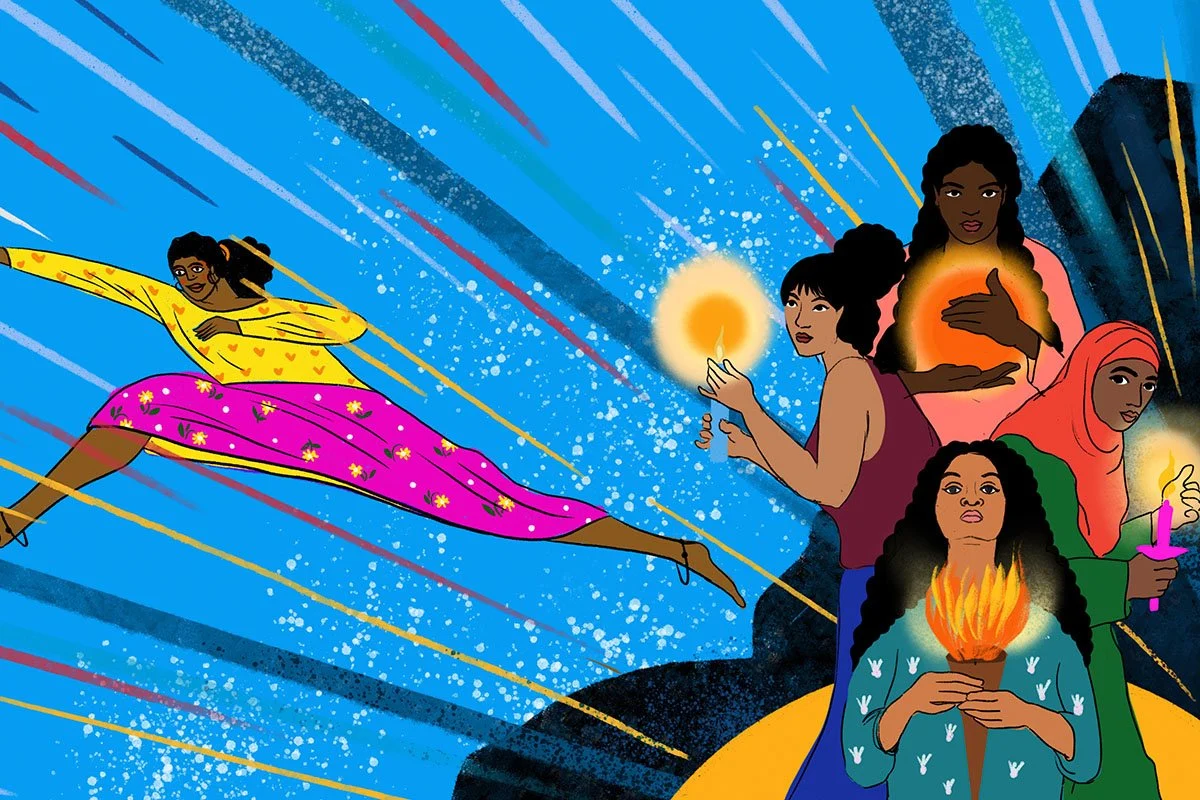
In an era where digital footprints are often fleeting and historical narratives are frequently dictated by those in power, a global initiative is redefining how the activism of adolescent girls and young feminists is recorded and preserved. The "Stories of Girls’ Resistance" project, a multilingual digital repository, has emerged as a cornerstone of what experts call "future-work"—the intentional act of documenting the present to ensure that the movements of tomorrow have a foundation upon which to build. This project, which spans 90 countries and multiple generations, seeks to dismantle the traditional power dynamics of archiving, replacing them with a decolonial feminist praxis that prioritizes the agency, safety, and voices of the contributors themselves.
Archives have long served as the gatekeepers of history, determining which knowledge survives and whose experiences are legitimized. However, traditional archiving methods have often been criticized for their exclusion of marginalized groups, particularly adolescent girls and non-binary youth, whose contributions to social movements are frequently overshadowed by adult-centric or male-dominated narratives. By centralizing the stories of these young resistors, the Stories of Girls’ Resistance project provides a vital counter-narrative, asserting that girls are not merely beneficiaries of social change, but its primary architects.
The Evolution of Movement Memory: From Oral Traditions to Digital Repositories
The history of social movements, particularly in the Global South and among Indigenous communities, has historically relied on oral traditions, songs, rituals, and artistic expressions to pass knowledge across generations. In regions across Africa, Latin America, and South Asia, these methods of remembering predated formal written records and remains central to how modern movements make meaning of their work.
However, as the "knowledge economy" has shifted toward formal documentation, a gap has emerged. Many contemporary girls’ and young feminist movements find themselves documenting their work primarily for external stakeholders, such as donors or international NGOs, rather than for their own internal growth or historical continuity. This donor-driven documentation often focuses on "impact metrics" and "case studies," failing to capture the nuanced conversations, disagreements, and strategic shifts that define a movement’s evolution.
The Stories of Girls’ Resistance project, launched in 2019, represents a strategic shift toward "movement-owned" documentation. By providing a safe, centralized home for over 150 stories from across the globe, the project ensures that when leadership transitions occur or political crackdowns happen, the collective wisdom of the movement is not lost to time or burnout.
Methodology and the Ethics of Decolonial Archiving
The construction of the Stories of Girls’ Resistance archive was guided by a rigorous methodological approach designed to address the inherent power imbalances in data collection. Organizers utilized a decolonial feminist framework, which asks critical questions about access, representation, and the protection of vulnerable contributors.
The project’s data collection phase resulted in a complex web of information, including:
- Narrative Histories: Over 150 primary interviews and transcripts.
- Visual Evidence: Self-portraits and photographs of "artifacts of resistance" identified by the storytellers.
- Multilingual Data: Transcripts and audio files in various languages, requiring extensive translation and cross-verification.
- Geographic Diversity: Data collated from nine distinct regions, including the Caribbean, Central-Eastern Europe and the Caucasus, East and Southern Africa, Latin America, the Middle East and North Africa (MENA), the Pacific, South Asia, the United States, and West Africa.
The sheer volume of data—estimated at over 600 core pieces—required a sophisticated naming and logging system to ensure consistency across different regional story collectors. However, the technical challenge of data management was secondary to the ethical challenge of informed consent. In a political climate where youth activism can lead to state surveillance or social backlash, anonymity became a paramount concern. Organizers implemented a double-blind review process for transcripts, removing all identifying features for those requesting anonymity and withholding audio files and portraits in those specific cases.
The Infrastructure of Resistance: Supporting Movement Continuity
The project organizers argue that "infrastructure" is more than just a website or a digital database; it is the set of conditions—time, resources, trust, and governance—that allow movements to decide how their knowledge is created and shared. This perspective is particularly relevant given the precarious nature of youth-led organizing. Much of the activism by girls and young feminists occurs in informal spaces: WhatsApp groups, school clubs, neighborhood networks, and creative collectives.
Without a formal infrastructure to capture the insights developed in these spaces, each new generation of activists is often forced to "reinvent the wheel." The Girl and Young Feminist Documentation Infrastructure, an initiative by Our Collective Practice, seeks to normalize documentation as a daily movement practice. By treating stories as a valid form of evidence, the initiative aims to bridge the gap between generations, allowing younger activists to inherit the political analysis and creative strategies of those who came before them.
Supporting Data: The Funding Gap for Girls’ Movements
The necessity of this independent archiving work is underscored by the current state of global philanthropy. According to data from the Association for Women’s Rights in Development (AWID) and the Global Fund for Women, a staggering minority of gender-focused funding reaches girl-led organizations. Reports indicate that while billions are spent on "gender equality" globally, only a tiny fraction—often estimated at less than 1 percent—reaches the hands of adolescent girls and young feminists directly.
This lack of resourcing extends to documentation. When movements are underfunded, they are forced to prioritize immediate crisis response over long-term memory work. The Stories of Girls’ Resistance project addresses this by advocating for dedicated resources to support "feminist memory work," arguing that an archive is a form of essential infrastructure as vital as any physical office or communication tool.
Regional Impacts and Global Connectivity
The archive’s regional structure highlights the diverse challenges and strategies employed by young feminists worldwide. In the MENA region, stories often center on navigating civic space and digital safety. In East and Southern Africa, narratives frequently touch on the intersection of climate justice and gender equality. In Latin America, the focus often shifts to "artivism" and collective defense against gender-based violence.
By bringing these diverse narratives into a single repository, the project facilitates a "global conversation of resistance." It allows a young organizer in the Pacific to see the parallels between her struggle for land rights and the strategies used by activists in the Caribbean. This cross-pollination of ideas is the ultimate goal of the "living memory" archive—to foster a sense of global solidarity that is rooted in shared history rather than just shared grievances.
Fact-Based Analysis: The Implications of Archival Power
The implications of this work extend into the realms of policy, academia, and social justice theory. By creating a rigorous, methodical archive, the project challenges the academic "gatekeeping" that often dismisses the lived experiences of youth as "anecdotal" rather than "evidentiary."
From a policy perspective, the archive provides a body of evidence that can be used to advocate for better protection of girl activists and more inclusive decision-making processes. When governments or international bodies claim that "girls are not leading," the Stories of Girls’ Resistance archive provides 150 clear examples to the contrary.
Furthermore, the project’s emphasis on "internal archives" for trusted communities of researchers and artists ensures that while the stories are preserved, they are not exploited. This model of "governed access" represents a significant departure from the "open data" movement, which often fails to account for the safety of marginalized contributors.
Conclusion: Archiving as a Radical Act of Hope
As the Stories of Girls’ Resistance project moves into its next phase, the focus remains on sustainability and expansion. The goal is not merely to store the past but to fuel the future. The project serves as a reminder that archiving, when done through a decolonial feminist lens, is a radical act of hope. It is a declaration that the struggles and triumphs of today’s girls are worth remembering and that their voices are an essential part of the human story.
By strengthening the ways in which girls and young feminists preserve and pass on knowledge, the global community can ensure that each generation inherits more than just a list of grievances. They inherit a roadmap of resistance, a collection of political insights, and the collective wisdom necessary to shape a more just and equitable world. The Girl and Young Feminist Documentation Infrastructure is, ultimately, a commitment to the idea that movements do not just happen—they are built, remembered, and evolved through the intentional preservation of their own history.