Nila Kartika Wati
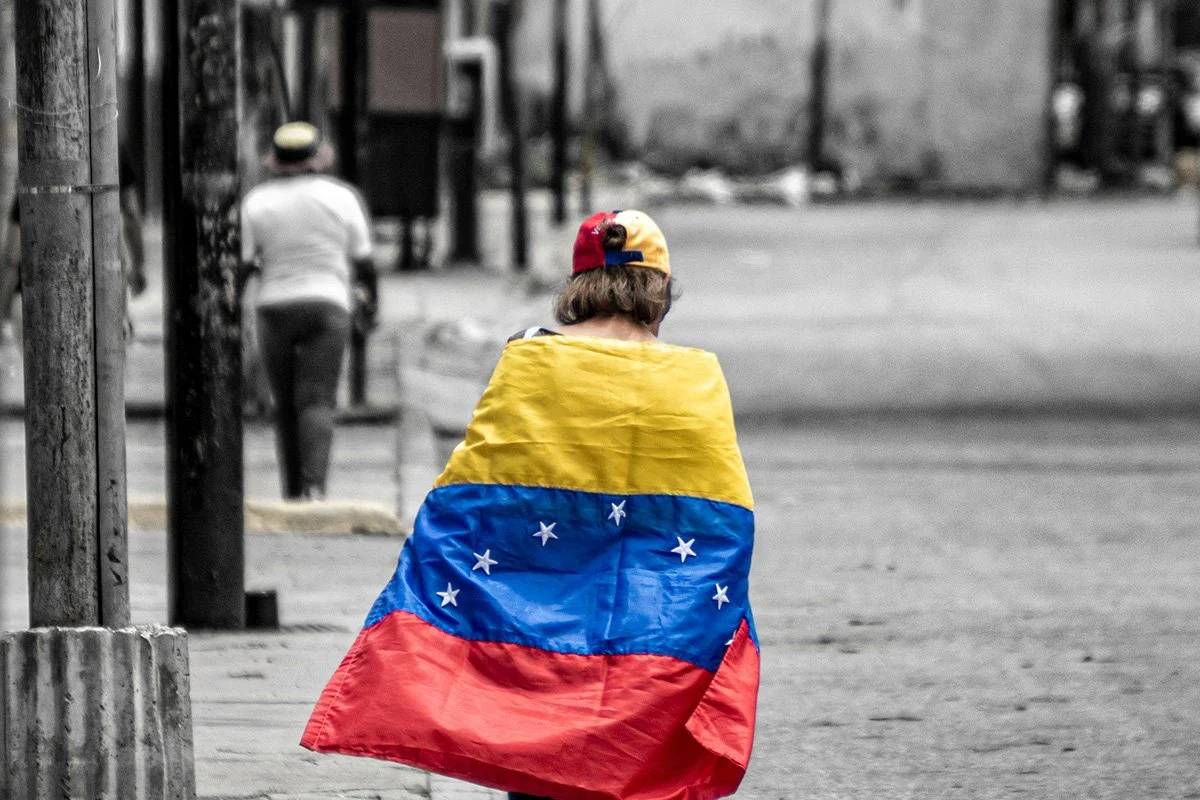
The capture of Nicolás Maduro by United States forces in January 2026 marked a seismic shift in the geopolitical landscape of South America, ending the tenure of the man who had served as Venezuela’s 53rd president since 2013. However, for Jesus Armas, a prominent political activist and educator, the fall of the regime did not result in immediate liberation. Armas’s journey from a Caracas coffee shop to the notorious cells of El Helicoide serves as a harrowing case study of the systematic repression that characterized the final years of the Maduro administration and the complex challenges facing the nation’s fledgling transition toward democratic stability.
Armas had spent months moving between anonymous locations to evade the state’s intelligence apparatus. His eventual capture occurred in a moment of perceived normalcy; the moment he stepped out of a business in Caracas, he was seized by masked members of an intelligence team. What followed was a year of arbitrary detention, characterized by psychological and physical duress. Armas was subjected to "the bag"—a method of suffocation used during interrogations intended to extract information regarding the whereabouts of Maria Corina Machado, a leading figure of the Venezuelan opposition. Despite his lack of information, Armas remained in custody for nearly twelve months, a period defined by total isolation from the outside world.
The Architecture of Repression: From Election Fraud to Mass Detention
The roots of the current human rights crisis can be traced back to the presidential election of July 2024. While the administration of Nicolás Maduro claimed victory, the opposition, led by Edmundo González, produced comprehensive evidence of the winning votes through digitized tally sheets (actas). The ensuing "power grab" sparked a wave of national protests, which the state met with unprecedented force.
According to data compiled by Venezuelan non-governmental organizations (NGOs) and international observers, approximately 2,500 individuals—including journalists, politicians, and ordinary civilians—were arrested in the immediate aftermath of the 2024 election. Marysabel Rodríguez, coordinator at the nonprofit Espacio Público, describes this period as a "mechanism of mass arrests," where the legality of an individual’s actions was secondary to the state’s goal of stifling dissent.
Jesus Armas was one of those swept up in this dragnet. His role as an organizing campaign coordinator for González made him a high-value target. During his incarceration in El Helicoide, a spiral-shaped building originally designed as a shopping mall but repurposed into a detention center for political prisoners, Armas was kept in windowless cells for weeks at a time. "I spent almost a year without being able to have visits or phone calls, without any information about my family," Armas told NPQ. His experience mirrors that of thousands of others who found themselves caught in a legal vacuum where due process was non-existent.
A Chronology of Crisis and Transition (2024–2026)
To understand the current state of Venezuelan civil society, it is essential to examine the timeline of events that led to the current provisional government under acting president Delcy Rodriguez:
- July 2024: Disputed presidential elections take place. Edmundo González claims victory based on independent tallying, while Maduro declares himself the winner. Massive protests erupt nationwide.
- August–December 2024: The Maduro administration implements "Operation Knock-Knock" (Tun-Tun), a campaign of targeted arrests against activists, election witnesses, and protesters.
- 2025: Human rights organizations report a tightening of the "Anti-NGO Law," forcing civil society groups to register with the government or face dissolution. International sanctions intensify.
- January 2026: In a rapid military operation, US forces capture Nicolás Maduro. Delcy Rodriguez assumes the role of acting president, promising a gradual "normalization" of the country.
- February 2026: High-profile political prisoners, including Jesus Armas, begin to be released from El Helicoide and other detention centers, though many remain in custody.
- September 2026: The government announces the unblocking of several digital news outlets, though censorship remains pervasive through selective domain restrictions.
The Role of Civil Society in a Post-Maduro Era
Despite the change in leadership at the executive level, the "repressive structure" built over a decade remains largely intact. Organizations such as PROVEA (Programa Venezolano de Educación-Acción en Derechos Humanos), Espacio Público, and CLIPPVEA (Comité por la Libertad de los Presos Políticos) continue to operate in a high-risk environment.
Oscar Murillo, Executive Director of PROVEA, notes that the administration previously attempted to criminalize these organizations by accusing them of "financing terrorism." This label was used to justify the detention of lawyers and the questioning of NGO leaders. Even now, with Maduro ousted, the legislative framework used to persecute dissent remains on the books.
Two specific laws continue to draw the ire of human rights defenders:
- The Constitutional Law Against Hatred, for Peaceful Coexistence and Tolerance: This law uses broad and vague definitions of "hatred" to jail political activists for the crime of discrimination.
- The Law for the Control, Regularization, Operations and Financing of Non-Governmental and Related Organizations: Commonly known as the "Anti-NGO Law," it mandates government registration and forbids actions that the state deems "promoting intolerance."
Marysabel Rodríguez of Espacio Público emphasizes that while there has been a decrease in arbitrary arrests since January 2026, the institutional risk remains. "The officials who operate and manage the apparatus are there," she warned.
From Victim to Defender: The Story of Sairam Rivas
The resilience of the activist community is perhaps best exemplified by Sairam Rivas, Armas’s partner and a co-founder of CLIPPVEA. Rivas’s history with political detention dates back to her time as a student leader at the Central University of Venezuela, where she was arrested for protesting the militarization of public spaces.
When Armas was detained in 2025, Rivas was forced to flee the country and seek political asylum to avoid a similar fate. During her exile, she remained a vocal advocate for his release, documenting his case for international bodies. Upon her return to Venezuela in the spring of 2026, she resumed her work with CLIPPVEA, which focuses on training former political prisoners to become human rights defenders.
"We want to train them to transition from victims to human rights defenders so they can be involved in strengthening democracy," Rivas explained. CLIPPVEA provides a multifaceted support system, offering legal assistance to relatives of detainees, organizing vigils, and maintaining a meticulous record of those who have died in state custody. This documentation is vital for future truth and reconciliation commissions.
Media Censorship and the Digital Frontier
While the government’s September 2026 announcement to unblock news websites was seen as a step toward restoring freedom of the press, the reality on the ground is more nuanced. Espacio Público reports that dozens of domains remain restricted, and many media outlets still operate under an implicit "order to broadcast" specific state-sanctioned content.
The case of Ana Belén Tovar, a journalist arrested in 2019 who remains subject to precautionary measures and trial deferrals, highlights the lingering legal entanglements used to silence the press. Analysts suggest that the government’s recent "tolerance" may be a tactical move to ease international pressure rather than a fundamental shift in philosophy.
Data and Implications: The Path Toward Reparation
A recent United Nations report indicates that over 300 political prisoners remain in custody under the acting administration. While this is a significant decrease from the peaks of 2024, the lack of a formal remediation policy remains a point of contention.
Oscar Murillo of PROVEA asserts that "social demand" is now shifting toward closure and reparation. "There is currently no policy of remediation or reparation for the damage caused to all these people who were unjustly imprisoned," he stated. Without a formal process to address the physical and psychological trauma inflicted on detainees, the country risks a cycle of perpetual grievance.
The current atmosphere in Caracas is one of cautious optimism tempered by historical skepticism. Families of prisoners now hold vigils that would have been violently dispersed just two years ago. The government’s increased tolerance toward civil society groups is a welcome development, but the permanence of these changes depends on comprehensive law reform.
Conclusion: The Necessity of Structural Reform
The release of Jesus Armas and other activists is a milestone, but it is not the end of the Venezuelan crisis. For the country to achieve a stable democracy, the transition must go beyond the removal of a single leader. It requires the dismantling of the legislative and intelligence frameworks that allowed for "Operation Knock-Knock" and the systematic use of El Helicoide as a tool of political coercion.
As the nation looks toward the future, the work of organizations like PROVEA and Espacio Público remains essential. They serve as the watchdogs of a transition that is still in its infancy. For Jesus Armas, who continues to attend therapy while telling his story, the risk of re-arrest is a price he is willing to pay for the prospect of a free Venezuela. The goal, as stated by activists and international observers alike, is a nation where dissent is no longer a crime, and the "eclipse of democracy" is finally replaced by the rule of law.