Pevita Pearce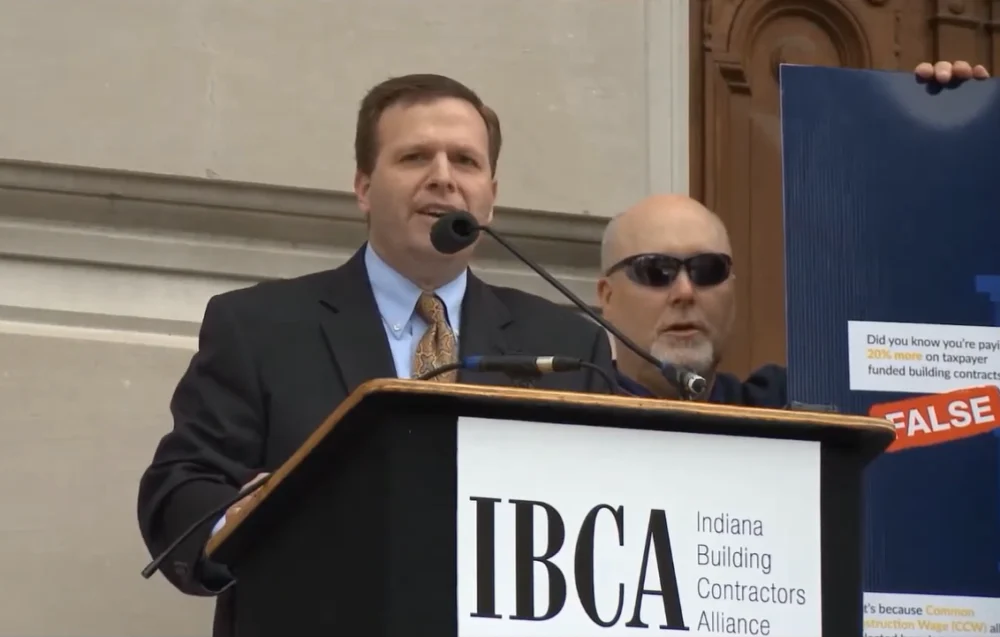
Former Portage Mayor James Snyder was sentenced to three years of probation on Tuesday, his 48th birthday, following his federal conviction for obstructing the Internal Revenue Service (IRS). The sentencing, handed down by Chief U.S. District Court Judge Holly Brady of the Northern District of Indiana, marks a significant development in a case that has spanned nearly a decade, impacting Snyder and his family significantly.
Judge Brady cited numerous factors in her decision, emphasizing the prolonged nature of Snyder’s legal entanglement, which has persisted for close to ten years. Snyder is also obligated to pay $78,111.57 in restitution, representing the outstanding amount he owes to the IRS. This sum will be paid in monthly installments of $570. To date, Snyder has already paid $18,000 toward his debt.
A Decade-Long Legal Battle
The legal saga surrounding James Snyder began over nine years ago when he was initially indicted on charges of defrauding the IRS and two counts of bribery. The bribery charges stemmed from allegations involving towing contracts and garbage truck contracts. While a jury acquitted him on the towing contract charge, he was convicted twice on the garbage truck contract charge. This particular charge eventually reached the U.S. Supreme Court, which in June 2024 ruled that a $13,000 payment Snyder received for a garbage truck contract constituted a gratuity rather than a bribe, as the payment was made after the contract was awarded, not before. The Supreme Court remanded the case to lower courts, effectively altering the landscape of the legal proceedings.
The IRS charge, which focused on Snyder’s personal business dealings rather than his mayoral duties, resulted in a conviction that had remained unchallenged until recent filings. However, the path to this IRS conviction has been complex, involving repeated delays and Snyder’s pursuit of further legal avenues.
The IRS Obstruction Conviction
The conviction that led to Tuesday’s sentencing revolves around Snyder’s actions to obstruct the IRS’s efforts to collect his unpaid business and personal taxes. Prosecutors outlined a scheme that spanned from January 2010 to April 2013. Snyder, who founded First Financial Trust Mortgage LLC (FFTM) in 2007, a mortgage loan origination business, was found to have withheld payroll and income taxes, as well as Medicare and Social Security contributions, from his employees’ paychecks but failed to remit these funds to the IRS.
Chronology of the IRS Obstruction Scheme
- 2007: James Snyder establishes First Financial Trust Mortgage LLC (FFTM).
- 2007-2009: Snyder withholds employee payroll taxes but fails to pay approximately $97,000 owed to the IRS. During this period, he also pays himself approximately $110,000 from the company’s bank account.
- January 2010: Snyder signs an employment agreement with GVC, a mortgage company, and operates a "branch office" out of the FFTM premises. GVC hires Snyder as an employee and covers all employee salaries.
- 2010: GVC pays Snyder approximately $141,891.27. In the same year, Snyder begins creating "phony invoices" from SRC, a company he owned, to bill FFTM for "consulting" work.
- 2010-2012: GVC pays SRC over $400,000. SRC receives deposits totaling over $640,000 during this period.
- March 2010: Snyder, under penalty of perjury, declares his personal tax debt (approximately $31,369 for 2005-2007) uncollectible and offers to pay $1,000. He fails to disclose his employment and income from GVC, as well as his ownership of SRC and its bank accounts.
Prosecutors argued that by routing GVC’s payments through SRC instead of FFTM, Snyder concealed FFTM’s true financial status from the IRS, describing it as a "shell game" to obstruct the agency’s tax assessment and collection efforts. The total tax loss in the case was calculated at $125,149.57, comprising $96,111.57 in unpaid FFTM taxes and $29,038 in Snyder’s personal taxes.
Defense Arguments and Prosecution’s Stance
During the sentencing hearing, Snyder’s attorney, Josh Minkler, argued for probation or a combination of probation and home confinement, advocating against prison time. Minkler highlighted that without the bribery charge, which was dropped by prosecutors prior to the hearing, Snyder’s current offense, while serious, is less severe than in previous sentencing considerations. He characterized the IRS obstruction charge as an "apparition" in Snyder’s otherwise crime-free life, suggesting it was not a pattern of behavior.
However, Judge Brady interjected, noting that Snyder evaded the IRS for years, indicating that it was "not just a one-off" and expressing difficulty with that aspect.
Assistant State’s Attorney Julia Schwartz, representing the prosecution, had requested a 21-month prison sentence. She pointed out that this request fell within the lower end of the sentencing guidelines, which ranged from 33 to 36 months for the charge, and was consistent with previous sentencing recommendations in the case. Schwartz detailed the business and personal taxes Snyder failed to pay, including payroll, income, Medicare, and Social Security taxes from employee paychecks at FFTM. She also emphasized that elected officials should be held to a higher standard, noting that $73,000 from SRV, which Snyder owned, was loaned to his mayoral campaign in 2013, funds that should have gone to the IRS.
Testimony and Sentencing Enhancements
In an attempt to mitigate sentencing enhancements, such as Snyder acting as a leader of a criminal enterprise, Snyder’s legal team called IRS agent Jerry Hatagan to testify. Hatagan testified that an IRS obstruction charge, when considered "solely on number" and not the manner of commission, might not be prosecuted. However, he acknowledged that "aggravating factors" in this case, such as Snyder being an elected official and the tax scheme lasting multiple years, contributed to the prosecution.
Hatagan further explained that while Snyder did not own GVC, the company informed IRS agents that acquiring other companies was common practice. The core issue, he stated, was Snyder’s use of SRC to invoice FFTM under GVC’s ownership. He described how Snyder presented a "dire picture to the IRS" while simultaneously receiving a paycheck from GVC and payments from SRC invoices. Despite Hatagan’s testimony, Judge Brady ultimately ruled that it did not alter her opinion regarding the sentencing enhancements.
Snyder’s Personal Statement and Family Impact
Addressing the court before his sentencing, Snyder, in a question-and-answer session with his attorney, acknowledged the gravity of his actions, stating, "this crime is extremely serious." He spoke about the personal toll the indictment, trials, and media coverage had taken on him and his family, which includes his wife and four children. Snyder conveyed his commitment to his family, church, and work, assuring the judge he would prioritize these aspects of his life if spared jail time. Reflecting on his conduct, he admitted, "I think that I could’ve done better."
When asked by Judge Brady about the impact of the case on him, Snyder described himself as "humbled." He reflected on the prolonged legal battle, stating, "Every time you seem to fight, you think you win and you don’t. I just want to be done, get it right and get it behind me."
Recent Legal Maneuvers and Broader Implications
In October 2025, Snyder’s legal team filed for a new trial on his IRS fraud conviction, arguing that information presented regarding the bribery charges might have improperly influenced the jury. Federal prosecutors, however, countered that the request was both untimely and without merit. The U.S. Attorney’s Office argued that Snyder’s scheme was a deliberate attempt to obstruct the IRS.
The sentencing on Tuesday concluded a significant chapter in a protracted legal narrative. The dropping of the bribery charge, a consequence of the U.S. Supreme Court’s ruling on gratuities versus bribes, simplified the proceedings for the IRS obstruction conviction.
Analysis of the Sentencing Outcome
The imposition of three years of probation, rather than a prison sentence, suggests that Judge Brady weighed Snyder’s personal circumstances, his acknowledgment of the seriousness of the offense, and the complexity and length of the legal proceedings. The significant restitution amount, coupled with monthly payments, underscores the financial accountability Snyder must undertake.
The case serves as a stark reminder of the consequences of financial misconduct, particularly for public officials. The IRS obstruction conviction highlights the intricate methods individuals may employ to evade tax obligations, and the prosecution’s emphasis on Snyder’s elected status underscores the heightened scrutiny and public trust expected of those in public office.
While Snyder has expressed a desire to move forward and "get it right," the nearly decade-long legal battle has undoubtedly left an indelible mark. The court’s final words to Snyder, "I certainly trust you won’t be back in front of this court," suggest a hope for a definitive end to his legal troubles.
As Snyder embraces his family after the sentencing, the focus shifts to his compliance with the terms of his probation and restitution. The resolution of this lengthy case offers a degree of closure, though the shadow of the legal battles and their impact on his reputation and public service career will likely endure.
Photo Caption: James Snyder, mayor of Portage, IN, delivers a keynote speech at the Indiana Building Contractors Alliance Rally on the Indiana Statehouse steps in defense of Indiana workers on April 27, 2015. (YouTube page of Mayor James Snyder)