
 Candice Horbacz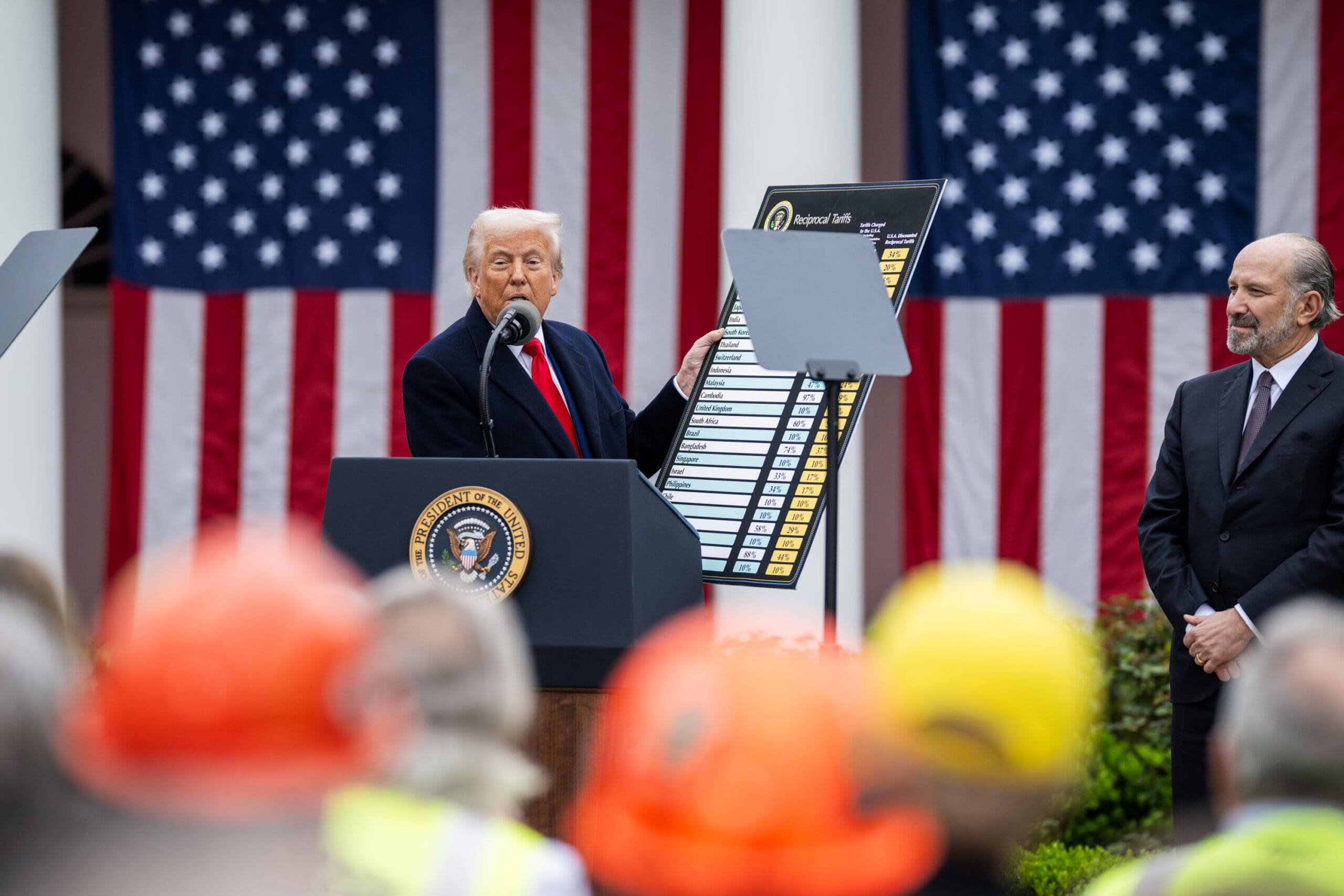
On Friday, February 20, 2026, the Supreme Court delivered a landmark ruling against President Trump’s extensive use of the International Emergency Economic Powers Act (IEEPA) to impose a wide array of new tariffs on goods imported into the United States. The 6-3 decision, which effectively nullifies all tariffs enacted under the IEEPA statute, including the controversial "Liberation Day" tariffs, marks a significant judicial check on presidential authority in trade policy. The case has now been remanded to the United States Court of International Trade to determine the intricate process for refunding the substantial sums collected, estimated to exceed $160 billion in illegally levied duties. While the ruling offers immediate economic relief by removing a considerable financial burden on American businesses and consumers, it simultaneously introduces a new layer of uncertainty regarding the Trump administration’s future trade strategies and potential alternative avenues for imposing tariffs.
The Genesis of the Tariffs and the Legal Challenge
The tariffs in question represent an unprecedented application of the IEEPA, a statute traditionally reserved for national security emergencies such as freezing assets of hostile foreign states or blocking transactions with terrorist organizations. President Trump’s administration became the first to invoke this emergency law to implement broad-based tariffs, arguing that certain import practices constituted an economic threat to national security. These IEEPA tariffs were projected to generate an astonishing $1.4 trillion in federal revenue between 2026 and 2034, making them a cornerstone of the administration’s trade agenda.
Tariffs, fundamentally, are taxes on imported goods, paid by domestic importers to the U.S. government. While importers bear the initial legal responsibility for these payments, the economic burden often disperses throughout the supply chain. Importers may pass these costs on to American consumers through higher retail prices, or foreign sellers might absorb a portion of the burden by reducing their sales prices. Regardless of how the burden is distributed, tariffs invariably increase costs within the U.S. economy, dampening incentives for work and investment, and ultimately leading to reduced output, suppressed wages, and diminished incomes.
The legality of these tariffs was swiftly challenged by a coalition of U.S. businesses and state attorneys general. The plaintiffs in the consolidated cases, Learning Resources, Inc. v. Trump and V.O.S. Selections v. United States, argued that the President had overstepped the bounds of his authority under IEEPA. These plaintiffs included a diverse group of small business owners, American manufacturers, and retailers who bore the direct brunt of the increased import costs. They contended that IEEPA was never intended to be a blank check for imposing sweeping economic protectionism under the guise of an emergency.
A Chronology of Judicial Review
The legal battle over the IEEPA tariffs unfolded over several critical months, culminating in the Supreme Court’s definitive ruling:
- May 28, 2025: A three-judge panel at the U.S. International Court of Trade delivered a unanimous decision, declaring the IEEPA tariffs illegal. This initial ruling validated the plaintiffs’ arguments that the President’s use of the emergency statute for such broad tariff imposition was ultra vires, or beyond his legal powers.
- August 29, 2025: The U.S. Court of Appeals upheld the International Court of Trade’s decision, reinforcing the illegality of the IEEPA tariffs. Despite these successive judicial rebukes, the tariffs remained in effect as the administration prepared its appeal to the nation’s highest court, causing continued financial strain on affected businesses.
- November 5, 2025: The Supreme Court heard oral arguments in the consolidated cases. Attorneys for the administration defended the President’s actions, emphasizing the executive branch’s broad powers in foreign policy and national security, while counsel for the businesses argued for a strict interpretation of IEEPA, limiting its application to genuine national emergencies that do not involve general tariff imposition.
- February 20, 2026: The Supreme Court issued its seminal 6-3 decision, unequivocally stating that "IEEPA does not authorize the President to impose tariffs." This ruling definitively closed the legal chapter on the IEEPA tariffs.
The Supreme Court’s Verdict and its Rationale
Chief Justice John Roberts authored the majority opinion, joined by Justices Sotomayor, Kagan, Gorsuch, Barrett, and Jackson. While the full text of the majority opinion and dissenting arguments will provide detailed legal reasoning, the core of the majority’s decision centered on a textualist interpretation of IEEPA, concluding that the statute’s language and legislative history did not grant the President the authority to levy tariffs as a default response to economic emergencies. The majority likely emphasized the constitutional prerogative of Congress to regulate commerce and impose taxes, viewing the President’s actions as an encroachment on this legislative power. The ruling underscored that while IEEPA grants the President substantial powers to address international emergencies, these powers are not limitless and do not extend to unilaterally imposing broad-based import duties, which are inherently a revenue-generating and trade-regulating function traditionally vested in the legislative branch.
Justices Thomas, Kavanaugh, and Alito dissented, likely arguing for a broader interpretation of executive power in foreign affairs and national security, perhaps emphasizing the need for the President to have flexible tools to respond to evolving global economic threats. Their dissent likely highlighted the executive branch’s inherent role in protecting national interests and managing international economic relations, suggesting that a narrow reading of IEEPA unduly restricts the President’s ability to act decisively in perceived crises.
Economic Ramifications and the Refund Mandate
The immediate economic impact of the Supreme Court’s decision is substantial. The ruling strikes down tariffs that were projected to raise $1.4 trillion over the next decade. More immediately, it mandates the refund of over $160 billion in duties already collected from U.S. importers. As of December 14, 2025, the government had accumulated $133.5 billion in IEEPA tariff payments, a figure that analysts estimate climbed to at least $160 billion by the date of the Supreme Court’s ruling. This represents a considerable sum that, if fully refunded, would erase nearly three-fourths of the new revenues generated by President Trump’s tariff policies.
The case has been remanded to the United States International Trade Court to oversee the complex process of refunding these illegally collected payments. For thousands of businesses, particularly small and medium-sized enterprises that have borne the brunt of these tariffs, the prospect of receiving refunds offers a lifeline. Industry groups and economic analysts are calling for the U.S. government to establish a transparent and streamlined process for importers to claim their refunds, minimizing bureaucratic hurdles and ensuring timely disbursement. The funds represent capital that was diverted from business investment, job creation, and operational expenses, and their return is expected to provide a much-needed liquidity injection into the economy.
Prior to this ruling, the Trump tariffs, driven primarily by the now-illegal IEEPA duties, were categorized as the largest U.S. tax increase as a percentage of GDP in over 30 years. They were estimated to impose an average tax increase of $1,000 per U.S. household in 2025, rising to $1,300 in 2026. The removal of the IEEPA tariffs is expected to mitigate this burden, shielding taxpayers and the broader economy from continued damage. Economic models had projected that the continuation of these tariffs would have shrunk U.S. GDP by 0.3 percent. Their removal is anticipated to alleviate this drag on economic growth by reducing marginal tax rates on work and investment.
Tariffs That Remain: Section 232 and Section 301
While the IEEPA tariffs have been invalidated, it is crucial to note that the Supreme Court’s decision does not affect all tariffs imposed by the Trump administration. Specifically, the industry-specific Section 232 tariffs remain in place. These tariffs, imposed under a different statutory authority, target imports deemed to threaten or impair U.S. national security. They currently affect products such as steel, aluminum, autos, and heavy trucks. These ongoing Section 232 tariffs are still projected to generate significant revenue, estimated at $635 billion over the next decade, amounting to an average tax increase of $400 per U.S. household in 2026.
Additionally, Section 301 tariffs, primarily those imposed on Chinese imports in response to alleged "discriminatory" trade practices, also remain untouched by this ruling. Introduced in 2018, these tariffs, some as high as 25 percent, continue to impact a vast array of goods from China. The distinction between these different tariff authorities underscores the complex and multi-faceted nature of U.S. trade policy and the various tools available to the executive branch, even as one significant avenue has been closed off.
Reactions and Future Implications for Trade Policy
The Supreme Court’s ruling has been met with a mix of relief and renewed apprehension across various sectors. Business associations, particularly those representing importers and retailers, have expressed significant relief. "This decision is a victory for American businesses, workers, and consumers," stated the head of a major trade group, echoing sentiments that the ruling protects the economy from arbitrary tax hikes and upholds the constitutional balance of power. Plaintiffs in the case celebrated the outcome as a vindication of their efforts to challenge executive overreach.
Economists largely view the decision as a positive development for economic stability, as it removes a considerable source of uncertainty and a direct tax on economic activity. However, many also highlight the lingering uncertainty. The Trump administration, known for its aggressive stance on trade, is now expected to explore other legal avenues to pursue its protectionist agenda.
Potential alternatives include:
- Expanded Use of Section 232: The administration is currently conducting 12 Section 232 investigations on various products, including copper, lumber, and semiconductors. The President has broad discretion under Section 232 to impose tariffs on imports deemed a national security threat. This authority could be used to replace some of the invalidated IEEPA tariffs with product-specific duties.
- Increased Section 301 Actions: The President could escalate existing Section 301 tariffs on China or target other countries for alleged "discriminatory" trade practices, expanding the scope of these duties.
- More Obscure Authorities: The administration might delve into less frequently used statutes, such as Section 122 or Section 338. Section 122 allows the President to impose tariffs (up to 15 percent, with Congressional approval needed for extensions beyond 150 days) to address balance-of-payments concerns. Section 338 targets discriminatory practices affecting U.S. commerce, with a tariff cap of 50 percent. Neither of these authorities has ever been invoked by a U.S. President, making their application untested and potentially fraught with new legal challenges.
The Supreme Court’s ruling represents a crucial affirmation of the separation of powers and a significant judicial rebuke of the President’s attempt to unilaterally impose substantial tax increases on the U.S. economy using an emergency statute. While it provides immediate and tangible relief to U.S. businesses and consumers by striking down over $160 billion in illegal tariffs and preventing trillions more in future collections, the broader landscape of U.S. trade policy remains volatile. The decision shifts the battleground for trade policy, forcing the administration to navigate alternative legal frameworks, each with its own limitations and potential for renewed legal scrutiny, ensuring that trade policy will remain a contentious and evolving area of national debate.