Lana Rhoades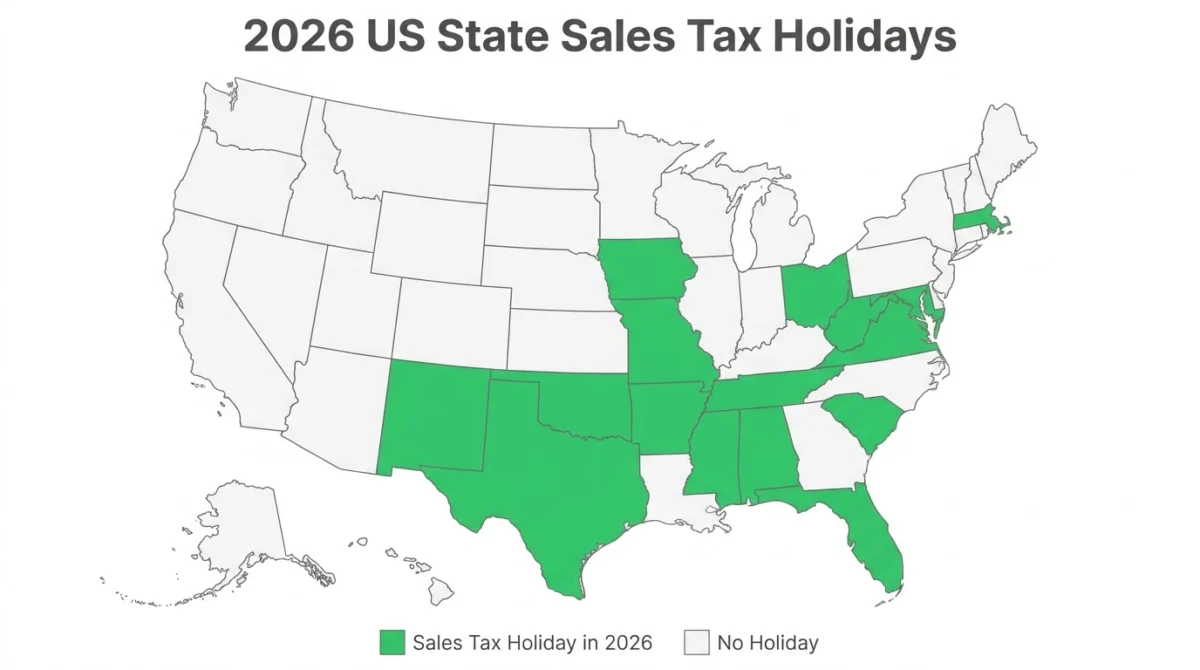
As the 2026 fiscal year approaches, retail landscapes across the United States are preparing for the annual tradition of sales tax holidays, a policy tool designed to provide consumer relief and stimulate local economies. While these events are often celebrated by shoppers as a rare opportunity to purchase essential goods without the added burden of state and local levies, they present a significant logistical and regulatory challenge for the business community. For retailers, particularly those operating in the e-commerce sector, these holidays are characterized by a dense web of varying dates, shifting product eligibility, and complex local jurisdiction rules that require meticulous attention to maintain compliance and avoid costly audit discrepancies.
The Economic Context and Strategic Purpose of Tax Holidays
Sales tax holidays emerged in the late 20th century as a popular legislative mechanism to incentivize spending during key periods, most notably the "back-to-school" season in late summer and "emergency preparedness" windows in the spring. From a macroeconomic perspective, these holidays are often debated by economists. Supporters argue that they provide a direct boost to retail sales and offer meaningful assistance to low-income families. Conversely, critics frequently suggest that these events do not necessarily create new economic activity but rather shift the timing of purchases that would have occurred regardless.
Regardless of the academic debate, the political and social momentum behind these holidays remains strong. In 2026, over 15 states and the territory of Puerto Rico have scheduled at least one tax-free period. These windows are not uniform; they are governed by state-specific statutes that often require annual renewal or adjustment by state legislatures. Consequently, the 2026 calendar reflects a dynamic environment where businesses must remain vigilant to real-time updates from state departments of revenue.
The Complexity of Regulatory Compliance for Retailers
For a business, a sales tax holiday is far more than a simple pause in tax collection. It is a period of heightened risk. Compliance traps often center on "granular rules," a term used by tax professionals to describe the highly specific criteria an item must meet to qualify for an exemption. For example, a state may exempt "clothing," but exclude "protective equipment" or "athletic gear," leading to confusion at the point of sale.
Furthermore, many states operate under destination-based sourcing rules, meaning the tax rate is determined by where the buyer receives the product. During a tax holiday, an e-commerce seller must ensure their tax engine recognizes the buyer’s specific zip code and applies the exemption only if that specific location is participating in the holiday. In states like Alabama, local municipalities have the option to "opt-in" or "opt-out" of the state-level holiday, creating a patchwork of taxability across a single state. Without automated systems, the manual tracking of these variables is nearly impossible for high-volume retailers.
Chronological Calendar of 2026 Sales Tax Holidays
The 2026 schedule begins in the first quarter with energy efficiency and emergency preparedness, peaking in late summer with back-to-school events, and concluding with specialized outdoor and Second Amendment holidays in the autumn.
First Quarter: Energy Efficiency and Disaster Readiness
The year begins with a focus on sustainability and safety. Maryland kicks off the season in mid-February with its "Shop Maryland Energy" weekend, followed closely by Alabama’s severe weather preparedness window.
- Maryland (Feb 14–16): Focuses on Energy Star-certified appliances.
- Alabama (Feb 21–23): Covers essential disaster supplies like batteries, generators, and first-aid kits.
Second Quarter: Spring Preparedness and Conservation
As storm and hurricane seasons approach, states like Texas and Missouri implement holidays to encourage the purchase of protective gear and water-conserving appliances.
- Missouri (Apr 19–25): The "Show Me Green" holiday focuses on Energy Star appliances with a $1,500 cap per item.
- Texas (Apr 25–27): Emergency preparation supplies.
- Puerto Rico (May 22–25): Hurricane preparedness equipment.
- Texas (May 23–25): Concurrent holidays for Energy Star and WaterSense-labeled products.
Third Quarter: The Back-to-School Peak
July and August represent the busiest months for tax-free shopping. This period is critical for retailers selling apparel, footwear, and technology.
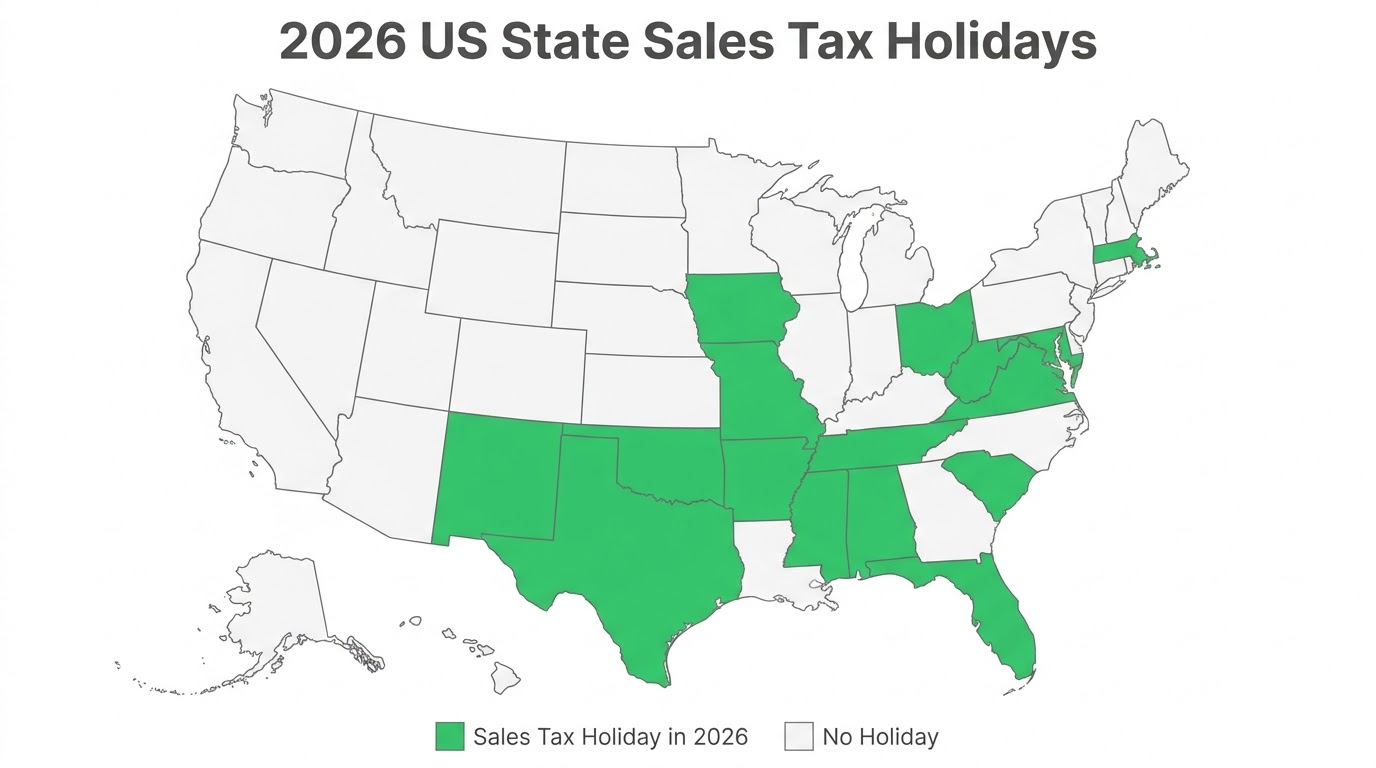
- Mississippi (July 10–12): Clothing and footwear under $100.
- Alabama & Puerto Rico (July 17–19): Significant focus on school uniforms and supplies.
- Florida (July 20–Aug 20): One of the longest holidays, covering clothing, supplies, and computers up to $1,500.
- Tennessee, New Mexico, & West Virginia (July 31–Aug 2/3): Major windows for laptops and school essentials.
- Arkansas & Virginia (Aug 1–3): Virginia’s holiday is notable for combining back-to-school with hurricane prep and Energy Star items.
- Iowa, Missouri, Ohio, Oklahoma, South Carolina, & Texas (Aug 7–9): A massive multi-state weekend requiring robust server capacity for e-commerce platforms.
- Illinois (Aug 7–16): Extended window for clothing and supplies under $125.
- Massachusetts (Aug 8–9): A broad holiday covering most retail items for personal use up to $2,500.
- Maryland (Aug 9–15): Focus on apparel and the first $40 of backpack costs.
- Connecticut (Aug 16–22): Clothing and footwear under $100.
Fourth Quarter: Specialized Interests
The year concludes with holidays targeting specific hobbies and constitutional rights.
- Mississippi (Aug 28–30): Second Amendment holiday for firearms and ammunition.
- Florida (Sept 1–Dec 31): A long-term "Freedom Summer" style holiday for hunting, fishing, and camping gear.
- Louisiana (Sept 4–6): Second Amendment weekend covering consumer purchases of hunting supplies.
Deep Dive: Regional Highlights and Specific Exemptions
Florida’s Extensive Incentives
Florida remains a leader in the frequency and duration of tax holidays. The state’s 2026 strategy includes a month-long back-to-school window and a four-month outdoor equipment holiday. This aggressive approach is designed to support the state’s massive tourism and outdoor recreation industries. For businesses, Florida’s holidays are particularly complex because they often include "learning aids" and "puzzles" as exempt categories, which are not standard in other states.
The Alabama "Local Opt-in" Challenge
Alabama serves as a prime case study for the "hidden chaos" of tax holidays. While the state waives its 4% sales tax during the February and July holidays, it does not mandate that cities and counties do the same. Retailers must track which of the hundreds of local jurisdictions have passed resolutions to participate. If a retailer fails to charge local tax in a non-participating city, they may be liable for the shortfall during an audit.
Missouri’s "Show Me Green" Constraints
Missouri’s energy-efficiency holiday is highly targeted. It applies only to Energy Star-certified products, such as clothes washers, refrigerators, and dishwashers. However, the exemption is capped at $1,500 per appliance. If a consumer purchases a high-end $2,000 refrigerator, the retailer must correctly apply tax to the remaining $500, a calculation that requires precise configuration within the checkout system.
Implications for the E-commerce Sector
The rise of the "Marketplace Facilitator" laws has shifted the burden of tax collection from individual small sellers to the platforms themselves (such as Amazon, Etsy, or Walmart). However, for independent e-commerce businesses managing their own web stores, the 2026 tax holidays necessitate a proactive approach to software integration.
Data from previous years suggests that sales tax holidays can lead to a 20% to 50% increase in transaction volume over a single weekend. This surge requires not only tax accuracy but also technical scalability. Furthermore, the "holiday" often applies to the date the order is placed, not when it is shipped, which can create reconciliation hurdles for accounting departments if a holiday ends while an item is still in fulfillment.
Analysis of Audit Risks and Filing Errors
Missing a sales tax holiday or misapplying an exemption is a common trigger for state audits. State revenue departments monitor filing patterns closely during these periods. If a retailer’s reported exempt sales spike significantly without a corresponding tax holiday in that jurisdiction, it may trigger a red flag. Conversely, if a retailer continues to charge tax during a holiday, they risk customer dissatisfaction and potential class-action litigation for over-collection of tax—a growing trend in consumer rights law.
To mitigate these risks, tax experts recommend the use of automated tax engines that utilize "product mapping." By assigning a specific code to each item (e.g., "School Supply" vs. "Office Supply"), the system can automatically determine taxability based on the date and the delivery address.
Conclusion: The Necessity of Vigilance in 2026
As 2026 progresses, additional states may announce one-time tax relief measures in response to budget surpluses or economic shifts. The schedule provided is a foundational roadmap, but it is not exhaustive. Businesses are encouraged to maintain a "compliance calendar" and subscribe to updates from state tax authorities.
The 2026 sales tax holidays represent a intersection of public policy and commercial execution. While they offer a moment of financial reprieve for the American consumer, they remain a rigorous test of a business’s operational maturity. Success in this environment is defined by the ability to balance the competitive advantage of offering tax-free shopping with the rigid requirements of state law. For the modern retailer, automation is no longer a luxury during these periods; it is an essential component of survival in an increasingly complex regulatory world.