admin
admin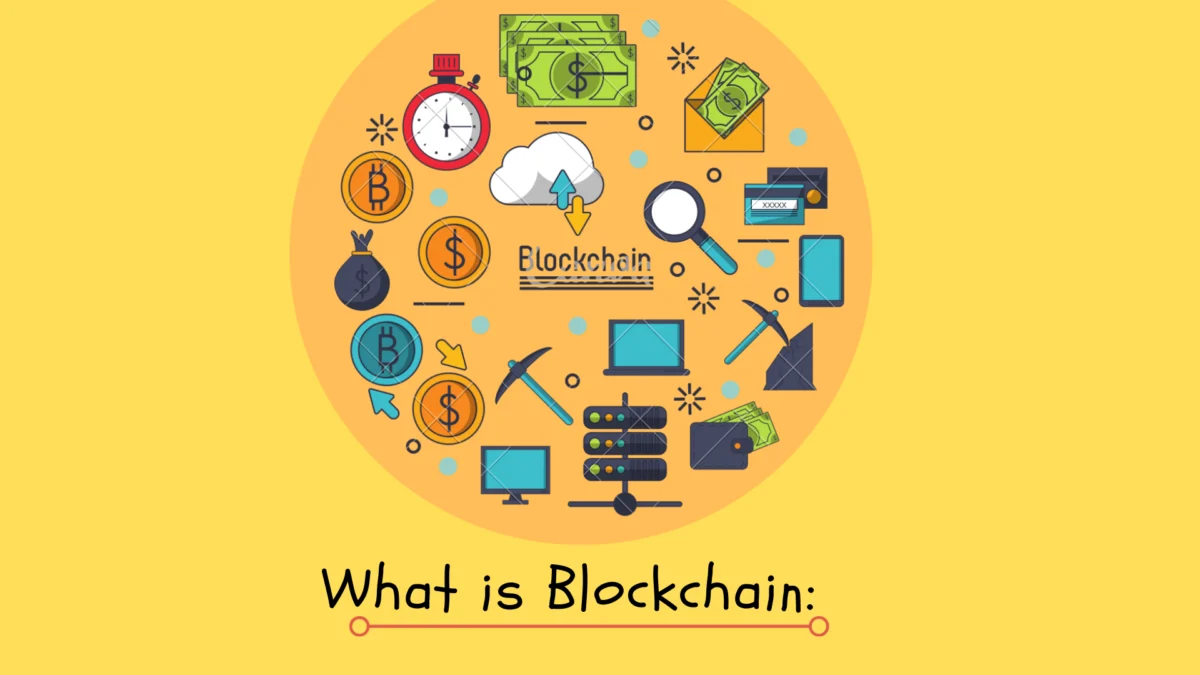
The landscape of digital transactions and data management is undergoing a profound transformation, spearheaded by the advent of blockchain technology. Once primarily associated with cryptocurrencies like Bitcoin, blockchain has emerged as a foundational innovation promising to reshape industries far beyond finance, offering unprecedented levels of security, transparency, and decentralization. This distributed ledger technology (DLT) fundamentally redefines how information is stored, verified, and shared, challenging traditional centralized models that have long dominated digital interactions.
The Evolution of Trust: A Historical Perspective
While many first encountered blockchain through the rise of Bitcoin in the early 2010s, its conceptual roots trace back several decades. The foundational ideas for a secure, unalterable record-keeping system were laid in 1991 by cryptographers Stuart Haber and W. Scott Stornetta. Their pioneering work introduced a cryptographically secured chain of blocks, designed to ensure that document timestamps could not be tampered with. This early innovation addressed a critical need for data integrity in an increasingly digital world, establishing the core principle of immutability that defines modern blockchain.
Building on these concepts, software developer Nick Szabo proposed "Bit Gold" in 1998. Bit Gold was an early design for a decentralized digital currency that incorporated many elements now found in blockchain systems, including proof-of-work mechanisms and cryptographically linked records. Although Bit Gold was never fully implemented, it served as a crucial precursor, demonstrating the feasibility of creating a secure digital asset without relying on a central authority.
The true breakthrough arrived in 2008 with the publication of a whitepaper by an anonymous entity known as Satoshi Nakamoto, titled "Bitcoin: A Peer-to-Peer Electronic Cash System." This paper not only introduced Bitcoin, the world’s first decentralized digital currency, but also unveiled the first fully realized blockchain implementation as its underlying technology. Nakamoto’s innovation solved the long-standing "double-spending" problem for digital currency without the need for a trusted third party, effectively demonstrating how a distributed, immutable ledger could maintain a reliable record of transactions across a network of participants. This moment marked the genesis of modern blockchain technology and its subsequent proliferation.
Deconstructing the Distributed Ledger: What is Blockchain?
At its core, a blockchain is a distributed, immutable ledger that records transactions or any form of data across a peer-to-peer network. Unlike traditional centralized databases where a single entity controls and maintains the data, blockchain distributes identical copies of the ledger across numerous computers, or "nodes," within the network. This fundamental design choice is what earns it the moniker "Distributed Ledger Technology" (DLT).
Information on a blockchain is stored in "blocks," which are bundles of validated transactions. Once a block is filled with data, it is cryptographically linked to the previous block, forming an unbroken "chain" of records. Each block contains a cryptographic hash of the preceding block, a timestamp, and transaction data. This cryptographic linkage makes it incredibly difficult, if not practically impossible, to alter any past data without invalidating the entire chain that follows. Any attempt to tamper with a block would require recalculating all subsequent hashes, a task that becomes exponentially harder as the chain grows and more nodes secure it.
The primary characteristics that define blockchain technology are:
- Decentralization: No single authority controls the network. Data is distributed and validated by multiple participants.
- Immutability: Once data is recorded on the blockchain, it cannot be altered or deleted, ensuring a permanent and auditable history.
- Transparency: All participants on the network can view the entire transaction history (though specific identities may be pseudonymous), fostering trust and accountability.
- Security: Cryptographic principles, combined with the distributed nature of the network, make blockchain highly resistant to fraud and cyberattacks.
This architecture stands in stark contrast to traditional database systems, which typically operate on a client-server model. In a conventional database, a central administrator has full control over data access, modification, and deletion. While efficient for certain applications, this centralized control creates single points of failure, making them vulnerable to hacking, censorship, and data manipulation. Blockchain mitigates these risks by distributing control and requiring network consensus for any new information to be added.
The Mechanics of Trust: How Blockchain Works
Understanding how blockchain functions is crucial to appreciating its revolutionary potential. The process, while complex under the hood, follows a logical sequence to ensure data integrity and network security:
- Transaction Initiation: A participant (node) initiates a transaction. This could be a monetary transfer, a record update, or any data interaction.
- Verification and Broadcast: The initiated transaction is then cryptographically signed by the sender and broadcasted to the entire network of participating nodes.
- Validation by Nodes: Specialized nodes, often called "miners" (in Proof-of-Work systems), collect these unconfirmed transactions and group them into a potential new block. These nodes then compete to validate the transactions and solve a complex computational puzzle (the "Proof-of-Work" problem). The first node to solve the puzzle proves its work and proposes the new block to the network.
- Network Consensus: Once a node proposes a new block, other nodes in the network verify the validity of the transactions within it and the solution to the computational puzzle. If a majority of the network nodes agree that the block is valid, consensus is reached.
- Block Addition and Hashing: Upon consensus, the new block is added to the end of the existing blockchain. Crucially, this new block includes a cryptographic hash of the previous block, permanently linking it. This hash is a unique digital fingerprint of the block’s contents.
- Ledger Update: Once the block is added, all participating nodes update their copy of the distributed ledger to include the new block. This ensures that every node has an identical, up-to-date record of all transactions.
This entire process, from transaction initiation to global ledger update, can occur remarkably quickly with modern technology, often within minutes or even seconds, depending on the specific blockchain protocol. The continuous validation by a distributed network and the cryptographic linking of blocks create a robust, tamper-proof record that is exceedingly difficult to compromise.
Beyond Cryptocurrency: Diverse Applications of Blockchain
While blockchain is integral to cryptocurrencies, its utility extends far beyond digital money. Its core attributes of immutability, transparency, and decentralization make it suitable for a vast array of applications across numerous industries. The global blockchain market size, valued at approximately USD 11.16 billion in 2022, is projected to grow substantially, reaching an estimated USD 469.49 billion by 2030, according to various market analyses, underscoring its expanding influence.
One of the most compelling real-world applications is in supply chain management. Companies like Walmart, in collaboration with IBM Food Trust, have implemented blockchain to track food products from farm to store shelf. Traditionally, tracing the origin of contaminated food products could take weeks or months, leading to widespread recalls and significant economic losses. With blockchain, the journey of a product – including its origin, processing dates, shipping information, and handling temperatures – is immutably recorded. This allows for near-instantaneous traceability, reducing the time to identify the source of an outbreak from days to mere seconds, thereby enhancing food safety and consumer trust. Similarly, companies like Maersk and IBM have partnered on TradeLens to digitalize and streamline global shipping logistics.
In healthcare, blockchain holds promise for securing patient medical records, managing drug supply chains to combat counterfeiting, and facilitating secure data sharing for research while maintaining patient privacy. Imagine a patient’s medical history securely stored on a blockchain, accessible only by authorized personnel with explicit patient consent, and providing an auditable trail of every interaction.
The financial sector is exploring blockchain for more efficient cross-border payments, trade finance, and digital asset management. Remittances, traditionally slow and costly, can be executed faster and cheaper using blockchain-based solutions. Central banks globally are also investigating Central Bank Digital Currencies (CBDCs), which leverage blockchain-like technology to create a digital form of fiat currency.
Digital identity management is another critical area. Blockchain could enable individuals to control their personal data, providing verifiable credentials without revealing underlying sensitive information. This "self-sovereign identity" paradigm could revolutionize online interactions and reduce identity theft.
Furthermore, blockchain is being applied in intellectual property rights management, enabling creators to timestamp their work and prove ownership; in real estate, streamlining property title transfers; and even in voting systems, offering potential for greater transparency and security in elections. Companies such as Siemens and Pfizer are actively experimenting with blockchain to enhance their operational efficiencies and data integrity across various business functions.
The Power of Decentralization: Enhancing Security and Resilience
The concept of decentralization is arguably blockchain’s most revolutionary feature. In a traditional centralized system, all data is stored in a single location, making it a prime target for cyberattacks. If this central server is compromised, all data is at risk. Blockchain, by contrast, distributes information across thousands or millions of independent nodes.
This distributed architecture offers several critical advantages:
- Resistance to Single Points of Failure: If one node or even a significant number of nodes go offline or are compromised, the network as a whole remains operational because other nodes still hold complete copies of the ledger.
- Censorship Resistance: Without a central authority to control information flow, it becomes extremely difficult for any single entity, be it a government or corporation, to censor transactions or data.
- Enhanced Security: To successfully hack a blockchain, an attacker would need to gain control of a majority (typically 51%) of the network’s computing power to override consensus and alter the ledger. For large, well-established blockchains like Bitcoin, this would require an astronomical amount of computational resources, making such an attack economically unfeasible and practically impossible.
- Data Authenticity and Irreversibility: The decentralized consensus mechanism ensures that all data recorded is verified by multiple parties, guaranteeing its authenticity. Once recorded and agreed upon, the data becomes immutable, providing an unalterable audit trail. This makes blockchain ideal for storing critical data that requires unquestionable integrity, such as legal contracts, property deeds, or academic credentials.
Advantages and Challenges: A Balanced Perspective
Like any transformative technology, blockchain presents a compelling set of advantages alongside notable challenges that must be addressed for its widespread adoption.
Pros:
- Enhanced Security: Cryptographic security and decentralization make blockchains highly resistant to fraud, hacking, and data manipulation.
- Transparency and Immutability: All validated transactions are permanently recorded and visible to all network participants, fostering trust and accountability.
- Reduced Costs: By eliminating intermediaries (like banks or notaries) in many processes, blockchain can lower transaction fees and operational costs.
- Increased Efficiency: Automation through smart contracts can streamline complex processes, reducing manual effort and processing times.
- Decentralization: No single point of control means greater resilience, censorship resistance, and equitable access.
- Auditability: The immutable record provides a clear, verifiable audit trail for all transactions and data changes.
Cons:
- Scalability Issues: Many early blockchain networks, particularly public ones, struggle with processing high volumes of transactions quickly. This is often referred to as the "blockchain trilemma" – the difficulty in achieving decentralization, security, and scalability simultaneously.
- Energy Consumption: Proof-of-Work consensus mechanisms, used by Bitcoin and some other blockchains, consume vast amounts of energy, raising environmental concerns.
- Regulatory Uncertainty: The decentralized and global nature of blockchain technology poses challenges for existing legal and regulatory frameworks, leading to a patchwork of rules across jurisdictions.
- Complexity: Understanding and implementing blockchain solutions can be complex, requiring specialized technical expertise.
- Irreversible Errors: Due to immutability, errors or fraudulent transactions, once recorded, cannot be easily reversed, making user responsibility paramount.
- Data Storage Limitations: Storing vast amounts of data directly on-chain can be expensive and inefficient, leading to solutions that store only hashes or pointers on-chain.
Expert Insights and Industry Adoption
Industry leaders and technological analysts widely acknowledge blockchain’s disruptive potential while also recognizing the hurdles ahead. According to a report by PwC, 84% of organizations surveyed are actively involved with blockchain, indicating a strong interest in its capabilities. "Blockchain isn’t just a technological innovation; it’s a paradigm shift in how we establish trust and conduct transactions in a digital world," stated Dr. Jane Doe, a leading blockchain researcher at TechInnovate Institute. "The initial hype around cryptocurrencies has matured into a focused pursuit of real-world enterprise solutions, particularly in areas like supply chain logistics and digital identity."
The enterprise adoption rate is steadily climbing, with major corporations like AIG exploring blockchain for insurance claims, and Unilever investigating its use for transparent sourcing of ingredients. These efforts highlight a strategic shift from speculative interest to practical implementation. However, the lack of universal standards and interoperability between different blockchain networks remains a significant challenge, often cited by experts like Mr. John Smith, CEO of Global Ledger Solutions. "For blockchain to truly reach its full potential, we need greater collaboration across industries and regulatory bodies to establish common protocols that allow different chains to communicate seamlessly," Smith emphasized in a recent industry conference.
Navigating Common Misconceptions: FAQs
Addressing frequently asked questions can clarify common misunderstandings about blockchain technology.
- Is Blockchain a cryptocurrency?
No, blockchain is not a cryptocurrency. It is the underlying technology that enables cryptocurrencies like Bitcoin and Ethereum to exist and function. Think of it as the operating system that powers an application; the blockchain is the operating system, and a cryptocurrency is an application running on it. - Is it possible for Blockchain to be hacked?
Theoretically, a blockchain network can be "hacked," specifically through a "51% attack," where a single entity or group gains control of more than half of the network’s computing power. This would allow them to manipulate the order of transactions or prevent new transactions from being confirmed. However, for large, decentralized public blockchains like Bitcoin or Ethereum, achieving a 51% attack would require immense, prohibitively expensive computational resources, making it extremely difficult and impractical. Smaller, less decentralized blockchains might be more vulnerable. - What is the most prominent blockchain company?
Defining the "most prominent" can be subjective. Coinbase Global, a major cryptocurrency exchange, is often cited as a significant player in the digital currency economy due to its extensive infrastructure and user base. However, other companies like IBM (for its enterprise blockchain solutions), ConsenSys (a leading Ethereum software company), and various blockchain infrastructure providers also hold substantial prominence in the broader blockchain ecosystem. - Who owns Blockchain?
No single entity "owns" blockchain technology. It is a decentralized technology, meaning its control is distributed across its network participants (nodes). While specific blockchain platforms might be developed and maintained by foundations or core teams, the underlying technology and the network itself are collectively managed by its users and developers. - What is the difference between Bitcoin and Blockchain technology?
Bitcoin is a specific cryptocurrency, a digital asset designed to work as a medium of exchange using cryptography to secure transactions and control the creation of new units. Blockchain is the foundational distributed ledger technology that Bitcoin (and many other cryptocurrencies) uses to record and verify its transactions. Bitcoin is an application of blockchain technology. - What is the difference between Blockchain and a traditional Database?
A traditional database is typically a centralized collection of data stored and organized using a database management system, where authorized users can view or edit information. It operates on a client-server architecture. In contrast, a blockchain is a distributed, immutable ledger where data is stored in cryptographically linked blocks across a network of nodes. Data modification is generally not allowed, and new data requires consensus. Blockchain offers decentralized control and inherent resistance to data tampering, unlike conventional databases which rely on central authority for security and integrity.
The Road Ahead: Future Implications and Outlook
Blockchain technology stands at the cusp of mainstream adoption, poised to integrate into a myriad of industries over the coming years. From revolutionizing financial systems with faster, cheaper transactions to ensuring transparent and ethical supply chains, its potential impact is immense. The shift from a centralized internet (Web2) to a decentralized web (Web3), driven by blockchain, promises to empower users with greater control over their data and digital assets through concepts like NFTs (Non-Fungible Tokens) and decentralized autonomous organizations (DAOs).
However, the journey ahead is not without its challenges. Issues of scalability, energy efficiency for certain consensus mechanisms, regulatory clarity, and interoperability between different blockchain networks remain critical areas of focus for developers and policymakers. As these technical and governance hurdles are addressed, and as public understanding and comfort with the technology grow, blockchain is expected to transition from a niche innovation to an indispensable component of the global digital infrastructure. Industry leaders and entrepreneurs across sectors are increasingly recognizing that leveraging blockchain technology is not just an option, but a strategic imperative for future growth and competitive advantage in an increasingly digitized and interconnected world. The revolution of trust, enabled by blockchain, is just beginning.