Pevita Pearce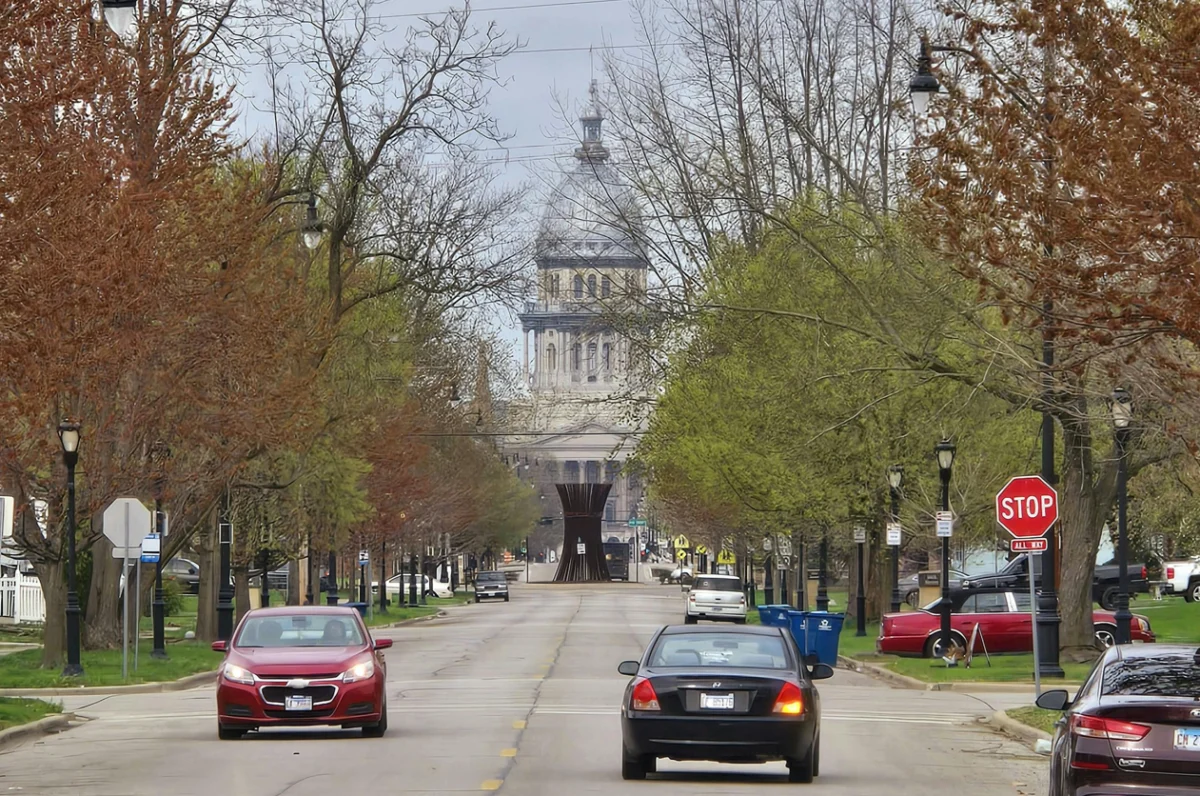
Illinois Democrats encountered a significant setback on Thursday as they failed to advance a proposed constitutional amendment that would have sought voter approval in November for an additional tax on residents earning over $1 million annually. This legislative defeat has exposed deep divisions within the party regarding education funding and has dealt a considerable blow to their election-year narrative centered on affordability. The Illinois House of Representatives adjourned without a vote on the measure, commonly referred to as the "millionaire’s tax resolution," effectively missing the May 3 deadline to place the question on the November 3 general election ballot. The House is not scheduled to reconvene in Springfield until May 5, rendering further action on this specific amendment before the deadline impossible.
The proposed amendment aimed to implement a 3% tax on the portion of an individual’s net income exceeding $1 million. Proponents estimated that this measure would generate approximately $2.2 billion in additional annual tax revenue. The revenue was intended to be split between property tax relief and enhanced funding for public schools. However, the proposal’s demise in the House was attributed, in part, to concerns voiced by several Democratic lawmakers. These concerns centered on the potential for a per-pupil distribution of school funding to undermine Illinois’s existing evidence-based funding formula. This 2017 law was specifically designed to channel more equitable resources to school districts serving lower-income student populations, and some legislators feared the new amendment could inadvertently dilute its effectiveness.
Internal Party Disagreements Hinder Progress
State Representative Will Davis, a Democrat and a vocal supporter of the existing evidence-based funding formula, articulated his reservations about the millionaire’s tax proposal. "Those of us that kind of understand EBF a little bit have raised that concern about whether or not it ultimately walks back EBF," Davis stated, highlighting the delicate balance of educational finance policy. His position reflects a broader sentiment among some Democrats who prioritize the integrity of the current, hard-won equity in school funding over the immediate prospect of increased revenue.
Hal Woods, chief of policy at Kids First Chicago, acknowledged the potential transformative impact of the estimated hundreds of millions of dollars in additional funding that could have been directed to Chicago schools. However, he also noted the rapid pace at which the measure was moving and the lingering "unanswered questions" surrounding its implementation. This sentiment underscores a common legislative challenge: the tension between the urgency to address pressing needs and the necessity for thorough deliberation and stakeholder engagement.
State Representative La Shawn Ford, a Democrat and the chief sponsor of the millionaire’s tax resolution, expressed profound disappointment that his party colleagues did not exert greater effort to advance the measure. He emphasized the Democratic Party’s responsibility to champion proposals that provide financial relief to average residents and urged for a bolder approach in seizing opportunities to support constituents. "We missed an opportunity to be progressive," Ford declared, drawing a parallel to what he perceives as the decisive action of Republicans when they hold power. Ford, who is also the Democratic nominee for Illinois’s 7th Congressional District seat, added, "You don’t see that happening with (President Donald) Trump and these Republicans. When they have the power to do something to help their constituents, they do it."
Speaker Acknowledges Need for Further Deliberation
Speaking to reporters on Wednesday evening outside his state Capitol office, Democratic House Speaker Emanuel "Chris" Welch affirmed his continued support for ensuring that the wealthiest individuals contribute more financially. However, he candidly acknowledged the complexities inherent in the proposal, even as he described it as "very close" to passage. "What we heard from listening to a lot of people over the last few days is that more work needs to be done," Welch stated. He expressed confidence that the measure would eventually pass, not only the House but also the Senate, and ultimately withstand voter scrutiny. "When this does pass the House, it will pass the Senate, and it will pass the voters’ test because when you listen to people and do it right, you build coalitions. And that’s what we’re going to do when it eventually passes," he added. This suggests a strategic pause to build broader consensus rather than an outright abandonment of the initiative.
The millionaire’s tax resolution had previously cleared a House committee along strictly party lines on Tuesday. However, it failed to garner enough support for a full floor vote. Republicans had also raised objections, specifically questioning sponsors about the intended distribution of the funds, a detail that was notably absent from the resolution itself. This highlights a bipartisan concern about fiscal transparency and accountability, even if the underlying intent of the tax differed.

Broader Implications and Alternative Proposals
The Chicago Teachers Union (CTU), a vocal advocate for increased funding for Chicago Public Schools, expressed its dismay that the Democratic supermajority in the House could not advance the resolution. CTU Vice President Jackson Potter issued a statement asserting, "Budgets are documents rooted in morals and math. The Governor and the General Assembly are currently failing at both." This sentiment underscores the deep-seated desire within certain advocacy groups for more robust public investment, particularly in education.
State Representative Kelly Cassidy, a progressive Democrat, lent her support to the proposal but acknowledged potential shortcomings in its educational funding formula component. She also noted possible issues concerning whether the resolution adequately accounted for inflation in determining the application of the millionaire’s tax. These technical concerns, while seemingly minor, can be significant obstacles in complex legislative initiatives.
With the millionaire’s tax now off the immediate legislative agenda, progressive lawmakers are likely to explore alternative avenues for revenue generation. The spring legislative session is scheduled to conclude in just over a month, leaving a limited window for action. Earlier in the year, renewed calls were made for proposals such as a 10% tax on digital advertising revenue generated by large technology companies, a tax on the appreciation of billionaire assets, the closure of specific corporate loopholes, and measures to prevent multinational corporations from shifting profits to tax havens. These alternative proposals indicate a sustained effort within the Democratic Party to address revenue shortfalls and promote tax fairness.
In parallel, a coalition of forty state lawmakers has formed the Affordability and Tax Justice Coalition. This group is dedicated to reforming Illinois’s tax system to benefit working and middle-class residents and to foster greater revenue stability, particularly in light of potential significant funding cuts threatened by the Trump administration. This coalition’s formation signifies a strategic effort to unify diverse progressive voices around shared fiscal goals.
Meanwhile, the business community actively lobbied against the millionaire’s tax resolution. Groups such as the Illinois Retail Merchants Association raised concerns that such a tax could negatively impact small businesses. These objections underscore the ongoing debate about the economic consequences of tax policy and the need to balance revenue generation with business growth.
It is worth noting that a nonbinding advisory question put before voters in 2024, asking whether there should be a 3% tax on income exceeding $1 million for property tax relief, garnered significant support, with 60% of voters endorsing the concept. This suggests a public appetite for such measures, even if legislative implementation proves challenging.
Governor JB Pritzker, a billionaire himself and a prominent figure seeking a third term while also reportedly eyeing a potential 2028 presidential run, has made affordability a central theme of his current agenda. However, he did not forcefully champion the millionaire’s tax amendment as a core component of his affordability initiatives. This measured approach may reflect an awareness of the internal party divisions or a strategic calculation regarding the amendment’s viability. The failure of this proposed amendment highlights the complex interplay of policy objectives, political realities, and internal party dynamics that shape legislative outcomes in Illinois. The path forward for achieving both enhanced education funding and broader tax relief for average citizens remains a significant challenge for the state’s Democratic leadership.