Julia Chirkova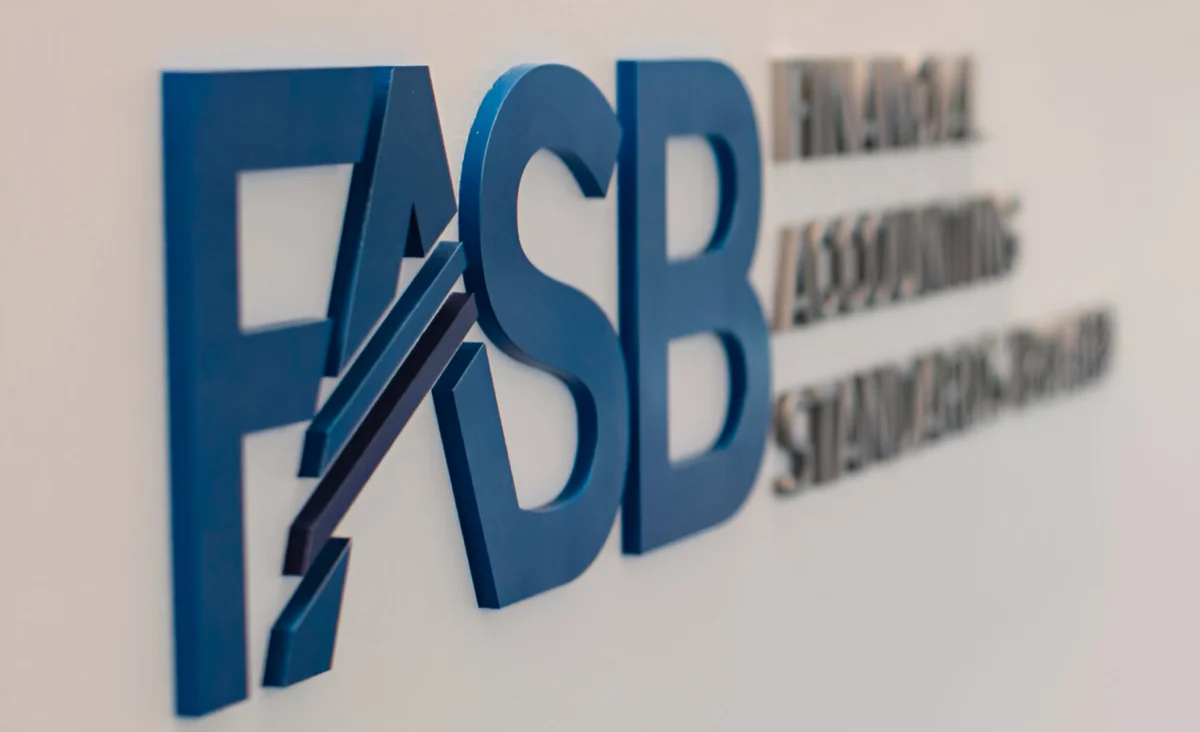
The Financial Accounting Standards Board (FASB) has released a proposed Accounting Standards Update (ASU) aimed at refining the accounting guidance for a specific type of defined benefit pension plan: market-return cash balance plans. This initiative, driven by recommendations from the FASB’s Emerging Issues Task Force (EITF), seeks to ensure that the measurement of benefit obligations for these plans more accurately reflects their underlying economic realities and to reduce inconsistencies in current accounting practices. The comment period for this proposed ASU is open until August 10, 2026, inviting stakeholders to provide feedback on the proposed changes.
Background: The Evolution of Pension Accounting and Cash Balance Plans
Pension accounting has long been a complex area of financial reporting, subject to ongoing evolution as plan designs and economic conditions change. Traditional defined benefit plans promise a specific retirement benefit, often calculated based on salary and years of service. Defined contribution plans, in contrast, define the employer’s contribution, with the retirement benefit depending on investment performance.
Cash balance plans represent a hybrid approach, blending features of both defined benefit and defined contribution plans. In a typical cash balance plan, an employee’s benefit is expressed as a hypothetical account balance. This balance is credited with "pay credits" (employer contributions) and "interest credits." While many cash balance plans use a fixed interest crediting rate, a subset known as market-return cash balance plans link these interest credits to actual market returns. This linkage is intended to provide employees with a retirement benefit that more closely aligns with investment performance, while still offering the employer a degree of predictability in its pension obligations.
The Emerging Issue: Inconsistencies in Discount Rate Application
The FASB’s proposed ASU stems from concerns raised by stakeholders regarding the application of existing accounting guidance, specifically Subtopic 715-30 of the Accounting Standards Codification, to market-return cash balance plans. Under current rules, entities measure the projected benefit obligation of defined benefit pension plans using a discount rate. This discount rate is crucial as it determines the present value of future benefit payments.
For market-return cash balance plans, stakeholders have indicated that the current guidance may not sufficiently address the unique characteristics of plans where interest credits are tied to market performance. Specifically, the concern is that the discount rate used to measure the benefit obligation might not align with the plan’s hypothetical account balance, which is directly influenced by these market-based interest credits. This potential mismatch can lead to financial statements that do not accurately portray the economic substance of these plans, potentially distorting key financial metrics such as pension expense and funded status. The EITF, a key advisory body to the FASB, identified this issue and recommended that the FASB provide more specific guidance to resolve the inconsistencies.
Proposed Amendments: Aligning Discount Rate with Interest Crediting Rate
The proposed ASU introduces a specific requirement for measuring the benefit obligation of certain market-return cash balance plans. The core of the proposed amendment is to mandate the use of the assumed interest crediting rate as the discount rate for these qualifying plans. This change is designed to ensure that the measured benefit obligation closely mirrors the plan’s hypothetical account balance, thereby improving the faithful representation of the plan’s economics.
The proposed guidance applies to market-return cash balance plans that meet two key conditions:
-
Account Balance Communication: Pension benefits must be communicated to employees in the form of an account balance. This balance should be comprised of principal credits (employer contributions) and interest credits. The interest credits must be based on an investable market return, which can be derived from:
- The return on the plan’s overall assets.
- The return on a subset of plan assets that is designed to approximate the performance of the associated cash balance liabilities.
- The return on a regulated investment company.
-
Lump-Sum Payment Option: Participants must have the option to elect lump-sum payments of their vested benefits. This feature is common in cash balance plans and reinforces the notion of a readily determinable account balance for the employee.
Crucially, the proposed amendments do not alter the fundamental accounting framework for these plans under Subtopic 715-30. Instead, they provide a specific directive on the discount rate for a defined set of plans. The expected outcome of applying the assumed interest crediting rate as the discount rate is that the benefit obligation will generally be equal to the plan’s hypothetical account balance. This alignment is anticipated to significantly enhance the transparency and comparability of financial reporting for companies offering these types of retirement benefits.
Expected Benefits and Implications
The FASB anticipates that the proposed amendments will yield several significant benefits:
- Improved Representation of Economics: By aligning the discount rate with the interest crediting rate, the proposed guidance will ensure that the measured benefit obligation more accurately reflects the economic reality of market-return cash balance plans. This means that changes in market returns that affect the hypothetical account balance will also be more directly reflected in the reported benefit obligation.
- Reduced Diversity in Practice: The current lack of specific guidance has led to varied interpretations and applications by different companies and auditors. This proposed ASU aims to standardize the accounting treatment, thereby reducing inconsistencies and improving the comparability of financial statements across entities.
- Enhanced Transparency: A more faithful representation of the plan’s economics will lead to greater transparency for investors, creditors, and other stakeholders. They will have a clearer understanding of the company’s pension liabilities and the factors influencing them.
The implications of this proposed change are noteworthy for companies sponsoring these plans. While the core accounting methodology remains the same, the specific discount rate used could impact the reported pension expense, net periodic pension cost, and the funded status of the plans. For instance, if the assumed interest crediting rate is higher than the discount rate previously used, the measured benefit obligation might increase, potentially leading to higher interest cost components of pension expense and a greater liability. Conversely, a lower interest crediting rate would have the opposite effect. Companies will need to carefully assess the impact of this change on their financial statements and disclosures.
The Role of the Emerging Issues Task Force (EITF)
The EITF plays a vital role in the FASB’s standard-setting process. It is a forum where accounting issues that are not clearly addressed by existing standards are discussed, debated, and resolved. The EITF’s recommendations serve as a crucial input for the FASB, helping to identify areas where accounting guidance needs clarification or enhancement. In this instance, the EITF’s proactive engagement with stakeholders identified the inconsistencies in the accounting for market-return cash balance plans, leading to the FASB’s initiative to propose a new ASU. This collaborative approach ensures that accounting standards remain relevant and responsive to the evolving landscape of business and financial instruments.
Next Steps and Stakeholder Engagement
The FASB has opened the proposed ASU for public comment, a critical step in the standard-setting process. This allows stakeholders, including companies that sponsor market-return cash balance plans, accounting firms, and other interested parties, to review the proposed changes and provide feedback. The comment period, which closes on August 10, 2026, is essential for the FASB to gauge the potential impact of the proposed guidance and to make any necessary adjustments based on the input received.
Organizations are encouraged to carefully examine the proposed ASU and consider its implications for their specific circumstances. Feedback should address whether the proposed guidance effectively addresses the identified issue, whether it is practical to implement, and if there are any unintended consequences. The FASB will review all submitted comments before finalizing the ASU. The aim is to issue a final standard that is clear, effective, and enhances the quality of financial reporting for these increasingly common retirement benefit arrangements.
The issuance of this proposed ASU by the FASB marks a significant step toward ensuring that the accounting for market-return cash balance plans is robust and accurately reflects their economic characteristics, thereby contributing to more reliable and transparent financial reporting.