Candice Horbacz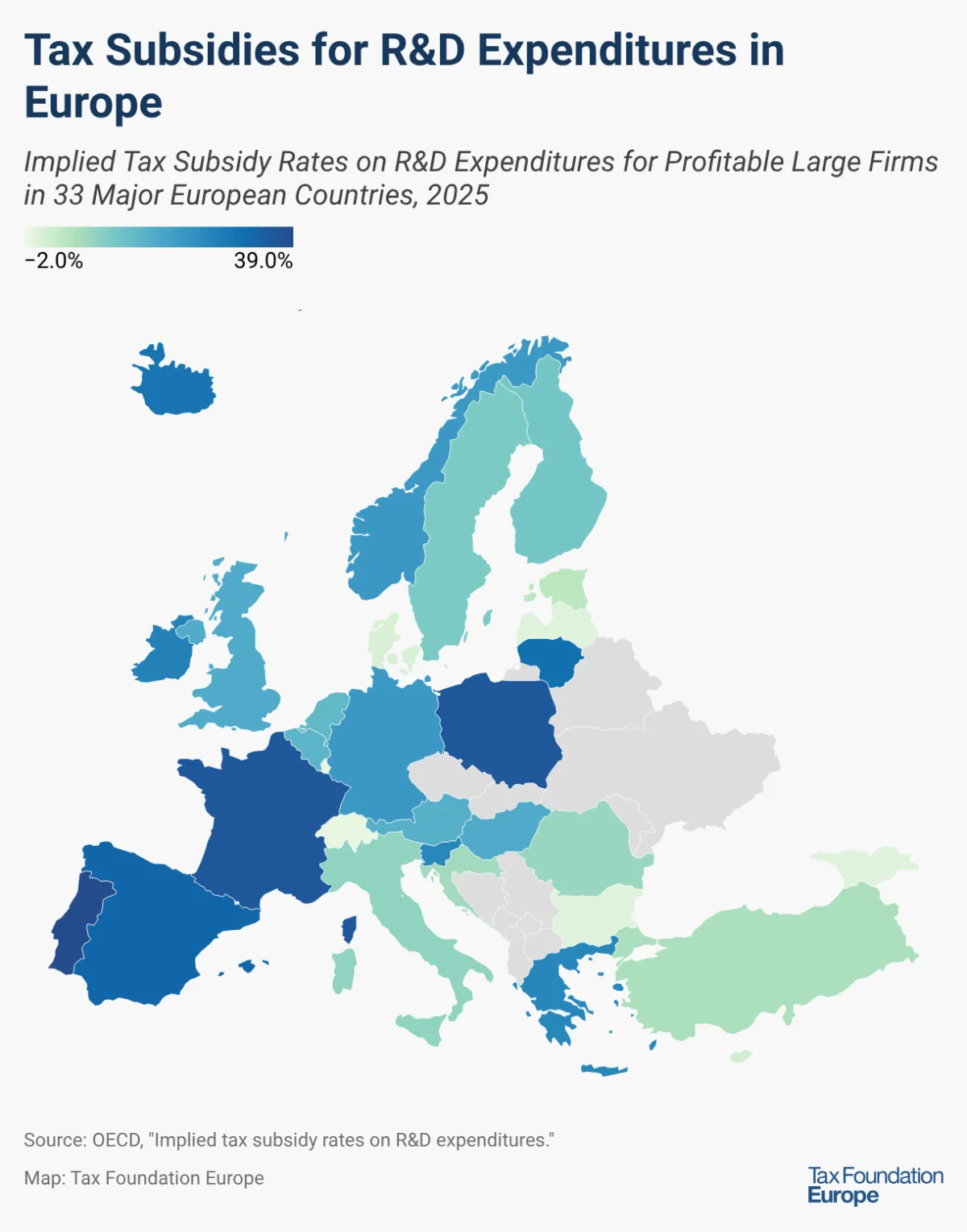
The landscape of research and development (R&D) tax subsidies for large profitable firms reveals a striking divergence among countries, with implied tax subsidy rates ranging dramatically from a mere 1 percent in Denmark to a generous 39 percent in Portugal. This significant variance underscores differing national strategies towards fostering innovation, influencing investment decisions, and shaping the global economic playing field. The latest analysis, focusing on expenditure-based R&D tax relief, highlights how nations employ tax policy to either aggressively stimulate technological advancement or adopt a more restrained approach, with profound implications for their economic futures.
The Varied European Landscape: Leaders and Laggards in R&D Tax Relief
Within Europe, the spectrum of R&D tax incentives is particularly broad. Portugal stands out as the most generous, offering an implied tax subsidy rate of 39 percent to large profitable firms. This aggressive stance reflects a clear policy objective to boost domestic innovation and attract R&D-intensive industries. Following closely are France and Poland, both providing substantial relief with an implied tax subsidy rate of 36 percent. These high rates suggest a strategic commitment in these nations to enhance their innovation ecosystems, recognizing R&D as a critical driver of long-term economic growth, competitiveness, and high-value job creation. For companies operating in these jurisdictions, such significant tax breaks can substantially reduce the cost of innovation, encouraging greater investment in new technologies, product development, and scientific research.
Conversely, some European nations adopt a much more conservative approach. Denmark, with an implied tax subsidy rate of just 1 percent, is the least generous among countries offering notable relief. Cyprus (2 percent) and Estonia (4 percent) also fall into this category. This minimalist approach might stem from several factors, including a preference for direct grants or other non-tax-based innovation support mechanisms, a generally lower corporate tax burden that reduces the perceived need for specific R&D deductions, or a different philosophy regarding the role of government in directly subsidizing corporate R&D. While these countries may still foster innovation through robust educational systems, strong intellectual property protections, or a favorable business environment, their tax codes do not explicitly prioritize expenditure-based R&D tax relief to the same extent as their more generous counterparts.
A further segment of countries—Bulgaria, Georgia, Latvia, Luxembourg, Malta, and Switzerland—do not show any significant expenditure-based R&D tax relief. This absence does not necessarily imply a lack of innovation policy, but rather that their tax systems do not feature the specific R&D tax incentives measured in this analysis. These nations might rely on broader economic policies, general investment incentives, or focus on specific sectors where R&D is naturally embedded without needing additional tax-based encouragement. For instance, Luxembourg and Switzerland, known for their financial services and pharmaceutical industries respectively, might find that general corporate tax neutrality and a stable regulatory environment are sufficient to attract and retain R&D activities without sector-specific tax breaks.
Across the 33 major European countries for which data is available, the average implied subsidy rate for profitable large firms is projected to be 16 percent in 2025. This average provides a crucial benchmark for understanding the general European commitment to R&D through tax policy, while simultaneously highlighting the substantial deviation of individual countries from this norm. The disparity suggests a complex interplay of national economic priorities, fiscal capacities, and varying interpretations of how best to stimulate private sector innovation.
Global Benchmarks: The US and China in the Innovation Race
Beyond the European continent, global economic powerhouses like the United States and China present their own distinct approaches to R&D tax incentives, offering vital context for the European figures. The United States, often seen as a global innovation leader, historically offered a comparatively modest implied subsidy rate of 3 percent for large profitable firms. However, significant policy shifts have recently pushed this rate to 7 percent. This change, detailed later in this article, reflects an ongoing debate within the US about the optimal way to encourage domestic R&D investment and maintain its competitive edge.
In stark contrast, China grants a substantially higher implied subsidy rate of 32 percent. This aggressive stance aligns with China’s broader national strategy to become a global leader in science and technology. The Chinese government has made massive investments in R&D, both through direct funding and tax incentives, as part of its long-term plan to achieve technological self-reliance and economic dominance. The high subsidy rate signals a clear intent to incentivize businesses, particularly in strategic high-tech sectors, to ramp up their R&D expenditures, fostering a rapid pace of innovation designed to propel the nation to the forefront of emerging technologies.
Comparing these global giants with Europe’s average of 16 percent reveals different innovation philosophies. While the US relies on a combination of a dynamic market, venture capital, and a targeted tax credit, China uses a more centrally directed, high-subsidy approach. Europe, with its diverse member states, navigates a middle ground, demonstrating varied levels of enthusiasm for tax-based R&D incentives.
Tailoring Incentives: Support for SMEs and Loss-Making Firms
The design of R&D tax incentives often extends beyond large, profitable corporations to address the specific needs of small and medium-sized enterprises (SMEs) and firms that are currently operating at a loss. These distinctions are crucial because SMEs typically face greater capital constraints and higher risk aversion compared to larger firms, while loss-making firms, particularly startups and those engaged in long-term R&D, may not have immediate profits against which to deduct expenses.
Most countries covered in this analysis provide the same expenditure-based R&D tax relief to both large firms and SMEs. This uniform approach simplifies administration but may not fully address the unique challenges faced by smaller businesses. However, several countries recognize the distinct needs of SMEs. Germany, Iceland, and the Netherlands, for instance, are relatively more generous to SMEs than to large firms. This differentiated approach is often justified by the argument that SMEs are vital sources of new ideas and employment, but their access to financing and their capacity to absorb the costs of R&D are often more limited. Enhanced incentives for SMEs can help bridge this gap, encouraging them to invest in innovation and grow.
The treatment of loss-making firms also varies significantly. R&D is inherently a risky and often long-term investment, meaning many innovative firms, especially in their early stages, may not generate profits for several years. For these firms, tax deductions against future profits may be less immediately beneficial than direct refunds or the ability to carry forward losses. The article notes that France, specifically in the case of loss-making firms, offers more generous relief. This suggests a policy aimed at nurturing nascent innovation, ensuring that promising R&D efforts are not stifled by a lack of immediate profitability.
The mechanisms of support for loss-making firms often include refunds and carryover provisions. Refundable tax credits allow companies to receive a cash payment even if they have no tax liability, providing crucial liquidity. Carryover provisions permit firms to apply current R&D expenses or losses against future profits, effectively deferring the tax benefit. The presence of such provisions significantly changes the implied tax subsidy rates for loss-making firms relative to profitable firms. Interestingly, the analysis indicates that these mechanisms have generally resulted in lower average implied tax subsidy rates for loss-making firms compared to profitable firms, both for SMEs and large firms. This counterintuitive finding suggests that while mechanisms exist to support loss-making firms, the immediate and full realization of benefits for profitable firms often results in a higher effective subsidy rate in practice.
Croatia presents a unique case, offering slightly higher relief to large firms than to SMEs. This could be indicative of a strategy focused on leveraging the scale and existing R&D capabilities of larger enterprises to drive national innovation, perhaps viewing large firms as having greater capacity for significant, impactful R&D projects.
Recent Policy Shifts: A Dynamic Landscape
The realm of R&D tax incentives is not static; it is subject to ongoing policy adjustments driven by economic conditions, fiscal priorities, and evolving innovation strategies. Recent changes across several European countries and the United States highlight this dynamic environment.
In Europe, Lithuania and the Slovak Republic implemented changes that indirectly boosted their R&D tax subsidies. Both countries raised their corporate tax rates starting in 2025. While seemingly counterintuitive, an increase in the corporate tax rate enhances the value of tax deductions for R&D expenditures. A deduction reduces taxable income, and the higher the tax rate, the greater the tax savings per dollar of deduction. Consequently, Lithuania saw its implied subsidy rate for large profitable firms increase from 31 to 34 percent, and the Slovak Republic’s rate rose from 28 to 33 percent. This demonstrates how broader tax reforms can have ripple effects on specific incentive programs.
The Netherlands, on the other hand, explicitly targeted its R&D incentives. It raised tax credit rates for in-scope R&D, directly increasing the implied subsidy rate from 31 percent in 2024 to 35 percent in 2025. This direct adjustment reflects a deliberate policy decision to make R&D investment more attractive, likely in response to competitiveness concerns or a desire to accelerate innovation in key sectors.
Across the Atlantic, the United States enacted a significant reversal concerning its R&D tax treatment. Prior to 2022, businesses could fully expense their R&D costs in the year they were incurred, meaning they could deduct the entire cost from their taxable income immediately. However, Section 174 of the Tax Cuts and Jobs Act of 2017 mandated that, beginning in 2022, R&D expenditures must be amortized (deducted over several years) instead of expensed immediately. This change, which was widely criticized by businesses and economists, effectively increased the cost of R&D and reduced the immediate cash flow benefits for companies. It was seen as a significant deterrent to domestic innovation.
In a crucial policy reversal, the United States scrapped these temporary R&D amortization requirements and restored its pre-2022 expensing regime. This restoration, combined with existing R&D tax credits, dramatically raised the implied subsidy rate for large profitable firms from 3 percent to 7 percent. This move was lauded by industry groups and policymakers who argued that immediate expensing is vital for encouraging investment in long-term, high-risk R&D projects. The shift reflects a renewed commitment to fostering domestic innovation and ensuring that US businesses remain competitive on the global stage, directly impacting the financial viability of R&D projects across various sectors.
The Economic Rationale and Inherent Challenges of R&D Tax Incentives
The underlying economic rationale for R&D tax incentives is rooted in the concept of "market failure." Research and development often generate positive externalities or "spillover effects," meaning the benefits extend beyond the innovating firm to the wider economy. For example, a new technology developed by one company might be adopted and adapted by many others, leading to broader productivity gains and societal improvements. Because firms cannot fully capture all the benefits of their R&D investments, they might underinvest in R&D from a societal perspective. Tax incentives aim to correct this market failure by reducing the private cost of R&D, thereby encouraging firms to undertake more innovation than they otherwise would. This, in theory, leads to higher economic growth, increased productivity, and enhanced national competitiveness.
However, the implementation of R&D tax incentives is fraught with challenges. One of the primary difficulties lies in targeting genuine innovation. Defining what constitutes "qualified expenditures" for R&D can be complex and subjective. This ambiguity can lead to firms claiming deductions for routine business activities rather than genuine, novel research, resulting in "fiscal losses" where public funds are spent without generating the intended innovation. Policymakers struggle to draw clear lines between incremental improvements, product modifications, and fundamental research.
Another significant challenge is administrative burden and compliance costs. For governments, managing and auditing R&D tax claims requires substantial resources and expertise to prevent abuse and ensure eligibility. For businesses, documenting R&D activities to meet stringent qualification criteria can be time-consuming and costly, particularly for SMEs that may lack dedicated compliance departments. This administrative overhead can dilute the net benefit of the incentives.
Furthermore, there is the perennial question of "additionality": Do these incentives genuinely encourage new R&D that would not have occurred otherwise, or do they merely subsidize activities that firms would have undertaken anyway? If incentives largely reward pre-existing R&D plans, they represent a deadweight loss to the treasury, failing to achieve their intended purpose of stimulating additional innovation. Measuring additionality is notoriously difficult, making it challenging for policymakers to assess the true effectiveness and return on investment of these programs.
Alternative Approaches to Fostering Innovation
Given the complexities and potential pitfalls of R&D-specific tax incentives, economists and policymakers often advocate for alternative, more neutral approaches to supporting innovation. These alternatives focus on improving the general tax treatment of risky investments, which are inherent to innovative firms.
One key recommendation is to allow firms to fully recover their capital costs. This means permitting businesses to immediately deduct the full cost of investments in equipment, machinery, and other capital assets, rather than depreciating them over several years. Full expensing reduces the cost of capital, encourages investment across all sectors, and is considered a more neutral approach than targeted R&D tax credits because it does not distort investment decisions towards specific activities. By making all capital investment more attractive, it indirectly supports innovative firms that often require significant capital outlays.
Another crucial measure is to allow firms to offset their operating losses. Innovative startups and firms engaged in long-term R&D often incur losses in their initial years. The ability to carry forward these losses and deduct them against future profits, or to carry them back against past profits for a refund, provides vital financial stability. This ensures that the tax system does not penalize risk-taking and long-term investment, which are hallmarks of innovation.
These neutral tax treatments are often preferred because they reduce the administrative complexity of defining and auditing specific R&D expenditures, minimize opportunities for tax avoidance through misclassification, and avoid distorting investment decisions towards narrowly defined R&D activities. They support the broader ecosystem of innovation by making all productive investment more attractive.
Beyond tax policy, governments employ a broader toolkit to foster innovation. This includes direct grants for specific research projects, the establishment of research institutions and technology parks, investment in STEM education, robust intellectual property protection, and the creation of regulatory sandboxes for emerging technologies. A holistic approach, combining both general and targeted measures, is often considered the most effective strategy for cultivating a vibrant and dynamic innovation economy.
Implications for Global Competitiveness and Future Policy Directions
The significant variations in R&D tax subsidy rates among nations have profound implications for global competitiveness. Multina tional corporations, when deciding where to locate their R&D hubs and intellectual property, will inevitably consider the tax environment as a critical factor. Countries offering generous subsidies may attract a larger share of global R&D investment, potentially leading to a concentration of innovation and high-skilled jobs. Conversely, nations with less attractive incentives might struggle to compete for these valuable investments, potentially leading to a "brain drain" and a slower pace of domestic technological advancement.
This competitive dynamic fuels an ongoing debate about tax harmonization versus tax competition. While some advocate for greater international coordination to prevent a "race to the bottom" in tax rates and incentives, others argue that competition drives efficiency and encourages countries to create more attractive business environments. The future direction of R&D tax policy will likely involve a delicate balancing act, as countries seek to maximize their own innovation potential while navigating the complexities of a globalized economy.
As technological advancements accelerate and economies become increasingly knowledge-based, the role of R&D and the policies designed to support it will only grow in importance. Policymakers will continue to refine their approaches, learning from successes and failures, to ensure that their tax systems effectively encourage the innovation necessary for sustainable economic growth and societal progress in the 21st century. The nuanced and often complex interplay of tax rates, subsidy mechanisms, and policy objectives will remain a critical area of focus for governments striving to build resilient and forward-looking economies.