Nila Kartika Wati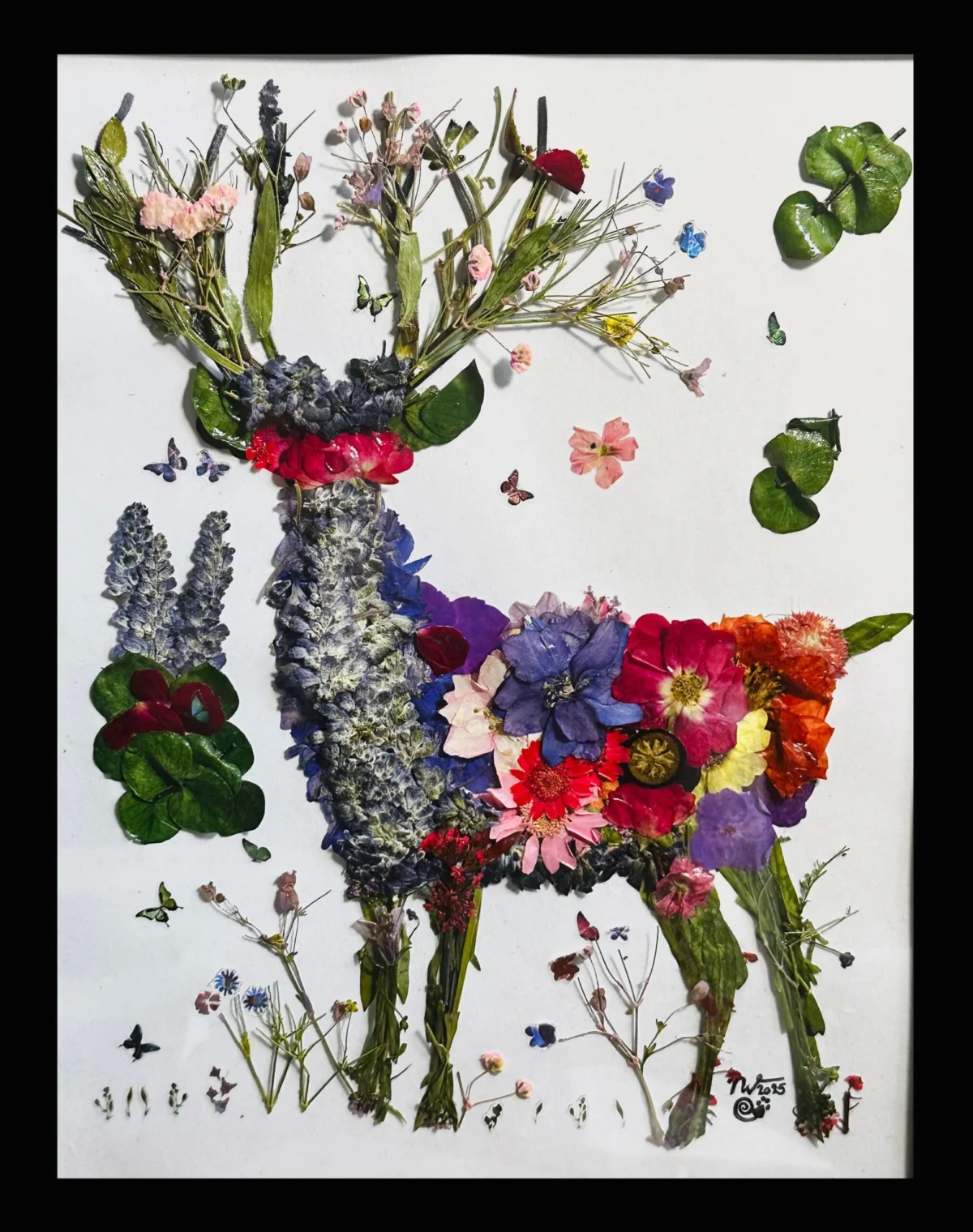
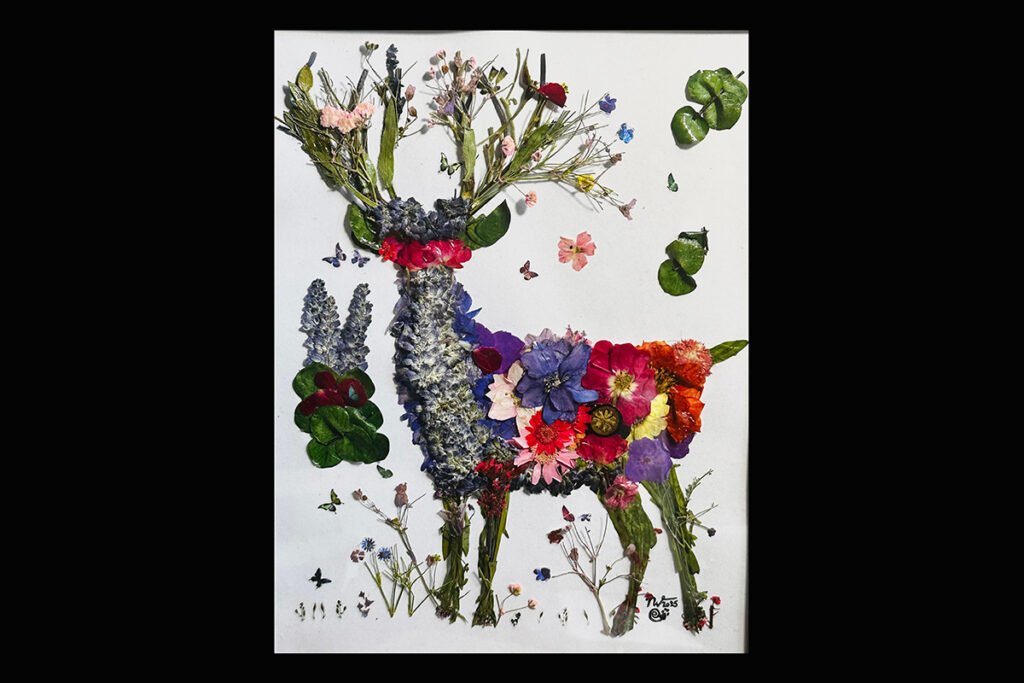
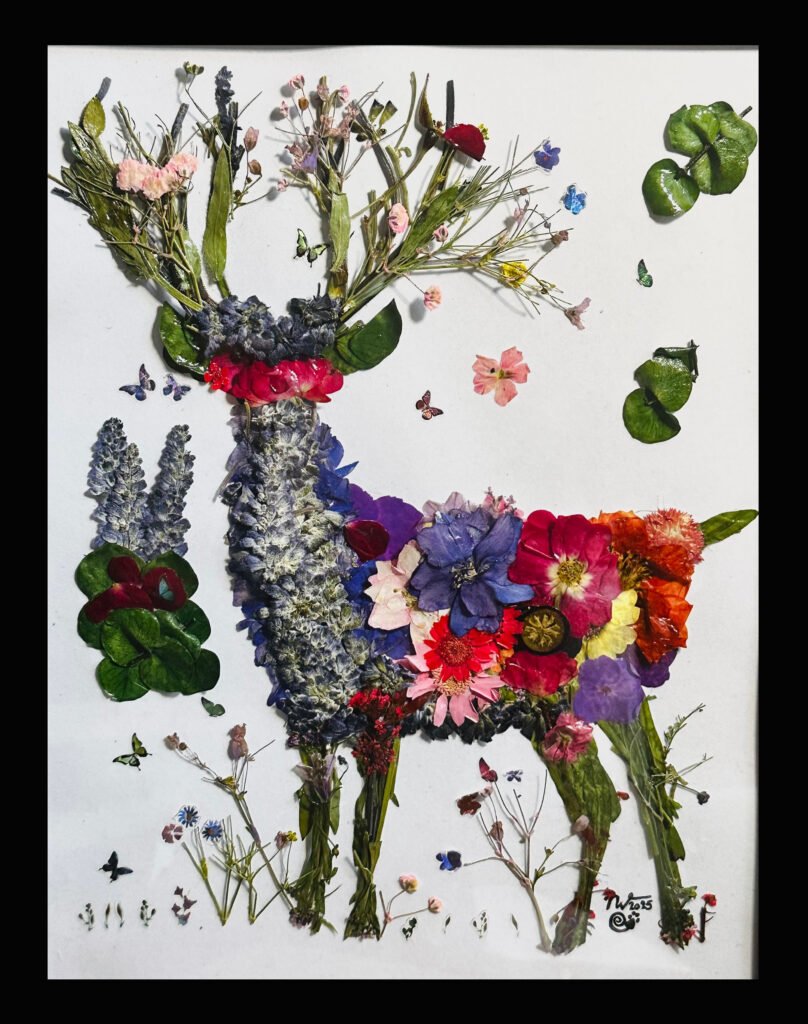
The contemporary art world is increasingly looking toward the intersection of ecological preservation and social justice, a trend exemplified by the recent release of the oshibana piece titled Buck by artist nae vallejo. Published through the Nonprofit Quarterly (NPQ) as part of its ongoing commitment to amplifying marginalized voices, the artwork serves as a profound meditation on the nature of memory, land, and the human condition. Through the meticulous arrangement of dried flowers and preserved plant materials into the silhouette of a deer, vallejo explores how histories—both personal and collective—are maintained through transformation rather than stasis. This work emerges at a critical juncture for the nonprofit and arts sectors, where themes of disability justice, Indigenous sovereignty, and racial identity are converging to redefine the American narrative.
The Artistic Vision of nae vallejo and the Oshibana Tradition
The central focus of the piece, Buck, utilizes the ancient Japanese art of oshibana, which involves the pressing and drying of flowers to create a composition. While oshibana has historical roots dating back to 16th-century Japan, vallejo’s application of the technique is distinctly modern and deeply personal. As a Black, Caddo, Mexican, queer, trans, and disabled artist, vallejo utilizes botanical preservation as a metaphor for "rememory"—a term popularized by Toni Morrison to describe the process of remembering something that has been forgotten or suppressed.
In the artist’s statement accompanying the piece, vallejo notes that the practice of botanical preservation allows for an exploration of how memory changes form without entirely disappearing. The wilting of flowers and the shifting of seasons are presented not as endings, but as transformations. This perspective is vital in the context of "experiential archiving," a field in which vallejo is a leading practitioner. By using organic materials that carry their own histories of growth and loss, the artist creates a bridge between the physical world and the intangible traces of the past.
Symbolism of the Deer and the American Landscape
The choice of a deer as the central figure in Buck is a deliberate symbolic act. In North American ecology and folklore, the deer is often seen as a symbol of gentleness, but vallejo adds layers of "alertness" and "relationship" to this interpretation. The deer represents a creature that moves through landscapes shaped by both natural beauty and human-driven disruption. This duality reflects the artist’s view of "America"—a story of land and memory that precedes national borders and colonial structures.
The deer adapts to changing conditions while remaining tethered to the ecosystems that sustain it. In a similar vein, vallejo suggests that human belonging should be shaped through connection and stewardship rather than ownership. This challenge to the concept of ownership is a significant theme in contemporary social justice discourse, particularly regarding land rights and the history of Indigenous peoples like the Caddo Nation. By framing the American story as one of ongoing relationships rather than fixed borders, the artwork invites a re-evaluation of national identity and historical accountability.
Chronology of the Work’s Publication and the Nonprofit Quarterly’s Mission
The publication of Buck in the summer of 2024 (archived for 2026 release in specific digital contexts) marks a significant moment for the Nonprofit Quarterly’s "Our Voices Are Our Power" campaign. This initiative was launched in response to perceived attacks on journalism, nonprofit organizations, and multiracial democracy. The chronology of this campaign reflects a broader movement within the nonprofit sector to move beyond traditional service delivery and toward narrative change.
- Early 2020s: NPQ shifts its editorial focus to include more direct contributions from "movement leaders" and artists, emphasizing that those closest to the problems are best equipped to design solutions.
- Launch of "Our Voices Are Our Power": This campaign specifically targets the protection of nonprofit voices, ensuring that contributors—including artists like vallejo—are compensated for their insights.
- The Release of Buck: As part of a series on "rememory" and "care," vallejo’s work is introduced to a global audience of nonprofit workers, activists, and policy-makers.
- Integration of Disability Justice: The publication highlights the intersection of art and disability justice, moving the conversation from mere "access" to "sensory attunement" and "interdependence."
Data and Context: Disability and the Arts in the United States
The context of vallejo’s work is supported by broader data regarding the representation of disabled artists in the United States. According to the National Endowment for the Arts (NEA), people with disabilities are frequently underrepresented in the professional arts workforce despite a high level of engagement in creative practices. A 2022 report indicated that while approximately 26 percent of American adults have some form of disability, they represent a much smaller fraction of those earning a living through fine arts.
Furthermore, the "Disability Justice" framework, which vallejo explicitly references, was developed in 2005 by the Sins Invalid collective. It differs from the traditional disability rights movement by centering the experiences of queer and trans people of color. The ten principles of Disability Justice—including intersectionality, leadership of those most impacted, and collective liberation—are clearly visible in vallejo’s practice. By centering interdependence and the use of a service dog in his daily life and artistic ritual, vallejo challenges the "lone genius" myth of the artist, instead proposing a model of creativity that is rooted in community and mutual support.
Official Responses and the Role of Experiential Archiving
While there are no official government statements on the specific piece Buck, the nonprofit sector has responded with significant interest in the concept of "experiential archiving." Organizations such as the Ford Foundation and the Mellon Foundation have increasingly funded projects that explore "alternative archives"—records of history that do not rely solely on written documents but on oral histories, art, and land-based practices.
Analysts in the nonprofit sector suggest that works like Buck provide a necessary counter-narrative to the "erasure" often faced by marginalized communities. By documenting the "trace" left across body and land, vallejo contributes to a form of social record-keeping that is resilient against political shifts. This is particularly relevant in an era where the teaching of history and the representation of diverse identities in public spaces are subjects of intense legislative debate across several U.S. states.
Broader Impact and Implications for the Future
The implications of vallejo’s work extend into the realms of environmental conservation and social policy. By highlighting the "histories of growth, loss, care, and return" inherent in botanical materials, Buck aligns with the "Slow Art" movement and the growing field of ecological art. These movements argue that environmental protection is inseparable from cultural preservation. If we do not remember the land’s history, we cannot effectively care for its future.
Moreover, the focus on "belonging through connection rather than ownership" offers a potential framework for addressing the housing and land-use crises currently facing many American communities. When belonging is viewed as a relational process—much like the deer’s relationship to the forest—policy solutions may shift toward community land trusts and cooperative models rather than purely speculative real estate ventures.
For the nonprofit sector, the lesson of Buck is one of transformation. As the original article notes, "even after a bloom has passed, something of its beauty, memory, and possibility remains." This serves as a metaphor for the sector’s resilience. Even in the face of funding cuts or political opposition, the "memory and possibility" of social movements continue to shape the future.
Conclusion: Art as a Tool for Democracy
In conclusion, nae vallejo’s Buck is more than a decorative arrangement of pressed flowers; it is a sophisticated piece of social commentary that weaves together the threads of disability justice, Indigenous history, and ecological awareness. By choosing to preserve the delicate and the fleeting, vallejo reminds the viewer that the most important aspects of our shared humanity are often those that are the most fragile.
As the Nonprofit Quarterly continues to champion these voices, the role of the artist as an "experiential archivist" becomes increasingly central to the survival of a multiracial democracy. Through the practice of "rememory" and a commitment to collective care, artists like vallejo ensure that while the forms of our stories may change, their essence—and their power—remains. The ongoing process of transformation, as honored in Buck, provides a roadmap for a more accessible, equitable, and connected future.