admin
admin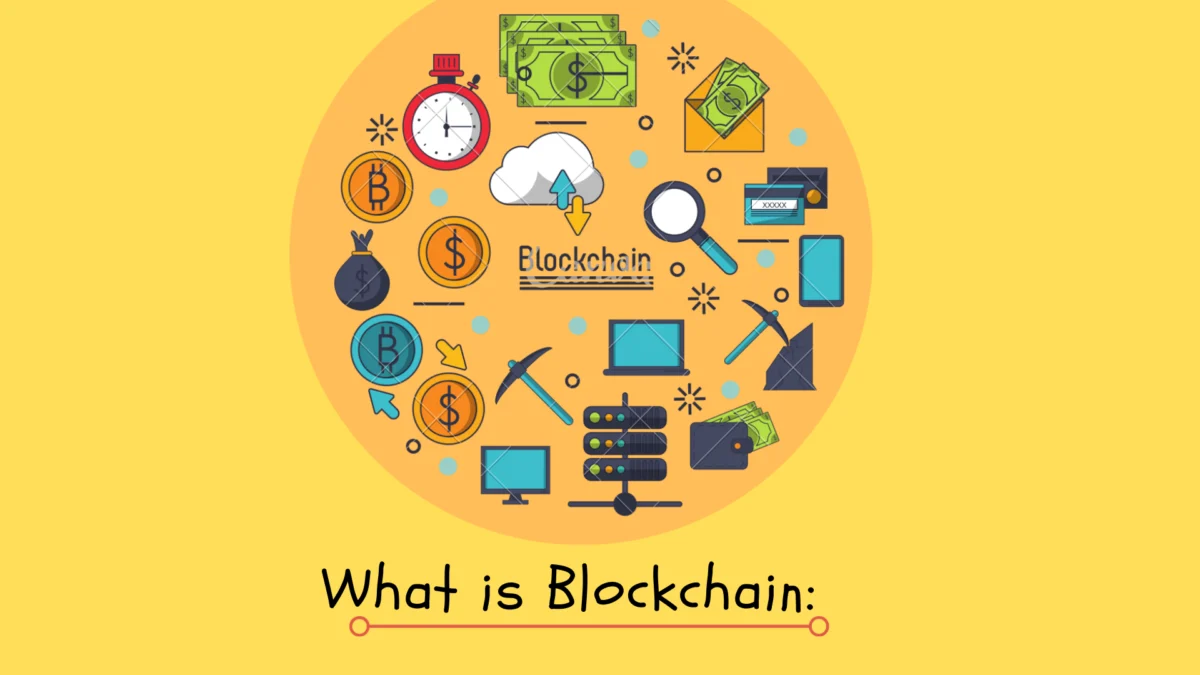
The landscape of digital transactions and data management is undergoing a profound transformation, challenging traditional centralized systems that have long underpinned global commerce. For decades, online payments necessitated registration and the submission of sensitive credit card details or reliance on bank transfers, subjecting users to intermediary control and potential vulnerabilities. However, the advent of blockchain technology, often synonymous with the rise of cryptocurrencies, signals a paradigm shift toward a decentralized, transparent, and immutable framework for information exchange. This innovation promises a world where transactions and data interactions can occur without the mandatory disclosure of personal information or reliance on conventional financial and governmental institutions, heralding a new era of digital autonomy and trust.
The Genesis of an Immutable Ledger: A Historical Overview
The foundational concepts of blockchain predate the public awareness sparked by Bitcoin. The journey began in 1991 when two cryptographers, Stuart Haber and W. Scott Stornetta, introduced a system designed to timestamp digital documents securely, ensuring that their creation dates could not be tampered with. Their innovation involved linking blocks of data cryptographically, forming a secure chain where each new block incorporated a hash of the previous one, making any retrospective alteration detectable. This early work laid the theoretical groundwork for what would much later be recognized as a blockchain.
Building on these principles, in 1998, computer scientist Nick Szabo conceptualized "Bit Gold," a decentralized digital currency system. Szabo’s vision involved a proof-of-work mechanism where participants would solve computational puzzles to create new blocks of currency, which would then be recorded in a public, timestamped chain. While Bit Gold was never fully implemented, it articulated many of the core ideas that would later define cryptocurrencies and the underlying blockchain technology, particularly the notion of a peer-to-peer electronic cash system independent of central authorities.
The true catalyst for blockchain’s widespread recognition arrived in 2008 with the publication of a white paper titled "Bitcoin: A Peer-to-Peer Electronic Cash System," authored by the pseudonymous Satoshi Nakamoto. Emerging in the wake of the global financial crisis, Bitcoin offered a radical alternative to conventional banking, proposing a decentralized digital currency secured by cryptographic proof rather than institutional trust. Nakamoto’s genius lay in integrating Haber and Stornetta’s chained blocks with Szabo’s decentralized currency concepts, adding a robust consensus mechanism (Proof of Work) to create the first practical and widely adopted blockchain implementation. The Bitcoin network officially launched in January 2009, marking the birth of blockchain as a functional technology.
Deconstructing the Mechanism: How Blockchain Operates
At its core, a blockchain is a distributed, decentralized, and immutable ledger that records digital information across a network of computers. Unlike traditional databases, where data is typically stored on a central server controlled by a single entity, blockchain distributes copies of the ledger to every participant, or "node," in the network. This fundamental architecture is why blockchain is often referred to as Distributed Ledger Technology (DLT).
The operational process of a blockchain can be understood through a series of sequential steps:
- Transaction Initiation: A user initiates a transaction, such as sending cryptocurrency, transferring data, or executing a smart contract. This transaction is digitally signed and broadcast to the network.
- Verification by Nodes: The broadcast transaction is received by multiple nodes in the network. These nodes are responsible for validating the transaction against predefined rules of the blockchain protocol (e.g., ensuring the sender has sufficient funds, checking digital signatures).
- Aggregation into a Block: Once verified, a group of transactions is bundled together to form a "block." Each block also contains a timestamp and a cryptographic hash of the previous block, creating a chronological and unalterable link in the chain.
- Consensus and Block Addition: For a new block to be added to the chain, the network’s nodes must reach a consensus. Different blockchains employ various consensus mechanisms. Bitcoin, for instance, uses "Proof of Work" (PoW), where "miners" compete to solve a complex computational puzzle. The first miner to solve it proposes the new block to the network.
- Chain Extension: Upon successful validation by the majority of network nodes, the new block is added to the existing blockchain. This makes the transaction permanent and virtually irreversible.
- Ledger Distribution: Once added, the updated ledger (including the new block) is propagated across all nodes in the network, ensuring that every participant has an identical and up-to-date copy of the entire transaction history.
This distributed and cryptographically secured process ensures data integrity and security. The immutability stems from the fact that altering any single block would require re-computing the hashes of all subsequent blocks, a computationally prohibitive task, especially on large, active networks. This inherent resistance to tampering is a cornerstone of blockchain’s trustworthiness.
The Power of Decentralization
The concept of decentralization is arguably blockchain’s most revolutionary feature. In a centralized system, a single authority (like a bank, government, or corporation) controls all data and operations. This creates single points of failure, making the system vulnerable to hacks, censorship, or manipulation. If the central server is compromised, all data is at risk.
Blockchain technology circumvents this by distributing data across a vast network of independent computers. If one node experiences a problem or attempts to introduce incorrect information, the overwhelming majority of other nodes, holding accurate copies of the ledger, will reject the erroneous data. This collective verification mechanism ensures the integrity and authenticity of information without needing a trusted intermediary.
Decentralization offers several critical advantages:
- Enhanced Security: Eliminates single points of failure, making it highly resistant to cyberattacks and data breaches. A malicious actor would need to compromise a majority of the network’s nodes simultaneously, which is practically impossible for large public blockchains.
- Censorship Resistance: No single entity can unilaterally block or reverse transactions, ensuring open and permissionless access for all participants.
- Transparency and Auditability: All transactions are publicly visible (though often pseudonymous), allowing for unparalleled transparency and ease of auditing.
- Reduced Intermediary Costs: By removing the need for third-party verifiers, blockchain can significantly reduce transaction fees and processing times in various sectors.
- Increased Resilience: The network can continue to operate even if some nodes go offline, ensuring continuous service availability.
This decentralized architecture guarantees not only the accuracy of data but also its authenticity and irreversibility, making it suitable for recording information that demands the highest levels of trust and integrity, such as legal contracts, state identifications, or supply chain provenance.
Diverse Applications Beyond Digital Currencies
While blockchain is integral to cryptocurrencies like Bitcoin and Ethereum, its utility extends far beyond digital money. Its ability to create immutable, transparent, and decentralized records has attracted significant interest across numerous industries.
- Supply Chain Management: One of the most prominent enterprise applications. Companies like Walmart, in collaboration with IBM’s Food Trust, leverage blockchain to track food products from farm to store shelf. This provides unprecedented transparency, allowing for rapid identification of contamination sources (e.g., E. coli, Salmonella outbreaks) and swift product recalls, drastically reducing the time it takes from months or years to mere seconds. Beyond food, blockchain is revolutionizing the tracking of pharmaceuticals, luxury goods, and raw materials, combating counterfeiting and ensuring ethical sourcing.
- Finance and Banking (DeFi and Trade Finance): Blockchain is transforming traditional finance. Decentralized Finance (DeFi) platforms, built on blockchain, offer peer-to-peer lending, borrowing, and trading without intermediaries. In trade finance, blockchain streamlines complex international transactions, reducing paperwork, increasing transparency, and mitigating fraud by creating a shared, immutable record for all parties involved. Cross-border payments become faster, cheaper, and more efficient.
- Healthcare: Blockchain can secure and streamline the management of patient health records, ensuring privacy while allowing authorized access for medical professionals. It can also track the provenance of pharmaceuticals to prevent counterfeit drugs, manage clinical trial data with greater integrity, and facilitate secure sharing of research data.
- Identity Management: Blockchain enables "self-sovereign identity," where individuals have complete control over their digital identities and can selectively share verified credentials without relying on central authorities. This has implications for digital IDs, secure login systems, and even voting, offering enhanced security and privacy.
- Intellectual Property and Copyright: Artists, writers, and creators can use blockchain to timestamp their creations, providing undeniable proof of ownership and protecting against plagiarism or unauthorized use. NFTs (Non-Fungible Tokens), built on blockchain, have further revolutionized digital ownership for art, music, and other digital assets.
- Real Estate: Blockchain can simplify and secure property transactions, reducing the need for intermediaries, lowering costs, and increasing transparency. It can record land titles, track ownership transfers, and streamline escrow processes, mitigating fraud and speeding up transactions.
- Voting Systems: Proponents suggest blockchain could enhance the security and transparency of electoral processes, ensuring votes are recorded accurately, are not tampered with, and are verifiable by the public.
Market Growth and Adoption Trends
The global blockchain market is experiencing exponential growth, reflecting its increasing integration into various sectors. According to numerous industry reports, the global blockchain market size, valued at approximately $11.15 billion in 2022, is projected to reach over $469 billion by 2030, exhibiting a compound annual growth rate (CAGR) exceeding 85%. This robust growth is fueled by rising venture capital investments, increasing enterprise adoption, and the expanding ecosystem of blockchain-based applications.
Major corporations like IBM, Microsoft, Oracle, and Amazon are heavily investing in blockchain solutions, offering DLT platforms and services to enterprises. Consortiums such as Hyperledger (an open-source collaborative effort hosted by The Linux Foundation) and the Enterprise Ethereum Alliance are fostering inter-industry collaboration to develop standardized blockchain frameworks for business use. Governments worldwide are also exploring blockchain for public services, land registries, and digital currencies (Central Bank Digital Currencies – CBDCs).
Advantages and Disadvantages of Blockchain Technology
While blockchain’s potential is vast, it also presents a unique set of challenges and trade-offs.
Advantages (Pros):
- Enhanced Security: Cryptographic encryption and the distributed nature of the ledger make data highly secure and resistant to unauthorized access or modification.
- Immutability: Once data is recorded on the blockchain, it cannot be altered or deleted, ensuring a permanent and verifiable audit trail.
- Transparency: For public blockchains, all transactions are visible to every participant, fostering trust and accountability.
- Decentralization: Eliminates the need for central authorities, reducing single points of failure, censorship risks, and intermediary costs.
- Efficiency: Can streamline processes by removing intermediaries, automating tasks via smart contracts, and accelerating transaction settlements.
- Auditability and Traceability: Provides a clear, chronological record of all transactions, making auditing and tracking assets much simpler.
- Resilience: The distributed network ensures continuous operation even if some nodes fail.
Disadvantages (Cons):
- Scalability Concerns: Many prominent blockchains (e.g., Bitcoin, early Ethereum) struggle with transaction speed and throughput, leading to network congestion and higher fees, particularly during peak usage. New solutions like sharding and layer-2 protocols are addressing this.
- Energy Consumption: Proof of Work (PoW) consensus mechanisms, used by Bitcoin, consume significant amounts of energy due to the computational power required for mining, raising environmental concerns. Newer mechanisms like Proof of Stake (PoS) are designed to be more energy-efficient.
- Regulatory Uncertainty: The decentralized and borderless nature of blockchain technology poses challenges for existing regulatory frameworks, leading to legal ambiguities and varying approaches across jurisdictions.
- Complexity and Adoption Barriers: Implementing and integrating blockchain solutions can be complex and expensive for businesses, requiring specialized technical expertise. User interfaces can also be challenging for mainstream adoption.
- Data Storage Limitations: As the blockchain grows, the size of the ledger can become substantial, requiring significant storage capacity for full nodes.
- Irreversibility: While an advantage for security, the immutability of transactions means that errors (e.g., sending funds to the wrong address) cannot be easily corrected.
- Interoperability: Different blockchain networks often operate in silos, making it difficult for them to communicate and exchange data seamlessly.
Addressing Common Misconceptions and Key Distinctions
The rapid evolution of blockchain has led to several frequently asked questions and common misunderstandings.
- Is Blockchain a cryptocurrency? No, blockchain is not a cryptocurrency. It is the underlying technology, a distributed ledger, that makes cryptocurrencies possible by providing a secure, transparent, and decentralized system for recording transactions. Cryptocurrencies are merely one application built upon blockchain technology.
- Is it possible for Blockchain to be hacked? Theoretically, yes, but practically it is extremely difficult for established, large public blockchains. A "51% attack," where a single entity or group controls more than 50% of the network’s computational power (for PoW chains) or staked assets (for PoS chains), could potentially manipulate transaction ordering or reverse recent transactions. However, achieving this on major blockchains like Bitcoin or Ethereum would require an astronomical amount of resources, making it economically unfeasible. The network’s distributed nature and constant review by thousands of participants make it inherently robust against such attacks.
- Who owns Blockchain? Blockchain is a decentralized technology and is not owned by a single entity. It is a network of distributed ledgers maintained by independent nodes (any electronic device connected to the network). The open-source nature of many blockchains means the code is publicly available, and the community collectively governs its evolution.
- What is the difference between Bitcoin and Blockchain technology? Bitcoin is the first and most well-known cryptocurrency, and it is powered by blockchain technology. Blockchain is the foundational system—the distributed ledger—that records all Bitcoin transactions. Bitcoin is the application; blockchain is the infrastructure.
- What is the difference between Blockchain and a Database? While both store data, their fundamental architectures and principles differ significantly.
- Structure: A traditional database stores data in tables that can be easily viewed, modified, or deleted by authorized users via a central database management system. A blockchain stores data in cryptographically linked "blocks" in a linear, append-only fashion.
- Control: Databases typically operate on a client-server architecture with centralized control, allowing specific administrators to manage and alter data. Blockchains are decentralized, with data distributed across multiple nodes, and no single entity has unilateral control.
- Immutability: Data in a traditional database can be changed or deleted. Data on a blockchain, once validated and added to a block, is virtually immutable and cannot be retrospectively altered.
- Consensus: Databases rely on central authority for data integrity. Blockchains use distributed consensus mechanisms (like PoW or PoS) to validate and add new data.
- Transparency: Database access and modification permissions are often restricted. Public blockchains offer unparalleled transparency, with all transactions visible to participants.
The Future Landscape: Integration and Transformation
Over the next five to ten years, blockchain technology is poised for widespread integration across virtually every industry. From finance to healthcare, supply chain logistics to digital identity, blockchain’s capacity to establish trust, transparency, and efficiency without intermediaries will revolutionize how data is stored, shared, and managed.
While initial hesitation toward adopting blockchain systems due to complexity, scalability concerns, and regulatory uncertainties has been present, this apprehension is rapidly diminishing. As the technology matures, with advancements in scalability solutions (e.g., Layer 2 protocols, sharding) and more user-friendly interfaces, its practical benefits are becoming undeniable. Industry leaders, CEOs, and entrepreneurs are increasingly recognizing blockchain not just as a niche technology for cryptocurrencies but as a foundational infrastructure capable of driving significant operational efficiencies, reducing costs, and fostering unprecedented levels of trust in digital interactions.
The convergence of blockchain with other emerging technologies like Artificial Intelligence (AI) and the Internet of Things (IoT) promises even more transformative applications. AI can analyze vast datasets on blockchains for predictive insights, while IoT devices can feed immutable data directly into a blockchain, creating secure and automated systems for everything from smart city management to autonomous supply chains.
The trajectory for blockchain is clear: it is evolving from a disruptive innovation into an indispensable component of the global digital infrastructure, shaping the future of decentralized governance, digital ownership, and a more transparent, secure, and efficient world.