Layla Zulfa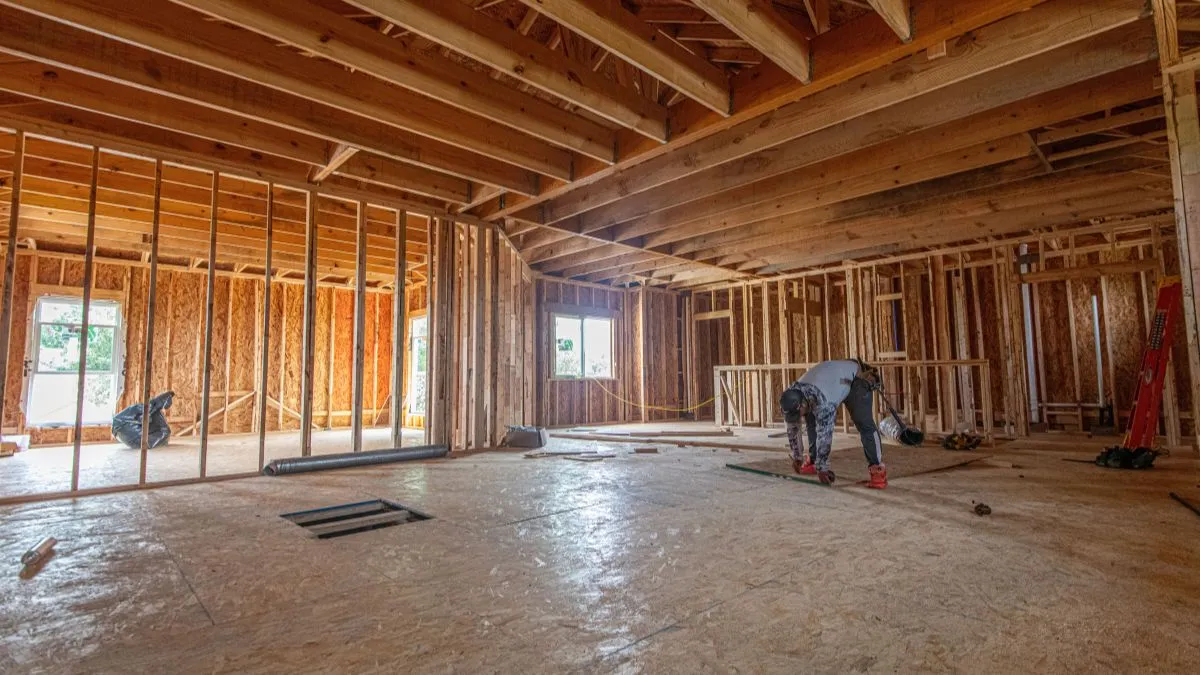
U.S. Immigration and Customs Enforcement (ICE) arrests surged to record levels in June and July, with substantial enforcement activity continuing into August. This sudden escalation has sent shockwaves through the homebuilding industry, impacting job sites and creating a pervasive atmosphere of uncertainty and unpredictability that is disrupting operational workflows and strategic planning. The raids have affected both undocumented workers and those legally authorized to work in the U.S., leading many to stay away from job sites out of fear of detention. This phenomenon has further exacerbated an already strained construction labor pool, prompting one major private builder CEO, who requested anonymity due to potential business repercussions, to describe the situation as "a hell of an issue." This executive highlighted a critical disconnect between immigration enforcement policies and the construction industry’s reliance on a labor force that these policies are actively disrupting. "It’s like we have crews that are stopped multiple times a week, so they don’t want to show up to work," the CEO stated. "The ICE situation is pretty frustrating and troubling for all of our operators. We have builders who are our employees who might have a Latino or Hispanic background, and they’re afraid to go to the job site. So, we’re talking about people who are citizens, who are here legally, and they feel targeted and afraid too."
As heightened immigration enforcement contracts the labor pool in certain markets, some builders are reporting materially higher labor costs, disrupted job sites, extended cycle times, and delayed closings. Collectively, these pressures are poised to significantly weigh on the profit margins of builders with substantial exposure to affected markets, adding another layer of challenge to an already difficult operating environment. However, these effects are not uniformly distributed across the nation. The impact of immigration enforcement appears to be highly localized, creating significant challenges in specific markets rather than manifesting as a broad-based national shock.
Public Homebuilders Report Manageable Labor Impacts Amidst Broader Concerns
President Trump made tougher immigration enforcement a cornerstone of his campaign, and his administration’s subsequent actions have undeniably altered the landscape for industries reliant on immigrant labor. Following his victory in 2024, homebuilding executives initially adopted a cautious "wait and see" approach regarding immigration enforcement, particularly during earnings calls in late 2024 and early 2025. Many executives pointed to President Trump’s background as a real estate developer and his behavior during his first term as reasons for optimism that immigration enforcement would have a limited impact on the construction sector. Initially, they viewed heightened enforcement as a risk to monitor rather than an inevitable disruption to their businesses.
This guarded optimism was reflected in public statements from various company leaders. In December 2024, Lennar CEO Stuart Miller characterized tariffs and immigration enforcement as "questions and potential concerns confronting the industry," while simultaneously forecasting "limited impact to us and to the industry." Similarly, in February 2025, Taylor Morrison CEO Sheryl Palmer acknowledged "a little bit of fear" that some workers might be absent due to immigration enforcement but deemed it too early to assess the full impact. By April 2025, Meritage Homes CEO Phillippe Lord reported that the situation remained "status quo" regarding labor and immigration enforcement. "I think we all were very concerned about how immigration might impact the labor pool specifically in construction and specifically in the South, where I think it’s acute. And as of right now, we haven’t seen that," Lord remarked at the time.
By early 2026, executive perspectives had become more nuanced. However, the majority of public homebuilders still reported adequate access to labor, especially as the industry collectively slowed new starts and focused on reducing accumulated speculative inventory. Many also indicated that they had successfully renegotiated pricing with their trade partners, leading to lower labor costs.
Slower Construction Starts Mask the Chronic Labor Shortage
The construction industry has grappled with a persistent, long-term labor shortage for years. However, the intensity of this problem tends to diminish when new-home construction activity slows. This is precisely what has been occurring recently. Housing starts experienced a notable decline of 12.4% year-over-year in July 2026, a trend attributed to weaker demand and strategic pullbacks by builders in oversupplied Sun Belt markets. As production rates decreased, the demand for workers also contracted, leading to a temporary shift in the labor pool relative to construction needs.
This dynamic temporarily shifted negotiating power back towards homebuilders, enabling them to secure more favorable trade pricing, even as the industry continues to face a structural, long-term deficit of construction workers. During an earnings call on August 20, Hovnanian Enterprises CEO Ara Hovnanian expressed confidence that the company did not anticipate labor shortages stemming from immigration enforcement. "With demand a little on the low side, labor has not been an issue right now," he stated.
Other public homebuilding executives echoed this sentiment. In March 2026, KB Home reported reduced labor expenses in most of its markets. Similarly, D.R. Horton and Beazer Homes indicated labor cost savings during the first half of the year. PulteGroup President and CEO Ryan Marshall elaborated on the reasons behind these successful negotiations during a March 2026 earnings call: "As builders slowed their start rates or their production last year, it created a little bit more availability of labor," Marshall explained. "Not that the trades are being paid less, but probably squeezing some of the profit margins for the owners." This explanation helps clarify why public homebuilders could report adequate labor availability despite the industry’s ongoing structural worker shortage.
Labor Costs Balloon in Certain Markets, Highlighting Disparities
While comments from public homebuilder executives suggest that federal immigration enforcement might have a minimal impact on the broader homebuilding market and labor supply, this perspective often overlooks the stark contrasts experienced by privately held homebuilding operators. Public companies, with their access to public equity and generally lower-cost debt, possess a greater capacity to absorb sporadic disruptions and integrate them into their financial structures.
In contrast, privately held homebuilders, who rely predominantly on bank financing and private credit for their capital, often operate with tighter margins, especially during slower economic periods. Paused or stalled construction cycles can trigger a cascade of adverse effects, including missed finish deadlines, delayed revenue recognition, breaches of bank covenants related to monthly revenue or completion targets, and potentially, the calling of loans by financial institutions.
Data from the U.S. Census Bureau’s latest release on permits, starts, and completions indicates that as of July, there were 579,000 single-family units under construction. Estimating that public homebuilders account for approximately 35% of these units, this leaves roughly 377,000 units under construction by private homebuilders that are in a started-but-not-completed phase. Disruptions at any stage of the construction cycle, from framing and rough trades to final fit-and-finish, can initiate the aforementioned cascade effect, potentially pushing some homebuilders to the brink.
Against this backdrop, there are significant nuances to consider, particularly the divergence between public and private entities. The number of ICE arrests, a key indicator of enforcement activity, surged dramatically in recent months, rising from 32,545 in May to 43,021 in June and reaching a record high of 49,571 in July. Homebuilders in affected markets reported experiencing the impacts of this enforcement surge more acutely after June.
However, the geographical distribution of these impacts has been highly uneven. While homebuilding associations in Phoenix, Kansas City, and Indiana reported minimal surges in ICE activity and limited market impact, nearly 40% of ICE arrests in July occurred in Texas and Florida. Builders in states such as West Virginia, Idaho, and Southern Pennsylvania also reported significant impacts, underscoring the localized nature of enforcement efforts. This geographic disparity suggests that the impact of immigration enforcement on labor availability should not be viewed through a national lens; instead, it is creating localized disruptions that vary considerably from one market to another.
Central Texas has emerged as one of the most affected regions. In San Antonio and Austin, some builders reported a noticeable increase in ICE raids on construction sites throughout the summer. A senior manager at a large homebuilder in Austin, who requested anonymity to speak candidly, noted that recent immigration enforcement actions had the most significant impact on framing, roofing, landscaping, painting, masonry, and electrical crews. The removal of undocumented workers from job sites, coupled with the reluctance of some legally authorized workers to report for duty, has led to a sharp contraction in the available labor pool. This has shifted bargaining power away from homebuilders and towards contractors, who are now in a stronger position to demand higher labor costs.
"What we’re seeing is that capacity is decreased, so there’s a bidding war between my peers and me to try and get labor on the job," the manager stated. The manager further explained that framing labor costs in Austin have risen by 25% to 50% in recent weeks, adding approximately $2,000 to $5,000 per home, even before accounting for increases in other categories. Given that the average home price in Austin hovers just over $500,000, this translates to a potential hit of around 40 basis points to margins, assuming the lower end of the cost increase. While some might assume builders can pass these increased costs onto consumers, this is becoming increasingly difficult in an affordability-constrained market. The median sales price of a new home nationally fell to a five-year low in July, indicating limited buyer capacity to absorb price hikes. Consequently, builders may be compelled to absorb most of these labor cost increases, further pressuring already compressed profit margins.
West Virginia’s Eastern Panhandle has been one of the submarkets most severely affected by ICE raids in recent months. Raids that initially targeted new-home subdivisions have expanded to include checkpoints at major intersections and state border crossings, making construction workers from Maryland and Virginia increasingly hesitant to enter the state. Even workers with legal status are reportedly declining jobs due to the fear of being stopped or detained. As a result, the labor pool has significantly thinned. One homebuilding executive with operations in the region suggested that ICE raids are "close to crippling the trade base." With the labor pool diminished, the company’s framing costs have tripled in recent months, placing substantial pressure on profit margins.
The Cascading Effects of Labor Crew Disruptions
Beyond the direct impact of increased labor costs, the operational consequences of reduced labor capacity are proving to be even more significant. In the Eastern Panhandle of West Virginia and other impacted markets like Texas, some builders report that diminished labor availability is hindering their ability to initiate new home starts, even with already subdued demand for new homes. Furthermore, construction schedules have become increasingly unpredictable and difficult to manage.
"It has definitely hampered starts. We’re doing everything we can to start [homes], but I can tell you, it’s like we’re all running a switchboard operation every day," an executive in West Virginia commented. "Where it’s, if you’ve got a crew here, how do you move this here? How do we get a concrete guy here? There’s not enough labor and manpower to feed all the builders and all the housing in the market now, and it’s steadily dwindling."
When construction crews are unable to report to job sites for extended periods, significant ripple effects can occur. According to the National Association of Home Builders (NAHB), building a typical single-family home involves approximately two dozen different subcontractors. A delay caused by the absence of one crew can push back the work of other trades, inspections, and material deliveries. Rescheduling these crews can lead to further conflicts, logistical headaches, and substantial project delays. "We have foundations sitting for 30 days plus… trying to get framing crews to come in," the executive continued. "I had 15 to 20 houses sitting in foundations that I couldn’t get framers on for over a month and a half."
In affected markets, some builders have reported an increase of a month or more in their average home construction timelines due to these disruptions and a lack of essential labor. "Even trying to close homes that have already been started is very difficult because we need concrete for the service walks, for the sidewalks, and for the driveways. If you don’t have that, you can’t get a [certificate of occupancy]," another homebuilding executive with operations in West Virginia stated. "So, we’ve got people who can’t close on homes, and we can’t tell them when the home is going to be ready." Across the executive’s communities in the Eastern Panhandle, a significant number of homes are now considered "at risk" due to scheduling delays and a scarcity of crews making it nearly impossible to complete construction on homes already underway. The expectation is that a substantial portion of these closings, estimated to be around 40, will be lost due to the inability to complete the homes in time.
The financial repercussions extend beyond missed closings. Homebuilders typically rely on home sales to generate the cash flow necessary to repay construction loans. Extended project timelines mean loans remain outstanding for longer periods, leading to increased interest accrual. When numerous homes are simultaneously affected, builders can face severe cash-flow challenges. While large public builders may be better equipped to weather such disruptions, smaller private builders with fewer resources and less scale can experience these impacts more acutely.
"A lot of these builders are building with loans. Every month, a bank has to take a percentage in interest, whether the house moves forward or not," said Mario Guerrero, Executive Director of the South Texas Builders Association. Guerrero warned that major ICE raids in South Texas have often doubled construction cycle times, putting regional private builders at risk, with many now losing money on their projects. "That negative is going to make companies go under, which is going to be hurtful for the economy," Guerrero cautioned.
Single-Market or Single-Region Builders Are More At Risk
The severity of ICE raids in the Eastern Panhandle of West Virginia has led some homebuilders to consider temporarily halting new construction in the area until the labor situation stabilizes. "If you can’t build houses and you can’t get manpower, you can’t be profitable," one executive observed. For a large public builder operating across multiple states, withdrawing from a single market represents a significant but manageable setback. The scale and geographic diversification of these companies allow them to partially offset weakness in one market with strength in others. Given the sporadic and unpredictable nature of immigration enforcement, substantial disruptions in one area may not significantly impact operations elsewhere.
Conversely, a private builder whose business is concentrated in a single market has far less of a financial cushion. These businesses incur overhead, debt, and other financial obligations, leaving limited room to absorb prolonged labor disruptions. If the labor pool in their sole operating market becomes severely constrained due to immigration enforcement or other factors, they risk incurring financial losses or being forced to scale back operations. In this context, the same labor disruption that poses a manageable headwind for a geographically diversified public builder could represent an existential threat to a smaller private builder concentrated in a highly affected single market.
The Bottom Line: Uncertainty Dominates a Challenging Environment
The financial repercussions of immigration enforcement on homebuilders are heavily dependent on market dynamics. While large public builders have generally reported adequate labor nationally, the escalating ICE enforcement in recent months has sharply reduced the available construction labor pool in specific affected markets. This reduction is amplified when even legally authorized workers become hesitant to report to job sites.
The confluence of higher labor costs, extended construction timelines, delayed closings, and rising interest expenses can collectively exert significant pressure on profit margins. Moreover, with buyers already contending with affordability challenges, builders have limited capacity to pass these increased costs on to consumers. Homebuilders in markets already grappling with the impacts of immigration enforcement see little immediate relief on the horizon, particularly as the Trump administration has indicated plans to intensify its current enforcement approach.
The current situation does not necessarily represent a widespread national labor shock, at least not yet. Instead, it is a geographically uneven disruption that adds another significant headwind for builders operating in an already challenging homebuilding environment. Crucially, it fosters a condition that businesses universally loathe: uncertainty. "If we’re going to continue down this road, who do you think is going to build houses, or anything that’s hard construction?" questioned a CEO of a multi-regional private homebuilding company. "Who do you think is going to do that work? No one has an answer."