Lina Irawan
The journey of cryptocurrency from an obscure digital innovation to a globally recognized asset class has been marked by a complex interplay between its foundational ethos of decentralization and anonymity, and the increasing demands for regulatory oversight. While the early days of Bitcoin offered a relatively straightforward path to anonymous transactions, the landscape has significantly shifted, making truly untraceable acquisition more challenging, yet still possible through specific channels. This guide delves into the various methods available for individuals seeking to buy cryptocurrencies without linking transactions to their personal identity, examining the underlying technologies, the motivations driving such choices, and the inherent trade-offs in an increasingly regulated financial world.
The initial promise of Bitcoin, as outlined in Satoshi Nakamoto’s whitepaper, centered on a "peer-to-peer electronic cash system" that would allow online payments to be sent directly from one party to another without going through a financial institution. This vision inherently implied a degree of privacy, where transactions were pseudonymous rather than fully anonymous, recorded on a public ledger but not directly linked to real-world identities. However, as cryptocurrencies gained mainstream adoption, particularly over the last decade, traditional financial institutions and governmental bodies began to take notice. The ease of buying crypto through platforms like PayPal, and the integration of crypto trading into numerous traditional brokerage firms, underscores a move towards accessibility but simultaneously away from anonymity. These mainstream avenues almost universally require extensive Know Your Customer (KYC) and Anti-Money Laundering (AML) verification processes, effectively eliminating the possibility of anonymous acquisition through centralized exchanges. Even brokerages that offer crypto exposure often limit options to established assets like Bitcoin (BTC) and Ethereum (ETH) or provide access solely via crypto-themed Exchange-Traded Funds (ETFs), further integrating them into the regulated financial system. For those who prioritize the original vision of privacy and operating "under the radar," alternative methods remain crucial.
The Evolution of Crypto Privacy and Regulatory Scrutiny
The push for transparency in cryptocurrency transactions stems largely from global efforts to combat illicit finance. Organizations like the Financial Action Task Force (FATF), an intergovernmental body established to combat money laundering and terrorist financing, have issued comprehensive guidance for virtual asset service providers (VASPs), which include crypto exchanges. This guidance, first published in 2019 and updated subsequently, strongly recommends that VASPs implement robust KYC/AML procedures, collect and retain customer information, and report suspicious transactions. Jurisdictions worldwide have progressively adopted these recommendations, leading to a significant crackdown on anonymous crypto activity on centralized platforms.
This regulatory evolution has created a dichotomy: on one side, highly regulated and transparent platforms catering to the broader public and institutional investors; on the other, a niche but persistent ecosystem dedicated to preserving the privacy-centric ideals of early crypto. This shift hasn’t been without consequences. While it has arguably reduced the use of crypto for major illicit activities on centralized platforms, it has also alienated users who value financial privacy for legitimate reasons, such as protecting wealth from surveillance, avoiding censorship, or operating in jurisdictions with restrictive financial controls. The debate continues between the necessity of combating crime and safeguarding individual financial freedom and privacy.
Strategies for Anonymous Cryptocurrency Acquisition
Despite the prevailing trend towards transparency, several methods still exist for acquiring cryptocurrency with a higher degree of anonymity. These methods often involve bypassing traditional financial intermediaries or leveraging specific technological features designed for privacy.
1. Leveraging Privacy-Focused Wallets and Privacy Coins
The choice of a cryptocurrency wallet is paramount for those prioritizing privacy. Not all wallets are created equal in their privacy features. While a basic non-custodial wallet gives you control over your private keys, some go further to enhance on-chain privacy.
Wasabi Wallet, for instance, is a prominent open-source, non-custodial Bitcoin desktop wallet specifically engineered to improve on-chain privacy. Its key feature is the integration of CoinJoin-style collaborative transactions. CoinJoin is a technique that combines multiple users’ Bitcoin transactions into a single, large transaction, making it difficult for external observers to trace which input corresponds to which output. This "mixing" process obfuscates the transaction history, thereby enhancing privacy. Users maintain full control of their keys, which is crucial for security and anonymity. It is vital to understand, however, that "private" does not automatically equate to "anonymous." While CoinJoin significantly improves transactional privacy, linking any part of a CoinJoin transaction to a KYC-verified exchange can still compromise anonymity.
Beyond specific wallet features, certain cryptocurrencies are explicitly designed with anonymity as their core function. These are often referred to as "privacy coins" and include:
-
Monero (XMR): Monero is perhaps the most well-known privacy coin, designed to be completely untraceable. It achieves this through several cryptographic techniques:
- Ring Signatures: These obscure the sender of a transaction by mixing their digital signature with others in a group, making it impossible to tell which participant signed the transaction.
- Stealth Addresses: Each transaction generates a unique, one-time address for the recipient, ensuring that funds go to a unique address for every transaction and making it impossible to link multiple transactions to a single recipient’s public address.
- RingCT (Ring Confidential Transactions): This technology hides the amount of cryptocurrency being transacted, further obscuring transaction details.
Monero’s market capitalization typically hovers around several billion dollars, indicating significant adoption among users prioritizing privacy. Its non-custodial nature means users control their own keys, further enhancing privacy when used with compatible, open-source wallets.
-
Zcash (ZEC): Zcash offers "shielded" transactions, which leverage zero-knowledge proofs (specifically zk-SNARKs) to allow users to prove that a transaction is valid without revealing any information about the sender, recipient, or transaction amount. Unlike Monero, Zcash offers both transparent (unshielded) and shielded transactions, giving users the option to choose their desired level of privacy. While shielded transactions are more computationally intensive, they provide a robust level of anonymity. Zcash’s market cap also typically resides in the hundreds of millions or low billions of dollars, reflecting its position as a major privacy-focused asset.
Using these privacy coins requires a compatible, open-source wallet that supports their unique cryptographic features. Crucially, avoiding custodial wallets associated with centralized exchanges is paramount, as these platforms inevitably link activity to user identities. Even using a self-custody wallet with a centralized platform for buying or selling can create a link between your identity and wallet addresses through deposit and withdrawal records.
2. Peer-to-Peer (P2P) Transactions and Physical Exchanges
The concept of peer-to-peer (P2P) trading predates centralized exchanges and remains a viable method for anonymous crypto acquisition. P2P platforms directly connect buyers and sellers, allowing them to negotiate terms and exchange assets without an intermediary. While the blockchain record of the transaction remains public, the physical or digital exchange of fiat for crypto can occur without personal identification.
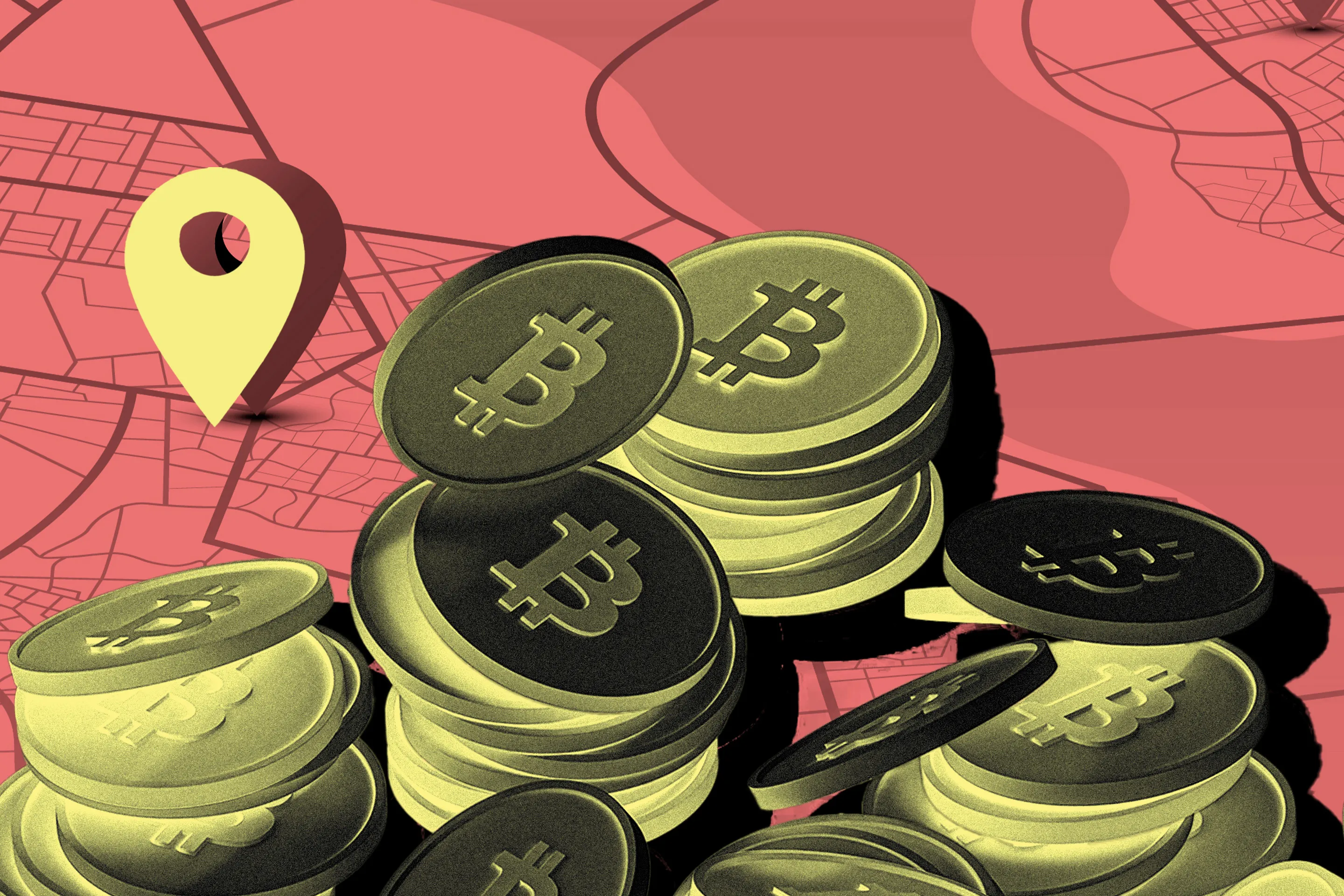
Decentralized P2P platforms like Bisq and RoboSats facilitate these direct trades. Bisq is a desktop application that enables users to buy and sell Bitcoin and other cryptocurrencies for fiat currencies or other cryptos using various payment methods, often with a focus on privacy. RoboSats offers a simpler, more private way to buy and sell Bitcoin using Lightning Network invoices and various payment methods. These platforms typically use escrow services to secure funds during the trade, ensuring both parties fulfill their obligations.
The most anonymous form of P2P exchange involves meeting in person. In this scenario, individuals arrange to meet in a public location—such as a library, cafe, or park—to exchange cash for cryptocurrency. The buyer provides their wallet address (often via a QR code), and the seller sends the crypto upon receiving the cash. This method effectively bypasses any digital identity verification. While once more common, especially in crypto’s early days, physical P2P exchanges have become less frequent due to convenience factors and safety concerns. For larger transactions, the inherent risks of carrying significant amounts of cash and meeting strangers necessitate extreme caution, often advising against going alone and taking other security measures. Social media groups or specialized forums sometimes connect individuals interested in such in-person deals, though their prevalence has declined.
The primary benefit of P2P is the potential for true anonymity, provided the fiat payment method itself doesn’t link back to an identity (e.g., cash). However, downsides include finding willing trading partners, the potential for scams, and the logistical challenges and safety risks of physical meetups.
3. Bitcoin ATMs
Bitcoin ATMs (BTMs) offer a physical point of access to cryptocurrencies, often providing a pathway to anonymity, particularly for smaller transactions. Globally, there are approximately 40,000 Bitcoin ATMs, with a significant concentration (over 88%) in North America, according to data from Coin ATM Radar. This geographic distribution means accessibility varies widely.
BTMs allow users to buy or sell cryptocurrencies, predominantly Bitcoin, by inserting cash or using a debit card. When buying, cash is inserted, and the equivalent amount of Bitcoin is sent to a specified wallet address. When selling, users send Bitcoin to the ATM’s address and receive cash in return.
The degree of anonymity offered by BTMs varies based on the operator, location, and transaction amount. Many BTMs, especially for smaller transactions (e.g., under $1,000 or $2,000), may not require any ID verification. Users can simply provide a wallet address or have the machine generate a paper wallet with a private key, allowing for anonymous accumulation. However, for larger transactions, or in jurisdictions with stricter regulations, BTMs may require varying levels of KYC, ranging from phone number verification to scanning a government-issued ID. Once an ID is used, the anonymity of that wallet, and any subsequent transactions linked to it, is compromised.
A significant drawback of BTMs is their typically high transaction fees, which can range from 5% to as high as 10% or more of the transaction’s value, significantly exceeding fees on centralized exchanges. This premium is often attributed to the operational costs, convenience, and the implicit anonymity offered. Despite the fees, for individuals seeking to acquire Bitcoin quickly and without digital identity trails, BTMs remain a viable option where available.
4. Prepaid Crypto Debit Cards
Prepaid crypto debit cards represent another method for acquiring and spending cryptocurrency without direct links to personal bank accounts or identities. These cards function similarly to traditional prepaid debit cards but are loaded with cryptocurrency rather than fiat currency directly from a bank.
The core principle behind their anonymity is the separation from traditional banking infrastructure. If the process of loading the card with crypto does not require KYC, and the card itself is issued without personal identification, then transactions made with it can be untraceable back to an individual. Users can load crypto onto these cards and then use them for purchases wherever traditional debit cards are accepted, effectively converting crypto into fiat at the point of sale without revealing personal financial details.
An example like KemyCard (though specific availability and terms can change rapidly in this evolving market) illustrates the model. Such virtual cards might advertise no personal information required for opening an account, enabling anonymous buying and selling of crypto and subsequent spending. However, these services often come with associated fees, such as monthly maintenance charges, replenishment fees (e.g., 5% to load funds), and transaction limits (e.g., $100,000 per month). Furthermore, the longevity of such anonymous card services can be uncertain due to increasing regulatory pressure on financial intermediaries to implement KYC/AML. The regulatory landscape around anonymous prepaid cards, especially those linked to crypto, is a grey area that is constantly being scrutinized and tightened by authorities.
The Case for and Against Anonymous Crypto Acquisition
The decision to acquire cryptocurrency anonymously involves weighing various motivations against a set of risks and trade-offs.
Motivations for Anonymity:
- Financial Privacy: In an increasingly surveilled digital world, many individuals seek to protect their financial transactions from government tracking, corporate data mining, or even malicious actors. Anonymity allows individuals to manage their wealth without revealing sensitive financial patterns or holdings.
- Protection Against Censorship and Confiscation: In certain political regimes or unstable economic environments, individuals may fear government overreach, asset freezes, or confiscation. Anonymous crypto provides a means to store and transfer wealth outside traditional, easily controlled systems.
- Philosophical Alignment: Some users are drawn to cryptocurrency specifically because of its original ethos of decentralization and freedom from centralized control, viewing anonymity as a fundamental right.
- Minimizing Cyberattack Risk: Offline or highly private transactions can reduce the "digital trail" associated with centralized exchanges, which, despite robust security measures and insurance policies, remain targets for cyberattacks. A breach on a centralized platform could expose user identities and transaction histories.
Trade-offs and Risks of Anonymous Acquisition:
- Reduced Liquidity and Higher Fees: Anonymous methods often mean trading with a smaller pool of participants, leading to less favorable exchange rates and significantly higher transaction fees compared to centralized, high-volume exchanges. Bitcoin ATMs and P2P platforms frequently charge substantial premiums.
- Security Risks: Physical P2P transactions carry inherent personal safety risks. Dealing with unknown individuals for cash exchanges can expose participants to theft or fraud. Even digital P2P platforms require careful vetting of counterparties.
- Legal and Regulatory Scrutiny: While privacy is a right in many contexts, using anonymous methods to bypass KYC/AML regulations can expose individuals to legal repercussions, particularly if transactions are linked to illicit activities. Governments worldwide are intensifying efforts to track and prosecute those who intentionally evade financial regulations, with penalties ranging from fines to imprisonment. The legal landscape varies significantly by jurisdiction, making it crucial for users to understand local laws.
- Complexity and User Experience: Anonymous methods are often more complex and less user-friendly than centralized exchanges. They may require more technical understanding, patience, and effort, making them less accessible for the average user.
- Limited Asset Availability: Anonymous acquisition methods typically offer a narrower selection of cryptocurrencies, usually limited to Bitcoin and a few prominent privacy coins, unlike the vast array available on major exchanges.
- Lack of Recourse: In the event of a scam, lost funds, or a dispute, anonymous transactions offer little to no recourse. Centralized platforms often provide customer support, dispute resolution mechanisms, and even insurance against certain losses, which are entirely absent in anonymous P2P or ATM transactions.
Broader Implications and Outlook
The tension between financial privacy and regulatory transparency in the cryptocurrency space is a persistent and evolving challenge. For most individuals engaged in legitimate investment or transactional activities, the convenience, liquidity, and relative security offered by KYC-compliant centralized platforms outweigh the desire for anonymity, despite the data privacy implications. These platforms are increasingly integrating advanced security features, robust insurance policies, and customer support, making them the default choice for mainstream users.
However, for a segment of the crypto community, particularly those operating in environments with significant financial surveillance, censorship, or instability, or simply those who deeply value their financial privacy, anonymous acquisition methods remain a vital, albeit more complex and risky, alternative. The future of anonymous crypto acquisition will likely be shaped by ongoing technological innovations in privacy-enhancing tools and the ever-tightening grip of global financial regulations. As regulators continue to push for greater transparency, the cat-and-mouse game between privacy advocates and oversight bodies will undoubtedly continue to define the edges of the cryptocurrency ecosystem. Understanding these methods, their motivations, and their inherent risks is crucial for anyone navigating the complex world of digital assets.