Lana Rhoades
The rapid proliferation of electric vehicles (EVs) across the United States has catalyzed a significant shift in how transportation infrastructure is funded and how energy consumption is taxed. As the automotive industry pivots away from internal combustion engines, state governments are facing a looming deficit in traditional fuel excise taxes, which have historically funded highway maintenance and transit projects. In response, a complex and multifaceted regulatory environment has emerged, placing new compliance burdens on charging station operators, e-mobility service providers, and utilities. The taxation of public EV charging is no longer a peripheral issue; it has become a central concern for businesses operating in the green energy sector, requiring a sophisticated understanding of varying state laws, operating models, and digital billing requirements.
The Shift from Volumetric to Energetic Taxation
For nearly a century, the primary mechanism for funding American roads has been the "user-pays" model, implemented through federal and state taxes on every gallon of gasoline and diesel sold. However, EVs do not consume liquid fuel, meaning they contribute nothing to the Highway Trust Fund through traditional means. To address this fiscal gap, states have begun implementing per-kilowatt-hour (kWh) taxes on electricity dispensed at public charging stations. This transition represents a fundamental shift from volumetric taxation—measuring liquid volume—to energetic taxation—measuring electrical output.
This transition is not uniform. While some states view EV charging as the sale of a tangible commodity (electricity), others categorize it as a service. This distinction is critical because it determines whether a transaction is subject to standard state sales tax, a specific "EV fuel" excise tax, or both. As of mid-2026, the legislative landscape is a patchwork of experimental policies, with over a dozen states having enacted specific EV charging taxes and many others currently debating similar measures in their respective legislatures.
Understanding the Structural Dynamics of EV Charging Operations
The tax liability of a business in the EV space is largely dictated by its operational structure. The industry has settled into two primary models: the integrated operator model and the split-role model. Each carries distinct responsibilities for tax collection, reporting, and remittance.
In the integrated operator model, a single entity maintains an end-to-end relationship with both the infrastructure and the consumer. The Charge Point Operator (CPO) owns the physical hardware—the pedestals and transformers—and also manages the software interface used by the driver. In this scenario, the CPO is the "retailer" in the eyes of the law. They are responsible for collecting sales tax on the total price paid by the driver and, where applicable, the specific state-level EV charging excise tax. This model is often favored by large networks that prioritize a seamless, branded user experience.
Conversely, the split-role model involves a partnership between two distinct entities: the CPO and the e-Mobility Service Provider (eMSP). The CPO manages the physical charging station and supplies the electricity, while the eMSP manages the driver’s account, mobile app, and billing. In this arrangement, the tax situation becomes more nuanced. The CPO typically sells the electricity or the "charging session" to the eMSP at a wholesale rate. If the eMSP provides a valid resale certificate, this transaction is generally exempt from sales tax at the wholesale level. The eMSP then bills the end-user, collecting sales tax on the full retail price. However, regulatory ambiguity often remains regarding who is responsible for EV-specific excise taxes. In some jurisdictions, the tax is tied to the owner of the equipment, while in others, it is tied to the entity collecting the payment.
A State-by-State Analysis of EV Charging Excise Taxes
As states seek to recoup lost gas tax revenue, the implementation of kWh-based taxes has accelerated. These taxes are often modeled after fuel excise taxes and are frequently adjusted based on inflation or infrastructure needs.
Georgia has emerged as a leader in this space with its EV Charging Tax, set at $0.028 per kWh. The state’s approach is designed to ensure that EV drivers contribute to the state’s transportation fund at a rate comparable to drivers of high-efficiency gasoline vehicles. Similarly, Iowa has implemented an Electric Fuel Excise Tax of $0.026 per kWh, requiring any business that dispenses "electric fuel" at a non-residential location to obtain a dealer license.
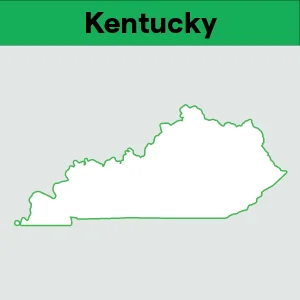
Kentucky offers a more complex example of the "user-pays" philosophy. The state imposes an EV Power Excise Tax of $0.032 per kWh. However, if the charging station is located on state-owned property, an additional $0.032 surtax is applied, effectively doubling the tax rate for those sessions. This reflects an effort by the state to monetize its real estate assets while simultaneously funding road repairs.
In the Midwest, Minnesota and Wisconsin have both moved toward a $0.03 to $0.05 per kWh model. Wisconsin’s tax, specifically, is an excise tax that must be reported twice a year, adding a layer of administrative overhead for small business owners who may have installed a single charging station at a retail location. Montana, meanwhile, has taken a unique path; while it imposes a $0.03 per kWh tax, the burden of collection and remittance often falls on the public utility supplying the power rather than the station owner, provided the station is metered appropriately.
Chronology of Legislative Action and Industry Response
The timeline of EV taxation has moved rapidly over the last five years. Between 2021 and 2023, the focus of most state legislatures was on "road usage fees"—flat annual registration fees for EV owners that ranged from $50 to over $200. While these fees provided a predictable revenue stream, they were criticized for being "regressive" and "unfair," as a driver who traveled 5,000 miles a year paid the same as one who traveled 30,000 miles.
By 2024, the legislative trend shifted toward per-kWh taxes, which more accurately reflect actual road usage. In 2025 and 2026, states like South Carolina and North Dakota began formalizing their own versions of these taxes, drawing on the "best practices" (and mistakes) of early adopters like Iowa and Oklahoma.
Industry reactions have been mixed. Large-scale charging networks, such as Electrify America and Tesla, have generally advocated for uniform national standards to avoid the "compliance nightmare" of 50 different tax regimes. Trade associations representing convenience stores—many of which are installing chargers to replace declining tobacco and fuel sales—have expressed concerns that high excise taxes could discourage the transition to electric mobility. "The goal should be parity, not a penalty," stated a representative from a major retail fuel association during a recent congressional hearing on infrastructure. "If the tax on a ‘virtual gallon’ of electricity is significantly higher than the tax on a physical gallon of gas, we are disincentivizing the very technology the government claims to support."
The Challenge of Ancillary Fees and Parking Charges
One of the most significant areas of confusion in EV taxation involves non-charging fees. Most public charging networks implement "idling" or "overstay" fees to prevent drivers from leaving their vehicles parked at a charger after the battery is full. These fees are designed to ensure high turnover and availability for other drivers.
From a tax perspective, these fees are rarely treated as the sale of electricity. Instead, many states classify them as "parking services." In jurisdictions where parking is a taxable service, operators must apply a different tax rate to the idling fee than they do to the charging session itself. This requires sophisticated billing software capable of bifurcating a single transaction into multiple tax categories. In cities like Chicago or New York, where local parking taxes can be exceptionally high, the tax on an idling fee can sometimes exceed the cost of the electricity consumed during the actual charging session.
Technical and Administrative Hurdles for Operators
The administrative burden of compliance is a growing hurdle for the industry. Unlike federal gas taxes, which are collected "at the rack" (at the terminal level before the fuel reaches the station), EV taxes are collected at the point of sale. This forces every charging station owner to act as a tax collector for the state.
Registration requirements vary wildly. In Oklahoma, an operator has a 15-day grace period to register after beginning operations. In Iowa, the license must be secured before the first kilowatt is dispensed. Invoicing requirements also differ; some states mandate that the EV tax be a separate line item on the digital receipt, while others allow it to be bundled into the total price, provided the underlying records are accurate for audit purposes.
Furthermore, filing schedules are inconsistent. A multi-state operator might find themselves filing monthly reports in Kentucky, quarterly reports in Utah, and annual reports in Oklahoma. For a company with hundreds of stations across dozens of jurisdictions, the data management requirements are immense. This has led to the rise of specialized tax automation software, such as Stripe Tax and TaxJar, which integrate directly with charging station APIs to calculate and remit taxes in real-time.
Broader Economic Impact and Future Outlook
The evolution of EV taxation is a microcosm of the broader transition to a decarbonized economy. As the federal government continues to deploy billions of dollars through the National Electric Vehicle Infrastructure (NEVI) Formula Program, the pressure on states to find sustainable long-term funding for road maintenance will only increase.
Internationally, the United States is watching the European Union and the United Kingdom, where Value Added Tax (VAT) is standard on EV charging but often varies depending on whether the charging is done at home (lower rate) or in public (higher rate). These international models suggest that the U.S. may eventually move toward a more harmonized system, perhaps through federal intervention or a multi-state compact.
The long-term implication for the consumer is clear: the era of "free" or low-tax EV charging is coming to an end. As EVs move from a niche market to the mainstream, they will be expected to carry their weight in infrastructure funding. For businesses, the challenge lies in staying ahead of the regulatory curve. Those who build robust tax compliance into their charging platforms early will be better positioned to scale as the country moves toward a fully electrified transportation future. The "electrification of the pump" is not just a mechanical change; it is a fiscal revolution that is rewriting the rules of the road.