Candice Horbacz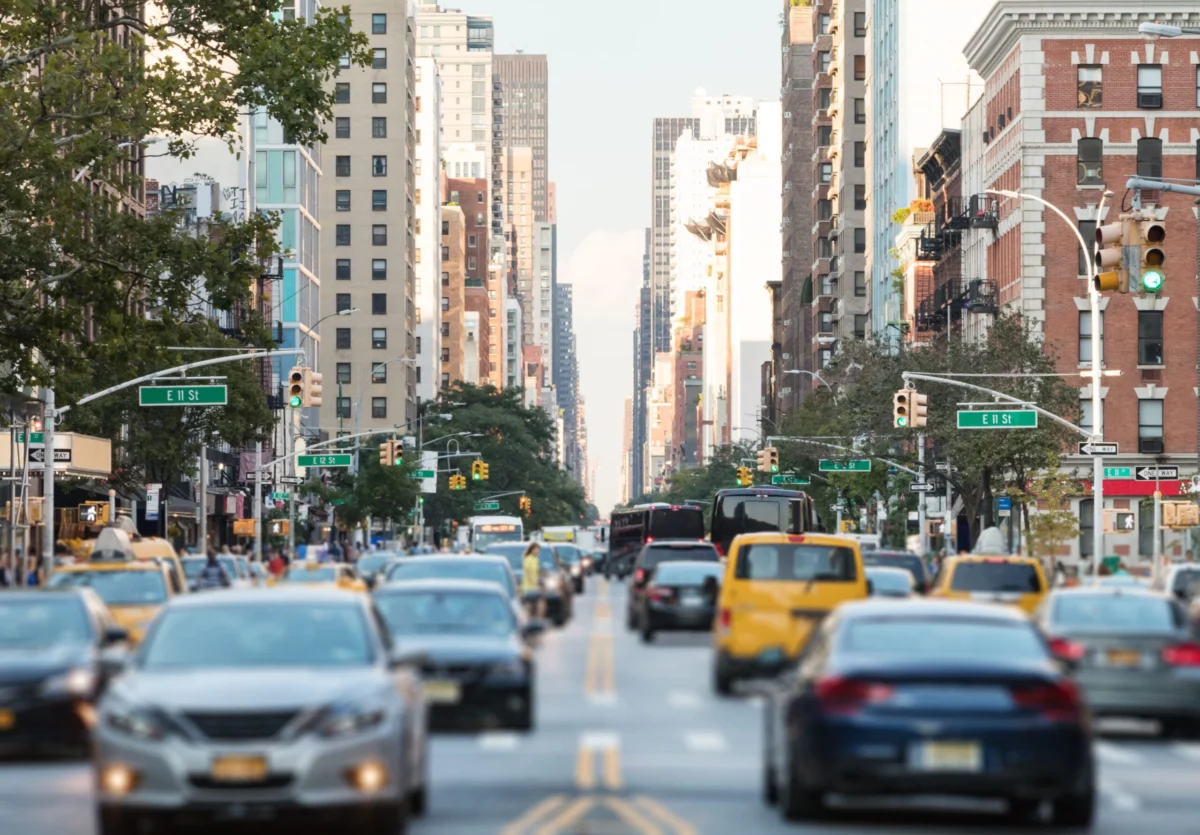
New York City’s traffic is legendary, a persistent urban challenge that has long plagued commuters, businesses, and the environment. In 2024, the city cemented its reputation for gridlock by recording the worst congestion in the United States, with drivers losing an staggering average of 102 hours to delays over the year. This pervasive issue was exacerbated by the dire financial state of the Metropolitan Transportation Authority (MTA), the sprawling agency responsible for New York’s subways, buses, and commuter rail. In the same year, the MTA faced an alarming deficit of $8.3 billion. This confluence of crippling traffic and a financially struggling public transit system created a vicious cycle: as the MTA grappled with maintaining service quality amid funding shortfalls, more commuters opted for private vehicles, further congesting roads, diminishing MTA revenue, and intensifying delays for everyone. To break this cycle, New York City, after decades of debate and years of planning, implemented a groundbreaking congestion pricing program in January 2025, a move designed to simultaneously alleviate gridlock and secure vital funding for its transit infrastructure.
The Genesis of a Solution: New York’s Traffic Predicament
New York City’s battle with traffic is not new; it is an inherent characteristic of one of the world’s densest and most economically vibrant urban centers. For generations, the sheer volume of vehicles navigating its historic street grid, coupled with limited road expansion possibilities, has made congestion a constant companion. The economic costs are immense, extending beyond lost productivity to increased fuel consumption, higher delivery costs for businesses, and significant environmental degradation from vehicle emissions. Before the implementation of congestion pricing, studies consistently highlighted how the average speed of vehicles in Manhattan’s central business district (CBD) had plummeted to single digits, often slower than a bicycle.
The MTA, the nation’s largest public transportation network, serves nearly 8 million daily riders across its vast subway, bus, and commuter rail lines. It is the lifeblood of the region’s economy, yet its infrastructure, much of it over a century old, requires continuous, massive investment. Decades of underfunding, coupled with rising operational costs and declining ridership (exacerbated by the COVID-19 pandemic), pushed the agency to the brink. The projected $8.3 billion deficit for 2024 underscored the urgent need for a dedicated, stable funding source that traditional tax revenues or farebox recovery alone could not provide. The combination of traffic’s economic drag and the MTA’s financial crisis made a radical intervention unavoidable, paving the way for congestion pricing to move from theoretical concept to tangible policy.
A Global Blueprint: Lessons from Abroad
New York City’s congestion pricing initiative was not without precedent. It drew inspiration from successful models implemented in major global cities that had grappled with similar urban mobility challenges. Singapore pioneered the world’s first electronic road pricing system in 1975, evolving it over decades to manage demand effectively. London introduced its congestion charge in 2003, dramatically reducing traffic within its central zone and generating substantial revenue for public transport. Stockholm followed suit in 2007, and Milan introduced its "Area C" scheme in 2008. These cities demonstrated that a well-designed congestion pricing system could significantly reduce traffic volumes, improve air quality, and provide a dedicated funding stream for public transit improvements.
While learning from these international examples, New York City’s program was tailored to its unique urban fabric and political landscape. Key features, such as electronic tolling, variable pricing based on vehicle type and time of day, and a focus on funding public transit, mirrored successful elements from abroad. However, NYC’s scale, the complexity of its interconnected transportation network, and the intense political and legal scrutiny it faced, made its implementation a singular challenge.
Crafting the Program: A Detailed Timeline and Mechanics
The journey to implementing congestion pricing in New York City was protracted, marked by years of legislative battles, extensive environmental reviews, and fierce public debate. The concept had been floated for decades, but it gained serious traction with state legislation passed in 2019, which authorized the MTA to develop and implement a "Central Business District Tolling Program." This legislative mandate set the stage for a multi-year planning process.
A critical step was the exhaustive environmental assessment, which involved rigorous studies on potential impacts on traffic patterns, air quality, and socioeconomic factors, both within the proposed Congestion Relief Zone (CRZ) and in surrounding areas. This federal-level review process, overseen by the Federal Highway Administration, was crucial for securing the necessary federal approvals, which finally came in mid-2023. Following this, the MTA’s Traffic Mobility Review Board finalized the specific tolling structure, and the system officially commenced operations on January 11, 2025.
The program’s mechanics are designed for efficiency and minimal disruption. The Congestion Relief Zone encompasses Manhattan south of 60th Street, excluding the West Side Highway and Franklin D. Roosevelt Drive. Entry into this zone is tracked by a sophisticated network of over 1,400 license plate scanners and the ubiquitous E-ZPass electronic toll collection system. This automated approach ensures compliance without requiring physical toll booths, thus minimizing additional traffic bottlenecks.
The fee structure is multi-tiered:
- Standard Vehicles: Most passenger vehicles pay a base fee of $9 per day for entering the CRZ. This fee applies once per day, regardless of how many times a vehicle enters or exits.
- Commercial Vehicles: Large trucks and sightseeing buses are charged the highest rate, $21.60 per entrance, reflecting their greater contribution to congestion and road wear.
- Motorcycles: These vehicles pay $4.50 per entrance.
- Taxis and Rideshare Vehicles: Recognizing their frequent entries and exits, these vehicles are charged per trip at a lower rate: $0.75 for taxis and $1.50 for rideshare vehicles. This structure aims to manage the volume of for-hire vehicles.
- Time-based Discounts: To encourage off-peak travel and further manage demand, a 75 percent discount is applied during off-peak hours (9 p.m. to 5 a.m. on weekdays, and 9 p.m. to 9 a.m. on weekends). The full toll applies during peak hours.
The rationale behind congestion pricing is twofold, rooted in economic principles. First, the toll acts as a user fee, similar to other road use charges. Driving within the CRZ contributes to wear and tear on valuable urban infrastructure, and the revenue generated partially offsets these maintenance costs. Second, and perhaps more significantly, the toll functions as a Pigouvian tax. Unpriced congestion creates a negative externality: each additional driver contributes to delays and pollution for all other road users, but without an inherent mechanism to internalize these costs. By charging drivers for these external harms, the program forces them to incorporate the societal costs of their travel decisions, thereby incentivizing a shift towards alternative modes of transport or off-peak travel, and ultimately reducing congestion.
Early Impact and Tangible Benefits: The First Year’s Report Card
The initial evaluation of New York City’s congestion pricing program, detailed in the MTA’s First Evaluation Report, painted a picture of early success. Comparing data from 2024 to 2025, the report highlighted significant improvements across its core objectives: reduced congestion, increased public transit ridership, and substantial revenue generation.
The most direct impact was on traffic volumes within the Congestion Relief Zone. Vehicle entries into the CRZ decreased by a notable 11 percent. This reduction was mirrored by a corresponding surge in public transit ridership, which saw a 9 percent increase. This shift from private vehicles to mass transit is a cornerstone of the program’s success, demonstrating its effectiveness in influencing commuter behavior.
The reduced traffic density translated directly into faster travel times. Average vehicle speeds within the CRZ increased by 4.6 percent. Even more impressively, speeds on critical crossings into Manhattan, such as bridges and tunnels, saw an astounding 23 percent increase. These improvements not only benefit remaining drivers but also enhance the efficiency of commercial deliveries and emergency services.
A particularly crucial, though often overlooked, benefit is the improvement in public safety. The National Bureau of Economic Research (NBER) estimated that decreased congestion led to a 5-6 percent reduction in emergency medical service (EMS) response times, translating to 63 to 70 seconds saved. In critical medical emergencies, where "time is tissue," such improvements can be life-saving.
Beyond overall traffic reduction, the program also achieved a reallocation of traffic patterns. The evaluation report noted that the hours immediately preceding and following the maximum toll period were the only times that saw an increase in vehicle travel in 2025 compared to 2024. This indicates that some drivers are strategically shifting their travel times to take advantage of off-peak discounts, further distributing traffic load more evenly throughout the day.
Financially, the program quickly proved its worth to the MTA. During its first year of operation, the Congestion Relief Zone Tolling recorded an average monthly revenue of $55 million. This consistent funding stream is transformative for the MTA, enabling the bonding of $15 billion specifically allocated for its ambitious capital plan. This capital investment is critical for modernizing the aging subway system, expanding service, improving accessibility, and enhancing the overall passenger experience, thereby reinforcing the viability of public transit as a superior alternative to driving.
The Battle Lines Drawn: Political and Legal Challenges
Despite its initial operational success, New York City’s congestion pricing program has not enjoyed a perfectly smooth ride. From its inception, it has faced significant political opposition and, shortly after implementation, became embroiled in complex legal challenges.
A primary source of opposition has been the federal government, particularly the U.S. Department of Transportation (DOT) under Secretary Sean Duffy. In February 2025, Secretary Duffy attempted to withdraw federal approval and funding for the program, culminating in a lawsuit alleging that the program had violated federal restrictions, specifically concerning the adequacy of its environmental review process. The lawsuit, filed by the federal government, argued that the environmental impact statement (EIS) was insufficient and did not adequately address potential adverse effects on neighboring states, particularly New Jersey.
New Jersey Governor Phil Murphy has been a vocal opponent, initiating his own legal challenges against the program. He argued that the toll disproportionately burdens New Jersey commuters, many of whom rely on their vehicles to access jobs in Manhattan and already pay tolls to cross into the city via bridges and tunnels. The state of New Jersey, along with several New Jersey counties and other commuter groups, contended that the program was an unfair "tax" on their residents without providing reciprocal benefits in the form of improved transit options for them.
The legal battle is ongoing. While the courts have thus far issued orders rejecting federal attempts to halt the program’s operation, effectively allowing it to continue, the core legal arguments remain unresolved. The case is currently awaiting a hearing by the 2nd Circuit Court of Appeals, where the arguments regarding federal oversight, environmental review sufficiency, and interstate equity will be thoroughly scrutinized. Beyond the federal and state lawsuits, various local groups, including some small business associations and residents of outer boroughs concerned about traffic diversion, have also expressed their discontent and, in some cases, pursued legal avenues. These challenges underscore the program’s controversial nature, even as its operational benefits accrue.
Broader Implications: Economic, Environmental, and Equity Considerations
New York City’s congestion pricing program carries profound implications across economic, environmental, and social dimensions, both locally and as a potential model for other American cities.
From an economic efficiency standpoint, the program directly addresses a long-standing market failure. By internalizing the external costs of congestion and pollution through the Pigouvian tax, it creates a more efficient allocation of road space. Reduced travel times translate into significant productivity gains for businesses and individuals, while lower fuel consumption reduces operational costs for commercial fleets. The dedicated revenue stream for the MTA is transformative, enabling investments that foster economic growth by improving the reliability and capacity of public transit, thereby facilitating labor mobility and access to jobs. While some businesses within the CRZ initially feared a drop in customers due to the toll, the overall economic benefit of a more fluid and predictable urban environment, coupled with enhanced public transit, could outweigh these localized concerns in the long run.
The environmental gains are substantial. Fewer vehicles entering the CRZ mean a direct reduction in greenhouse gas emissions (such as CO2) and local air pollutants (like particulate matter and nitrogen oxides). This leads to improved air quality, particularly for residents and workers within and near the CRZ, contributing to better public health outcomes and reduced rates of respiratory and cardiovascular diseases. The shift towards public transit, a inherently more sustainable mode of transport, further amplifies these environmental benefits.
However, the program has also sparked considerable debate around equity. Critics argue that the $9 daily fee disproportionately impacts lower-income commuters, essential workers, and small businesses that may not have viable public transit alternatives or rely heavily on vehicle access to the CRZ. Concerns have been raised about the potential for the toll to be a regressive tax, placing a heavier burden on those least able to afford it. Proponents counter that the significant improvements to public transit, funded by the tolls, ultimately benefit lower-income individuals who are more reliant on mass transit. The MTA has also implemented certain exemptions and credits for specific groups, such as low-income drivers making fewer than 10 trips a month into the zone, and specific categories of emergency vehicles. Nevertheless, ensuring equitable access and mitigating unintended burdens remain critical considerations for ongoing policy refinement.
Ultimately, congestion pricing represents a significant step in urban transformation. It signals a policy shift away from car-centric planning towards a multimodal, sustainable urban environment. By disincentivizing private vehicle use in the most congested areas, it encourages greater investment in public transit, cycling infrastructure, and pedestrian-friendly zones, fostering a more livable and resilient city.
A Blueprint for the Nation? The Future of Congestion Pricing in the US
New York City’s positive experience with congestion pricing stands as a vital data point, yet questions remain about its broader applicability across the United States. NYC is unique among American cities, characterized by several distinguishing factors: it boasts the nation’s largest population, endures unparalleled traffic congestion, operates a sprawling and deeply integrated mass transit system that is a primary mode of transport for millions, and contains one of the densest concentrations of jobs in the world in Lower and Midtown Manhattan.
No other American city fully matches this profile. Many urban centers, particularly in the post-pandemic work-from-home era, are actively struggling to attract businesses and workers back into their downtowns. Implementing a congestion pricing scheme in such contexts, where public transit infrastructure may be less robust and reliance on personal vehicles more entrenched, could potentially be counterproductive, further discouraging downtown activity. Cities like Los Angeles and Washington, D.C., which are considering similar programs, face different urban landscapes, commuting patterns, and political realities. Los Angeles, for instance, is far more sprawling and car-dependent, and while it has a growing transit system, it does not offer the same level of comprehensive coverage as New York.
Nevertheless, New York’s early success provides a powerful case study. It demonstrates the feasibility of such a program in a major American city, showcasing tangible benefits in traffic reduction, environmental improvement, and transit funding. Its experience offers invaluable lessons regarding planning, implementation, public outreach, and navigating legal challenges. Even if the exact model cannot be directly replicated, the principles of demand management, user-pays systems for infrastructure, and dedicated funding for public transit could inform tailored approaches in other metropolitan areas. The ongoing evaluation of NYC’s program will continue to provide critical data for urban planners and policymakers nationwide as they grapple with the multifaceted challenges of urban mobility in the 21st century.
New York City’s congestion pricing program represents a bold, data-driven approach to tackling chronic urban challenges. By strategically leveraging economic mechanisms, the city has made significant strides in reducing traffic, improving air quality, enhancing public safety, and securing a critical financial lifeline for its indispensable transit system. While political and legal complexities persist, the initial results underscore the program’s potential to redefine urban mobility and serve as a pioneering model for sustainable city planning, even as its unique context demands careful consideration for any broader application.