admin
admin
Rapid business growth, a highly coveted achievement for any enterprise, often brings with it an unforeseen array of operational complexities, particularly within the critical domain of payroll management. While expanding market share and increasing headcount signify success, they simultaneously introduce significant vulnerabilities that, if unaddressed, can lead to substantial financial penalties, legal liabilities, and a deterioration of employee trust. Small and medium-sized businesses (SMBs), frequently operating with lean administrative teams, are particularly susceptible to these escalating payroll challenges as they transition from fledgling startups to established entities. The journey from a handful of employees to dozens, or even hundreds, fundamentally alters the administrative landscape, demanding robust systems and stringent adherence to compliance that manual processes simply cannot sustain.
The Double-Edged Sword of Rapid Growth: A Deeper Dive into Payroll Vulnerabilities
The current economic climate, characterized by a dynamic entrepreneurial spirit and increased remote work capabilities, has fueled aggressive growth trajectories for many SMBs. A recent report by the [Fictional Business Growth Observatory] indicated that nearly 40% of SMBs experienced a significant hiring surge (over 20% increase in headcount) in the last fiscal year, with projections suggesting similar trends for the foreseeable future. While this expansion is a testament to innovation and market demand, it invariably tests the resilience of internal administrative functions.
When an organization rapidly scales its workforce, the seemingly straightforward task of ensuring accurate and timely compensation becomes exponentially more intricate. Suddenly, a business might be contending with a dramatic increase in:
- Employee Volume: Managing dozens or hundreds of individual paychecks instead of a select few.
- Diverse Compensation Structures: Integrating varied salary scales, hourly rates, commissions, and performance bonuses.
- Regulatory Compliance Burdens: Navigating an expanding web of federal, state, and local labor laws, tax codes, and reporting requirements.
- Administrative Overload: Overwhelming existing HR and finance teams with data entry, verification, and query resolution.
This sudden surge places immense pressure on payroll accuracy. What might be a minor oversight for a team of five—such as a forgotten tax form for a new hire or a miscalculated overtime hour—can multiply across an entire organization of fifty or more, leading to a cascade of costly errors. These errors can manifest as:
- Significant Financial Penalties: Fines from tax authorities (e.g., IRS, state tax departments) for incorrect withholdings or late filings.
- Wage and Hour Disputes: Legal challenges from employees regarding underpayment of wages, particularly overtime.
- Employee Dissatisfaction and Attrition: A direct hit to morale when employees’ paychecks are consistently inaccurate, fostering distrust and potentially leading to resignations.
- Operational Bottlenecks: Administrative teams spending disproportionate amounts of time correcting errors instead of focusing on strategic initiatives.
Businesses cannot afford to decelerate their growth to simplify payroll; rather, they must proactively implement scalable systems and strategies that evolve alongside their expansion.
Unpacking the Core Challenges: A Chronology of Growing Pains
As headcount steadily climbs, several critical payroll challenges tend to emerge, often in a sequential manner, requiring increasingly sophisticated solutions.
1. Inconsistent Onboarding and Data Entry:
Initially, when a business is small, new hire information might be collected informally, perhaps through disparate emails or ad-hoc paper forms. As growth accelerates, this informal approach becomes a critical liability. Without a standardized, repeatable onboarding protocol, each manager might collect varying types or incomplete sets of information. This lack of uniformity directly leads to:
- Missing or Inaccurate Employee Data: Critical details like Social Security numbers, addresses, bank account information, and emergency contacts are either omitted or entered incorrectly.
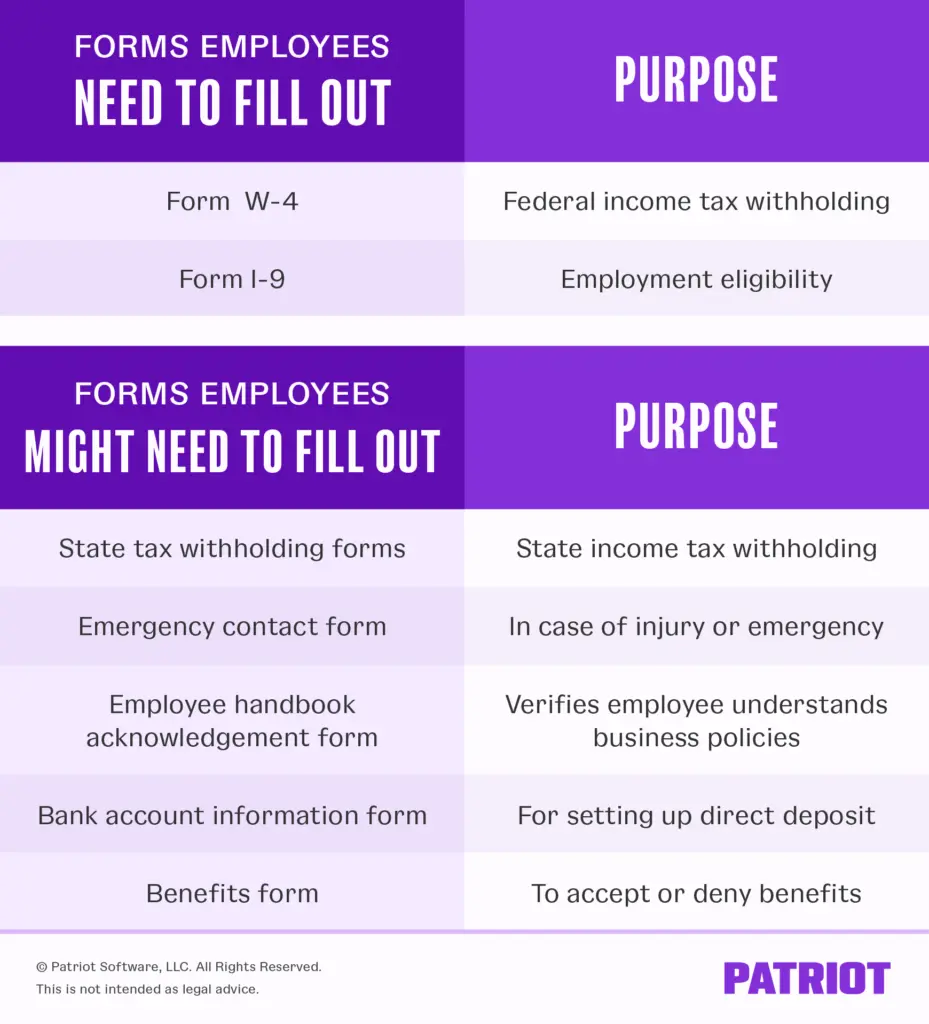
- Non-Compliance with Form Requirements: Failure to obtain mandatory federal forms (e.g., I-9 for employment eligibility, W-4 for tax withholding) and state-specific tax declarations.
- Delays in Payroll Processing: The administrative burden of chasing down missing information postpones initial payroll setup and subsequent payments.
- Increased Risk of Errors: Manual data entry across multiple unstandardized documents drastically increases the probability of human error, which then propagates through the entire payroll cycle.
"HR professionals often cite inconsistent data capture as a primary source of downstream payroll errors, especially during periods of rapid expansion," notes Dr. Eleanor Vance, a recognized expert in human capital management. "The cost of correcting these errors far outweighs the initial investment in a robust onboarding system."
2. Misclassifying Workers:
Growth frequently brings a diverse mix of talent, including traditional W-2 employees and independent 1099 contractors. The distinction, while seemingly minor, carries profound legal and financial ramifications. Misclassifying an employee as an independent contractor, whether intentionally or inadvertently, can result in:
- Unpaid Overtime and Benefits: Employees are entitled to overtime pay, minimum wage, and often benefits (health insurance, retirement plans) that contractors are not.
- Back Taxes and Penalties: The IRS and state labor departments can levy significant fines for unpaid payroll taxes (Social Security, Medicare, unemployment insurance) that should have been withheld from misclassified employees.
- Legal Scrutiny: Increased risk of lawsuits from misclassified workers seeking owed wages and benefits.
- Reputational Damage: Public perception of unfair labor practices can severely impact a company’s ability to attract future talent and customers.
The U.S. Department of Labor (DOL) has intensified its enforcement efforts regarding worker classification, with penalties ranging from thousands to hundreds of thousands of dollars per violation, underscoring the critical need for vigilance.
3. Multi-State Payroll Complexity:
As businesses expand their footprint, either by opening new physical locations or, more commonly, by hiring remote employees across state lines, payroll complexity skyrockets. Each state presents its own unique set of regulations, creating a labyrinth for the payroll administrator. This introduces challenges such as:
- Varying Income Tax Laws: Different state income tax rates, local taxes (city/county), and reciprocity agreements.
- State Unemployment Insurance (SUI) Rates: SUI rates vary significantly by state and are often experience-rated, requiring precise tracking.
- Differing Wage and Hour Laws: State-specific minimum wage laws, overtime rules (e.g., daily overtime in California), and meal/rest break requirements.
- Unique Reporting Requirements: Each state may have distinct new hire reporting mandates and tax filing schedules.
- Nexus Establishment: Determining when a business has a sufficient presence (nexus) in a state to trigger its tax obligations.
"Navigating the labyrinth of multi-state tax regulations can be a full-time job for even seasoned payroll managers," states Mr. Arthur Jenkins, a principal at [Fictional Tax Advisory Group]. "Without specialized software or expert guidance, the risk of non-compliance is exceptionally high."
4. Overtime, Bonuses, and Variable Pay:
With growing teams come more complex compensation structures. Managing overtime calculations for hourly employees, especially those working fluctuating schedules, becomes a constant challenge. Furthermore, the introduction of performance bonuses, sales commissions, shift differentials, and other forms of variable pay adds layers of complexity:
- FLSA Compliance: Adhering to the Fair Labor Standards Act (FLSA) for overtime calculations, including the "regular rate of pay" for non-exempt employees.
- Accurate Bonus Distribution: Ensuring bonuses are calculated correctly based on defined metrics and paid out according to schedule.
- Commission Tracking: Meticulously tracking sales data to accurately calculate and disburse commissions, which can be highly variable.
- Benefit Eligibility Impact: Variable pay can affect how certain benefits (e.g., retirement plan contributions) are calculated.
These complexities demand precise record-keeping and a deep understanding of wage laws to avoid underpayment or overpayment.
5. Manual Processes That Do Not Scale:
What functioned adequately for a team of five employees—spreadsheets, paper timesheets, and manual calculations—becomes an unmanageable and error-prone nightmare for a team of fifty or more. Common pain points include:
- Excessive Time Consumption: Manual data entry and reconciliation can consume hundreds of administrative hours per pay period.
- High Error Rate: Human error is inevitable with manual processes, leading to frequent corrections and recalculations.
- Lack of Audit Trail: Difficulty in tracking changes or verifying data inputs, making audits challenging.
- Security Risks: Storing sensitive employee data in unsecure spreadsheets or paper files increases the risk of data breaches.
A survey by [Fictional Payroll Solutions Provider] found that businesses relying heavily on manual payroll processes spend on average 30% more time on payroll administration and experience twice the error rate compared to those utilizing automated systems.
Strategic Imperatives: Building a Resilient Payroll Framework
To mitigate these risks and ensure sustainable growth, businesses must adopt a proactive and systemic approach to payroll management. The following strategies are crucial for maintaining accuracy and compliance during periods of rapid expansion.
1. Standardizing the Onboarding Lifecycle:
Establishing a repeatable, comprehensive new hire checklist is paramount. This checklist should cover every essential step and document required before an employee begins work, including:
- Personal Identifiers: Full legal name, address, Social Security number.
- Tax Information: Completed W-4 (federal) and relevant state tax withholding forms.
- Employment Eligibility: Verified I-9 form with supporting documentation.
- Direct Deposit Information: Bank account details for automated payroll.
- Benefit Enrollments: Health insurance, retirement plan, and other elective benefits.
- Company Policies: Acknowledgment of employee handbook, IT usage, etc.
- Emergency Contacts: Critical for safety and communication.
- Job-Specific Details: Salary/hourly rate, department, reporting manager, start date.
This checklist should be digitized, ideally integrated into an HRIS (Human Resources Information System), and shared with all individuals involved in the hiring process. The goal is to ensure no employee commences work without all necessary documentation for correct and compliant payment.
2. Centralizing Data Management Systems:
Dispersed data—across email threads, paper files, and fragmented spreadsheets—is a recipe for disaster. Consolidating all payroll-related data into one secure, centralized system (such as dedicated payroll software or an integrated HRMS) offers immense benefits:
- Single Source of Truth: Eliminates discrepancies and ensures all stakeholders access the most current, accurate information.
- Improved Data Integrity: Reduces the risk of data loss or corruption.
- Enhanced Security: Centralized systems typically offer robust security features, access controls, and audit trails.
- Streamlined Reporting: Facilitates the generation of accurate payroll reports, tax filings, and compliance documentation.
Leading payroll software solutions are specifically designed to centralize this information, preventing the administrative nightmare of juggling multiple data sources.
3. Automating Time and Attendance Protocols:
Relying on manual timesheets during rapid hiring is an untenable and risky practice. Implementing automated time and attendance systems provides a robust solution:
- Digital Time Clocks/Apps: Employees can clock in/out via web portals, mobile apps, or biometric scanners.
- Automated Calculation: Software automatically calculates regular hours, overtime, and breaks, adhering to complex wage and hour laws.
- Real-time Tracking: Provides immediate visibility into employee work hours and potential overtime accruals.
- Integration with Payroll: Seamlessly feeds approved time data directly into the payroll system, eliminating manual entry.
Automated time tracking significantly reduces manual errors, minimizes time theft, ensures compliance with labor laws, and offers a clearer, real-time picture of scheduling patterns and labor costs.
4. Defining Clear Roles and Approval Hierarchies:
Rapid growth can often blur lines of responsibility. Establishing clear roles and an approval hierarchy for payroll processes is critical for internal control and accuracy. Businesses must define precisely who:
- Enters new hire data.
- Approves timesheets and expense reports.
- Reviews and verifies payroll calculations.
- Authorizes the final payroll run.
- Manages tax filings and payments.
Furthermore, building an explicit approval step into every payroll run—even a quick review by a second party—can catch errors before they impact employees’ paychecks, thereby preventing costly corrections and maintaining trust.
5. Leveraging Purpose-Built Payroll Software:
As employee numbers swell, dedicated payroll software transitions from a convenience to an indispensable ally. Modern payroll solutions are built to handle the complexities of growing businesses, offering features that can help:
- Automate Tax Calculations: Accurately calculate federal, state, and local taxes, ensuring compliance.
- Manage Multi-State Payroll: Handle the intricacies of employees working in different jurisdictions.
- Process Diverse Pay Types: Seamlessly manage salaries, hourly wages, commissions, bonuses, and shift differentials.
- Generate Compliance Reports: Automatically produce W-2s, 1099s, and other necessary tax and labor reports.
- Integrate with HR and Time Systems: Create a cohesive ecosystem for employee data management.
- Provide Employee Self-Service: Allow employees to access pay stubs, update personal information, and manage tax withholdings, reducing administrative queries.
- Scale with Demand: Easily accommodate increasing employee numbers without requiring a complete overhaul of the system.
The return on investment (ROI) from implementing robust payroll software is often substantial, stemming from reduced error rates, avoided penalties, and freed-up administrative time.
6. Instituting Regular Payroll Audits:
Even with sophisticated software, human oversight remains vital. Scheduling regular payroll audits is a proactive measure to detect and correct errors before they become significant issues. Businesses should set a schedule to review:
- Employee Pay Rates: Verify that all employees are being paid their correct wages.
- Tax Withholdings: Ensure federal, state, and local tax deductions are accurate and up-to-date.
- Deductions: Confirm health insurance premiums, retirement contributions, and other deductions are correctly applied.
- New Hire Data: Periodically review recently added employee files for completeness and accuracy.
- Terminated Employee Final Pay: Verify compliance with state-specific final pay laws.
These audits should compare what the payroll system shows against original documentation, time records, and benefit enrollment forms. During periods of rapid growth, a quick review each pay period, coupled with a deeper audit quarterly or at least annually, is advisable.
7. Comprehensive Training for Key Personnel:
Anyone involved in the hiring or payroll process needs a foundational understanding of payroll basics and worker classification rules. Training should cover:
- Worker Classification: The legal distinction between W-2 employees and 1099 contractors.
- Wage and Hour Laws: Federal (FLSA) and state-specific regulations regarding minimum wage, overtime, and breaks.
- Payroll System Usage: How to accurately enter data, approve timesheets, and run reports within the payroll software.
- Tax Withholding Basics: Understanding W-4 forms and tax implications.
- Compliance Requirements: Overview of key federal and state reporting obligations.
Empowering employees with this knowledge reduces reliance on a single expert and helps to prevent common errors from the ground up.
8. Proactive Growth Planning and System Upgrades:
Foresight is a powerful tool. If a significant hiring surge is anticipated, businesses should prepare their payroll processes well in advance. This involves:
- Documenting Existing Processes: Clearly outlining current payroll workflows to identify bottlenecks.
- Assessing Current System Capacity: Evaluating whether existing software and administrative resources can handle increased volume.
- Budgeting for Upgrades: Allocating resources for new software, additional staff, or professional payroll services.
- Consulting Experts: Engaging with HR consultants, tax professionals, or payroll service providers to prepare for future challenges.
By planning for growth before it hits, businesses can implement necessary upgrades and adjustments smoothly, preventing reactive, costly fixes under pressure.
The Broader Economic and Operational Implications
Beyond direct financial penalties, the implications of payroll inaccuracies during rapid growth extend to broader economic and operational aspects of a business. Employee morale, a critical driver of productivity and retention, suffers significantly when paychecks are consistently wrong. This can lead to increased employee turnover, forcing businesses to incur additional recruitment and training costs. Furthermore, persistent payroll issues can damage a company’s reputation, making it harder to attract top talent in a competitive market.
Operationally, administrative teams become bogged down in error correction, diverting valuable resources from strategic HR initiatives like talent development, performance management, and employee engagement. This creates a cycle where the administrative burden prevents the very strategic work that supports sustainable growth. Government agencies, including the IRS and the Department of Labor, are increasingly scrutinizing payroll practices, making compliance a non-negotiable aspect of business operations. The cumulative effect of these challenges can undermine the very success that rapid growth initially promised.
Expert Perspectives and Future Readiness
The consensus among HR and finance experts is clear: a robust, scalable payroll infrastructure is not merely an administrative necessity but a strategic imperative for any business anticipating or undergoing rapid expansion. "Ignoring payroll complexities during growth is akin to building a skyscraper on a shaky foundation," warns Mr. David Chen, a leading financial strategist for SMBs. "The structure may stand for a while, but it’s inherently unstable and prone to collapse under pressure."
For businesses aiming for sustained growth, the emphasis must shift from reactive problem-solving to proactive system design. This means embracing technology, fostering a culture of compliance, and investing in continuous training. Businesses are strongly encouraged to review their current payroll systems, assess their scalability, and consider consulting with specialized payroll providers or tax professionals to ensure they are adequately prepared for the challenges and opportunities that accompany significant workforce expansion.
Conclusion
Rapid hiring is a strong indicator of a business’s vitality and success, but it also serves as a critical stress test for its administrative resilience. The escalating complexities of payroll management, from inconsistent onboarding and worker misclassification to multi-state regulations and manual process limitations, demand a strategic and comprehensive response. By standardizing processes, centralizing data, automating tasks, defining clear responsibilities, leveraging advanced software, and maintaining a vigilant audit schedule, businesses can transform payroll from a potential Achilles’ heel into a robust pillar supporting their ambitious growth trajectory. The future success of rapidly expanding SMBs will undoubtedly hinge on their ability to master these intricate payroll dynamics, ensuring compliance, fostering employee trust, and ultimately, safeguarding their financial stability.